
Crucian carp, like most living creatures, are susceptible to disease. Early detection of signs of illness can facilitate treatment. In crucian carp, damage can be detected in the early stages, regardless of the specific disease.
Causes of diseases
Pond and river crucian carp are equally susceptible to disease. The reasons for this are:
- little space;
- discharge of hazardous waste from the entire farm;
- swamping of a reservoir;
- lack of oxygen.
If a carp becomes ill, remove it from the pond, as an infected specimen can infect other fish in the pond, not just those in its own family. Quarantine is not necessary unless the disease is non-contagious.
Non-communicable diseases
Crucian carp can be affected diseases, which pose no danger to other inhabitants of the reservoir. However, such ailments must be treated.
- ✓ The presence of white spots up to 1 mm in size on the fish’s body indicates ichthyophthirius.
- ✓ Fluffy growths on the fins and gills are characteristic of saprolegniasis.
Obesity
Obese crucian carp experience difficulty moving. Other problems also arise:
- indigestion;
- infertility;
- liver disease.
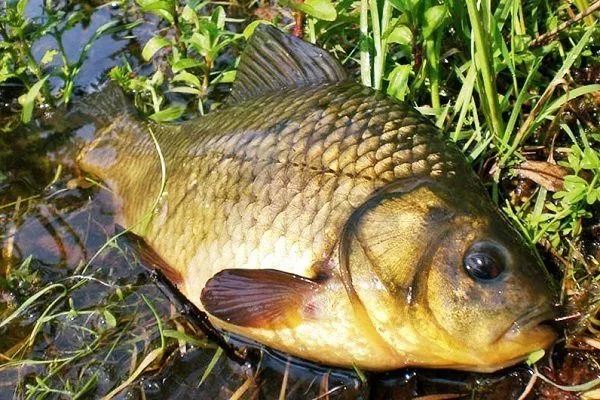
Causes of obesity:
- too nutritious food with a high fat content;
- overfeeding, improperly selected diet;
- feeding dry food;
- There are too many individuals in the reservoir, the crucian carp cannot move freely and burn calories.
The main symptom of obesity is a large body, increased abdominal circumference and the area of the body between the head and the abdomen.
Treatment of the disease:
- a therapeutic diet prescribed by a veterinarian;
- feeding by the clock;
- reduction in the amount of food.
Scoliosis
Scoliosis is a condition characterized by curvature of the spine. It has several causes:
- related fish breeding;
- food containing few vitamins;
- injuries due to frequent relocation;
- prolonged lack of oxygen;
- bacterial turbidity in a reservoir.
Symptoms:
- the body becomes rounded with a hump;
- the crucian carp is losing weight;
- refuses to eat.
It's impossible to cure scoliosis in crucian carp; it can only be prevented. To do this, take a number of steps:
- use food with a high content of microelements;
- Transfer fish from one pond to another as little as possible (this also applies to fry);
- do not overstock the pond with fish;
- Change some of the water once every 7 days.
Asphyxia
Asphyxia, or suffocation, in crucian carp is a condition that can lead to death if not treated promptly. The condition is caused by:
- prolonged lack of oxygen;
- high water temperature;
- pollution of the reservoir, untimely removal of food waste.
Symptoms:
- all affected fish rise to the surface of the water, trying to gulp down air;
- protruding gills.
Treatment of the disease:
- Eliminate the cause of the disease.
- Change some of the water and aerate.
If the latter is not possible, use a 15% hydrogen peroxide solution at a rate of 1 gram per liter of water. This is only a temporary solution. Do not use the solution multiple times. Repeated use may be fatal.
Infectious diseases of crucian carp
Carp are often susceptible to infectious diseases caused by various pathogenic microorganisms.
Swim bladder inflammation
Nothing is known about the origin of the disease. There is evidence that the illness is transmitted through contact with infected individuals, and the pathogen spreads through water. Crucian carp have the highest infection rates. The infection affects the swim bladder, but other organs can also be affected.
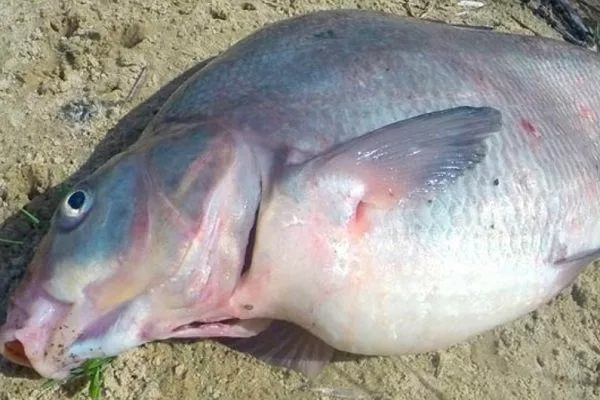
Fish of any age can contract the disease. Young fish often die during the winter. If the infection becomes severe, the entire reservoir can die.
The disease is incurable. There are no medications. The only cure is for the crucian carp to develop immunity. This will strengthen the immune system, and the disease will begin to subside.
Saprolegniosis
This disease is classified as a skin disease and is caused by pathogenic waterborne fungi. It is a secondary condition. It initially affects previously injured areas of the body, and then spreads to healthy areas.
Symptoms:
- fluffy growths, similar to cotton wool, on the caudal and dorsal fins, head, eyes and gills;
- loss of balance (after which the fish dies).
Treatment:
- In summer and at the onset of the first autumn cold, treat the fish twice with basic violet K at a rate of 1 gram per 1 cubic meter of water for 30 minutes.
- Until the disease has subsided, disinfect the water with ultraviolet rays.
You can also take 0.1% salt baths for 30 minutes.
Gill necrosis
Gill necrosis is one of the most dangerous infectious diseases affecting crucian carp. The causative agent is unknown. It can lead to the death of an entire reservoir.
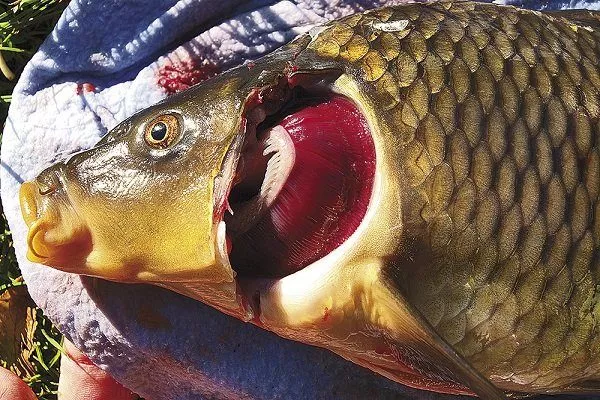
The disease begins to actively progress from the beginning of summer, and by mid-autumn all symptoms disappear without a trace.
Signs:
- refusal to eat;
- the crucian carp floats to the surface of the water to swallow air;
- inflammation of the gills, followed by their complete destruction.
As a preventative measure, regularly enrich the water in your pond. Use bleach at a rate of 3 grams per cubic meter of water.
Rubella
Carp and wild carp are the first to be affected by the bacteria, followed by crucian carp. The infection is considered dangerous because it is considered contagious. Crucian carp most often become infected in early spring and summer, but there have been cases of infection in winter as well.
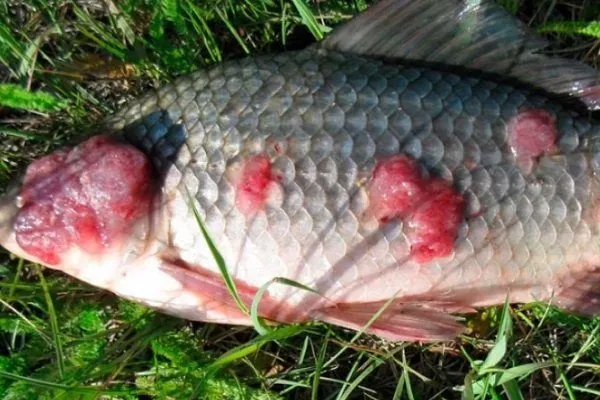
Symptoms:
- small hemorrhages and exophthalmos when the disease is in an acute form;
- ulcers of red, less often white, hue;
- red spots on the fins.
Only an experienced ichthyopathologist can detect the disease. If measures are not taken promptly, all fish in the pond may die.
Probiotics are used to treat the disease, but the most effective method is summering. Completely drain and disinfect the pond, and destroy any infected individuals. If the pond has a natural water supply, saving the carp is impossible.
Branchiomycosis
The disease affects the gill tissue. The main symptom is a refusal to eat and frequent floating on the surface of the water. The infection appears in mid-summer, and within two to eight weeks, all crucian carp in the reservoir die.
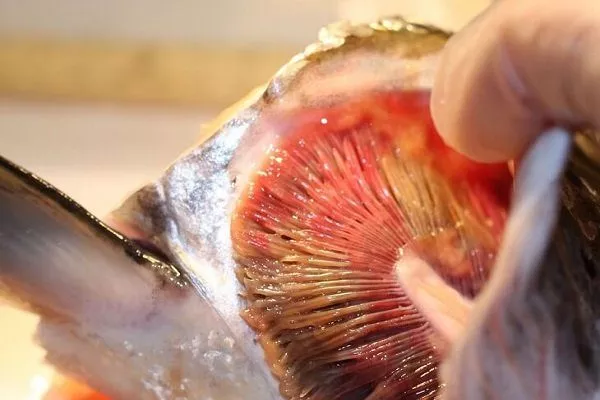
To avoid negative consequences, catch and destroy infected individuals. After catching them, apply bleach at a rate of 5 grams per cubic meter of water and treat the pond.
Invasive diseases
While studying the habitat of crucian carp on commercial farms, scientists discovered a huge number of parasites. If their numbers are small, the fish don't even notice their presence. But if the concentration of parasites in a body of water is high, this leads to the development of diseases.
Ichthyophthirius
The most dangerous disease of crucian carp. This illness can cause mass fish kills. It is caused by a ciliate parasite. The parasite attacks internal organs, destroying them.
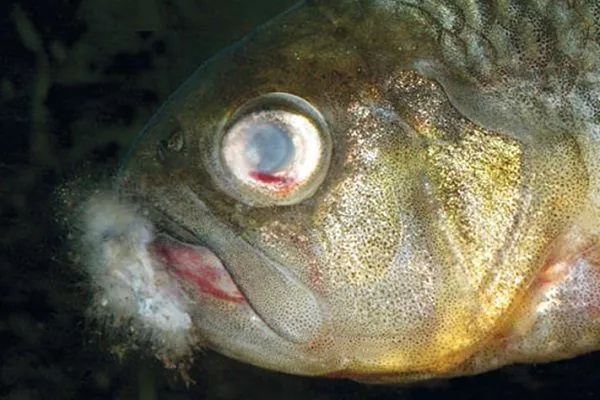
Getting rid of the organism is difficult, as it is resistant to various pharmaceutical medications. Furthermore, the ciliate can divide repeatedly, resulting in the production of numerous daughter cells that also infect the crucian carp.
Symptoms of the disease:
- the fish does not react to external stimuli;
- White growths appear on the body and gills.
Breeders often cannot independently diagnose the disease, as the symptoms are similar to those of microsporidiosis. The main rule when getting rid of ciliates is that treatment must be carried out exclusively under the supervision of a doctor. The doctor should also prescribe the medication and dosage.
The pond owner only needs to restrict access of infected individuals to healthy ones. It's also important to drain and clean the pond using bleach at a rate of 3 grams per cubic meter of water.
Argulez
The disease is caused by the gill-tail crustacean. The disease primarily affects juvenile crucian carp. The parasite accumulates in large numbers on the fish's skin and pierces it. This infection then causes inflammation at the site.
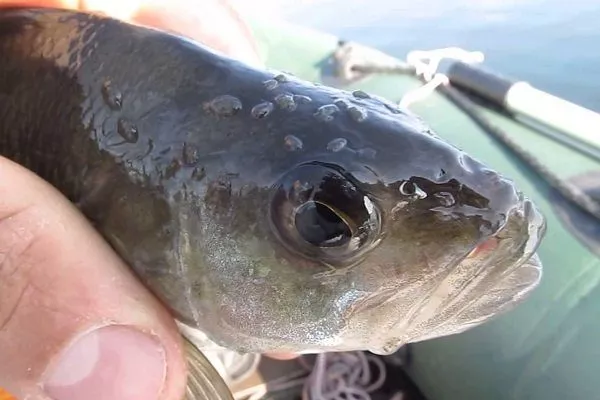
Preventive measures to control pests:
- Create a structure that will prevent infected fish and crustacean larvae from migrating from one pond to another.
- To destroy the egg clutch, dry the bottom and disinfect with bleach (3 g per 1 cubic meter of water).
- If possible, clear the pond of any tough vegetation.
- If fish migrate during the winter, leave the pond without water during the cold season.
Organochlorine compounds are often used during treatment, but their use negatively impacts the fish's environment, which can also cause a number of diseases.
Caviosis
A cestode (the pathogen) infects the intestines of crucian carp. The disease occurs in all fish farming areas. It can affect fish of all ages, but most often affects those around two years old.
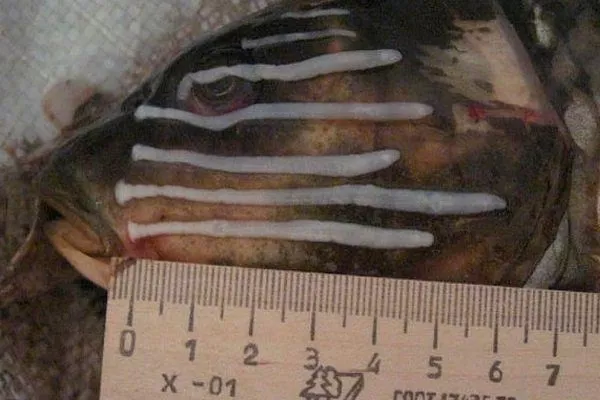
During the cold season, the parasite localizes in the body of the fish, and when warm weather arrives, it begins to spread eggs throughout the pond.
Signs of the disease:
- the crucian carp moves little;
- spends a lot of time near the shore;
- skin is dull;
- fish lose weight;
- bloating;
- redness in the anus area.
Preventive measures include:
- drying the bottom;
- disinfection of the reservoir with bleach (3 g per 1 cubic meter of water);
- summering with plowing of the bottom and introduction of new vegetation.
Treat the disease with a special food called cyprinocestin. Feed fingerlings once in midsummer and once at the onset of autumn. Add food to two-year-old fish once in June.
Trienophorosis
The causative agent is a cestode. Trienophorosis is a disease that cannot be cured. All fish are susceptible, but the parasite most often attacks pike and trout. To protect crucian carp from the disease, keep them separate from other fish.
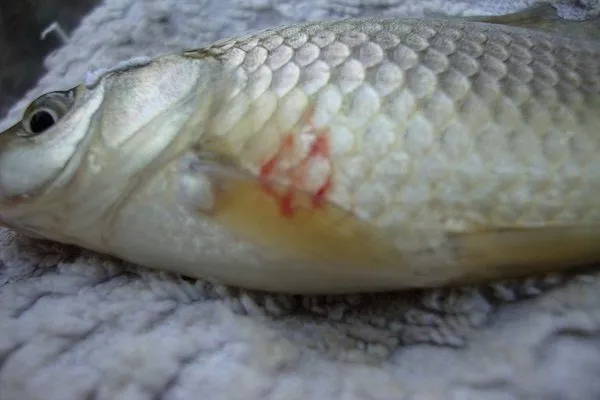
Symptoms of the disease:
- exhaustion;
- bloating;
- pallor of the mucous membranes.
All infected crucian carp must be destroyed as quickly as possible.
Bothriocephalosis
Tapeworm infects the intestines of crucian carp. The disease is considered dangerous because it can lead to the death of an entire body of water. The main cause is contact between infected individuals and healthy ones or shared water supply systems.
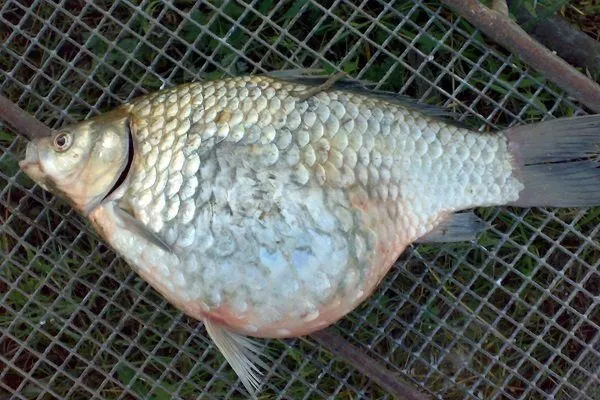
Main symptoms:
- bloated belly;
- refusal to eat;
- low activity.
The peak of infestation occurs in early summer, when crucian carp feed productively.
To treat the disease, use specialized food. The dosage and timing of its administration are determined exclusively by a doctor, based on the severity of the disease and the species of crucian carp. Prevention involves a series of veterinary and sanitary measures (draining the pond, treating the bottom with bleach).
Diplostomatosis
The disease is caused by the larvae of digenetic flukes. They live in the eyes of fish. All crucian carp, regardless of age, are at risk.
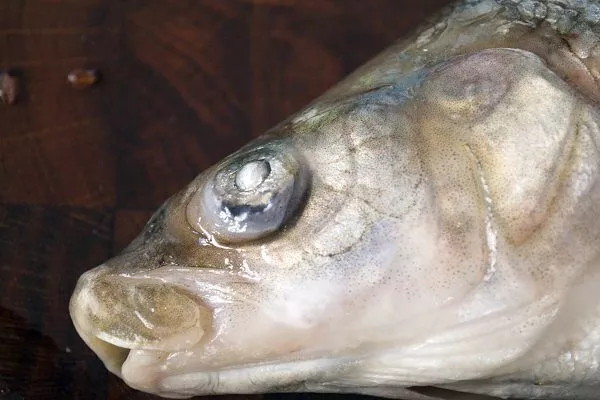
Signs of the disease:
- the lens of the eye becomes cloudy;
- appearance of a cataract;
- blindness;
- inflammation of the membranes of the eye.
The larvae prevent proper blood circulation, causing the lens to deteriorate and the eyes to become ulcerated. Affected crucian carp refuse to eat, lose weight, grow poorly, and may eventually die of starvation.
There is no cure for the disease. It can only be combated through preventative measures. The key is to interrupt the parasite's life cycle. Destroy the mollusks:
- Catch crucian carp from the contaminated area.
- Dry the pond.
Another option is to introduce grass carp into the pond, which feed on parasites and significantly reduce their numbers. Experts use copper sulfate, bleach, quicklime, a 1% ammonium nitrate solution, and a 2% table salt solution.
Lernaeosis
The causative agent is a copepod. It inhabits the skin, fins, nasal cavities, eye sockets, mouth, and gills of crucian carp. If the organism concentration is high, the fish's body becomes coated with mucus, a blue or gray coating forms, and irreversible processes occur in the body.
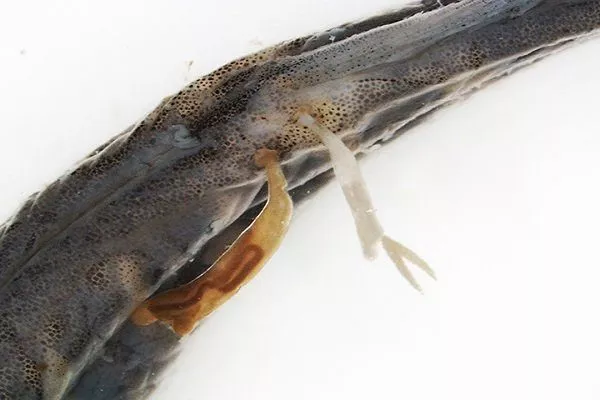
The parasite's peak activity occurs in the summer. Fry and yearlings are the first to become infected. If left untreated, the fish die by the end of the summer.
Treatment is determined by a specialist. The most commonly used medications are:
- purple K;
- malachite green;
- potassium permanganate.
Self-treatment is prohibited. The specifics of treatment depend on environmental conditions and the condition of the crucian carp.
What crucian carp diseases are dangerous to humans?
All infectious diseases of crucian carp are dangerous to humans. Fish diagnosed with the following diseases can cause serious harm to health:
- opisthorchiasis;
- helminthiasis;
- diphyllobothriasis;
- food toxicosis.
General preventive measures
To ensure fish farming is enjoyable and profitable, and to prevent fish from dying, it is recommended to regularly carry out a number of preventative measures:
- expansion of the reservoir area;
- regular cleaning of rotten vegetation;
- water control to prevent oxygen starvation;
- periodic drying of the reservoir or partial change of water;
- treating the bottom with lime or other special preparations;
- continuous diagnostics of the condition of crucian carp.
Crucian carp are often susceptible to various diseases. There are three types of illnesses: non-contagious, infectious, and invasive. Each disease has its own characteristics, but all can lead to mass fish mortality. Not all illnesses are treatable, so preventative measures are essential.