
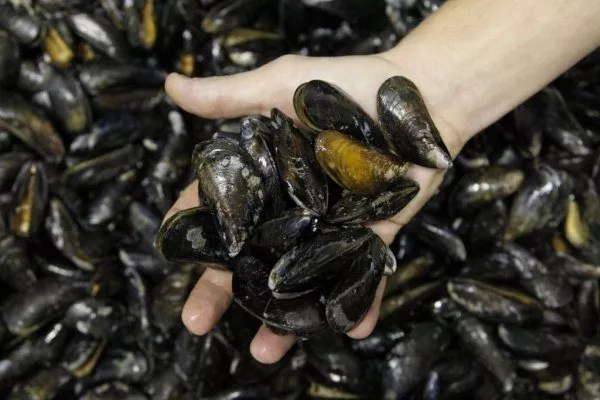
Mussel farming is a popular business that can provide a stable income regardless of the season. Mussels are a delicacy: they are in demand in restaurants and cafes, and are also popular in specialty stores. These mollusks can even be grown at home, using large aquariums.
General information, pros and cons of business
More and more people prefer fish and seafood to traditional red meat, which has a negative impact on health. Mussels contain a large amount of protein and a high concentration of vitamin B. They are also rich in zinc, iodine, and manganese.
The rise of Asian and Spanish cuisines, which often feature shellfish, has also driven increased demand for mussels. This makes mussel farming a promising business opportunity.
Growing mussels is especially profitable for those living near the sea. Water temperatures of 10-12 degrees Celsius are sufficient for spawning.
The advantages of this type of business include the following:
- there is no need to purchase fry - they are washed ashore by the waves;
- there is no need to spend a lot of money on feed: mollusks raised in the sea take their own food from the water, using algae and plankton as food;
- no need for significant labor costs and financial investments for keeping mollusks;
- continuity of production;
- the possibility of complete processing of products;
- the ability to get a lot of mussels at once, as they are prolific: in one season, an adult produces more than 10,000 eggs;
- the opportunity to sell finished products at a high price;
- high demand.
The peculiarity of breeding lies in the imitation of conditions for the growth and development of mollusks in the natural environment.
Business plan
To organize your business, you need to purchase the necessary equipment and develop a detailed plan that takes into account all expenses, income, and payback periods.
In this case, the following expenses must be taken into account:
- rent of a coastal area (if mussels will be grown directly in the sea);
- construction of structures, collectors and carriers;
- Equipment for a mussel processing workshop: it must include machines for blanching and boiling mussels, and washing equipment.
Experts indicate that all expenses for organizing a business, including staff salaries, amount to approximately $20,000.
The business pays for itself in approximately three years, with a return on investment of 20%.
Types of mussels for industrial farming
| A type of mussel | Period of growth to marketable size | Optimum water temperature (°C) | Habitat depth (m) |
|---|---|---|---|
| Regular (edible) | 3 years | 10-20 | up to 60 |
| Giant (Grey) | 4-5 years | 12-18 | 5-20 |
| Korean | 2 years | 15-22 | up to 40 |
| Mediterranean | 2.5 years | 15-18 | 1-20 |
The main types of mollusks that are suitable for breeding on a home farm are the following:
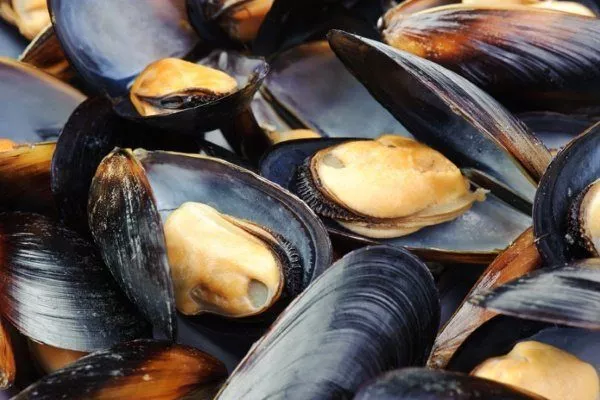
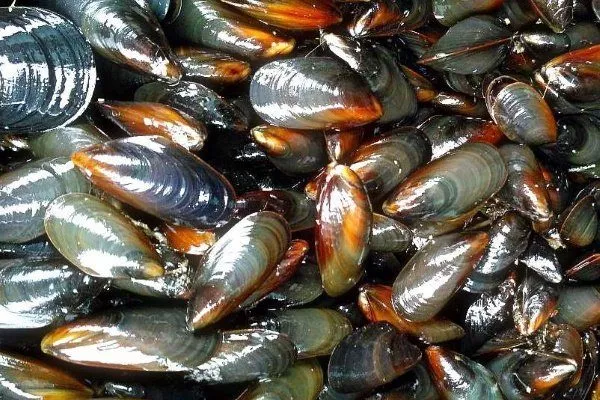
- The common (or edible) mussel. This is the most common type of mollusc. These mussels reproduce year-round. They reach the required market size (5-8 cm) in three years. For their optimal habitat, the water temperature in which they live should be between 10-20 degrees Celsius. They can be found at depths of up to 60 meters.
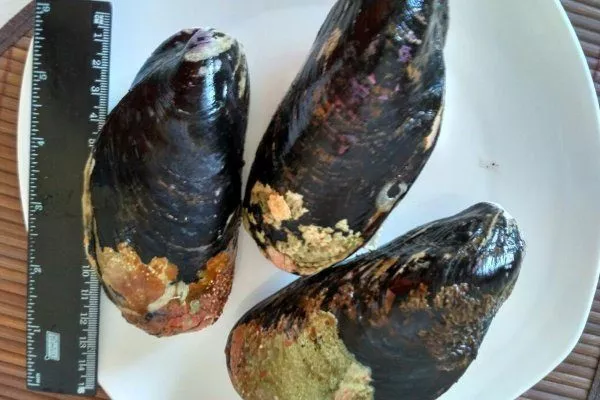
- The giant mussel (Gray's mussel) is large—its shell is approximately 20 cm long, and the shell and all can weigh up to 1.6 kg.
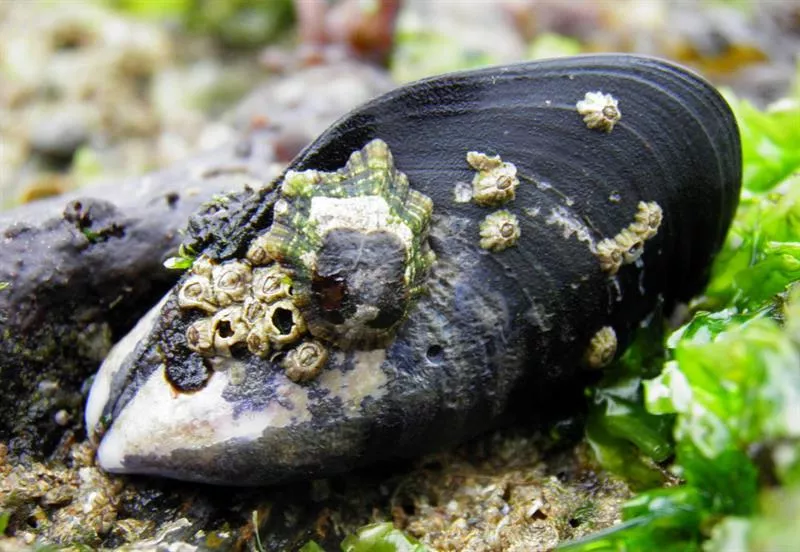
- Korean. Mussels of this species live at depths of 40 meters. They grow up to 5-6 cm in 2 years.
- Mediterranean. These mussels live at depths ranging from 1 to 20 meters. The temperature at which they develop is 15 to 18 degrees above zero.
Common mussel
Gray's mussel
Korean mussel
Mediterranean mussel
It is best to choose one type of mollusks for breeding, since each of them requires specific conditions: temperature, depth, salinity level.
Options for cultivation technologies
Mussels can be bred in different ways: in natural conditions (in the sea), in fresh water, in an aquarium, and even on the ground.
Breeding in an aquarium
Keeping marine mussels in aquariums is difficult; freshwater mollusks thrive best. The aquarium should be spacious and equipped with filtration and aeration systems. To ensure strong shells, the water is enriched with calcium. Chalk and clean limestone are placed on the bottom of the aquarium.
Since the aquarium lacks the microorganisms that mussels naturally feed on, regular feeding is important. Soaked fish food and egg yolks can be used as food sources.
Breeding on soil
This is a simple and cost-effective method. Clams are grown in shallow waters, in pre-prepared areas. They must be protected from parasites and predators.
Mussels are placed in these areas after harvesting. Larvae are collected from May to September.
The young mussels are transferred to rope collectors. Growing continues for approximately 2.5 years. During this time, the mussels reach marketable weight.
Peculiarities of the mussel business when grown in fresh water
To farm mussels this way, you need to select mollusks that thrive in these waters. The water temperature should not fall below 12 degrees Celsius.
To make an artificial collector, old seines are used to save money. They need to be knotted. The collector is secured to a horizontal rope and placed in an elastic casing – this will prevent the mussels from slipping off.
To obtain a "harvest," it's necessary to select the right site in a freshwater body. A specialist with knowledge of mollusc cultivation can help with this.
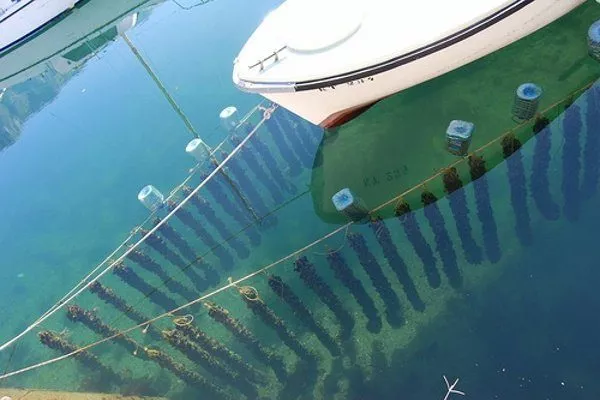
Shellfish farming near the sea
Mussels can also be farmed at sea, in their natural habitat. In this case, you first need to lease a specific stretch of coastline and obtain all the necessary paperwork.
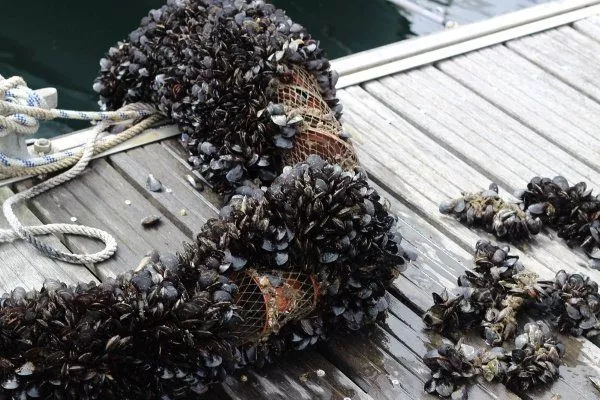
To ensure the production process, a collector must be made. To do this, take a long nylon rope and fold it like an accordion.
Floats are attached to the top, and concrete weights to the bottom. For safety, the collector is lowered to a depth of 1.5 meters. This prevents it from being damaged by ice during the winter.
Styrofoam is threaded between the weights and floats, to which the mussels will attach themselves as they settle.
The collector should be installed in spring or autumn, when the mussels begin their mating season.
The collector height is usually 4-7 m. The recommended installation depth is up to 21 m.
One such collector can yield a mussel harvest of up to 60 kg. To harvest the shellfish, a diver dives into the sea and cuts off the weights. The collected mussels are blanched in boiling water. After this, the shells open, allowing the meat to be easily removed.
When setting up a mussel farm at sea, it's important to select areas with the highest larval concentrations. These areas may be located where cyclonic currents are observed. Additionally, the following criteria should be considered:
- wave load: it must be moderate, otherwise the collectors will be carried away by a strong current;
- environmental safety: mussel farms should not be located near industrial plants that discharge toxic waste into the sea;
- relief character: the bottom of the area where mussels will be bred should be flat, without any noticeable differences in elevation.
It's important to note that not all of the Sea of Azov offers the conditions necessary for mussel farming. The Black Sea is the best location for a farm. This is because most of the Sea of Azov has insufficiently saline water.
The Black Sea coast has a natural food source for mollusks.
Annual work plan for marine farming
- January-March: Collector Preparation
- April-May: Installation of collectors
- June-August: Control of larval settling
- September-November: Cleaning collectors from fouling
- December: Winter Monitoring
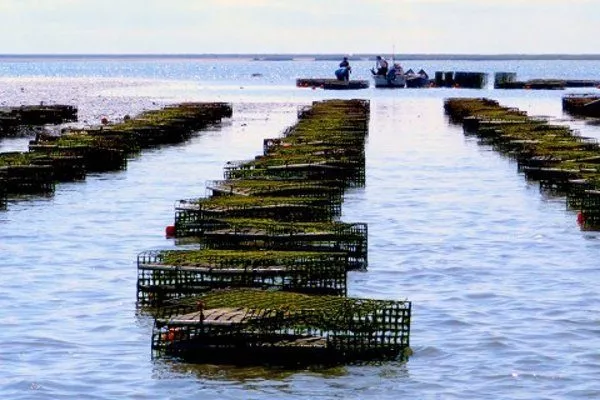
Methods of product sales
The first "harvest" of mollusks is collected a year after the larvae attach to the artificial collector. Within a year, the mollusks will reach marketable size – 6-7 cm. They are harvested between July and October.
Demand for mussels is growing. Large customers will include restaurants and cafes, as well as fish and seafood stores. Another option for selling mussels is opening your own market stall and selling the shellfish at retail prices.
As practice shows, wholesale sales of shellfish are more profitable than retail sales.
| Distribution channel | Average price per kg ($) | Minimum lot size | Packaging requirements |
|---|---|---|---|
| Restaurants | 8-12 | 5 kg | Ice glaze |
| Fish markets | 6-8 | 10 kg | Vacuum packaging |
| Processing plants | 4-5 | 100 kg | Without shells |
As the business grows, you can expand your operations and open a canned food production facility. This will also be in demand due to its long shelf life.
To reach as many people as possible with your product, you'll need to invest in advertising. You can create your own website and use it to inform potential buyers about all current offers and prices.
Some farmers use zero-waste production methods to maximize profitability. For example, they use waste to make biologically active supplements (mussels contain numerous microelements and nutrients), sauces, and caviar substitutes.
Raising mussels on a home farm is a profitable business that requires a significant initial investment. It is highly profitable due to the demand for these shellfish. Mussel farming can be organized in a variety of ways, including in seawater, freshwater, and even on the seabed.