
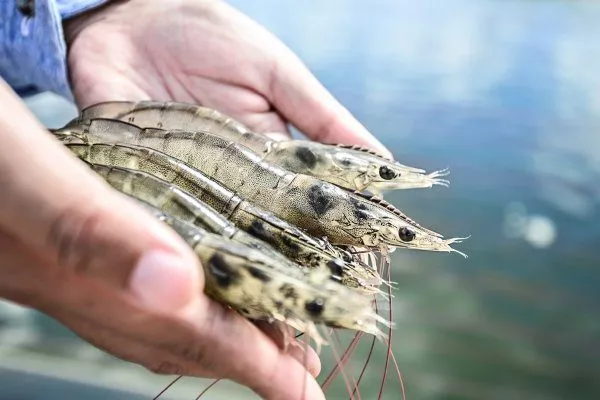
Shrimp farming is a popular hobby in various fields. They are much easier to maintain than many fish species, considering the resources required. However, creating favorable conditions for shrimp reproduction is crucial, as without proper care, breeding these crustaceans is a lost cause.
Care Features
Depending on the species, shrimp can live from 12 to 18 months, or up to two full years if purchased from professional breeders. However, if improperly cared for, have a poor lifestyle, or are kept in poor conditions, they will live for six months at best.
To successfully breed shrimp, anyone needs to know the basic features of their care.
1To start with, a regular aquarium or a small pool is enough.
Consistently successful shrimp breeding (especially dwarf shrimp) can be achieved even in aquariums or small pools. This is a key advantage when breeding.
Shrimp occupy the lowest level of the food chain, meaning they serve as food for all other marine life, and they themselves feed on the remains of fish food, dying plants/algae, and other microorganisms.
Due to their minimal breeding and life requirements, a 55-liter aquarium or plastic pool will suffice for shrimp. However, even though the tank size may be minimal (relatively speaking), it's important to observe and maintain certain conditions. Otherwise, the shrimp will die faster than the owner realizes.
2Monitor the temperature
Shrimp absolutely need a constant temperature, otherwise they will not grow and reproduce normally.
The ideal temperature for shrimp is 22-28 degrees Celsius above zero. At this temperature, the shrimp are most active, eager to reproduce, and their growth is unimpeded.
If the temperature drops below 20-22 degrees Celsius, the shrimp will feel uncomfortable and become rather passive. At higher temperatures, they will die or suffocate due to a lack of oxygen (aeration won't help in such conditions).
Temperature also directly affects young individuals, who are not adapted to survival in similar conditions as older individuals.
3Check the pH of your water regularly.
Water should have a neutral pH balance and not exceed 9.0.
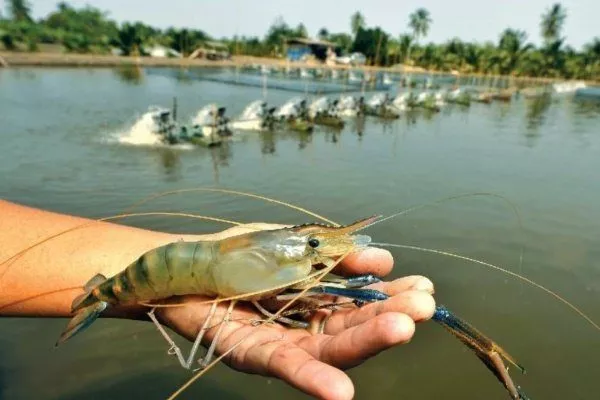
Shrimp also require virtually no saltwater, as they adapt well to freshwater conditions. The Malaysian rainbow shrimp thrives best in freshwater, but the breeder is free to choose which shrimp species to use. The main thing is that the shrimp adapt to the conditions, and the rest is easy.
4Shrimp need oxygen and water with low levels of hazardous substances.
The oxygen content in water (as well as some other substances) must meet the requirements necessary for breeding.
To make sure your shrimp feel as comfortable as possible, you will need:
- oxygen content – 5-6 mg/l;
- nitrites – 0.25 mg/l;
- nitrates – 1.5-3 mg/l.
Critical water parameters
| Parameter | Optimal value | Critical threshold |
|---|---|---|
| Temperature | 22-28°C | Below 18°C / Above 32°C |
| pH | 6.5-8.0 | Below 5.5 / Above 9.0 |
| Oxygen | 5-6 mg/l | Less than 3 mg/L |
| Ammonia | 0 mg/l | Above 0.25 mg/L |
| Nitrites | 0 mg/l | Above 0.5 mg/L |
Shrimp are arthropods that are critically sensitive to nitrogen and free chlorine in water. Therefore, even a slight excess of the maximum permissible levels will cause a massive collapse of the shrimp population in record time. Within two days, the breeding operation will be abandoned, and new shrimp will have to be purchased.
5Perform water changes regularly
Shrimp require regular water changes. This should be done once a week, at a rate of 15-20% of the total volume of the tank where the shrimp are being raised. It is highly recommended to thoroughly filter this water before changing it (as well as the water that will initially be added to the aquarium/pond containing the shrimp).
For filtration, it's best to use a multi-stage filter, a recirculating aquaculture system (RAS), and an ozonizer. The key goal is to remove as many suspended solids and harmful pathogens as possible from the water.
The RAS can be replaced with an ozonizer or vice versa, but passing the water through the filter is a mandatory condition.
Before introducing the post-larvae into the water, you'll need to thoroughly aerate the water (to provide oxygen). This is best done 5-7 days before introducing the larvae into the pond.
As for seawater, after purification, it is necessary to dissolve sea salt in it (at a rate of 15-25 kg per 1,000 liters). Only special salt, artificially created for such purposes, is suitable. Its composition will be as close as possible to ocean salt with its ionic composition.
In swimming pools, water doesn't need to be changed—it should only be added as it evaporates. This applies to both fresh and seawater.
Water also needs to be regularly purified to remove ammonia compounds. This should be done using biological filtration (special biofilters).
6Shrimp need gradual acclimatization
Post-larvae are transported in cool water, thus reducing oxygen consumption. Therefore, extreme caution should be exercised when introducing the larvae into the main tank: the sudden temperature difference will prevent adaptation, which is very bad. To avoid wasting money on a second post-larva, it's important to approach the transfer process with extreme caution.
7The food must be nutritious
Shrimp are incredibly selective eaters. While feeding, they seek out the tastiest morsels of food. This zeal even extends to these cunning arthropods waiting for their food to swell in water so they can more easily find the most nutritious and delicious bits.
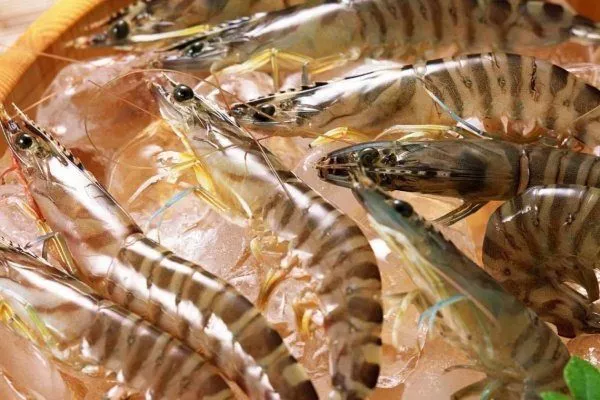
Shrimp feed manufacturers strive to improve the density and composition of their feeds to ensure maximum absorption. Good imported feed costs an average of €3 per kg. Key components should also be considered: fishmeal is essential in high-quality feed, and its total content should be at least 25%.
The process of breeding individuals
Knowing all the nuances of keeping shrimp at home, it becomes clear that shrimp require very few resources, but the conditions they provide must be first-class. To begin breeding these crustaceans, you'll first need:
- aquarium/pond/pool (optional), etc.;
- constant maintenance of the required temperature in the water (heaters);
- continuous oxygen supply (good aeration);
- shrimp food (the higher its quality, the better for future breeding);
- high-quality and proper processing of waste products (biofilters).
Compatibility Tips
- ✓ Minimum volume for 20 individuals is 40 l
- ✓ Use soil with a fraction of 2-4 mm
- ✓ Add Java moss for hiding spots
- ✓ Maintain 10-12 hours of daylight
- ✓ Place feeders in different areas
Work plan by seasons
- April: Larval release, temperature control
- May-June: Intensive feeding (4-5 times/day)
- July-August: Sort by size
- September: Selection of producers
- October: Preparing for Winter
Comparison of breeding containers
| Type | Volume | Pros | Cons |
|---|---|---|---|
| Aquarium | 40-200 l | Parameter control | Limited capacity |
| Plastic pool | 500-2000 l | Cheapness | Complex heating |
| RAS | 1000-5000 l | Automation | High cost |
| Natural reservoir | Unlimited | Minimum costs | Lack of control |
Shrimp live on the bottom, so the optimal depth of the pond is considered to be no more than 1.5 meters. Good lighting is also especially important, otherwise the individuals will become extremely passive.
Breeding can be done from April to October—this is the ideal time for raising fry and selling adults. However, if the pond is indoors or not on a property (but rather inside), breeding and selling adults can be done non-stop.
But to achieve this, it's crucial to adhere to all agreed-upon conditions to successfully maintain the shrimp's growth rates. This means a constant supply of electricity, heat, food, and so on.
If you're using a breeding aquarium (20-30 individuals maximum), it's more practical to breed dwarf shrimp or ornamental shrimp (for sale to pet stores). This is due to cost-effectiveness: 100 adult shrimp will yield a much higher profit for the owner than 25, as they can be sold in bulk, for example, to stores, restaurants, and the like.
It's important to note that no other fish should be kept in the same pond with shrimp. They will happily feast on the young, which will deplete the shrimp population. Predatory fish are especially dangerous, but it's best to avoid them altogether. This is purely for the safety of the larvae and fry, especially since the shrimp don't suffer in any way if they're alone in the pond.
But if the individuals begin to reproduce too actively, then something must be done about it: the shrimp will begin to eat each other even with a sufficient amount of food.
Experience shows that shrimp farming is difficult and expensive, but success can still be achieved through trial and error. Watch a report about a successful shrimp farm in Volgograd:
These are the key points of shrimp breeding. The process isn't complicated; it's just important to approach the care of the shrimp with the utmost care. If all the key conditions are met, especially water temperature, the shrimp will begin to reproduce and delight their owner with a large number of offspring.