
Crayfish are considered a tasty and desirable food. In the summer, it's possible to catch them yourself. But not everyone knows how. There are many ways to catch crayfish, all of which will be discussed in this article.
- ✓ Availability of clean water without signs of chemical contamination.
- ✓ The presence of a rocky or sandy bottom, which indicates favorable conditions for crayfish to live.
- ✓ Absence of strong currents, which can make catching crayfish difficult.
Crayfish habits
Crayfish prefer clean water. Finding a body of water where they are present indicates a clean environment. Crayfish are a desirable prey, no less popular than fish. Everyone enjoys their taste; they are a popular snack with beer. They are also used as bait for fishing.
A large specimen, without claws, can reach up to 20 centimeters in length, and an adult weighs between 150 and 200 grams. Catching such a crayfish is a stroke of luck. In most cases, crayfish anglers manage to catch medium-sized specimens—10-12 cm in length.
Crayfish habitats
Crayfish are considered solitary. They prefer to live on rocky bottoms, where they can easily find a secluded spot, or on non-muddy surfaces, where they can easily dig a burrow. Crayfish burrows are located near the shore; they are narrow dwellings with a long corridor, no more than 1 meter long.
During the day, the crayfish remains in its burrow, blocking the entrance with its claws. It emerges to search for food at night or in the afternoon on cloudy days. Its specific circumstances are taken into account when hunting.
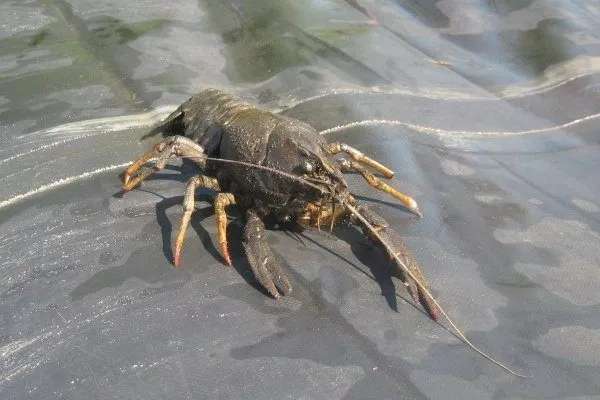
The most successful places for catching crayfish are considered to be:
- Shell rock. This is a place where crayfish often settle.
- Thickets of reeds. There are no people swimming there, and there are no animals, so the crayfish can easily make their home.
- Sandy bottom. It's an ideal fishing environment. The clean bottom and fine sand make it easy to spot your prey.
- A quiet backwater with snags and tree roots. It is very convenient for the crayfish to hide here, but it is also easy for the crayfisher, who easily navigates the area, to catch it.
- Rocky bottom. This is where crayfish make their burrows, so you can find a lot of prey.
Time
Knowing the right time to catch crayfish is essential for every crayfisher who decides to go hunting. This is essential to avoid wasting time. Crayfish are best caught during the hours of darkness, when they are hunting for prey—from 10:00 PM to 3:00 AM. There are also bodies of water where crayfish emerge to forage early in the morning.
It's difficult to give a definitive answer as to when to catch crayfish, as different regions have different seasons. It's generally believed that delicious crayfish can be caught in the fall. From late August to late October, crayfish produce the most delicious and fatty meat. However, catching crayfish in the spring during spawning season is prohibited by law.
When is it prohibited to catch crayfish?
Crayfish harvesting bans in different regions of Russia are determined by the relevant government agency. Below are some examples of freshwater fishing restrictions:
- Crayfish are not caught from April to June, as it is prohibited by law. This is spawning time.
- It is completely forbidden to catch arthropods in Krasnodar and all surrounding rivers.
- From October to June, a ban on crayfish fishing is in effect in the Vladimir region.
- From October to June, crayfish hunting is prohibited in the Kirov region.
- In the Moscow region and surrounding areas, year-round crayfish fishing is not possible.
- In the Orenburg region, a ban on catching arthropods is in effect from June 5 to July 15.
- In the Kursk region, hunting is prohibited from the beginning of October until the end of June.
- In the Pskov region, catching arthropods is prohibited from the moment the ice melts until mid-July.
Fishing methods
Due to the popularity of catching crayfish with nets today, other fishing methods are rarely used or even forgotten. However, there are many options for catching these arthropods. Not all methods are easy, but that's precisely what makes crayfish hunting so interesting and exciting.
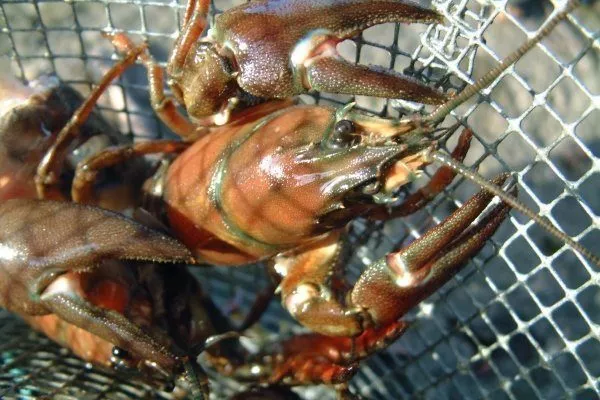
Crayfishing with a crayfish trap
Catching crayfish by hand is prohibited by law, so it's recommended to use a crayfish trap, which is fairly easy to use. Several types of crayfish traps are typically used simultaneously to increase the chances of catching crayfish. The traps are designed to trap the crayfish and prevent them from escaping. To encourage them to enter, bait is used to attract the crayfish.
Since crayfish prefer to burrow in steep, cliff-like banks to build burrows, the structure is installed near the banks. This is how it's done:
- They take a long, strong stick with a slingshot at one end.
- The cord from the crayfish trap is hooked with a slingshot to raise the structure.
- The crayfish trap is slowly lowered into the water until it touches the bottom.
- The cord is tied to reeds, a stick stuck into the bank, or any strong tree.
At night, crayfish come closer to the shore, so you shouldn’t cast your crayfish trap too far.
How to fish with a fishing rod?
This option isn't easy, as crayfish aren't fish; they don't just bite bait. Moreover, attaching bait at night is difficult. For these reasons, there's only one solution: fishing for crayfish with a rod during daylight hours, but closer to sunset. Recommended bait includes earthworms, dung worms, rotten meat, or fish. The best time to fish for crayfish with a rod is from September to October.
It's easier to catch crayfish with a classic fishing rod during feeding season. For a bigger catch, it's best to tie several hooks to the rod at once, which will increase the chance of getting multiple bites. While crayfish bite very slowly, the crayfish will sense a bite immediately: the crayfish grabs the bait and tugs it, with the float first moving smoothly to the side, then sinking and disappearing into the water. Because the crayfish's grip on the bait is not very strong, the rod is pulled in carefully.
Screen efficiency
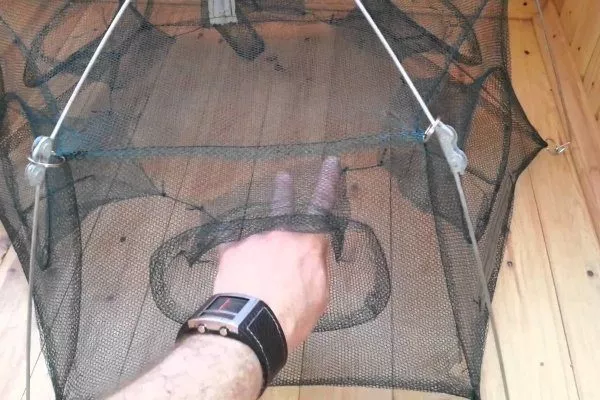
A popular way to catch crayfish is with a screen, which is a round or square structure with sides that prevent the crayfish from falling out when removed from the water. Two to five screens are sufficient for a good catch. The design of a screen is similar to a regular crayfish trap, but it is rectangular.
Take steel wire, make two squares, and secure them 20-30 centimeters apart. Then, cover the bottom and sides of the screen with mesh. Crayfish will crawl in through the open top to retrieve the bait. The screen is tied to a thick pole, which will act as a fishing rod. Bait is placed in the center, and the screen itself is carefully positioned in the water.
What to feed the crayfish?
Crayfish bait is selected based on the season. In spring and summer, plant-based baits are effective. In fall and winter, crayfish are lured with animal-based bait. The following are used for this purpose:
- meat trimmings, poultry or fish entrails;
- fish;
- worms;
- shellfish;
- frogs;
- meat;
- snails.
Fish can be used fresh or slightly spoiled. To enhance the bait's aroma, it is first sun-dried. Crayfish prefer bream, roach, and crucian carp. For meat bait, poultry or a piece of beef are preferred. The use of stale meat is acceptable. Frogs, snails, and mollusks are best caught in the same body of water where you plan to catch the crayfish. Worms are a last resort; they are placed in cheesecloth to prevent them from crawling.
From plant foods, the following are considered effective:
- corn;
- dill;
- peas;
- black bread;
- oil cakes;
- garlic.
Peas and corn are pre-boiled, steamed, or used canned. The season is taken into account when choosing bait. As cold weather sets in, arthropods are lured with rotten meat or peas. In the spring, fish or plant-based bait is used. In the summer, during extreme heat, a piece of liver, meat, or chicken giblets is considered the best option. A little fish oil is added to enhance the scent.
Choosing the right location for crayfishing is equally important, as it will allow you to select the right bait. For example, when fishing for crayfish in ponds with muddy bottoms, spoiled fish are used as bait. For the arthropods that inhabit such environments, this is considered a natural food source. They will crawl into the trap without realizing the danger. If the bottom is heavily planted, crayfish fishermen choose peas or corn as bait.
If hunting in underwater caves or near the shore, it's advisable to use bait with a strong aroma, such as spoiled meat or a mixture with added garlic. In shallow water, corn, worms, or shellfish are effective.
The best bait for catching crayfish is considered to be homemade bait. Several effective recipes used by experienced crayfish fishermen are available:
- Garlic bait. Grate or crush the garlic. Cut the rye bread into pieces and lightly fry in oil (optional). Press the garlic into the bread and rub it on the crust. Garlic balls are equally delicious. To make them, mince both the garlic and the rye bread, forming the resulting mixture into small balls. Place them in nylon or cheesecloth bags to prevent them from becoming soggy in water.
- From the cake. Cut the pressed sunflower seeds into medium-sized pieces, then add fresh or dried dill and rye bread. Mix thoroughly and add the mixture to the cheesecloth.
- Fish bait. Before preparing the bait, fish are caught from a body of water where arthropods are found. Fresh-frozen store-bought fish can also be used. An incision is made along the backbone, squeezing out or puncturing the fish's air bladder. The scales are lightly picked at, and in the case of crucian carp, they are completely removed. Small fish are used whole, while larger ones are cut into pieces.
Read more about feeding crayfish, their diet and bait – read here.
Helpful tips
Experienced crayfish fishermen recommend using some tips that will help when catching crayfish.
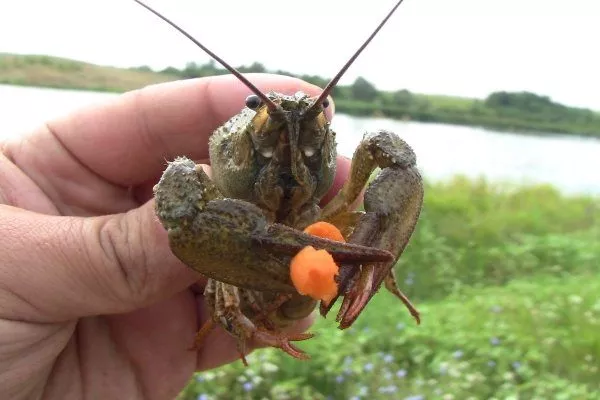
You need to know the following features:
- Crayfish have a highly developed sense of smell, which is why they use baits that emit a particularly strong odor. The smell of garlic is particularly attractive to crayfish. Many crayfish fishermen rub a piece of brick with garlic and then place it in the trap. After a while, the crayfish are sure to be attracted to the garlic aroma. If the smell isn't strong enough, especially with plant-based baits, it's recommended to flavor them with garlic juice.
- The best time to catch crayfish is from July to December, when the arthropods gain weight and females begin laying eggs. Animal-based bait is used. Another option is to rub bread with garlic, wrap it in cheesecloth, and place it in the trap.
- The bait (except for shellfish) is firmly secured to the bottom of the crayfish trap. A nylon pocket is sewn into the bottom of the trap. Sometimes, a large bait is used, secured with a rubber band.
- When using fresh fish as bait, it is first cut lengthwise. This is necessary to attract arthropods with the scent of the fish's flesh and blood.
- It's recommended to go crayfishing in areas where ponds are located near poultry farms. These ponds often contain waste from meat production, which can lead to large numbers of crayfish.
Crayfishing is considered a very interesting and exciting process, as it awakens the fisherman's passion and desire to catch as many as possible for a delicacy to enjoy. Knowing where and when crayfish are found, as well as what traps and bait to use, will ensure your success.