
It is not uncommon when crayfish breeding The question arises: what do crustaceans eat? Feeding crayfish is a responsible process that requires a serious approach. After all, the arthropods' immunity, taste, and future development depend on what they eat. Crayfish cannot be fed just any food. This article covers all aspects of feeding crayfish.
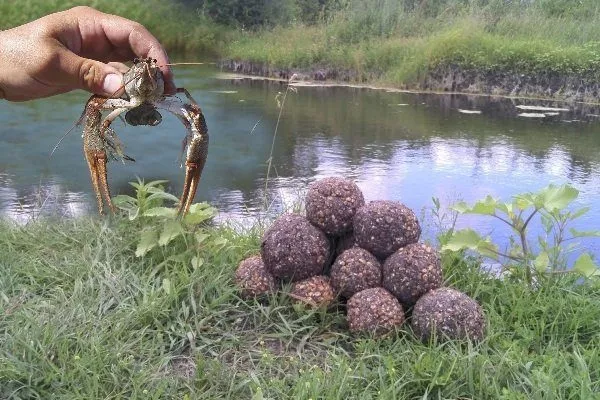
Feeding Features
When it comes to feeding crayfish kept in an aquarium, pool, or specially created pond, it is important to know a few rules and features:
- It's recommended to feed arthropods in the evening. In the wild, they begin searching for food after dark.
- During breeding and molting periods, crayfish eat in greater quantities, as their bodies begin to expend energy much more quickly.
- If fed an improper or unbalanced diet, crayfish are prone to cannibalism, especially during molting. Crayfish should be kept in a spacious, open area with several hiding places.
- The daily diet of young crayfish is much higher than that of adults.
- Crayfish are capable of leaving their habitat in search of food. It is necessary to create conditions in which the arthropods cannot escape.
- Different feeding schedules are established for females and males. A female crayfish can consume food once every three days, while a male crayfish requires feeding once every two days.
- After molting, do not remove the remaining shell - the crab will later eat it, as it is rich in calcium, which promotes rapid recovery of the body.
Crayfish that eat a proper and balanced diet grow rapidly and are less likely to try to escape from their habitat.
Types of feed
Crayfish are completely omnivorous creatures. They are fed both plant and meat-based foods. In the wild, they spend most of their time in shallow waters foraging for food, where they feed on a variety of mollusks, small fish, tadpoles, worms, and insects. Among plant foods, crayfish prefer water lilies, elodea, and pondweed. Overall, plant matter accounts for up to 90% of the arthropod's diet.
| Type of feed | Feeding period | Benefit | Recommendations |
|---|---|---|---|
| Plant-based feed | All year round | 90% of the diet is rich in fiber | Water lilies, elodea, and pondweed are preferred. |
| Animal feed | 2 times a week | Proteins for growth | Bloodworms, pieces of squid, fish |
| Industrial feed | As needed | Balanced nutrition | Select based on water pollution and balance criteria |
Preparing your own feed
Homemade crayfish food should be similar to what they are used to eating in the wild. Animal food can be replaced with bloodworms, pieces of squid, fish, shrimp, or lean meat.
When preparing a diet for crayfish, animal-based foods should be provided no more than twice a week. Many crayfish breeders claim that meat-based foods trigger aggressive behavior in crayfish.
From plant food, crayfish are fed the following products:
- zucchini;
- lettuce leaves;
- cucumbers;
- Chinese cabbage;
- spinach;
- carrots (contains keratin, which helps to significantly enhance the color of crayfish);
- hornwort (the plant should be located in the area where the crayfish live).
When planting plants in an aquarium or pond, it's important to be extremely careful, as they are often treated with insecticides, which can cause massive deaths of arthropods.
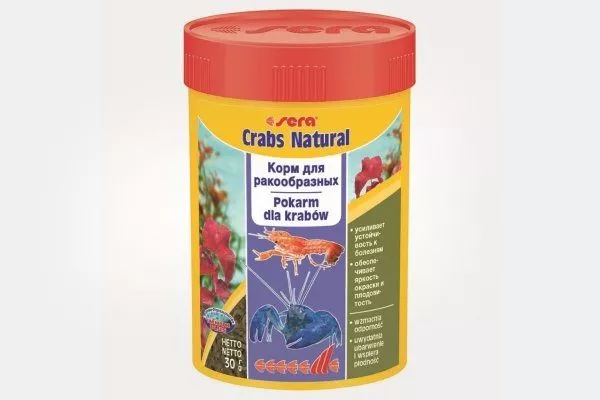
Industrially produced feed
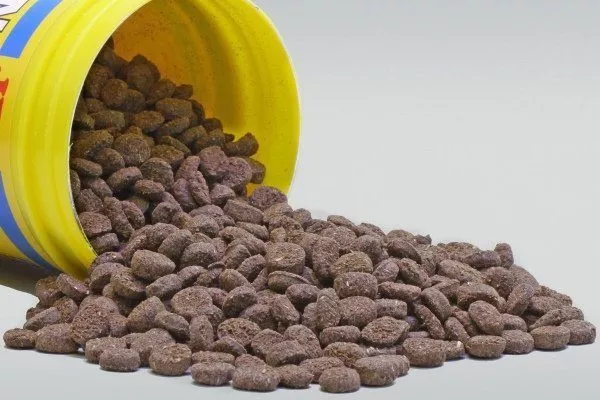
Industrially produced feeds are produced in granulated form of different sizes, and can be in the form of flakes or sticks.
Regardless of which option is preferred, the food must meet the following criteria:
- do not pollute the water in the pond;
- ensure a balanced diet;
- maintain the natural color of the shell;
- facilitate the process of changing the shell.
- ✓ Does not pollute water
- ✓ Provides balanced nutrition
- ✓ Maintains shell coloration
- ✓ Facilitates shedding
Specialty stores may offer food types designed for specific periods of crustacean life. For example, specialists often use foods designed to stimulate reproduction or strengthen the immune system of young fish.
Feeding the young
Juveniles are fed differently than adult crayfish. They are fed small daphnia, fish fry food, vinegar nematodes, crushed tubifex, and brine shrimp.
When feeding small daphnia to crayfish, it is recommended to first scald them with boiling water, as they are very active when alive, making it difficult for the little crayfish to catch them.
Young crayfish require more food than adults. For this reason, they search for food day and night. They feed on detritus—the natural breakdown product of various organic matter. For example, in an aquarium with constantly filtered water, detritus is very low.
Fallen tree leaves are often used as a substitute. Dried oak, alder, and beech leaves are preferred—they are an excellent source of valuable food that not only promotes the development of their digestive system but also helps rid them of parasites. Crayfish eat leaves very quickly in an aquarium, so they need to be replenished regularly.
It is prohibited to use freshly picked leaves for adding to an aquarium, as they have the ability to release toxins into the water.
Feeding adult crayfish
Adults prefer minced meat from warm-blooded animals and fish, frogs, and tadpoles. Before molting, crustaceans should be fed crushed small mollusks, with the bivalve shells thoroughly crushed.
Kitchen scraps are used for feeding, including meat scraps, vegetable peelings, bread scraps, and other items. If the scraps are not entirely fresh, they are boiled first.
It is unacceptable to use heavily decomposed food for feeding, as this can cause widespread disease in crayfish.
Cooked grains, especially round ones (corn, peas), should be mashed before feeding to the crayfish, otherwise it will be difficult for them to grasp them with their claws. Food should be placed in shallow areas at night. Feeding should be done so that the crayfish consumes everything. It's important to monitor food consumption by running a net along the bottom. Feeding should be done sparingly in ponds, especially if they are fed animal feed.
If food remains, the owner should reduce its amount or stop feeding the crayfish altogether for a while. When food remains rot, the pond becomes contaminated, causing the arthropods to suffer from various diseases. diseases, leading to their death.
Feeding begins in April with a ration of 0.5% of the crayfish's live weight, increasing it in warm weather after molting and during periods of intensive growth to reach 2-2.5% of their live weight. During molting, feeding is stopped for several days. When the weather turns cold, the crayfish are not fed or are fed at reduced rates in dense stockings. In winter, feeding should be done carefully: during this period, their nutritional requirements are low, but they require occasional supplementation.
A properly balanced diet will ensure the arthropods' good health. It's important to approach feeding your crayfish responsibly. Avoid feeding crayfish random foods or foods of questionable quality.
Diet during the molting period
Molting is a normal occurrence for crayfish. Throughout their lives, crustaceans grow, but their hard chitinous shell prevents this from happening. Crayfish need to shed their shell regularly. During molting, the arthropods become inactive and spend most of their time in hiding. If you see only a shell instead of a crayfish, don't be alarmed; this is a natural process.
The chitinous covering isn't removed—the crayfish will eat it. After molting, young crayfish require a lot of calcium, which promotes rapid restoration of the new covering. During the early stages of their life, arthropods molt 5-6 times. After several years, molting occurs several times a year. The process itself lasts only 2-3 minutes. The new covering is completely restored within 1-1.5 weeks.
- Increase the food volume by 4 times before molting.
- Use specialized feed.
- Include calcium-rich foods in your diet.
Before molting, the feeding volume or frequency should be increased approximately fourfold. Specialized food is permitted for feeding crayfish.
It is also recommended to feed the following products:
- pasta;
- shrimps;
- carrot;
- fish;
- porridge;
- worms;
- snails;
- meat;
- bloodworm;
- tubifex;
- coretra;
- daphnia;
- gammarus.
Arthropods will also enjoy a diet consisting of cabbage, lettuce leaves, peas, parsley, zucchini, nettles, spinach, frozen vegetables, tree leaves, and even dry food for aquarium fish.
Crayfish feeders
Various feeders are used to feed aquarium crayfish. A wide variety of options are available commercially. However, most feeders are made at home.
The simplest crayfish feeder is a small, fixed platform made of any non-toxic plastic. Aquarium stores offer attractive leaf-shaped feeders and many other options.
How to feed crayfish when catching them?
Crayfish bait is selected based on the season. Plant-based baits are effective in the spring and summer. In the fall and early winter, animal-based baits are used to feed the arthropods. The following are used:
- meat trimmings;
- fish;
- fish and poultry entrails;
- shellfish;
- worms;
- snails;
- frogs;
- meat.
Fish is served fresh or slightly spoiled. To enhance the flavor, it is lightly sun-dried. Crayfish prefer roach, crucian carp, and bream. Poultry or whole meat is a good choice. It should also be used stale. Mollusks, snails, and frogs are caught in the same body of water where the crayfish are being caught. Worms are used very rarely, unless there are no other options: they are placed in a piece of thin gauze to prevent them from spreading.
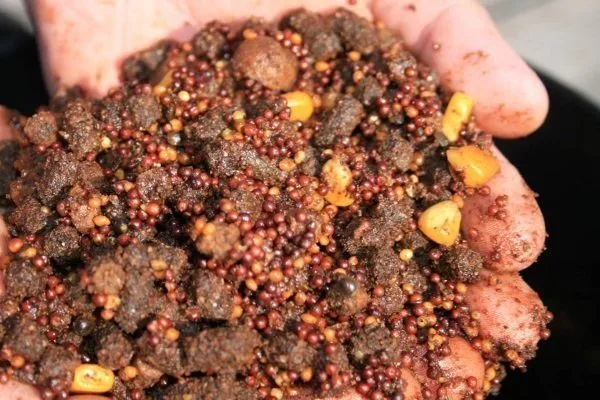
The most effective plant baits include corn, dill, peas, black bread, oilcake, and garlic. Peas and corn can be boiled, steamed, or purchased canned. Crustaceans are attracted to the aroma of garlic, so it's recommended to add it to other foods.
When choosing bait, take into account the time of year:
| Season | What to feed? |
| Summer | They are fed with a piece of liver, meat, or chicken giblets. Fish oil is added to enhance the aroma. |
| Spring | They use plant bait or fish, which are first cut along the spine, turned inside out and left in the sun to spoil. |
| Winter and autumn | It is recommended to use rotten meat or peas. |
Habitat is also very important. When hunting in bodies of water with a muddy bottom, it's advisable to use rotten fish as bait. This is a natural food source for crayfish, which thrive in such conditions. The critters will crawl into the "trap" without suspecting anything. If the bottom is heavily planted, peas or corn are more effective.
When fishing in underwater caves or near the shore, bait with a strong scent of garlic or spoiled meat is used. In shallow water, experts recommend using worms, shellfish, and corn as bait.
What does crayfish eat in the natural environment?
Crayfish have an excellent sense of smell. In the wild, they can detect rotten fish faster than fresh fish, as the latter has a distinct odor as it decomposes. In rivers, crayfish are often seen fighting over old fish carcasses.
Their vision is equally well developed. When they see something red, they'll definitely want to taste it, mistaking it for a piece of meat.
Crayfish are prone to eating algae rich in lime. They need it for healthy shell growth, especially during molting, when they shed their old "armor" and grow new ones.
Crayfish need the following algae:
- Elodea;
- Characeae plant species;
- Hornwort.
Only crayfish feed on these plants, as they contain lime, which gives the arthropods a hardening effect they enjoy. This is important to consider when feeding crayfish at home – it's advisable to increase the amount of lime in their food.
In addition to plants, they feed on a variety of aquatic life, including various types of invertebrates, such as daphnia and cyclops. They also feed on larvae, tadpoles, snails, and worms.
It is recommended to cultivate phytoplankton and zooplankton in the pond. Crayfish respond favorably to such a presence. These species serve not only as food for the crayfish but also as prey for their prey.
Feeding crayfish is a responsible task, as proper nutrition and diet composition ultimately determine the weight of the arthropods and their subsequent profitability from sale. Following proper feeding guidelines will accelerate growth and reproduction and keep the crayfish active.