
Crayfish, like other marine and freshwater arthropods, are susceptible to disease. Most often, illnesses are caused by pathogenic fungi, parasites, and various microorganisms. The well-being of crayfish depends on responsible and vigilant human care.
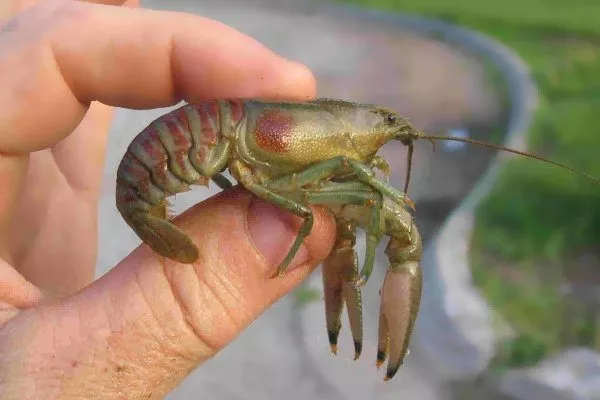
Viral diseases of crayfish
Viral infections in crayfish are rare. However, viral diseases are currently incurable. All a person can do is prevent a single individual from infecting the entire aquarium.
Bacillary infection
The essence and the reason. A disease of Australian blue crayfish caused by a bacillary virus that enters the arthropod's body through water or contaminated food. It affects the internal organs.
Signs:
- the affected cancer becomes sluggish and weakened;
- weakly reacts to external stimuli;
- If you lay a crustacean on its back, it will not be able to turn back over.
Prevention:
- If a crayfish exhibits the above symptoms, it should be immediately removed from the general tank. This will not save the infected crayfish, but will prevent the virus from spreading to healthy individuals.
- Prevent the spread of infection to the offspring by separating the eggs from the female at the stage of eye formation, followed by sterilization of the eggs and hatching the offspring in a clean, uninfected aquarium.
- Purchase crayfish, food, and other aquarium equipment only from trusted suppliers.
- After acquiring new specimens, don't immediately place them in a new aquarium. First, quarantine them for 3-4 weeks.
- ✓ Positive reviews from other buyers
- ✓ Provision of documents on the health of individuals
- ✓ Cleanliness and conditions of crayfish keeping at the supplier
Currently, information regarding viral diseases of crustaceans is of a reference nature. However, scientists are intensively conducting research to develop a cure for these viruses.
Giardia-like infection
The essence and the reason. Viral infection can occur immediately after molting in young crayfish. The infection affects the hepatopancreatic system.
Signs and prevention diseases similar to bacillary infection.
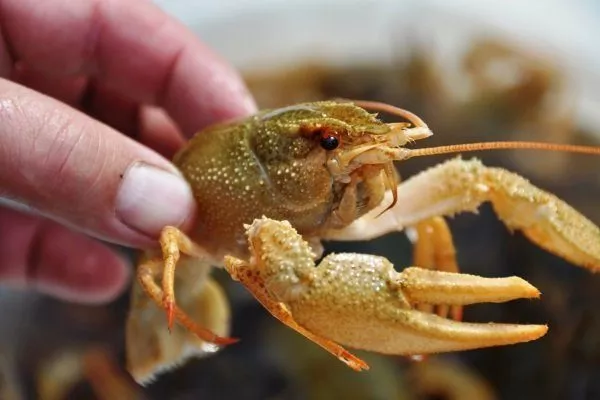
Systematic parvo-like infection
The essence and the reason. Another disease common to Australian crayfish. Affected individuals die quite quickly from necrosis of connective tissue, internal organs, muscles, and gills.
Signs. In addition to the already listed signs of a viral infection, another one is added: through the surface of the abdomen, which becomes transparent during the disease, one can discern cloudy, opaque muscles.
Preventive measures The same ones are used as for other viral diseases.
Fungal diseases of crayfish
Crustaceans are often susceptible to diseases caused by pathogenic fungi. This type of disease is often untreatable.
Crayfish plague
The essence and the reason. A disease caused by the Saprolegnia fungus, which inevitably leads to death. Infection occurs through any object that has come into contact with a cancer patient. The disease is also known for its rapid spread and rapid progression.
Signs:
- brownish-red spots appear on the muscles of the tail;
- the shell is covered with black spots (in the area of the paws and the lower part of the abdomen);
- White spots may appear if the water in the aquarium is at a high temperature;
- crayfish begin to show vigorous activity during the day, although they usually lead a nocturnal lifestyle;
- are making attempts to get out;
- the arthropod's gait begins to look as if it is walking on stilts;
- after some time, the crayfish stop trying to move at all and fall onto their backs;
- convulsions appear.
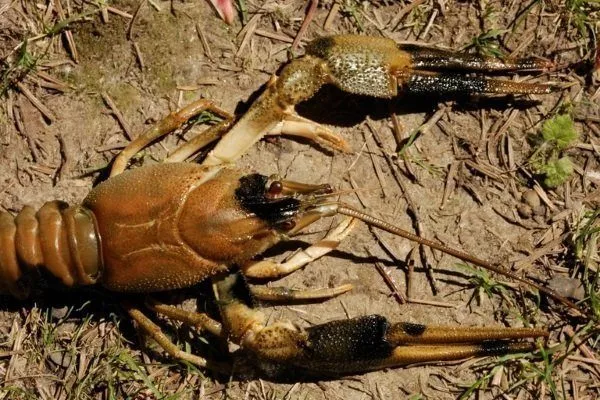
The disease progresses more quickly at elevated temperatures and more slowly at low temperatures.
Treatments No, dead crayfish must be burned.
Prevention:
- placing newly arrived crayfish in quarantine for a month;
- Arthropods native to North America should be kept separately;
- Fungal spores are highly sensitive to high temperatures, so you can protect your aquarium and accessories from the spores by maintaining a temperature of 30 degrees for three hours;
- Magnesium chloride also has a negative effect on spores.
- Isolate the sick individual immediately.
- Disinfect the aquarium and equipment.
- Consult a veterinarian.
Water cancer mold
The essence and the reason. This fungal disease often appears after the cancer has weakened, for example, after molting, mating, fighting, or stress.
Signs:
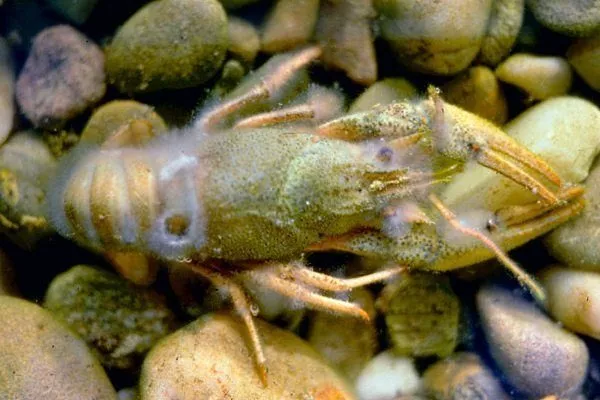
- white fluffy spots appear on the shell, resembling pieces of cotton wool;
- the appearance of bright green formations both on the shell and on the belly is possible;
- darkening of injuries sustained by arthropods;
- excessive passivity appears;
- Cancer is more interested in food.
Treatment:
- The most successful treatment for cancerous mold is considered to be the use of the drug Fungol, moreover, it does not cause damage in the future;
- Add almond leaves to the aquarium to slow down the growth of fungus.
- ✓ Providing sufficient shelters
- ✓ Maintaining stable water parameters
- ✓ Minimizing sudden changes in the aquarium
Prevention:
- Vegetation debris must be removed periodically, as well as the carcasses of dead crayfish;
- maintain favorable environmental conditions – ventilation, temperature conditions, eliminate stress factors, etc.;
- change the water regularly.
Porcelain disease
The essence and the reason. This fungal disease is currently incurable, and affected crayfish, although they can survive the disease for quite some time, eventually inevitably die. Infection occurs through contact with an infected crustacean.
Signs:
- the legs, abdomen, and oral apparatus become less mobile;
- the lower part of the abdomen becomes white, porcelain color;
- In the later stages, cancer becomes paralyzed.
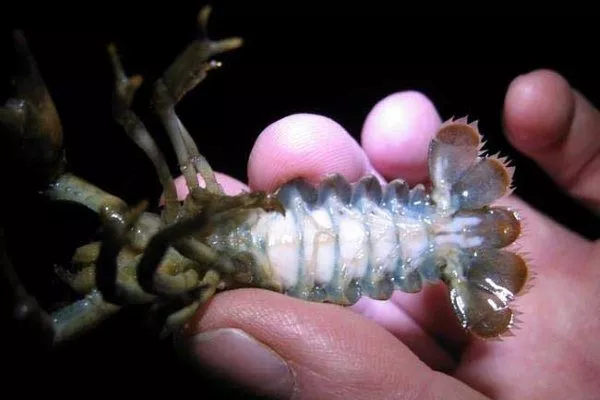
Treatments does not exist.
Prevention:
- Crayfish originating from Austria, Great Britain, Finland, France and Lithuania should be kept separately;
- Newly acquired arthropods should be kept in quarantine for the first two to three months.
Mycosis
The essence and the reason. A fungal disease that lasts for several months, causing disturbances in osmotic pressure and the concentration of sodium and chloride ions in the hemolymph of crayfish. Fungal spores typically enter the aquarium on plants or in substrate collected from the wild.
The main sign The early stages of the disease are characterized by the appearance of brown spots on the gills and shell.
Treatment. The disease is treated with antibiotics – Streptomycin sulfate and Penicillin.
Prevention:
- Do not use objects found in nature in aquariums – soil, plants, stones, etc.;
- If necessary, be sure to sterilize and disinfect it before installing it in the aquarium.
Fungal infection of crayfish eggs
The essence and the reason. Pathogenic fungi initially infect dead eggs, after which the infection spreads to healthy ones. This disease kills only weak larvae, while strong ones are able to cope with it on their own, without any human intervention, after they shed their eggs and molt.
Sign The disease has one, but very specific, symptom: the affected calf becomes covered with a peculiar “fluff”.
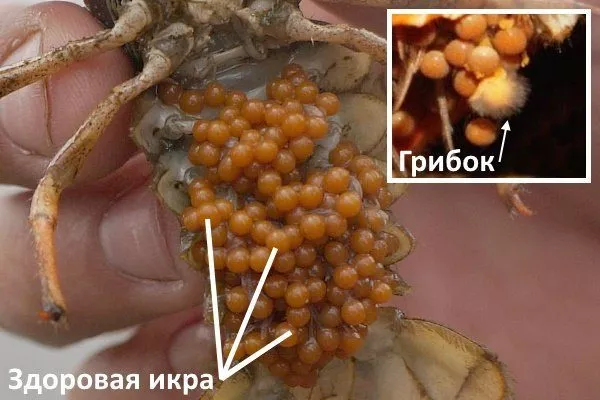
In a specific treatment Fungal infection of eggs does not require.
- Check water quality regularly.
- Provide quarantine for new individuals.
- Monitor the behavior and appearance of crayfish.
Prevention:
- maintain optimal environmental conditions;
- change the water regularly;
- Do not place paraphernalia from unverified suppliers or from natural bodies of water into the aquarium.
Rust spot disease
The essence and the reason. Septocylindrosis enters the arthropod's body through wounds and cracks in the shell, where it begins to actively damage tissue. The disease leads to the slow death of the crayfish.
Signs:
- the appearance of fresh greenish spots on the shell;
- Over time, these spots become rusty brown in color;
- the core of the spots gradually becomes hard and grainy, while the edges are thin and soft;
- at the site of the spots, deep ulcers form, which disrupt the integrity of the shell;
- sometimes the ulcers scar, forming a tubercle of chitin;
- the process of necrosis begins, during which massive destruction of the shell occurs.
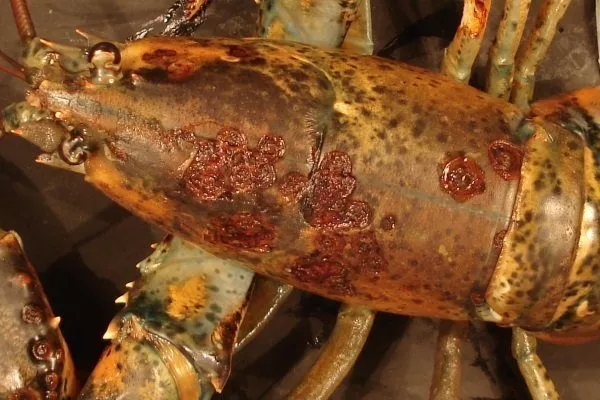
Treatments does not exist.
Prevention:
- do not buy crayfish from unverified sellers;
- new crayfish should be kept in quarantine for at least two weeks;
- Add dried almond, oak or beech leaves to the aquarium.
Burn disease
The essence and the reason. Opaline is one of the most common diseases in crayfish, caused by a pathogenic fungus and often accompanied by bacterial infection. Arthropods are most often affected by the disease in overcrowded aquariums, especially in unsuitable environments.
Signs:
- the shell becomes covered with black or black-brown spots with a red border, reminiscent of a burn;
- in the center of such a spot, destruction of the chitinous coating of the cancer often occurs;
- Sometimes, instead of spots, holes may immediately form.
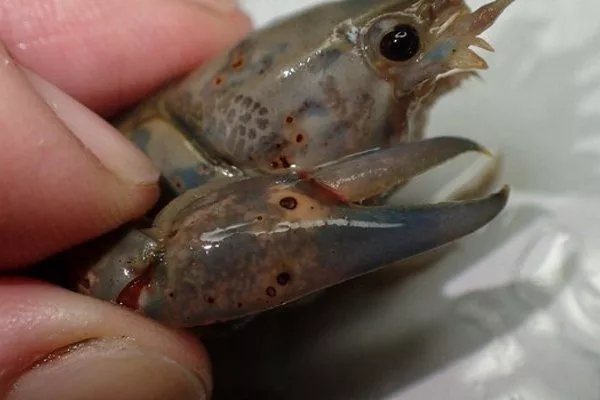
Treatments does not exist, however, some crayfish manage to overcome the disease by shedding the affected shell.
Prevention: The human task is to prevent the spread of infection, therefore, crayfish infected with burn disease must be destroyed.
Invasive diseases of crayfish
Parasites are the most numerous and widespread cause of crayfish diseases. Some parasites can be eliminated with medication or by maintaining a clean aquarium, while others cause no direct harm to the arthropods and require no treatment.
Metacercariae
The essence and the reason. Parasitic larvae that live on the abdominal muscles, in the claws, and sometimes in the body cavity.
Sign – the appearance on the body of the cancer of small (up to 3 millimeters) bright pink larvae that are highly mobile.
Specific methods treatment And prevention does not exist. Affected individuals must be immediately removed from the general aquarium and destroyed.
Microsporidiosis
The essence and the reason. The second most dangerous disease in crayfish after plague. It affects virtually every organ system and progresses extremely rapidly. It can be detected using a microscope.
Signs:
- sick individuals are sedentary;
- the abdominal muscles acquire a white tint;
- Over time, a chalky coating characteristic of the disease appears;
- At a late stage, not only the belly but also the tail becomes white.
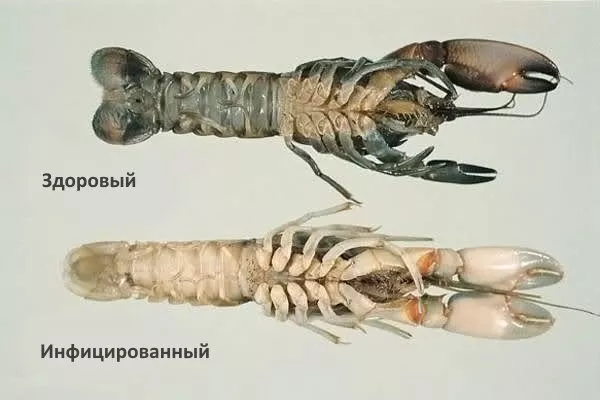
Microsporidiosis in crustaceans (using lobster as an example)
Treatment: Use medications such as buquinolate, monesin, sodium hydrochloride, and iodine-containing agents. Treatment involves immersing the crayfish in a bath containing a weak solution of the medication for five minutes.
Specific preventive measures does not exist.
The concentration of any medication should be prescribed by a veterinarian.
Trematodes
The essence and the reason. These parasites pose no threat to crayfish in small populations. However, if their numbers increase critically, they can cause death within a few days, even in the most favorable environment.
Signs:
- infected cancer is characterized by a sluggish state;
- the shell turns blue, sometimes a milky tint appears.
Treatments and specific measures prevention does not exist.
Branchiobdellas
The essence and the reason. Worms colonize the gills and body surfaces of crayfish. During the summer, the arthropods' gill appendages become damaged, and the surface area of the respiratory epithelium decreases.
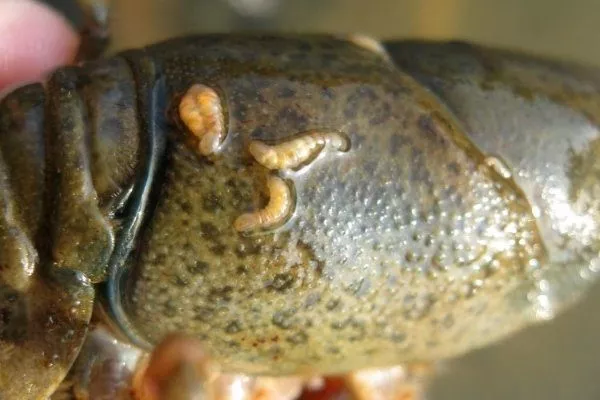
Branchiobdella parasitizes cancer
Sign There is only one disease: the unexplained death of a crustacean during transportation or while being kept in an artificial reservoir.
Treatment is currently under active development.
Prevention:
- quarantine regime for new individuals;
- purchasing crayfish from trusted sellers.
Cestodosia
The essence and the reason. The disease is caused by cestodes (tapeworms). The parasites develop in the tissues and cavities of the body, but this process does not last long—crayfish are not the worms' final hosts. Humans can contract helminthiasis if they do not observe proper hygiene (wash your hands after every contact with crayfish and before eating). Infection is inevitable if the eggs or larvae of the worms are ingested. It is also important to thoroughly cook crayfish before consumption to kill all parasites.
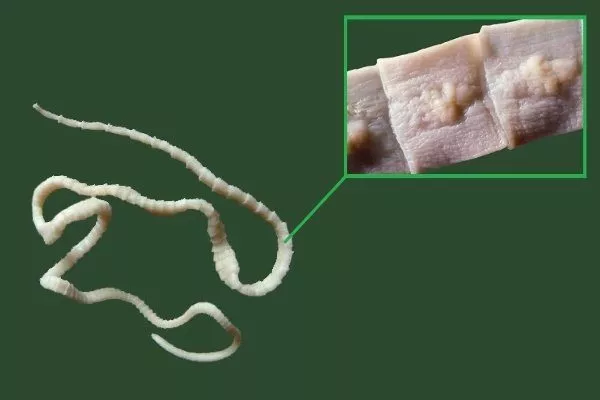
Signs:
- the cancer shows more interest in food;
- mobility decreases.
In a specific treatment Cancer with cestodiasis does not need it.
Special preventive There are no measures. When purchasing crayfish for breeding, choose reputable retailers.
Nematodes
The essence and the reason. Another type of parasite that targets crayfish as both final and intermediate hosts. The worms typically settle in the gill chambers, sometimes interfering with the crayfish's breathing.
Signs:
- under a microscope, small worms can be seen swimming jerkily in the water of an aquarium;
- Helminth capsules can be found in the intestinal walls or in striated muscles.
Treatment:
- involves adding Baycox to water at a dosage of 5 mcg/ml;
- Also, some species of fish that feed on these worms can be added to an aquarium infested with parasites.
Special preventive measures No.
Ectosymbionts are a harmless type of microorganism
The essence and the reason. This type of organism occupies the surface of the shell and gills of crayfish. Attached to the crayfish, they consume bacteria in the water. The presence of the ectosymbionts themselves does not harm the crayfish, but their presence is a clear sign that the water is polluted.
Signs The presence of symbionts can be detected by examining the crab shell.
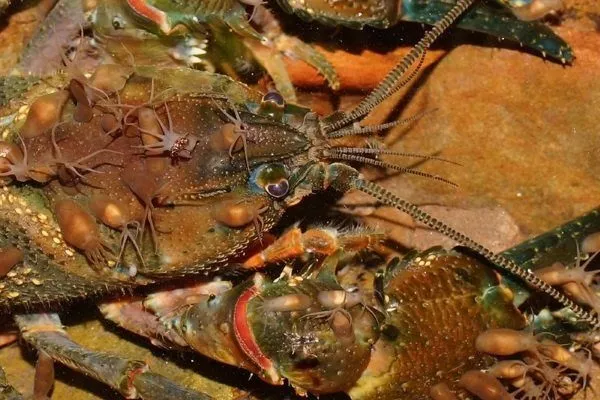
Ectosymbionts of Temnocephala sp. (temnocephala) on a crayfish
Prevention and treatment:
- It is necessary to maintain organic cleanliness;
- maintain optimal environmental conditions;
- do not overfeed crayfish;
- Water changes should be carried out regularly.
Epistylosis
The essence and the reason. Infection of crayfish with these parasites can lead to death from lack of oxygen, as the protozoa parasitize mainly on the gills, where they reproduce.
Sign The disease has one feature: the cancer looks as if it has been dipped in whitish or brown foam.
Treatment:
- reduce water pollution by changing it frequently;
- reduce the amount of feed;
- As soon as the ecological situation in the aquarium improves, the crayfish will get rid of the parasite on its own after molting.
- ✓ Balanced composition
- ✓ No artificial colors or preservatives
- ✓ Age and size appropriate for crayfish
Prevention The disease is standard - verified suppliers and quarantine.
The last two diseases are often caused by contaminated water. To avoid them, pay close attention to the cleanliness of your crayfish tank.
Acanthocephalans
The essence and the reason. Only Australian blue crayfish are susceptible to these parasites. The worms infest the midgut, muscles, and circulatory system.
The disease has no specific symptoms. signs manifestations, treatment or preventive measures, in addition to standard ones. It is discovered by chance and, as a rule, in laboratory conditions. It extremely rarely leads to cancer death.
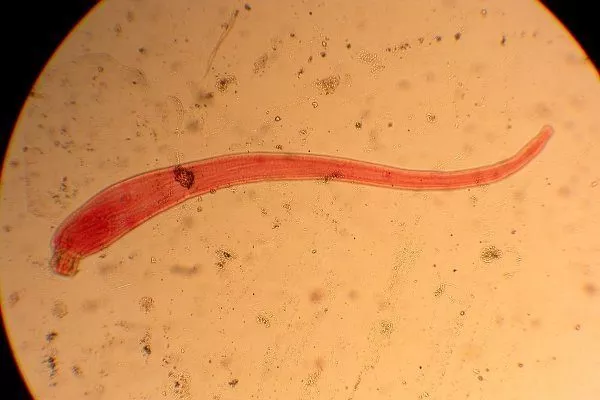
Acanthocephala (or acanthocephalans): a view under a microscope
Bacterial diseases of crayfish
They are caused by bacteria that multiply in the aquarium. They are rarely treated, but their occurrence and development can be easily prevented by keeping the crayfish's environment clean.
Rickettsia
The essence and the reason. Australian crayfish are infected by bacteria that penetrate the connective tissues of all organ systems and the epithelium of blood vessels.
Signs:
- crayfish become weak and passive;
- show a weak reaction to stimuli;
- cannot turn over on their own when turned onto their back;
- Sometimes rickettsia causes blue spotted coloration in crayfish.
They lend themselves well treatment broad-spectrum antibiotics, such as tetracycline.
Prevention – standard for the prevention of bacterial diseases.
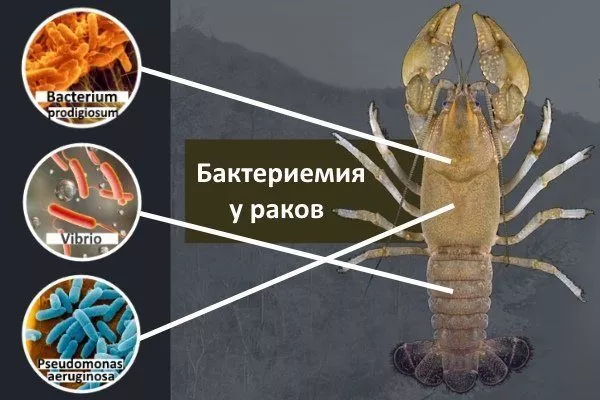
Asymptomatic bacteremia
The essence and the reason. In the early stages, the disease is asymptomatic, but bacteria may already be detected in the hemolymph. Stressful situations, such as high water temperatures or low oxygen levels, are known to accelerate the proliferation of microorganisms.
Signs:
- crayfish become lethargic;
- the reaction to external stimuli is dulled;
- muscles lose tone;
- there is a violation of motor function;
- Nodules and granulomas appear on the tissues.
Treatment and prevention:
- change water weekly;
- carry out timely siphoning of the soil;
- maintain optimal temperature and sufficient aeration;
- introduce probiotics into the crayfish diet.
In general, it is possible to keep crayfish without any substrate at all, but in this case they must have hiding places in the aquarium.
Intestinal bacterial infection
The essence and the reason. One of the least dangerous diseases in crayfish, as it does not lead to mass mortality. Bacteria multiply in the crayfish's intestines, facilitated by a weak and vulnerable state (such as molting) or unfavorable living conditions.
Specific symptoms and treatment The disease does not have any side effects due to the fact that those infected with cancer experience only discomfort that is not life-threatening.
To prevent the development of infection, typical measures are sufficient preventive measures to maintain cleanliness.
Difficulties during molting
Molting is a process during which crayfish are quite vulnerable. Moreover, it doesn't always go smoothly. One of the difficulties an arthropod may encounter is remaining soft for more than a day (known as shell disease). The causes of this phenomenon are as follows:
- unsuitable water acidity (pH);
- water hardness is too low;
- calcium deficiency (the body cannot build a new chitinous shell).
To keep your pet safe and ensure a comfortable shedding period, you need to ensure a proper, nutritious diet with sufficient calcium in advance. This can be achieved in two ways:
- In addition to standard frozen cooked shrimp, add specialized food for such cases (for example, Sera Crabs Natural Complete Die or JBL NovoCrabs Food Chips).
- Calcium carbonate powder can be applied to any typical food and then fed.
Sometimes, molting can be fatal for cancer. The most common cause of this is iodine deficiency. The following measures can be taken to prevent this:
- Add specialized iodine drops to the aquarium once a week, which are available at any pet store. Carefully read the instructions for the drops. Typically, the dosage is specified for marine aquariums. For freshwater, the dosage should be half that amount.
- Food containing spirulina or chlorella will also benefit crayfish and help prevent problems during molting. However, it's important to keep in mind that chlorella contains over 50% protein, so if your crayfish's standard diet is dominated by protein-rich foods (shrimp, fish, shellfish, squid, bloodworms, etc.), it's important to diversify their menu with plant-based foods.
Despite their thick shells and menacing appearance, crayfish are extremely vulnerable to disease. Treating these arthropods is often simply impossible. However, preventing them is quite simple: all it takes is a responsible and vigilant approach to the health and safety of your pets.