
During the winter, sudden cold snaps lead to changes in water life, particularly affecting fish. Aquatic life decreases in activity and slows down its metabolism.
Wintering options
There are several ways freshwater fish adapt to winter cold. These depend on the depth of the water, the current or lack thereof, the ambient temperature, and the fish species.
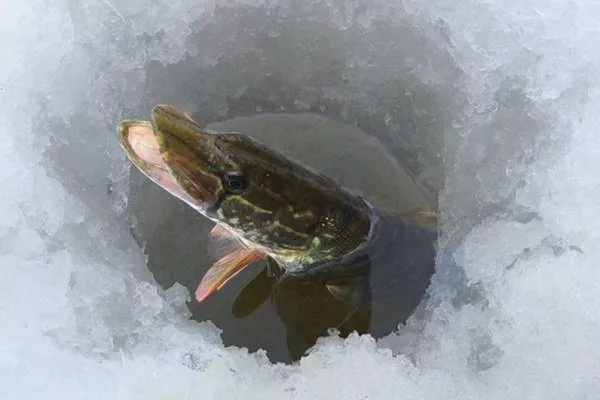
Wintering pits
| Name | Wintering temperature regime | Wintering depth | Duration of wintering |
|---|---|---|---|
| Carp | 4-6°C | 2-4 m | 3-4 months |
| Bream | 3-5°C | 3-5 m | 3-4 months |
| Carp | 4-6°C | 2-4 m | 3-4 months |
| Tench | 3-5°C | 3-5 m | 3-4 months |
- ✓ Consider the presence of a current: in stagnant water, the oxygen level deteriorates faster.
- ✓ Check the depth: Different fish species require different wintering depths.
Cold and freezing waters affect each fish species differently. Some are heat-loving:
From October onward, they migrate in schools to greater depths. These deep-water areas are called wintering pits. The characteristics of this wintering ground are:
- Fish spend up to three months at depth, huddled tightly together and barely moving. Those at the bottom often develop bedsores.
- Fish of the same species and age typically overwinter in small pits. This is because less intense metabolic processes provide optimal conditions for a large number of individuals.
- During hibernation, fish secrete mucus. This prevents their bodies from touching each other and serves as a kind of thermal cushion.
- Catfish hibernate not in the pits themselves, but near them. They cannot tolerate the deterioration of oxygen levels that inevitably occurs some time after the ice cover forms.
Complete passivity
This type of wintering is most often chosen by crucian carp. They simply freeze close to the bottom of the reservoir, completely ceasing to move or feed, and wait in this position for spring. Metabolic processes in the body slow down significantly, allowing the fish to survive the cold and hungry season.
Burying in the mud
This is a unique version of complete passivity. It's suitable not only for crucian carp, but for many other species as well.
The fish sink to the bottom, burrow deep into the silt, and freeze. This stillness helps them conserve energy (meaning there's no need to replenish it), and the silt acts as a cushion, protecting them from freezing.
Migration
Some fish, such as salmon, migrate to southern regions for the winter. Over the summer, they accumulate sufficient fat, grow, and as cold weather approaches, they migrate to warmer seas, where they overwinter closer to the bottom. This process is called "migration."
After the end of winter, fish that have fed in sea water return to the rivers to spawn and continue their species.
Maintaining activity
Some fish species, especially large ones, remain active during cold weather. Constant movement provides energy and warmth, and they feed on small fish that haven't hibernated, such as roach, bleak, and ruffs. They can even feed on their own young.
Spawning
A common wintering method used by burbot. In warm water, the fish feel depressed and hibernate as soon as the temperature rises above 15-16°C. However, winter is the most favorable time of year.
With the onset of autumn cold, burbot actively feed and begin breeding in winter. They spawn in cold water under a thick layer of ice, laying eggs on the rocky bottom of the reservoir.
Freezing
Small bodies of standing water freeze to the very bottom during harsh winters. Sometimes even the silt in which fish are buried freezes. Inhabitants of ponds, lakes, and swamps with no current have adapted to this as well.
Fish that easily endure the winter in complete inactivity (such as crucian carp and dahlia) freeze into a layer of ice, entering a complete hibernation. When the ice thaws and the water gradually warms, the fish awaken and begin their active life.
Only if the gills and body fluids of an underwater creature become severely frozen does it die. This happens rarely.
How to help fish in a pond survive the winter?
Many fishermen are directly involved in organizing wintering for their fish, especially when it comes to small ponds with standing water or homemade reservoirs stocked with fish.
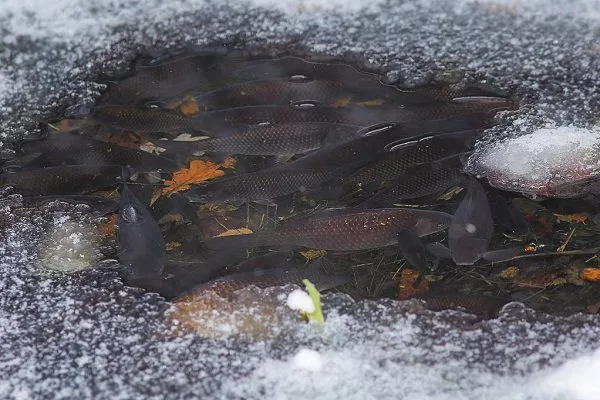
You can provide the pond's inhabitants with a comfortable winter in the following ways:
- Once the ice on the water reaches a few centimeters in thickness, drill a small hole in it. Pump out a layer of water about 15 cm thick through the resulting hole. The oxygen entering the resulting space is sufficient for the overwintering fish.
- When the water begins to freeze, place bunches of straw upright on the surface. Their tubular stems will provide oxygen access to the water as it freezes.
- Make several depressions in the pond bottom to serve as wintering pits. The fish can lie in them to safely wait out the winter.
How do peaceful fish overwinter?
The difference between peaceful fish and predatory fish is that the former are more thermophilic. Their normal winter state is to retreat to deeper waters and become almost completely passive.
Features of wintering:
- As early as autumn, peaceful fish species begin preparing for winter, switching from a plant-based diet to a protein-based one to replenish energy reserves and accumulate fat. This also helps them secrete a characteristic mucus that provides thermoregulation and protection from predators.
Its smell disgusts predators, and they leave the peaceful inhabitants of the water bodies frozen in their wintering holes. Otherwise, the entire population of these species would be wiped out. - When frost sets in and bodies of water freeze over, the peaceful fish sink to the bottom. They remain motionless in wintering pits until spring. Thousands of fish of various species and ages sometimes congregate there.
- When the weather thaws or becomes consistently sunny, some fish rise to the surface to breathe oxygen or find food. These are usually small or medium-sized fish. Larger fish can remain dormant throughout the winter thanks to their accumulated fat.
- ✓ Increase the proportion of protein feed in the diet from the beginning of autumn.
- ✓ Carry out preventative treatment against parasites before wintering.
Features of wintering of predatory fish
Large predators slow down only during the coldest temperatures, remaining active the rest of the time. This is because these fish prefer twilight, and ice on the water's surface creates precisely this kind of semi-darkness.
Large predatory fish find plenty of food in the form of small fish that haven't yet sunk to the bottom. That's why fishermen know that the best fishing is at the beginning and end of winter. Only perch fish well throughout the cold season—they hold on thanks to the large amounts of fat they accumulate.
Unlike other predators, catfish prefer to hibernate passively, hibernating just above deep pits. For this purpose, they gather in groups, although at other times of the year they prefer to dwell in secluded areas.
Fish have adapted to living in any climate, including cold winters. Beginner fishermen will benefit from knowing how these underwater creatures overwinter to ensure a successful catch even during the cold season.
Not Yorshi, but Yorshi