
The Jupiter grape is a true discovery for many gardeners, as this variety perfectly combines excellent commercial and flavor characteristics with low-maintenance, decorative growth habit. With proper care, high-quality harvests are possible in various regions.
Description of the variety
This is the result of the work of renowned breeder D. Clark. Back in 1985, the author received a patent for this grape variety, but did not consider it worthwhile to distribute it outside of America. Russian gardeners successfully grow it throughout the country, including in the Moscow region.
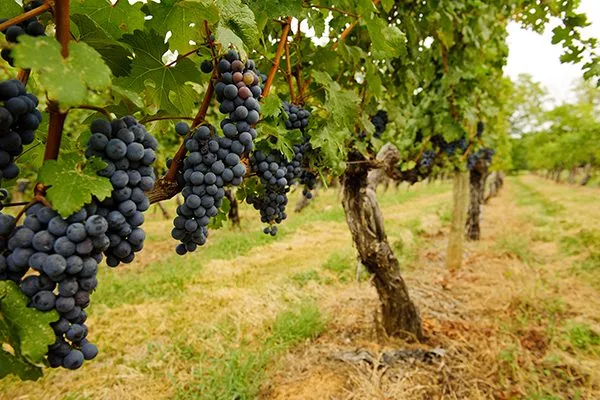
Bushes
It grows as a medium-sized bush, not prone to extensive branching or spreading. Mature vines are brown with a reddish tint. The plant is covered with large, trilobate leaves without obvious dissection. The foliage is bright, rich green, glossy on top and pubescent on the underside.
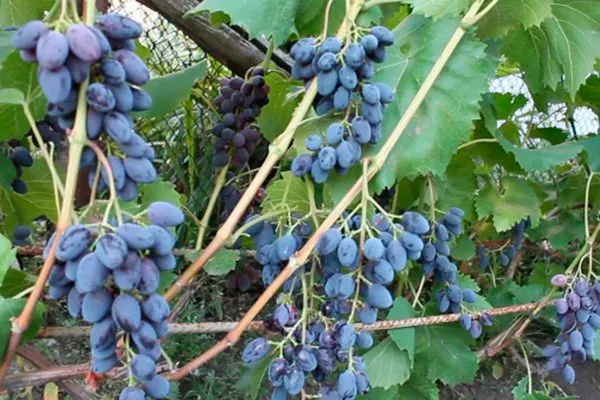
The crown (the top of the shoot) has a distinctive curve and a whitish hue due to the delicate pubescence. The flower clusters are large, sometimes exceeding 15 cm in length. Up to five clusters can develop on a single shoot.
Berries
Jupiter is an early-ripening grape variety. Under favorable conditions, it fully develops its color and reaches full maturity in 105 days. In cloudy weather or heavy harvest conditions, ripening may be delayed by 10–15 days.
Characteristics of berries:
| Form | Oval, obovate, tapering towards the tip.
|
| Weight | Depending on care, it can range from 4 to 7 g. |
| Coloring | Changes from greenish-pink to red as it ripens, turning dark purple when fully ripe. |
| Peel and pulp | The skin is thin, strong, without cracking, covered with a dense pruinose coating, the flesh is elastic, marmalade-like. |
| Seeds | There are no bones, but small, soft rudiments may be present. |
| Taste | Harmonious, sweet with a distinct Isabelle muscat and strawberry flavour. |
| Sugar content | Depending on weather conditions, sugar accumulation ranges from 20 to 30%. |
| Acidity | Does not exceed 6 g/l. |
| Productivity | Depending on the method of formation – from 5 to 20 kg per bush. |
Clusters
The clusters are impressive and decorative. As they ripen, the berries acquire uneven coloring. A single cluster may contain greenish, pink, and red fruits.
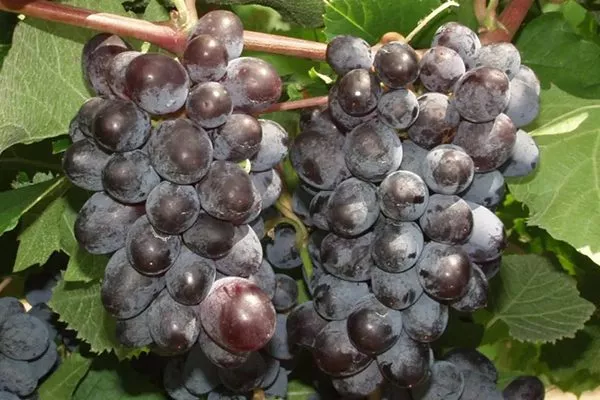
The coloring process is affected by air temperature, and at higher temperatures, the color develops more quickly. Full ripening of the flesh may take longer than the skin's full purple color.
Taste
Tasters highly rate the variety's flavor, giving ratings ranging from 8.9 to 9.2 out of 10. The berries have a sweet taste that offers a harmonious blend of varied fruity notes with subtle muscat undertones.
Advantages and disadvantages
The hybrid is considered promising for cultivation in various climatic conditions, including northern industrial viticulture zones. It is highly environmentally friendly, requiring minimal use of crop protection chemicals for its cultivation.
Landing
Planting a crop doesn't require any special skills or knowledge. Even novice gardeners can handle the process. The key is choosing the right site and planting the seedling.
- ✓ The optimal soil temperature for planting should not be below +10°C, which is critical for the rooting of the seedling.
- ✓ The seedling planting depth should take into account the climatic conditions of the region: in colder regions, deep planting is recommended to protect the root system from frost.
Follow the recommendations:
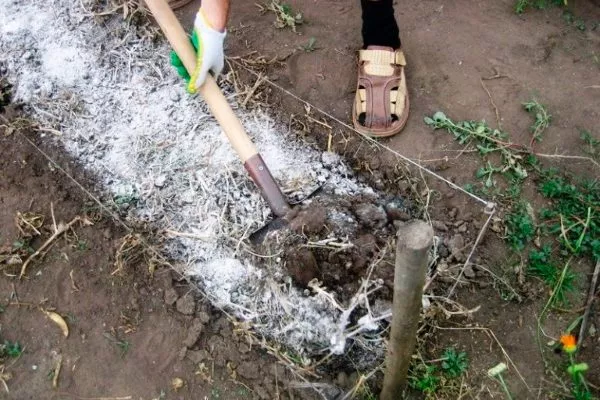
- Preparing the soil and planting site. For successful cultivation, choose a site with loose, well-drained soil. If the soil is acidic, improve its composition beforehand by adding dolomite flour and wood ash during tilling.
The plant prefers sunny locations and does not tolerate close proximity to buildings, fences, or tall trees. Choose a location that receives maximum sunlight but is protected from cold winter winds.
When preparing the soil for planting, dig holes about 80 cm deep and 60 cm wide. Mix the excavated soil with humus and sand, and add phosphorus and potassium fertilizers. - Landing algorithm. Seedlings with closed root systems can be successfully planted from spring to late autumn, provided that the air temperature does not drop below 15°C. In spring, plant when the soil warms up to 10°C. In autumn, complete the work 2-3 weeks before the onset of sustained cold weather.
Place at least 10 cm of drainage material at the bottom of the holes. Fill the holes halfway with fertile soil, water, and allow the soil to settle. Before planting, form a small mound of soil without adding mineral fertilizer in the center of the hole and place the seedling in it. Tamp the hole with soil and water thoroughly.
Care
This easy-to-grow hybrid requires little care. Regular watering, fertilizing, and pruning are essential for its successful development.
Carry out the following agricultural practices:
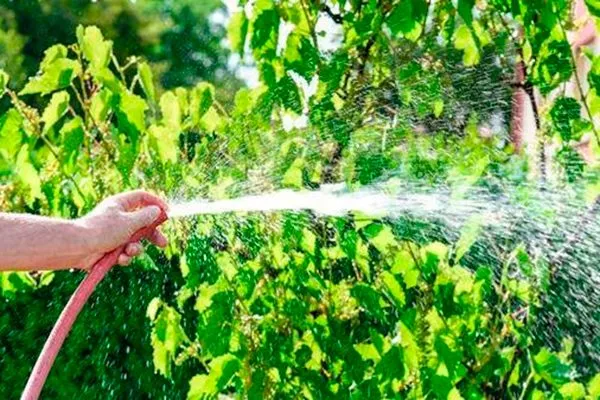
- Watering. During dry and hot weather, water young plants once every 14 days, and mature plants once every 3-4 weeks. Water the plant a few days before flowering. Water thoroughly twice during berry formation, especially when the berries are pea-sized.
Avoid watering after August 1 and during the berry coloring period.

- Top dressing. In spring and early summer, use fertilizers high in nitrogen, and from midsummer until the end of the season, use phosphorus and potassium. Apply an infusion of mullein, nettle, or chicken manure at the beginning of the season, and incorporate ash into your plan in the second half of the gardening season.
- Pruning during the season. Regarding greening, follow the classic plan. Pinch out all shoots before the first leaf as they appear. Remove shoot tips when the plant reaches a height of 2.5 m.
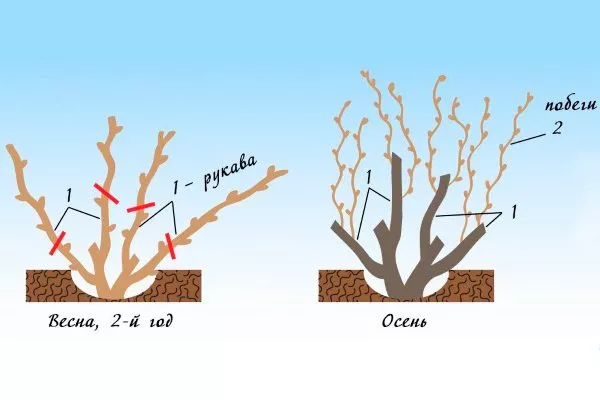
- Formation. In the first year, plant a woody or vegetative seedling in the spring and leave only one shoot on it. The main goal is to grow this shoot until the vine has time to mature. In late fall, prune the shoot back to its original growth, leaving 4-5 buds.
In the second year, in the spring, begin to form future branches from emerging buds. The number of shoots left depends on the vine's growth in the previous season. In the fall, prune the shoots, taking into account their maturity and placement on the trellis.
In the spring of the third year, place the shoots horizontally on the bottom wire of the trellis – these will become the fruiting branches for the first harvest. Vertical shoots will begin to develop from the buds on the fruiting branches; trim the tops of these shoots as soon as they reach the top wire of the trellis.
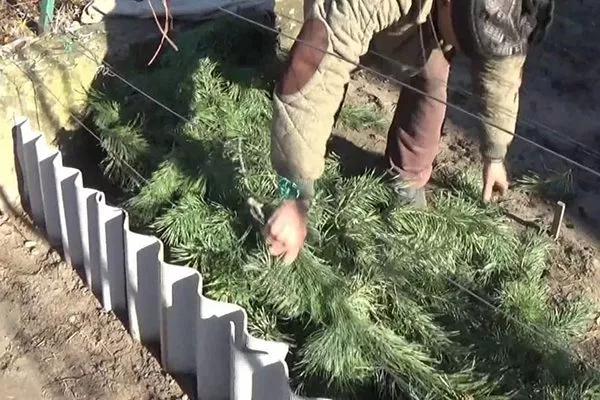
In the fall, identify fruiting branches for the next season, leaving only one vertical shoot on each branch, preferably closer to the head of the bush. - Shelter for the winter. Preparing for winter by burying the vines in the ground is a simple and effective way to protect them from winter frosts. Dig trenches about 15-20 cm deep. Place the tied vines, trying to spread them evenly. Fill the trenches with soil and cover them with spruce branches, ensuring the vines are securely covered.
Follow these care rules and you will have a healthy bush that will bear fruit regularly.
Reproduction
Cuttings, grafting, and planting grafted seedlings are considered the optimal propagation methods. All these vegetative methods ensure that the young plants are fully compatible with the characteristics of the parent plant.
Graft
To impart special rootstock properties, use cuttings or buds. Jupiter, grafted onto the Vostorg rootstock, shows particularly good results. To strengthen the plant during the winter, use other regionally resistant rootstock varieties.
Although the hybrid exhibits moderate growth when grown on its own roots, it gains greater vigor when grafted onto other grape varieties. Prepare cuttings for grafting during pruning, using both mature vines and green shoots.
The grafting process:
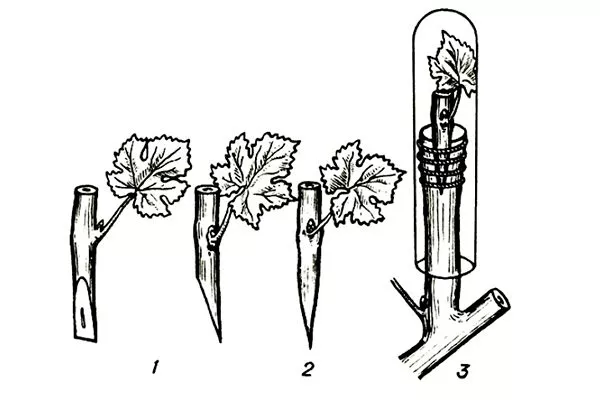
- Make a wedge-shaped cut at the bottom of the cutting and immerse it in a rooting solution or biostimulant.
- Make a cut or split the vine into the rootstock.
- Insert the scion into the resulting gap with a sharp cut.
- Ensure the graft is sealed using clay dough, garden pitch or soft bandaging.
Spring grafts usually take root successfully, and the first flowers may appear on the young vines as early as the following season. Remove the signal trusses.
Cuttings
Mature vines from a 4-year-old plant are suitable for propagation by cuttings. Cut the rooting shoots into pieces at least 15 cm long. Store the planting material in a cool place throughout the winter. Cuttings can be tied into small bundles, wrapped in plastic, and stored in a cellar until winter.
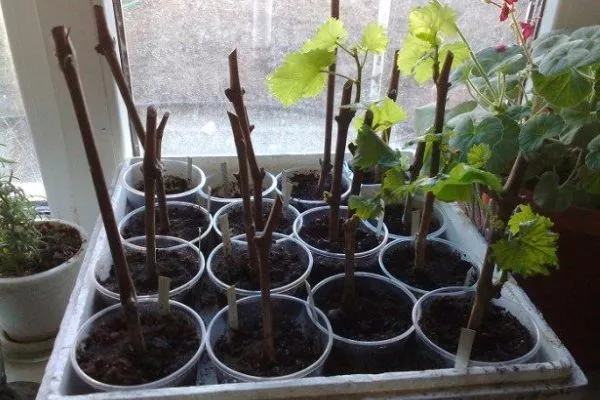
The process of rooting cuttings:
- At the end of February, soak the cuttings in warm water for about 24 hours, adding a solution of any growth stimulator if necessary.
- Place the lower cuttings in loose, moist soil up to the middle of the cutting. Create a mini greenhouse on top using a bottle or wide-mouthed jar.
- Water the plantings periodically and wait until the above-ground growth appears.
In warm climates, root cuttings directly outdoors. The plant takes root successfully and quickly develops a well-developed root system. To plant, dig small trenches and space the cuttings in rows at least 10 cm apart. After rooting, space them further apart.
Saplings
When purchasing planting material in the form of ready-made seedlings, contact only reputable producers. Many Russian agricultural companies offer Jupiter seedlings, although previously the main source was supplies from America.
- ✓ Seedlings must have a clearly defined grafting site without signs of disease.
- ✓ The root system should be developed and flexible, which indicates the health of the plant.
When selecting planting material, be guided by the following criteria:
- Give preference to seedlings grown in containers.
- The grafting site should be clearly defined in thickness, but should not have any damp areas or spots.
- If the root system is visible, check the shoots for flexibility.
- Discard seedlings with wilted leaves and fragile roots.
Diseases and pests
The plant is disease-resistant, but can be susceptible to pest attacks. To prevent the plant from dying, identify the cause promptly and begin treating it.
Phylloxera
This is an insect that parasitizes the roots of vines. It penetrates the root system, feeding on the cells and causing the plant to dry out and wither. Regularly treat the root zone with insecticides to prevent infestation.
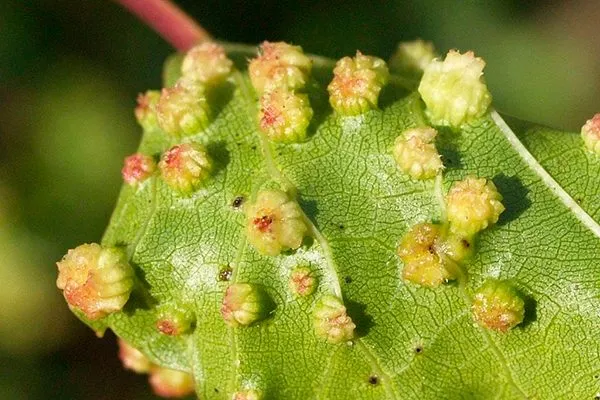
Spider mite
A microscopic pest that leaves a fine web on leaves and stems. It feeds on plant sap, which can weaken the plant and reduce yields. Spray the bush regularly with insecticides or miticides. Maintain moderate humidity around the plants.
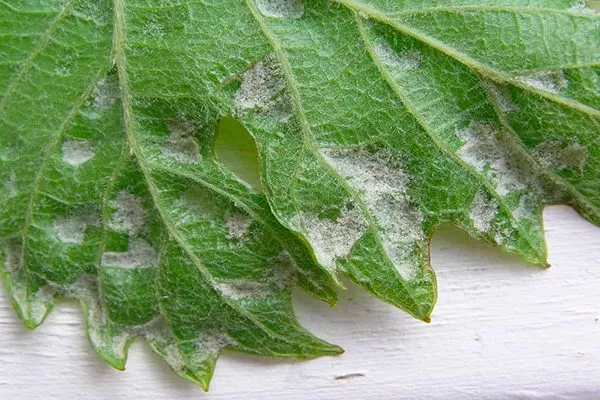
Tick
A small arthropod pest that feeds on leaf sap, causing deformation and red spots. Apply miticides and insecticides, regularly inspect the leaves, and treat planted areas. Maintain optimal humidity.
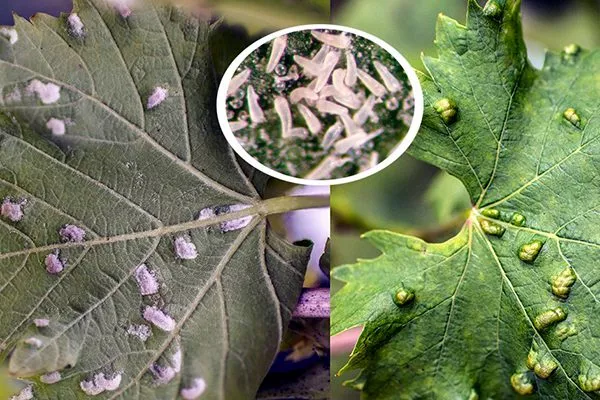
Storage and harvesting
Ripe bunches are harvested in the second half of July. Carefully stack the bunches in wooden crates, limiting the number of layers to two. Grapes are prized for their excellent transportability and long shelf life.
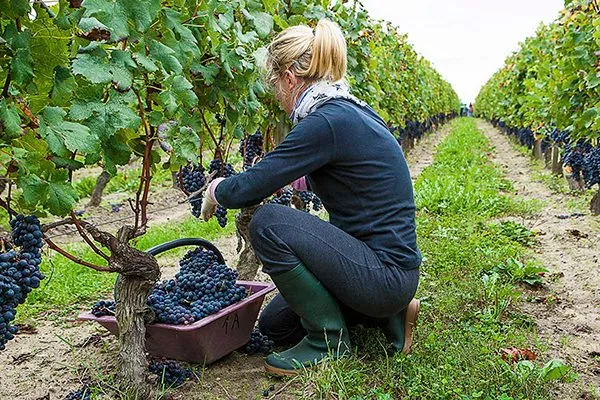
Ripe bunches of grapes can be easily stored in the refrigerator for two months, and under optimal conditions in a well-ventilated room, they can retain their taste and commercial qualities for up to 3-4 months.
Gardeners' reviews
In its short lifespan, this American hybrid has earned numerous accolades. The plant quickly adapts to various conditions, develops vigorously, and grows confidently. This makes Jupiter an excellent choice even for inexperienced gardeners, who can enjoy harvesting delicious, sweet bunches of fruit right in their own backyard.