
Specialty stores offer a variety of fertilizers, but homemade fertilizers are no less effective. Eggshells are a good choice for this purpose, but it's important to note that they aren't suitable for all plants. These raw materials have a rich composition and many beneficial properties.
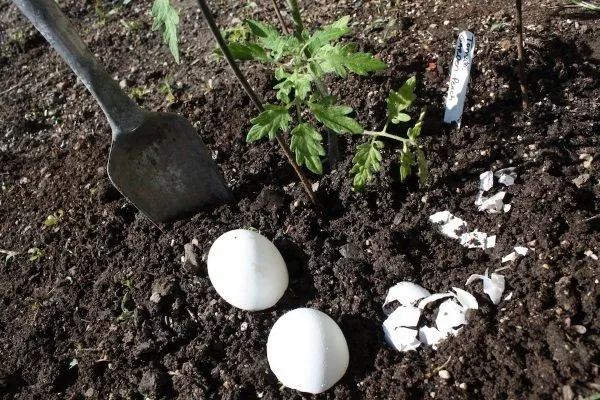
Composition and benefits of eggshells
The structure of this raw material is almost entirely (93%) calcium carbonate. This substance is a well-known lime fertilizer. It has a beneficial effect on the physical and chemical properties of the soil, strengthening its structure.
The effect of calcium carbonate is most noticeable in highly acidic soils. This negatively impacts soil fertility, and using eggshells for deacidification is more convenient than chalk or lime. It is most effective when applied in combination with mineral fertilizer.
In addition to calcium carbonate, the product also contains other elements. Of particular importance is the content of:
- gland;
- magnesium;
- potassium;
- sulfur;
- phosphorus;
- manganese;
- fluorine;
- molybdenum;
- zinc;
- silicon.
In total, eggshells contain approximately 30 different elements. Most of them are essential for the normal functioning of flora.
Fertilizers made from shells are attractive for several reasons:
- the raw materials are of natural origin;
- no additional costs required;
- During the year, you can collect a decent amount of product for fertilizer;
- This fertilizer is safe for various crops and for humans;
- Even large amounts of fertilizer from the shells will not cause excessive harm to plants.
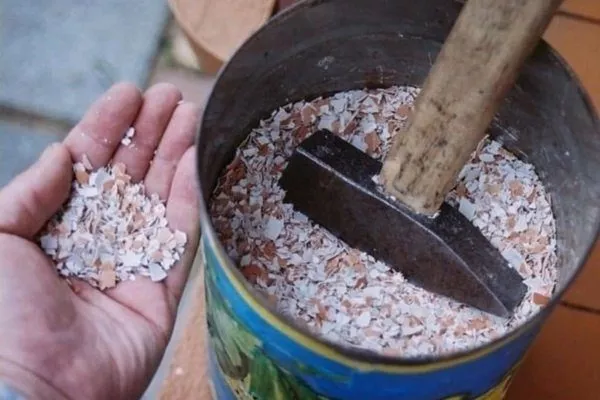
The best source of fertilizer is poultry eggs, as they are fed natural ingredients. Store-bought eggs have the advantage of higher calcium content, but this is a minor factor.
Which plants benefit from eggshell fertilizer?
The raw material is ideal for most plants, including vegetables, berry and fruit crops, and ornamental plants.
Among vegetable crops, fertilizer based on shells is most effective for the following representatives:
- tomatoes;
- cucumbers;
- eggplants;
- bell pepper;
- cabbage (any type);
- legumes;
- pumpkin.
Shells should be used primarily for mature plants. When applying this fertilizer during the seedling stage, moderation is key, as it can actually be harmful.
Eggshells are an effective fertilizer for berry and fruit crops, as calcium is required for the formation of pits and seeds. The following plants benefit from this fertilizer:
- apple tree;
- cherries;
- bird cherry;
- plum;
- pear trees;
- currants;
- gooseberry.
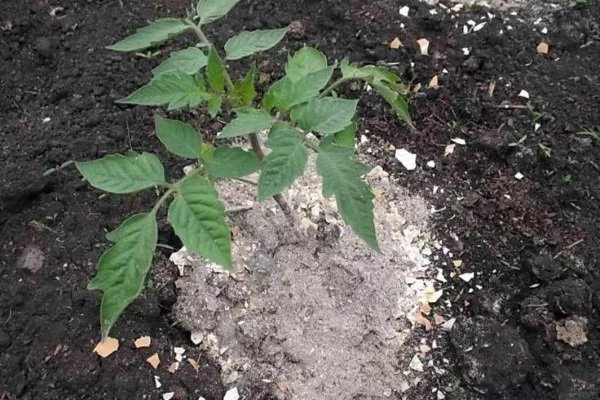
The shells are an attractive fertilizer for watermelons and melons. In this case, it is recommended to scatter them over the top fertile soil layer.
What plants don't like eggshells?
Most plants respond well to eggshell fertilizer, but some crops don't tolerate it. This applies to the following crops:
- beet;
- carrot;
- radish;
- turnip;
- radish;
- onion.
The edible parts of all these plants are located in the soil during cultivation, and shells can negatively impact their flavor. This fertilizer can make root vegetables unnecessarily loose and soft if applied to the soil. Liquid egg fertilizer can have the opposite effect, causing the fruits to become too hard.
Potatoes are also root vegetables, but their shells can be used as fertilizer, with a few caveats. The material can be scattered between plantings, but should not be applied to the planting holes, and liquid fertilizer infused with the shells should not be used.
The slight softening of the potatoes by using eggshells can even be appealing. These potatoes will cook faster, and the dish will be crispier.
Avoid fertilizing sorrel or chicory with eggshells. These plants prefer acidic soil. This also applies to sunflowers, sage, and a number of other flower crops:
- aster;
- petunias;
- lilies of the valley;
- roses;
- tulips;
- carnation;
- delphiniums;
- chrysanthemums;
- calendula;
- bindweed;
- primroses;
- nasturtiums.
Methods of preparing fertilizer and options for its application in the garden
Only properly prepared raw materials will ensure their benefits. This will also allow for proper storage without the risk of unpleasant odors.
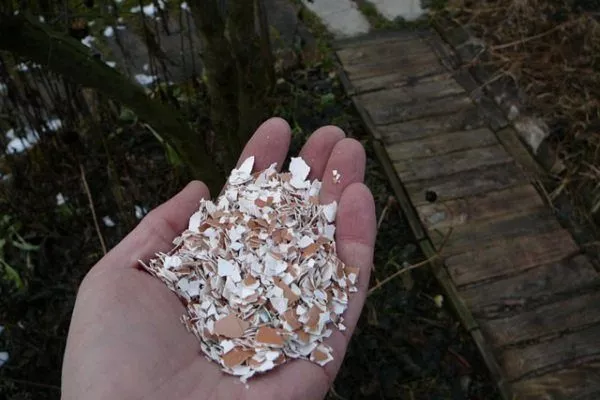
It's necessary to collect the shells left over from raw eggs. It's best to first place them in a cardboard box and place them in a warm place to dry. Within a few days, the protein film will dry. After this, the shells can be crushed and placed in a paper bag.
You can also collect shells from boiled eggs, but it's important not to leave the protein film on them when peeling them. This will make the fertilizing material less useful.
Some believe that brown eggshells are better for fertilizer. They have been found to be thicker, resulting in a higher nutrient content per egg.
The storage location for the prepared raw materials must be dry. If the stored shells emit an unpleasant odor, they were not dried sufficiently or the storage location was incorrect.
Eggshells collected in winter contain more beneficial elements. It's best to start harvesting early to ensure you have enough for the upcoming season.
There are different ways to prepare eggshell feed:
- Grind in a meat grinder or coffee grinder. It is recommended to crush the ingredients with a rolling pin beforehand. The resulting flour should be stored in tightly sealed jars.
- Baking the shells in an oven or over a fire produces a mixture with ash, which is often used as a fertilizer for various crops. This method burns off the protein film, thus losing some of the product's beneficial properties.
- You can make liquid fertilizer from the shells. To do this, grind the naturally dried shells in a meat grinder or coffee grinder, place them in a glass container, fill it with plain water, and seal tightly. Let the solution steep in a cool, dark place. The fertilizer will be ready when it turns cloudy and has an unpleasant odor. Before applying, dissolve it in 3 parts water.
Comparison of cooking methods
| Method | Cooking time | Shelf life | Efficiency |
|---|---|---|---|
| Dry grinding | 5-10 minutes | Up to 1 year | 70-80% |
| Water infusion | 5-7 days | 2 weeks | 90-95% |
| Baking | 30-40 minutes | 6 months | 50-60% |
It's believed that products ground into a powder are better absorbed by plants. Liquid fertilizer is also effective in this regard, as the nutrients are released into the water during the infusion process.
In garden beds, this material can be useful not only as fertilizer but also as protection against a number of pests. This primarily applies to moles and mole crickets. In this case, the material does not need to be crushed too much. It's important to add pieces of eggshell to the soil when planting. Pests dislike the sharp edges and stop digging.
Slugs are controlled in a similar manner, especially in cabbage beds. Pieces of eggshells are spread over the surface of the beds.
During the seedling growth stage, the shells can be useful as drainage. This option is suitable for any plant. The powdered material can be added to the seedling soil.
Eggshells are also used as containers for growing seedlings. To do this, raw eggs are not broken; the tops are simply removed. Be sure to make several holes in the bottom for drainage. You can plant the sprouted seedlings directly in the shells, but it's best to gently crush them or remove the bottom of the improvised pot before planting.
To learn how to make and use eggshell fertilizer, watch this video:
In garden beds, eggshells are also used in the following ways:
- If the soil is highly acidic, it needs to be deacidified. To do this, dig the soil with crushed eggshells at a rate of 0.5 kg per square meter. If this amount of eggshells is not available, a handful can be added to each hole during planting. The amount of eggshells added should be adjusted to the soil's pH level.
- To prevent blackleg (root rot), sprinkle the soil where plants have already been planted. If the disease has already affected the plantings, the affected plants are completely pulled out or dug up, and the remaining holes are sprinkled with egg powder.
- Crushed eggshells are effectively sprinkled on the soil after planting seeds. This technique accelerates sprouting.
- Liquid fertilizer based on eggshells is ideal for feeding flowers. You can also make an infusion for watering them. To do this, pour boiling water over the product and soak it for 4 days.
- Liquid eggshell fertilizer is effective as a root dressing. This option is suitable for both greenhouse crops and open-ground root vegetables.
- One of the simplest ways to use eggshells as fertilizer is to add them to compost. However, it's important to remember that not all plants appreciate this type of fertilizer.
If you start collecting eggshells in the fall, you can accumulate a decent amount of fertilizer by the gardening season. It's natural, harmless, and requires no additional expense. This fertilizer can be used for most crops, but in moderation. It also helps protect plants from certain pests that can be a major nuisance to gardeners.