
Veteran is a foreign mid-season peach variety that has been around for nearly 100 years and is popular with gardeners in many countries. It is also loved by domestic gardeners for its low maintenance, hardiness, and consistent, high yields. It is also of interest to agricultural companies growing fruit on an industrial scale.
Who developed the variety and when?
Veteran was born in 1925 thanks to the efforts of Canadian breeders from Ontario. This fruit variety was created by crossing Vaikan and Elbert early.
The appearance of the tree
This variety of peach tree has the following distinctive features:
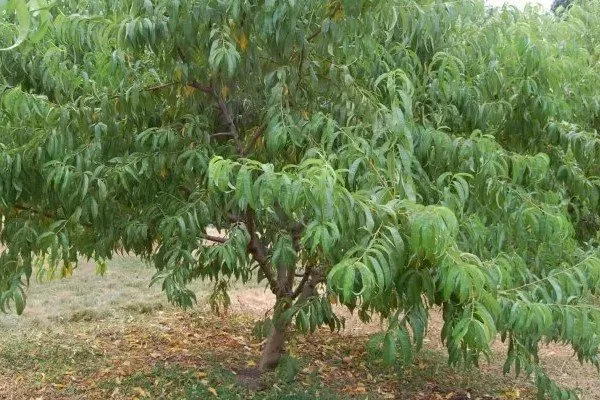
- medium height (height varies from 2 m to 4 m);
- a crown prone to thickening in the shape of a ball;
- Foliage: dark green, lanceolate, appearing later than the flowers;
- flowering: late (May), rose-shaped, fragrant.
Fruits and their taste characteristics
The Veteran variety yields high commercial quality fruits. These characteristics include:
- large size - 59x63x63 cm;
- weight - from 120 to 170 g;
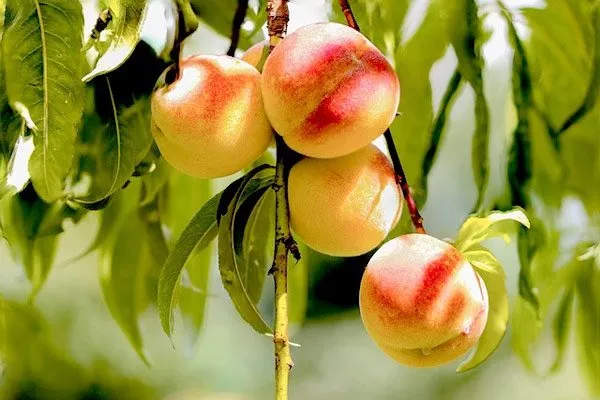
- the shape of a ball, slightly flattened at the top;
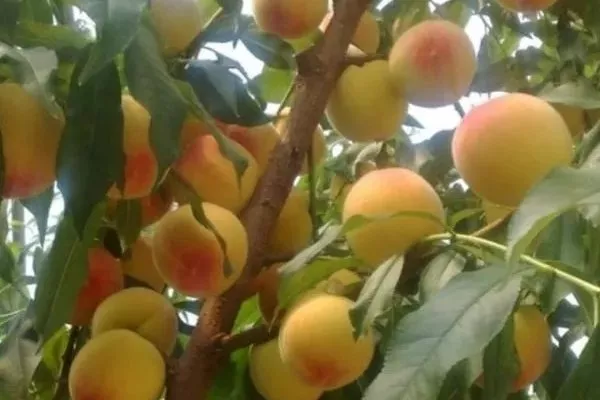
- skin: medium thickness, dense, drooping, yellow in color with an extensive carmine blush;
- pulp: yellow, fibrous, medium-dense, juicy, aromatic;
- stone: broadly oval, pointed, medium-sized, characterized by satisfactory separation from the pulp.
This peach has a harmonious, sweet flavor. Its pulp contains 9.28% sugar and 0.28% acid. The variety received a tasting score of 4.2 out of 5.
Eat fruits fresh or use them for culinary purposes:
- for making jam, marmalade, compote, jelly;
- to obtain juice;
- for preservation;
- as a pie filling;
- for adding to desserts and summer fruit salads.
Self-fertility and pollinators
The Veteran peach is self-fertile. It produces fruit without other pollinators growing nearby in the same plot. However, to increase its yield, it makes sense to plant nearby fruit varieties of the same flowering period:
- Greensboro;
- Redhaven.
Ripening period and yield
Veteran is a mid-season garden variety. The first fruits ripen by mid-August. The harvest ripens unevenly. It is harvested in several stages until September.
The yield indicators of the variety are high:
- One adult plant produces 40-50 kg of fruit;
- From 9,200 kg to 18,600 kg is harvested by farmers growing fruit for sale from 1 hectare of peach planting.
The harvest of this variety has excellent commercial qualities:
- shelf life, which is ensured by strong skin and medium-dense flesh;
- transportability (peaches retain an attractive appearance and do not get crushed during transportation for 3-4 days, provided that they were picked from the tree whole and not overripe).
Care and cultivation
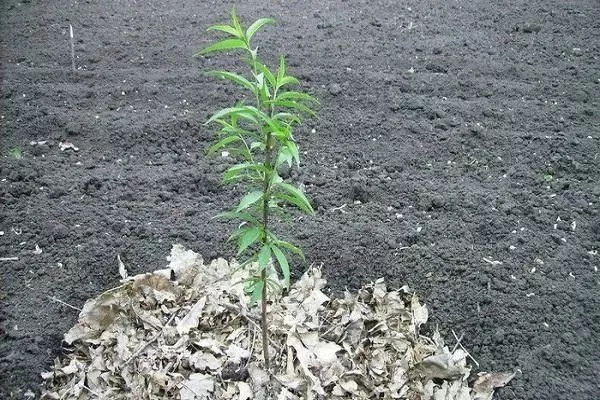
Plant the Veteran variety seedling at the following times:
- in spring, before the sap begins to flow;
- in the fall, before the frosts come.
Choose a sunny location in the garden for growing peaches, well protected from wind and drafts. Avoid low-lying areas with groundwater levels close to the soil surface.
If you purchased several garden seedlings from a nursery, keep a distance of 3-5 meters between them when planting. Follow these step-by-step instructions:
- Fill the planting hole with expanded clay, creating a drainage layer. Top with fertile soil mixed with organic matter.
- Place the tree in the center of the hole. Spread out its roots. Cover them with soil, trying to leave a few centimeters of the peach's root collar exposed.
- Compact the soil under the tree.
- Place a stake next to the seedling and tie it to it.
- Water the peach generously.
- Mulch the tree trunk circle with peat to retain moisture in the soil.
Veteran is an easy-to-grow fruit tree variety. However, without proper care, the tree's immunity weakens, increasing its risk of disease and insect infestation. This negatively impacts its yield. To avoid complications, care for it properly:
- Water the peach tree regularlyIt prefers moisture, but not overwatering. Don't allow the soil to dry out. Water young trees once every 7 days. Apply 40-50 liters per plant. Water mature peach trees once every 10-15 days.
- Feed your garden cropsIf you plant a peach tree in soil enriched with organic and mineral compounds, it won't need fertilizing for the next few years. In the spring, apply nitrogen-containing fertilizers to stimulate all vegetative processes in the mature plant. You can also use compost as a nitrogen source. In the fall, fertilize the peach tree with potassium and phosphorus fertilizers.
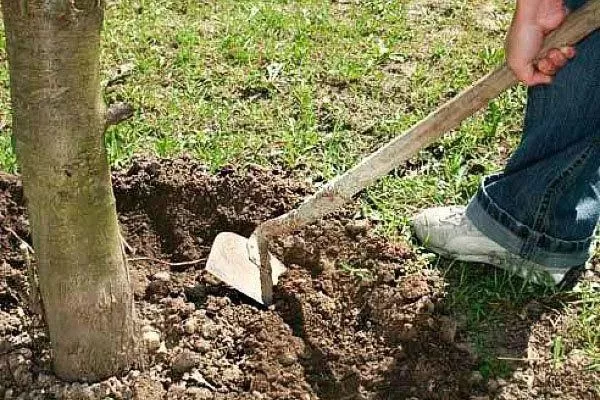
- Loosen the soil under the treeCarry out this procedure to prevent the formation of a dense, air-impermeable soil crust. Perform it every time after rain or watering. Combine loosening with weeding.
- Mulch the area around the tree trunkThis measure will help the soil retain moisture better. Sprinkle the soil under the peach tree with peat, straw, and sawdust.
- Make sure to protect the tree from rodentsIn the fall, before wintering, not only mulch the tree's trunk area, but also wrap the trunk with roofing felt or agrofibre.
- Carry out pruningA few weeks after planting the peach tree, thin out its crown. Measure 35 cm from the graft to the lateral shoot and prune all shoots above this distance into a ring. Leave 4-5 strong branches. Cut the remaining branches back to 3-4 buds above the ground. Regularly prune to remove diseased and dead branches.
Diseases and pests
The variety exhibits resistance to the following crop diseases:
- cleasterosporiasis;
- cytosporosis.
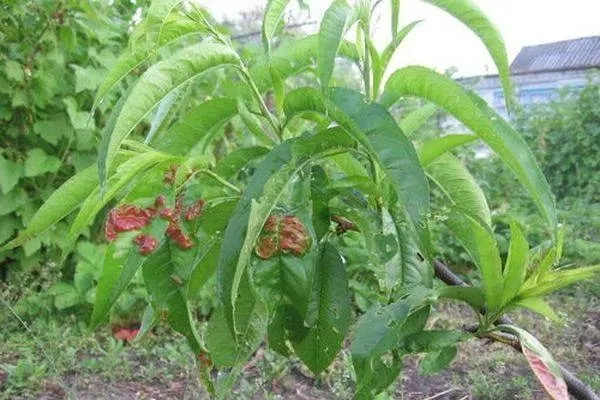
The Veteran peach is relatively resistant to powdery mildew. The disease attacks the leaves and spreads to the fruit if cultivation practices are improper. These seedlings are also susceptible to leaf curl, which manifests as deformation of the leaf blades and the formation of pimply swellings.
If you detect signs of disease in your garden crop, take the following steps:
- cut off affected branches and burn them away from the area;
- Spray the tree with Topaz, Skor or Fundazol.
Pay attention to disease prevention:
- In autumn, prune damaged, dried and infected branches;
- completely remove fallen leaves from under the tree;
- Spray it with fungicides in spring and after autumn leaf fall.
The variety is also susceptible to pest attacks, particularly the striped peach aphid. The latter is active in midsummer. To prevent peach infestation, follow these recommendations:
- destroy weeds;
- cut out root shoots;
- in early spring, before the buds swell, treat fruit trees with insecticides such as Iskra or Intavir;
- Treat the peach with an infusion of wormwood, tobacco, and wood ash.
Frost resistance and the need for shelter
Veteran is popular among Russian gardeners due to its hardiness, drought, and heat tolerance. It is relatively winter-hardy: temperatures dropping to -20°C damage the flower buds, and in the absence of snow, the tree's roots. This variety is hardy in zones 5-8.
Prepare your peach for winter if you are not growing it in the south of the country, as follows:
- mulch the tree trunk circle with sawdust, straw, and pine branches (layer thickness - at least 10 cm);
- wrap the trunk with non-woven material;
- Hill up the seedling that is about to overwinter for the first time.
Advantages and disadvantages
Domestic gardeners often grow the Veteran variety in their garden plots, basing their choice on its undeniable advantages:
The variety is not without its drawbacks. Among the few disadvantages, gardeners highlight:
Reviews
Veteran is a peach variety popular among Russian gardeners, developed by Canadian breeders nearly 100 years ago. It remains popular thanks to its early maturity and high yield, excellent fruit flavor, and long shelf life.