
Garden varnish, designed for trees, is popular not only with gardeners but also with vegetable growers and florists. This is due to its rapid healing and versatility. A wide selection of this product is available in specialty stores, but you can also make your own.
Description of garden var
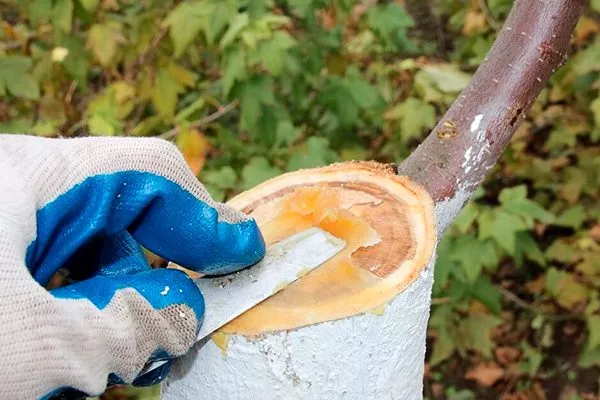
Garden varnish is intended for treating apple, pear, plum, gooseberry, and other trees, shrubs, and garden crops. It is a paste-like substance applied to cuts, breaks, and other damaged areas.
Composition of the product
Depending on the type of garden var, the product contains components aimed at neutralizing infections, quickly healing damaged areas, and binding the components for ease of use.
What may the var contain:
- beeswax or paraffin;
- propolis;
- rosin;
- drying oil or other oils of animal and vegetable origin;
- antifreeze or alcohol;
- nigrol.
The paste-like mass can be liquid, cold-resistant or melting.
What is it used for?
Its main purpose is disinfection, wound healing, protection from parasites and bacteria, and retention of tree sap. It is most often used in the following cases:
- after trimming;
- when removing broken branches;
- during vaccination;
- if the wood is damaged by pests or rodents;
- in case of illness.
There are also other negative factors that arise in the absence of treatment measures. For example:
- During the natural healing process, wood becomes infected with various types of bacteria. Most often, they are fungal. This contributes to tree disease, rot, and the formation of hollows. Garden pitch accelerates the healing process and disinfects.
- If branches are broken, the pieces remaining on the tree dry out. Insects penetrate the wood, eating it from the inside. The paste can seal open wounds.
- When a tree or bush is eaten by rodents, the bark and young shoots are severely damaged. After treatment with pitch, the destructive processes stop, and hares no longer approach the plant.
- In summer, trees can get sunburned. And in winter, frostbite. After treatment with the paste, recovery occurs.
An important question—when exactly to apply garden varnish—remains open, as expert opinions differ. Some believe the wounds should be allowed to dry slightly, while others believe they should be treated immediately, before infection occurs.
Advantages and disadvantages
Garden pitch, whether store-bought or homemade, has many advantages. These include:
- natural and environmentally friendly compositions;
- speed of healing;
- comprehensive action;
- versatility of application (suitable for trees, bushes, flowers and other crops);
- after hardening, the paste is not afraid of mechanical damage;
- excellent adhesion to wood;
- The required level of humidity is maintained under the garden pitch, so the wood does not dry out or become over-watered;
- the paste is easy to use;
- hermetically sealed after treatment, preventing contamination.
Garden var also has its disadvantages:
- large areas take too long to dry;
- cannot be used in freezing temperatures;
- There is a risk of buying a product based on chemical components (in particular, these are “home-made” pastes with a significantly reduced cost).
Store-bought garden var
Garden pitch is now sold everywhere—in specialty stores and online. The selection is wide, but gardeners particularly appreciate several pastes that have established themselves on the Russian market:
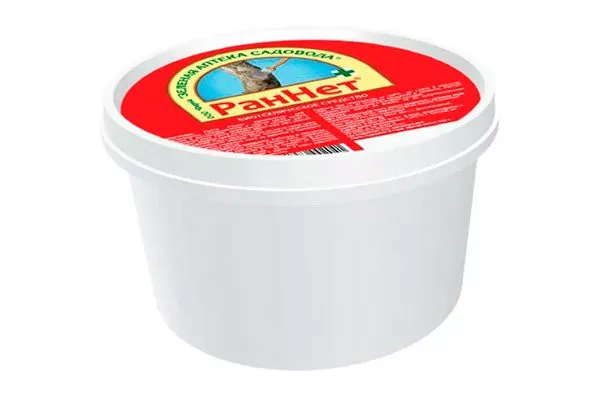
- Green Pharmacy of the Gardener RanNet. It is intended for the regeneration and disinfection of all types of wounds. It is produced in jars and is easy to apply, but prior to application, the wound must be cleaned down to the healthy tissue.
It is resistant to low temperatures (it doesn't harden) and requires no heating. The average price for 600g is 220-350 rubles.

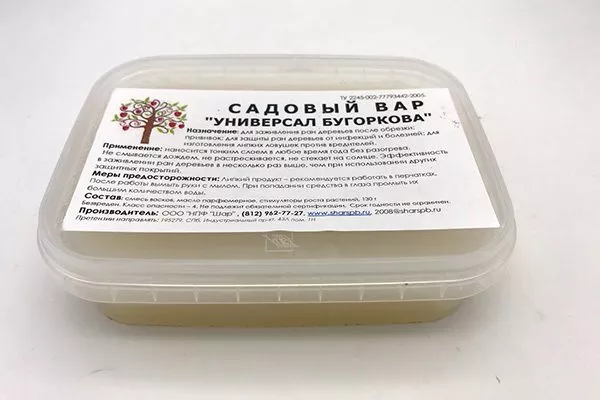
- Garden varnish "Universal Bugorkova". The product is considered highly effective, requires no heating, and is frost-resistant, making it suitable for year-round use. Its distinguishing feature is the transparent color of the paste, which is applied in an ultra-thin and flexible layer.
The wax doesn't wash off in rain, doesn't crack in the sun, and is a universal treatment for all types of damage. However, it's quite expensive—130 grams will cost 400-500 rubles (with a discount, around 300 rubles).
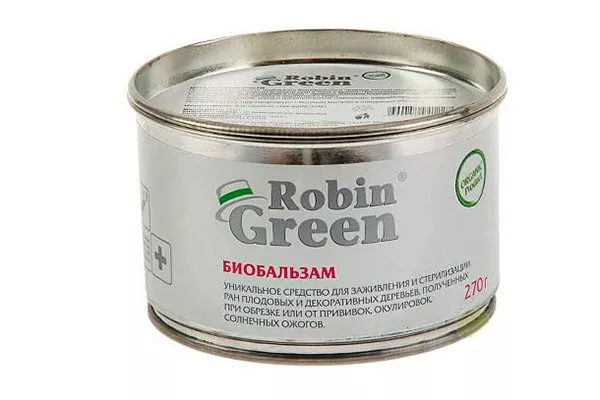
- Robin Green Biobalsam. The product is available in liquid form, belongs to the group of bio-products, and is considered universal. It also strengthens the tree's immune system and is particularly popular in southern Russia, as it prevents sunburn.
Produced in jars. Price for 270 g: 600-800 rubles.
- Green Belt Garden Var. Purpose: diseases, protection from pests and insects, sunburn, and cracks caused by drought. Cleaning of the damaged area is essential.
Available in 200g tubes. Cost: 180-200 rubles.
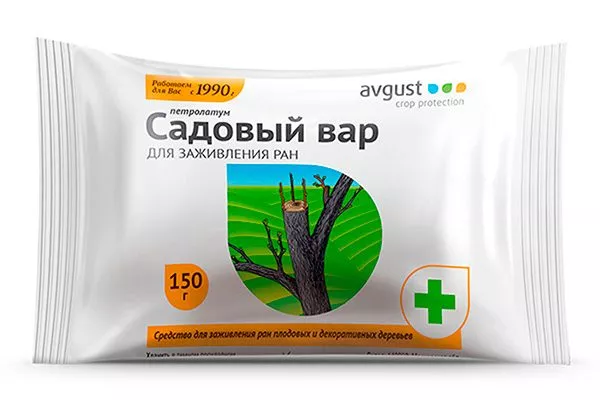
- August Garden var. Its primary purpose is to treat illnesses. The varnish is available in tubes and briquettes and is applied in a thin layer. It can be mixed with fillers (chalk or dolomite flour), which is necessary for sealing very deep wounds.
The price for a 150g briquette is 55-80 rubles, for a 150g tube – 175-200 rubles.

- ✓ Consider the climatic conditions of your region when choosing the type of var (cold-resistant, standard).
- ✓ Pay attention to the composition: natural ingredients are preferable for the environmental friendliness and safety of plants.
How to make your own garden var at home
If you can't or don't want to buy store-bought garden varnish, experienced gardeners recommend making your own. This method is advantageous because you can be sure of the eco-friendly ingredients. Furthermore, a homemade solution will be several times cheaper.
Paraffin based
This is the most popular recipe. It includes the following:
- 12 parts medical paraffin;
- 6 parts rosin;
- 4 parts of any vegetable oil (can be replaced with mineral oil).
The process of preparing paraffin garden varnish is simple:
- Pour the paraffin into a metal container and place it over a fire. It's best to use a double boiler.
- Melt the product and add rosin, which is pre-crushed to a powdery state.
- Once boiling, add the oil. Cook for about 20-30 minutes, stirring thoroughly.
- Remove from heat and let cool slightly, then knead with your hands and transfer to a storage container.
Another version of paraffin-based var requires taking the following components in equal proportions:
- paraffin;
- transmission oil;
- rosin.
The method of preparation is identical to the previous one.
With the addition of propolis
This option is beneficial because the propolis will additionally saturate the cut areas with nutrients. What's included in the recipe:
- wax – 3 kg;
- turpentine – 1 kg;
- propolis – 2 kg;
- rosin – 6 kg.
Cooking instructions:
- Place all ingredients except turpentine in a water bath.
- Bring to a boil and cool.
- After the mass has cooled, pour in turpentine.
- Mix thoroughly.
The product will need to be kneaded with your hands before use.
Based on beeswax
Beeswax helps wood wounds heal very quickly. This is especially important in regions with high humidity. There are several varieties of garden varnish.
What you will need for recipe #1:
- beeswax – 4 parts;
- rosin – 8 parts;
- Visceral fat – 2 parts.
What you need for recipe #2 (according to Zhukovsky):
- beeswax – 1 kg;
- unsalted pork fat – 1 kg;
- rosin – 1 kg.
Recipe #3 has slightly different proportions:
- wax and lard - 1 part each;
- rosin – 4 parts.
The method for preparing garden var is the same:
- Pass the internal fat or lard through a meat grinder.
- Separately melt the fat, wax and rosin.
- Combine all ingredients and mix well.
- Leave for 2 hours, then melt the mixture again.
- Pour cold water into another pan.
- Pour the mixture into this container. The mixture will curdle under the influence of water.
- Take the mixture out and form it into a ball.
It is recommended to store in oiled paper or parchment.
Based on nigrol
Nigrol is a lubricant developed back in Soviet times. It is used for vehicles, military equipment, and other machinery. Nigrol is added to garden varnish when large and deep wounds need to be healed.
Take the following components in equal quantities:
- paraffin;
- nigrol;
- rosin.
How to cook:
- Melt the rosin and paraffin in a double boiler. Boil for 20 minutes, then remove from heat.
- Pour in nigrol and stir.
- Let it sit under a closed lid until it cools completely.
Cold-resistant garden vars
This type of var is used in regions with harsh climatic conditions, as the product can withstand low temperatures.
Option one is Reshetnikov's var. It contains the following:
- fir resin – 5 parts;
- yellow wax – 1/2 part;
- wine alcohol – 1/2 part.
How to cook correctly:
- Melt the resin and wax in a double boiler. Be sure to stir thoroughly, otherwise lumps will form.
- Add alcohol to the warm solution in a thin stream. Stir again.
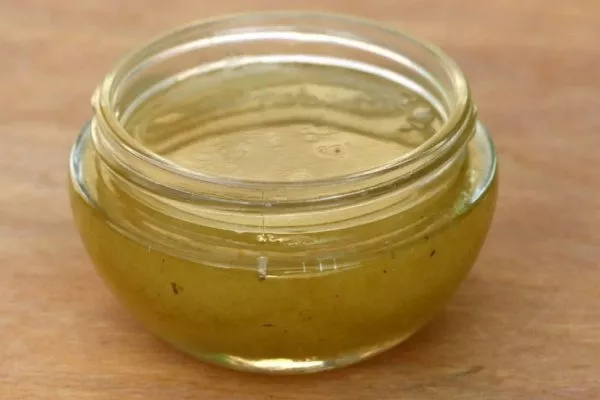
Option two is Gauga's var. For this you'll need:
- medical alcohol – 120 ml;
- pine resin – 800 g;
- baking soda – 1 tbsp;
- gum – 8 g.
The preparation method includes the following steps:
- Melt the resin, pour in alcohol.
- Separately combine the gum and baking soda. Add a little water and stir. You should get a thick paste.
- Transfer the soda mixture into a container with alcohol and resin.
The third option is Raevsky's Variety. It contains:
- wood resin – 1 kg;
- flaxseed oil – 4 tbsp;
- medical alcohol – 120 ml.
Sequence of actions:
- Melt the resin in a separate container.
- Pour in the alcohol first, then the linseed oil.
- After cooling naturally, transfer the mixture to a glass jar and cover tightly with a lid.
With the addition of drying oil
Drying oil is often used to prepare garden varnish, as the product has a positive effect on wood.
What you will need:
- paraffin – 5 kg;
- rosin – 1 kg;
- drying oil – 250 ml.
How to make it correctly:
- Melt the paraffin in one container.
- In another container, melt the rosin, then add the drying oil.
- Combine both mixtures while hot.
How to use garden pitch?
Garden varnish comes in two types: liquid and thick, which dictates the use of different tools—paint brushes, rollers, spatulas, etc. It's essential to treat the cut or broken area with an antiseptic before applying the varnish.
Instructions for use
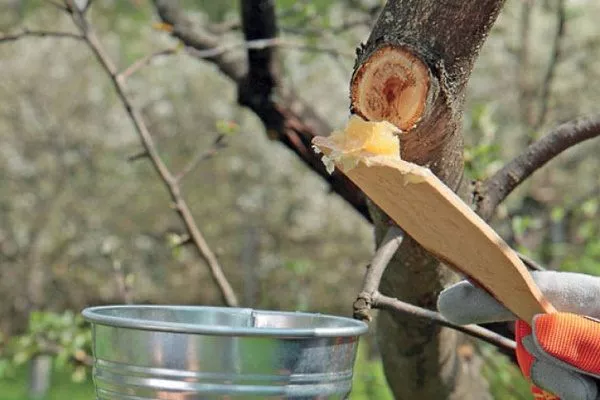
Tree wound healing agents are usually solid, so they need to be warmed before use. The working temperature should range from 35 to 40 degrees Celsius. This can be done by placing the container in hot water or on the stove. If you have time, leave the mixture in direct sunlight.
How to lubricate tree wounds – step-by-step instructions:
- Prepare the application tool and rubber gloves in advance.
- Clean the wounds with a knife if they are old.
- Treat the cut with any garden antiseptic (copper sulfate, etc.).
- Using a spatula (or a brush, etc.), apply the ointment to the damaged area. The layer should be approximately 1-2 mm thick. Avoid making the layer thicker, as the wax will crack as it dries.
- To improve adhesion, experienced gardeners recommend using heating devices. Direct a stream of hot air from a heat gun onto the treated surface. If you don't have a heat gun, use a gas or petrol torch.
To see how to perform the procedure correctly, watch the video below:
Features of aerosol garden var
You can find garden varnishes commercially available that are applied to the broken area using an aerosol spray. Gardeners who have started using aerosol garden varnishes note the following advantages:
- reduction of treatment time – it is enough to spray a thin layer on the wound;
- good adhesion of the product to wood;
- the ability to fill even the smallest cracks;
- high level of protection, as a solid film is formed;
- ease of use.
There are also disadvantages:
- high cost (for a 500 ml bottle you will have to pay about 500-600 rubles);
- You need to work in a protective mask and glasses, since when spraying, harmful substances spread around the gardener;
- It is inconvenient to process cuts at a great height.
Also watch this video, which shows a comparison and application of aerosol garden var from two different manufacturers:
Use in vaccinations
To ensure successful grafting, damaged sections must be treated with garden pitch to prevent infection. Any type of pitch can be used, but it can be used for budding, ablating, or bark grafting. After applying the grafting pitch, it's important to seal the area with tape.
Tips and recommendations
Applying garden putty has its own specific requirements, and proper use depends on following them. Experienced gardeners are happy to share their tips:
- It is prohibited to process wood that has signs of disease or mold - be sure to cut off these fragments first, and clean the wood down to living tissue;
- the edges are cleaned at the very base until smooth (remove all growths and bulges);
- treat garden tools and your hands (gloves) with antiseptics;
- wash the wounds first with water, then with copper sulfate, a weak solution of potassium permanganate;
- The procedure must be carried out in spring and before wintering;
- If you are treating diseases such as cytosporosis simultaneously with lubrication, treat the affected areas with iron sulfate (5%);
- the best weather for events is dry and cool;
- the optimal time is early morning, evening;
- After treating with an antiseptic, let the wounds dry completely, only then apply lubricant;
- if a large area is damaged, after applying garden ointment, cover the area with a rag (make a bandage);
- If the mixture cracks after drying, apply the varnish again;
- The hardened product can be softened most easily with warm hands, in the sun or in a water bath;
- If the wound has already been covered with garden putty, scrape off the old layer before applying fresh.
- ✓ After hardening, it forms an elastic film that does not crack or crumble.
- ✓ Does not contain harmful chemicals that may harm the plant.
What can replace garden pitch?
It's not always possible to buy or prepare garden varnish, but you need to act immediately. In this case, experts recommend using the following ingredients as a putty:
- A lump of earth. You can only apply the sealant for a short period of time, and after 2-3 days you'll need to treat it with garden pitch. To apply, take a slightly damp lump of soil, apply it to the damaged area, and wrap it in a plastic bag or cloth.
- Polyethylene. Prevents the wound from drying out and becoming infected. If the injury is minor, the procedure won't need to be repeated. If it's extensive, a varnish should be applied afterwards.
- Mullein. A good alternative that provides additional nutrition to the tree. To prepare a mixture, use 2 parts clay and 1 part mullein. You can also use chopped hay instead of clay.
- Slaked lime. Take 10 liters of water, 500 g of copper sulfate, 3 kg of slaked lime and 100 g of casein.
- Wood ash. The composition is complex, but effective. What you need: 8 parts cow manure, 4 parts chalk, 4 parts charcoal, 0.5 parts river sand. The mixture should be creamy.
- Dye. Give preference to oil and acrylic paints. Keep in mind that PF, alkyd enamel, nitro paint, and solvent-based paints should not be used.
- Drying oil. It is used in its pure form, but it must be applied in 2-3 layers.
- Plasticine/glue stick. It is used as a temporary measure.
- Chatterbox. It's made from clay. You'll need 200 g of it, 100 g of cow dung, 50 g of straw, and 2-3 tablespoons of copper sulfate. The consistency should be creamy.
Also watch videos with recipes that are a great substitute for ready-made store-bought garden varnish:
Reviews of garden var
Garden tree varnishes come in a wide variety, and they can be made at home from various ingredients. They always contain ingredients designed to kill bacteria, promote adhesion, and heal burns. The key is to prepare the mixture correctly or purchase a high-quality gardening product.