
Growing garden crops takes up a lot of time for homesteaders and summer residents. But to reap a bountiful harvest and maintain a tidy garden, you don't have to work from dawn to dusk. There are methods that make gardening and vegetable gardening much easier.
Use automatic irrigation systems
One of the most labor-intensive and time-consuming tasks is watering. Watering beds with buckets and watering cans is a huge waste of time and effort. Using hoses speeds up and simplifies watering, but it's still not ideal.
- ✓ Consider the type of soil on the site: sandy soils require more frequent watering than clay soils.
- ✓ Assess the availability of water resources: the presence of a centralized water supply or the need to use storage tanks.
Irrigation systems allow for the delivery of water to plants, ensuring soil moisture without human intervention. A landowner can leave their plot without worrying about their garden suffering from drought—water will be supplied according to a schedule.
Irrigation systems:
- Gravity-flowing. Dig 10-cm-deep trenches along the sides of the garden bed and connect them with a plastic pipe or regular hose—it can be connected to a water barrel. The barrel is placed 1.5-2 meters above the ground to allow the water to flow under its own pressure. If you have a centralized water supply, this task is simplified.

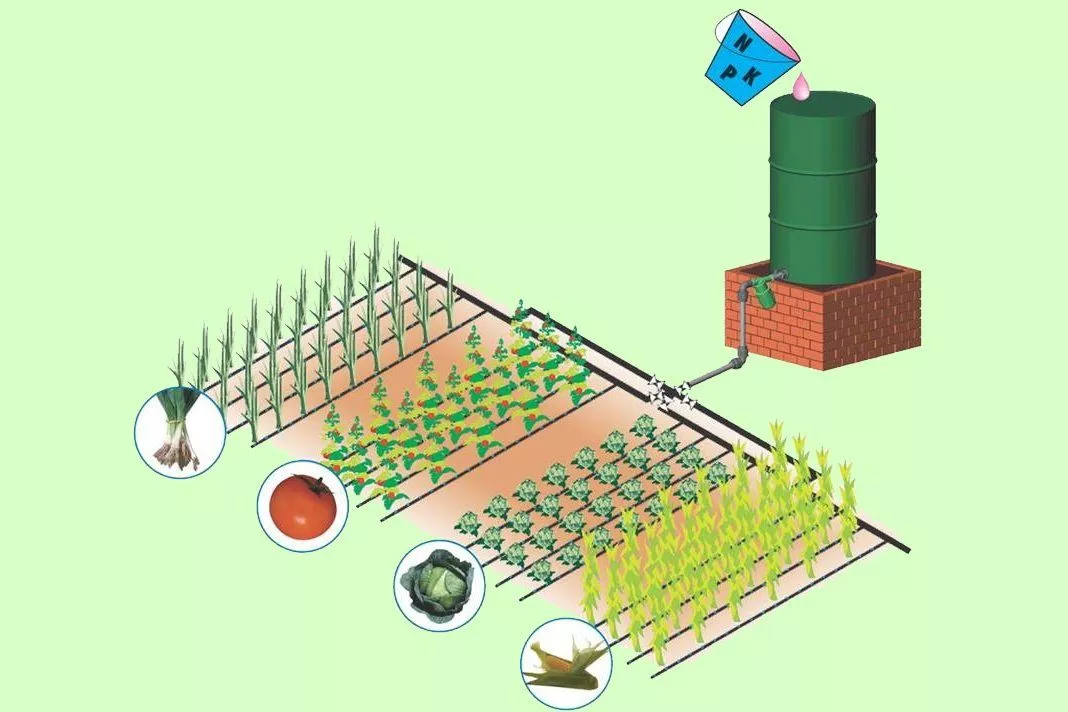
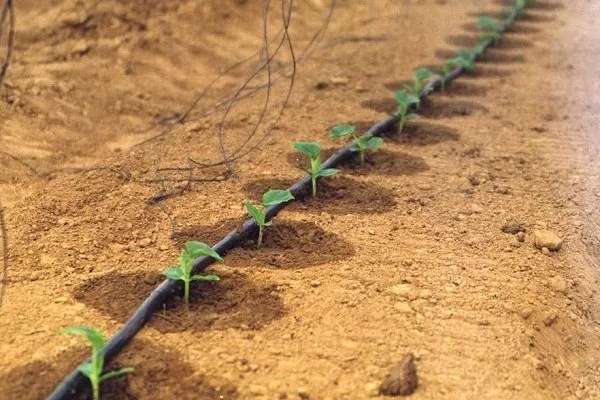
- Drip. This method is especially beneficial for watering moisture-loving plants. Water is supplied from a storage tank or through a pipeline.
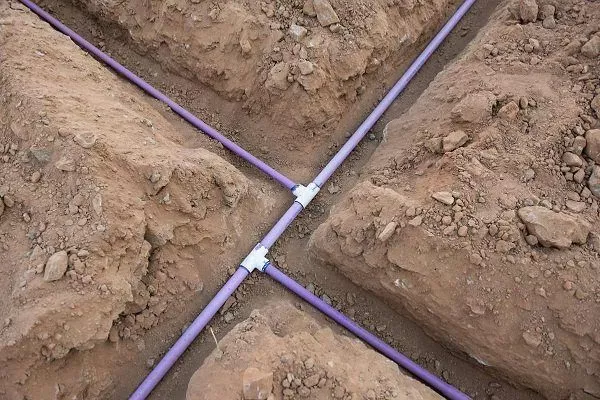
First, a central pipe is installed, with connectors extending outward toward the garden beds. To ensure water flows at the desired rate, a timer is installed.
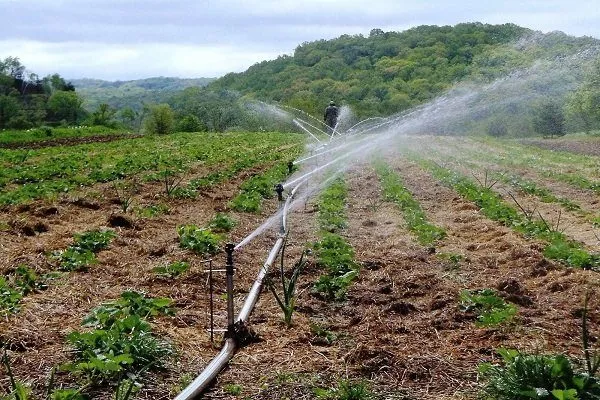
- Rain. Sprinklers—pivoting or static—with varying spray angles are installed throughout the property. This option is suitable for larger areas and requires adequate pressure in the system. A pump is also used. The spray radius reaches up to 2 meters.
Sprinkler irrigation prevents erosion of the topsoil, as there is no water movement across the surface. The downside is the high cost of purchasing equipment.
- Intrasoil. The system consists of plastic pipes distributed throughout the site. They are buried in the ground to a depth of at least 30 cm. Holes are drilled in the pipes to allow water to reach the plant roots. This system is used in areas that are not subject to digging.
Polyethylene pipes are used for subsurface systems—they are easy to install, strong, durable, and do not form deposits on their surface. The plastic is completely inert to the soil and does not deteriorate even when water freezes in the pipes.
Prevent weed growth
Weed control has always been a time-consuming and labor-intensive endeavor. It's a completely unproductive endeavor aimed at eliminating a factor that hinders the normal growth of crops.
The traditional method of weed control is hand weeding with a hoe. Weeding the beds requires hoeing every 2-3 weeks, as weeds quickly grow back from their roots, and new ones emerge from seeds scattered throughout the garden.
How to prevent weed growth:
- Use herbicides. A distinction is made between non-selective and selective herbicides. The former destroy all weeds, while the latter target specific species. Popular herbicides include Roundup, Tornado, and others.
Herbicides can help control tenacious weeds such as couch grass, goutweed, and hogweed. Follow the instructions on the packaging. - Cover the beds. To prevent weeds from growing, cover the beds with an opaque material. Black plastic, agrofibre, or regular cardboard will work. Make slits in the material for the plants to grow in. To make the beds more attractive, you can sprinkle the plastic with sawdust, hay, or straw.
- Sow green manure. After harvesting, weeds grow vigorously in the cleared area. To prevent this, sow the area with rapeseed, rye, and white clover. These inhibit weed growth by enriching the soil with glycosides, which inhibit the growth of harmful plants.
Green manure is an excellent fertilizer. Three weeks after sowing, dig the area, incorporating the green manure into the soil to a depth of 3-4 cm.
Unlike film, agrofibre "breathes." It's a lightweight, durable, and weather-resistant material. Condensation doesn't form underneath it, preventing the development of fungal diseases.
Use new types of fertilizers
No matter what crop you grow, it has its own fertilizer schedule. From early spring to late fall, gardeners and horticulturists have to apply fertilizer to fruit trees, tomatoes, cabbage, berry bushes, and so on. APION—"fertilizer for the lazy"—helps solve this problem.
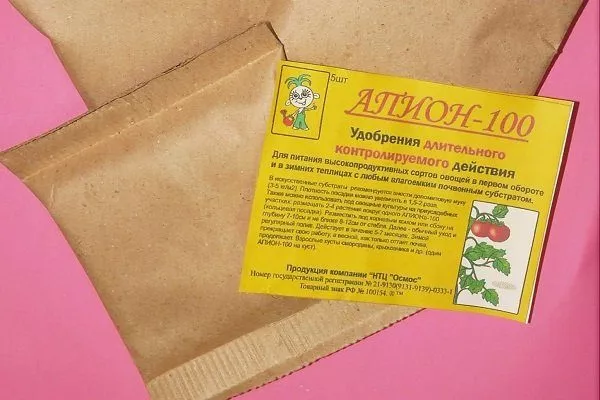
The acronym "APION" stands for Automatic Feeding Osmotic Pump. Every plant is a biological pump that draws nutrients from the "APION."
What is APION and how does it work?
- It's a tablet or a small packet. You bury it in the soil so you can forget about fertilizing for a year or two.
- Inside the semipermeable shell are soluble fertilizers and growth biostimulants.
- The validity period varies from several months to 1.5 years.
- Fertilizers are evenly dosed, reaching the plant roots in the required quantities throughout the entire growing season.
Choose "convenient" trees
Maintaining an orchard requires not only time but also certain knowledge, skills, and abilities. To simplify and reduce gardening chores, it's recommended to follow a specific strategy at different stages of cultivation.
How to simplify the care of garden trees:
- Low-growing varieties. The shorter the tree, the easier it is to care for. A large pear or apple tree is very difficult to maintain, requiring the use of a stepladder for various tasks.
In a garden of dwarf and columnar fruit trees it is easier:- carry out spraying;
- perform pruning (in the types indicated it is reduced to a minimum) - standing on the ground, you can prune any branch;
- collect fruits - no need to climb ladders or use fruit pickers.
- Conduct rejuvenation. Aging trees inevitably weaken, become ill, and require increased care. To prevent or delay premature aging, special rejuvenating pruning is necessary.
- Trim trees properly. If you neglect your orchard, the crowns will become overgrown, and the fruit will fail to ripen properly. Properly and timely pruned fruit trees require much less care than unpruned ones—they're less susceptible to disease and produce better fruit.
- Choose varieties with high immunity. The more resistant a tree is to fungal, bacterial, and viral diseases, the less maintenance it requires. If it's constantly sick, it needs to be sprayed regularly, but there's still no guarantee that the disease won't affect the harvest.
Take care of your garden tools
Many inexperienced gardeners waste a lot of effort using low-quality or ineffective gardening tools. Dull hoes and awkward handles complicate and prolong gardening. Tools often deteriorate due to improper storage.
How to choose good equipment:
- Cutting edges must be sharp. Otherwise, you'll have to put more effort into the work than necessary.
- When choosing hoes, shovels and rakes, take your height into account - select the equipment accordingly.
To prevent equipment from deteriorating, it's important to store it properly. If you leave rakes and shovels outside, the iron parts will rust, and the wooden ones will rot and deteriorate.
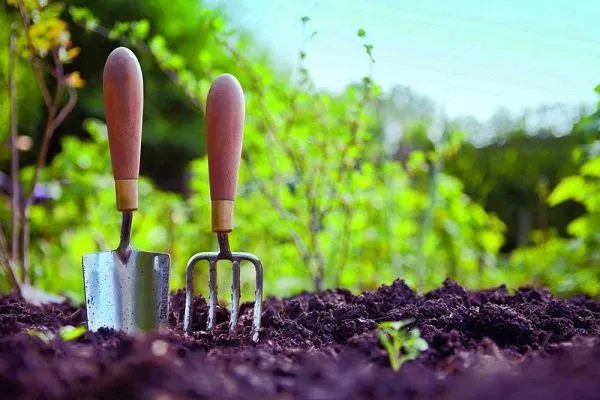
There are tools for a wide variety of tasks that can make gardening easier—fruit and berry pickers, special stools and carts for sitting, hand cultivators, mowers, and much more.
Perennial plants
Gardeners won't have to start the season pulling up dead wood, weeding, and planting new plants in their gardens if they plant perennials. This approach will free up a lot of time, which can be spent on more important tasks, such as pruning trees, preparing garden beds, etc.
What perennials to plant in the garden:
- Seed the soil with lawn grass. You won't have to weed or dig the area, and your garden will always be beautifully green.
- Plant shrubs. They can serve as a stunning hedge, decorate the garden, and even produce fruit. Consider serviceberry, dogwood, barberry, hawthorn, and other berry bushes that are hardy and drought-resistant.
- Sow and plant perennial flowers in the flowerbeds - tulips, peonies, chrysanthemums, various succulents.
- Replace large-flowered species and varieties with natural counterparts. They are more modest in appearance, but can grow for many years without replanting.
If you don't want to dedicate all your free time to tending to your garden, avoid crops, trees, flowers, and shrubs that require a lot of attention. Instead, choose low-maintenance plants.
You can learn about perennial flowers in the following video:
Install modern greenhouses
Many gardeners have their own greenhouse on their property, where they grow seedlings for open ground or heat-loving crops like tomatoes, cucumbers, and so on. Traditional greenhouses are made of film. The transparent covering material is simply stretched over arches.
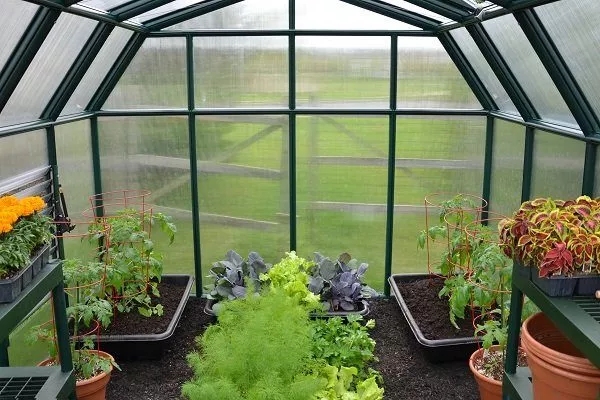
Choose a greenhouse model with an automated system for watering, ventilation, and temperature control. This will save you a lot of time and effort while providing ideal growing conditions for your plants.
Consider the frost resistance of plants
Consider plant zoning. This depends on the climate and frost resistance of the plants. Avoid wasting effort on growing crops or varieties that are not suited to local conditions.
Within the same crops, there are varieties that don't require insulation or shelter. This applies to both fruit trees and garden crops. By choosing a frost-resistant option, you'll save time and money, and reduce the risk of frost damage and crop failure.
Grow fewer seedlings
Many garden crops are grown from seedlings. However, it's not necessary to start them on windowsills. Seedlings can be grown directly in a greenhouse or even directly sown into the ground. Indoor seedlings often become leggy and diseased, and they don't transplant well.
The seedling method should only be used if it's truly profitable, or if there's no other way to get a harvest. Cabbage, cucumbers, squash, and melons can all be grown from seeds. The harvest will be delayed, but you won't have to deal with seedlings.
Buy ready-made seedlings
It's easier and often cheaper to buy seedlings than to grow them yourself. There are people and companies that professionally grow seedlings in large greenhouses, where optimal growing conditions are maintained.
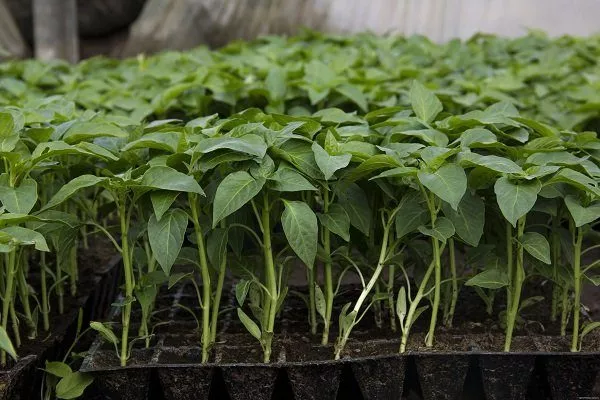
Many gardeners spend time growing seedlings, believing that this is the only way to obtain healthy, disease-free seedlings. In reality, there is no guarantee that such seedlings will be healthy or free from blackleg or other dangerous diseases.
The best solution is to find a reliable seedling supplier, which will save you a lot of time and effort growing them.
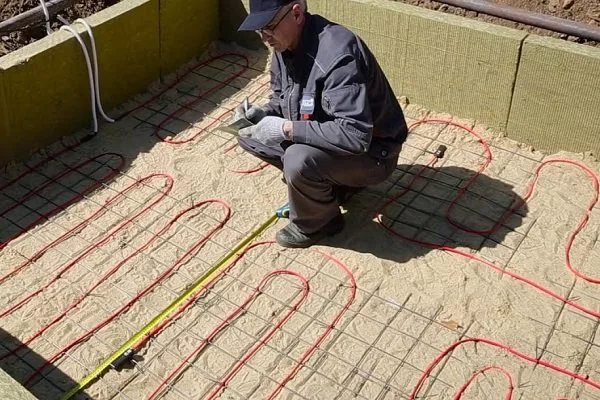
Use the results of scientific and technological progress
Keep your finger on the pulse of scientific and technological progress, which never fails to influence agriculture. Alongside traditional growing methods, you can utilize all sorts of advanced advances that simplify plant care.
Sow seeds in the fall
Experienced gardeners know that a large number of garden crops can be sown/planted in the fall.
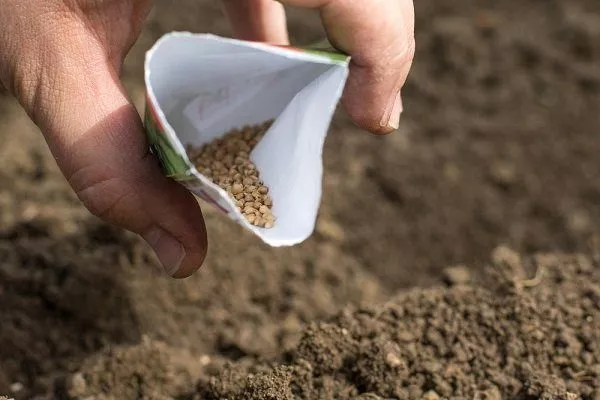
Advantages of autumn planting:
- In spring, time is freed up—during this period, gardeners have enough concerns related to sowing and planting work.
- Anything sown in the fall will grow vigorously in the spring, outpacing plants sown/planted after winter. This allows for earlier harvests.
In the fall, you can sow dill, carrots, cabbage, beets, and various garden flowers—asters, marigolds, calendula, and many others. It's also convenient to plant bulbous crops like garlic and onion sets before winter.
Plant self-fertile plants
Self-sterile plants require pollinators. To obtain a harvest, two or three pollinator varieties must be planted near the main tree. This takes up space and the time required to care for multiple trees.
Buy seedlings with closed roots
All seedlings are divided into two broad groups based on root type: closed-root and open-root. Open-root trees are trees whose roots are contained in planting containers.
- ✓ Check the root system for rot and mechanical damage.
- ✓ Make sure that the seedling is adapted to the climatic conditions of your region.
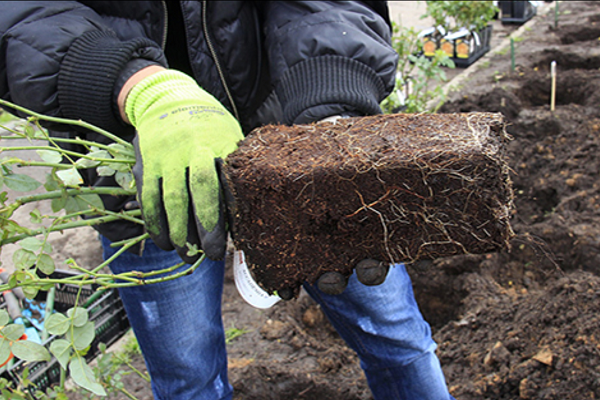
To plant a regular seedling—one with bare roots—you have to dig holes in advance and add fertilizer. Not every tree planted this way takes root.
Advantages of container-grown seedlings:
- may have to wait a long time to board;
- take root well;
- They are easy to plant - a hole is dug to fit the pot, the seedling is watered, removed from it and moved to a new location.
Treat trees and shrubs in a timely manner
With trees, treatment and prevention are just like with humans—prevention is cheaper and easier than cure. Furthermore, not all garden crop diseases are treatable. If a tree dies, it will have to be uprooted, a new one planted, and a harvest will have to wait several years.
There are simple and effective preventative methods that can help prevent many diseases. These include preventative spraying, whitewashing the trunks, winterizing, and so on.
You can learn more about tree treatment in the following video:
Create optimal conditions for plants
Before planting a plant, find out its growing conditions. How does it handle light, does it tolerate shade, is it sensitive to groundwater, and other nuances. The more factors you consider, the better the chances that the plant will thrive without causing problems for its owner.
Taking into account growing conditions is especially important for fruit trees—they grow slowly and are extremely difficult to transplant, so any mistake leads to a loss of time, harvest, and the tree itself.
Gardening isn't a necessary necessity for many people today. It's more of a hobby, a way to usefully spend time. To make gardening a pleasure, you need to carefully consider your plot's development strategy and approach its maintenance wisely.