
Every gardener who has ever tried to grow dill has encountered problems, such as signs of disease or mechanical damage from insect pests. Taking timely measures will help save the harvest, because the more severe the situation, the more radical the solution.
Dill diseases
Various diseases adversely affect dill at any stage of growth. Most often, those at risk are those with poor agricultural practices, where dill lacks immunity to infection due to nutrient deficiencies.
Peronosporosis
The first stage of infection is characterized by the appearance of dirty yellow spots on the plant's leaves. As the disease progresses, the leaves turn brown and become covered with a gray coating. The leaves wrinkle and dry out. The disease progresses so rapidly that a week of inactivity can result in the loss of an entire crop.
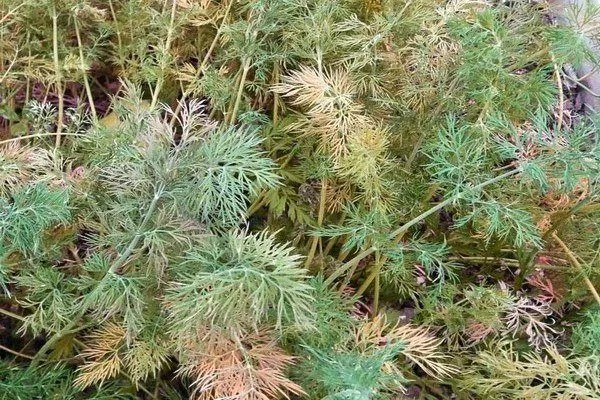
The development of this disease is caused by temperature fluctuations in the greenhouse, the presence of weeds and old infected plant debris.
- ✓ The air temperature must be at least +15°C to activate microorganisms in biological products.
- ✓ Carry out treatment in cloudy weather or in the evening to avoid rapid evaporation of the preparation from the leaves.
Folk remedies are not suitable for combating downy mildew. In the early stages of infection, treatment with Fitosporin-M, Planriz, Baikal-EM, and others can be effective. These biopreparations are non-toxic and non-toxic, making the fruits safe to eat. Cucumber beds should be treated twice, 14 days apart.
When downy mildew has completely taken over your cucumbers, only pesticides can help. For example, use Acrobat MC, Oxychom, or Ridomil Gold, strictly following the instructions. After treatment with these chemicals, do not eat dill for a month.
Powdery mildew
Powdery mildew is one of the most common diseases in gardens. It can be identified by the appearance of a white coating on the surface of the plants, which thickens over time and spreads out over an increasing area. Dill loses its juiciness and flavor, becomes wilted, and lacks a marketable appearance.
- ✓ The plaque first appears on the underside of the leaves, then moves to the top.
- ✓ Affected leaves may curl and fall off, but the plaque remains in place.
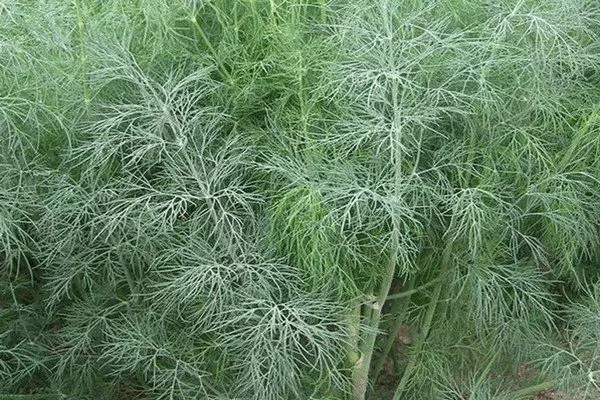
Powdery mildew is transmitted by flying insects such as aphids, ants, etc. Infected plant debris from the previous season can also be the source of infection.
Initially, the disease can be treated with folk remedies. After removing the infected bushes, treat the remaining dill with an infusion of onion peels with mustard powder. A soap solution or whey diluted with water (1:10 ratio) with one drop of iodine added to each liter also produces positive results.
In advanced stages of the disease, only fungicides, solutions based on Bordeaux mixture and copper sulfate, and antibiotics can help. Such medications include Strobi, Mikosan, Terramycin, and others. After using these medications, dill should not be consumed for at least 21 days.
Fomoz
A fungal disease characterized by the appearance of elongated brown spots with a dark border and black dots inside on dill. The leaf branches near the ground may also take on a pink tint, and rotten spots may appear on the roots.
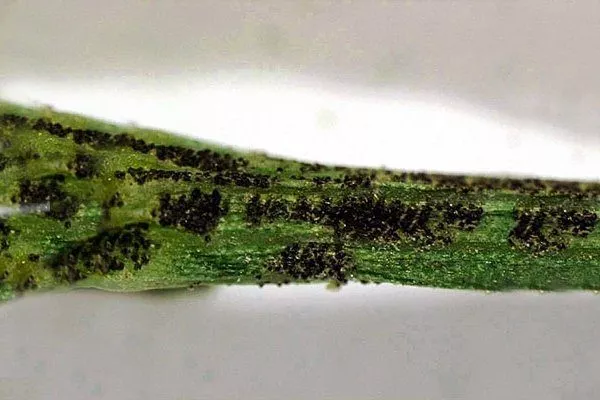
The dill stem is affected by phomosis
Waterlogged soil and warm weather, infected weeds, dense plantings, and boron deficiency in the soil promote disease development. It only takes 14 days for the blight to destroy crops. The disease spreads from an infected dill bush and spreads further.
You can save the greenery by promptly removing diseased plants from the bed and destroying them. The remaining plants should be periodically sprayed with Bordeaux mixture. Preventative measures include treatment with Fundazol, fertilizer, and boron.
Verticillium wilt
This disease is characterized by stunted growth, curling leaves, browning, and degeneration of the dill. This is because, once inside the plant, the fungus clogs the tissues and poisons them with the toxins it releases. The dill loses its strength and is unable to replenish itself due to the root system's inability to absorb minerals.
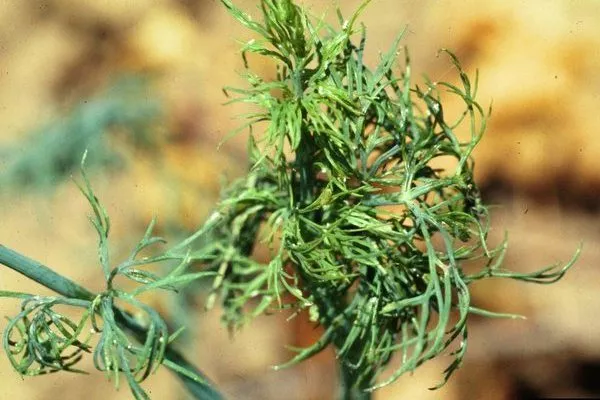
Poorly decomposed and infected manure and compost are considered the source of verticillium wilt. Hot weather and low humidity trigger the disease's development.
The complexity of this disease is that it may not manifest itself for 2-3 seasons. Verticillium wilt has no cure. Preventative measures include treating dill beds with Fitosporin-M, Fitodoctor, and other chemicals. When sowing seeds, sprinkle Gliocladin, Trichodermin, or Entobacterin into the rows.
Cercospora leaf spot
A fungal disease that affects the green parts of dill. Dark spots form where the fungus enters and is active, which become coated with a film as the spores mature. The infected plant quickly dies.
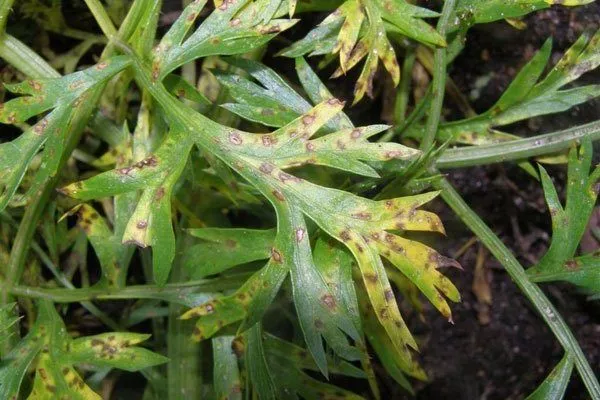
The source of the disease is the presence of weeds, where the fungus overwinters, as well as infected plant debris. To prevent the spread of the infection, diseased dill bushes and weeds are destroyed. Healthy plants are treated with Fundazol as a preventative measure.
Blackleg
A disease caused by a fungus. In affected dill, the decay process is concentrated in the underground portion of the plant. The root system's inability to function leads to rapid wilting and death of the foliage.
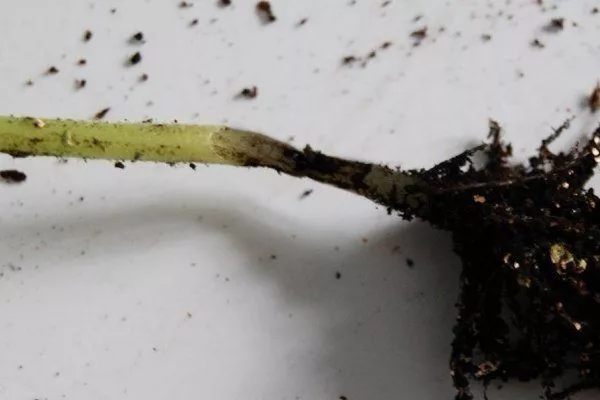
Blackleg most often occurs due to the sowing of infected seeds and the lack of disinfection measures before planting them in the soil. Conditions for the active development and spread of the fungus include dense plantings that impede ventilation and aeration of the root system and plants themselves, overwatering, and heavy soil.
At the first signs of infection, reduce watering of the dill and treat the beds with a potassium permanganate solution. Onion peel infusion, Fitosporin, and Baktofit also produce good results.
Fusarium wilt
Fusarium wilt is a fungal infection that spreads when soil is overwatered and air temperatures are high. When infected, dill dies and changes color: first turning yellow, then brown. The accumulation of toxins makes the crop unfit for consumption.
The fungus can spread over large areas in a short time, so if it's detected, infected dill plants are destroyed, roots included. The beds are treated with Fitolavin, Vitaros, or other fungicides. As a last resort, Oxychom and Discor are used.
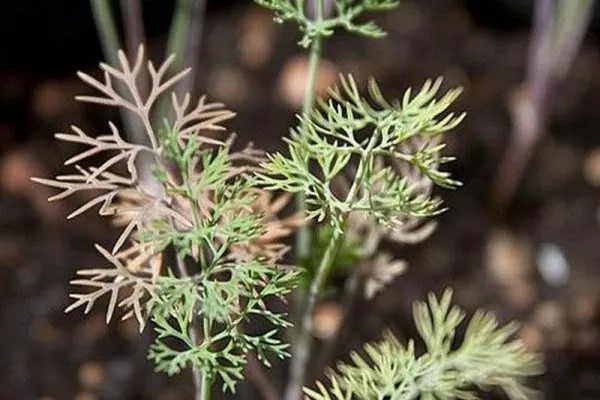
Prevention plays a key role in combating dill diseases. It's much easier and more cost-effective to prevent a disease from developing and progressing than to search for treatments, wasting time and a significant portion of the harvest. Moreover, most fungal diseases are incurable in their advanced stages. All dill plants will have to be uprooted and burned, and the beds treated with antifungal agents.
To increase the crop's immunity to diseases, it is recommended to use preparations such as "Siyanie" and "Baikal EM-1", using them according to the instructions.
Pests
Insect pests not only cause physical damage that can kill dill but also transmit certain diseases. Therefore, preventing and controlling pest attacks is essential when growing herbs.
Blind bug
Herbivorous insects that feed on the sap and pulp of garden crops cause significant damage to dill crops. The plants wilt, and the inflorescences are damaged or destroyed by the pests, preventing seeds from forming. The presence of these bugs on dill can be identified by the webbing they leave on the leaves.
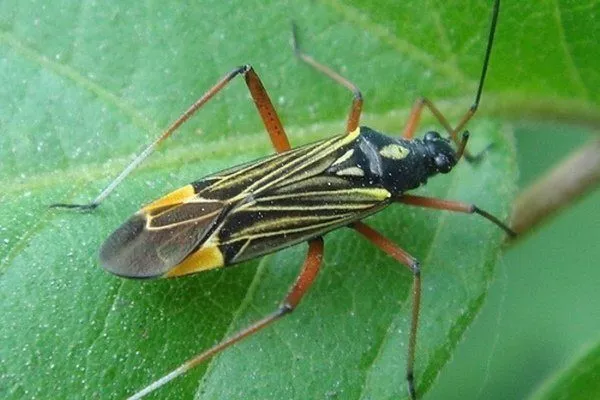
In the spring, when young shoots of the crop begin to actively grow, the fly bugs migrate to them. The female lays several eggs on the leaf petioles. A week later, the voracious offspring emerge, reaching sexual maturity in 24 days. Thus, the fly bugs can produce several generations in a single season.
To combat this type of pest, spray the crop with a solution of Fitoverm and Actellic.
Striped shield bug (or Italian bug)
The striped shield bug gets its name from its body shape and red-and-black striped pattern. In mid-spring, these pests emerge from their hiding places—the remains of the previous season's crops—and begin their active life on young dill plants.
In early summer, females lay eggs, preferring to do so on celery plants. This period lasts almost the entire summer, meaning that for an extended period, the young Italian stink bugs and their larvae suck the sap from the crop, reducing the yield by a third.
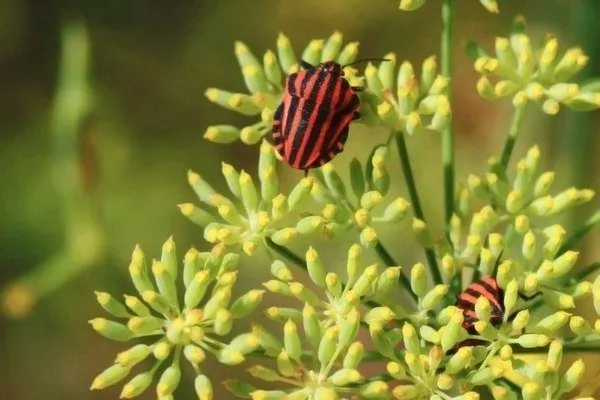
Control measures include hand-picking these insects and shaking them off into a container of water. Special attention should also be paid to weed control and wild umbelliferous plants. When planting dill, consider crop rotation and its proximity to celery crops.
Aphid
It is a small, greenish-yellow, almost transparent insect that feeds on the sap of dill and other umbelliferous plants, devouring the young upper shoots and leaf tips. Due to a lack of nutrients, plants wither, and their flavor and aroma are lost. When attacked by a large colony of aphids, dill quickly dries up.
These pests pose no danger to humans, but when eating dill, there is a high risk of eating insects, since they are not washed out of the greens when rinsing them in water.
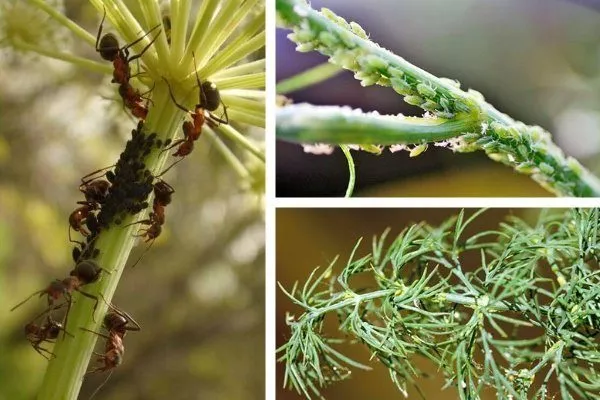
Aphids reproduce very quickly but are easily destroyed. This is because their bodies are not covered with a shell, meaning all treatments quickly penetrate the body. The following treatments provide rapid, positive results in aphid control:
- Infusion of potato tops.Pour water over the crushed potato pulp in a ratio of 1:5. Bring to a boil and let steep for 4 hours.
- Tomato tops infusion.It is prepared in the same way as the potato mixture.
- Tobacco infusion.Crush the tobacco leaves and add warm water in a ratio of 1:10. Let it steep for at least 24 hours. You can add hot pepper.
- Dandelion infusion. Chop 250 g of roots or 500 g of leaves and steep in warm water for 2-3 hours. Strain before spraying. This treatment can be repeated 2-3 times at 10-day intervals.
When infusing aphid treatments, it's recommended to add liquid or laundry soap. This will ensure the treatment stays on the leaves longer after application, and leave a thin protective film after drying.
Spray the prepared solutions in the morning or evening to prevent sunlight from reaching the treated bed. After spraying, wash the dill thoroughly under running water before eating.
Methods for protecting dill from aphids are described in the video below:
Carrot psyllid (Latin: Psyllidae)
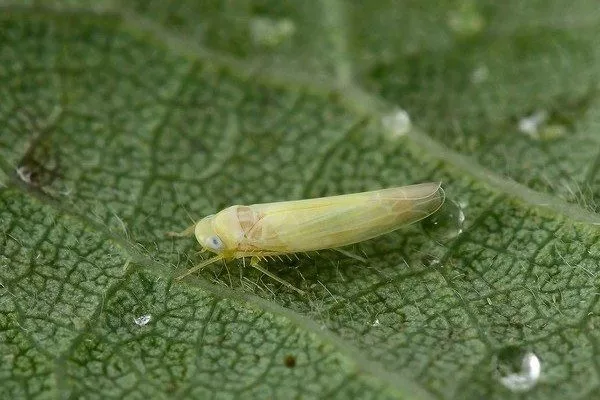
This light green insect is 2 mm long. It has red eyes, long, thin antennae, and membranous, translucent wings. The female lays eggs once per season. The insects overwinter on conifers, becoming active in early May.
Both adults and larvae are dangerous to dill. The pests suck the plant's sap, causing the leaves and stems to become deformed, wilt, and eventually dry out.
To combat the pest, destroy wild carrots, practice crop rotation, and plant away from conifers and shrubs. Treat dill with a tobacco infusion mixed with laundry soap or a citrus peel infusion. You can cover the garden bed with a special mesh material to create a mechanical barrier to the carrot psyllid. Spunbond and lutrasil are suitable.
Umbrella moth
The adult moth is a butterfly with brownish-red forewings. However, due to the vast diversity of moth species, its coloration may vary. The reddish body of the larvae has a green tint between the segments. In warm climates, a female produces up to three generations of moths.
It's the young generation of the parasol moth that poses a threat to dill. As they develop, the caterpillars consume the dill inflorescences, formed buds, and seeds, entangling them and fusing them together.
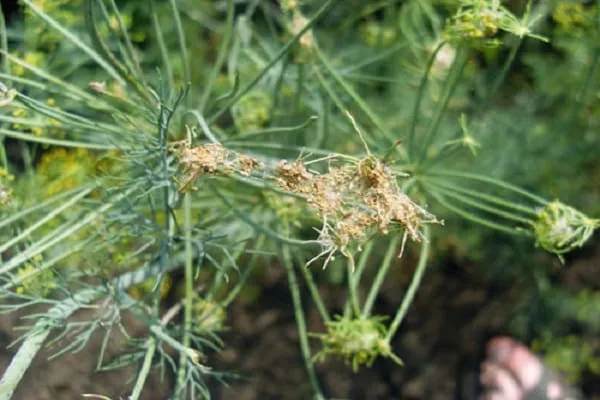
To control dill moth, cut off affected umbels and destroy them with fire, promptly removing seed florets. Keep the area clean to prevent pests from infecting the dill by flying in from wild umbelliferous plants.
Carrot fly (Psila rosae)
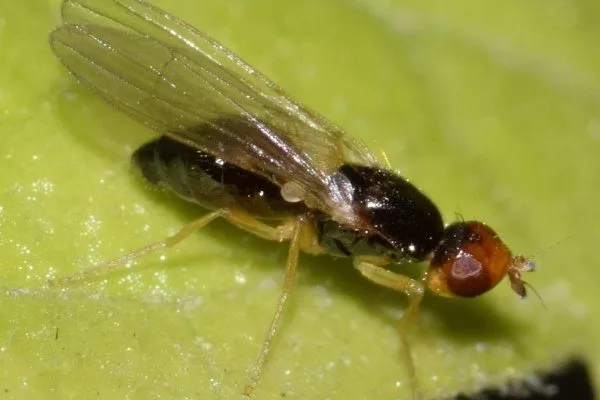
The carrot fly is a small, brown insect with transparent wings. It feeds on dill stems, causing rot and wilting of the plant.
A mixture of slaked lime, charcoal, and tobacco dust, mixed in equal proportions, has proven effective for pest control. It is scattered around dill bushes, using at least 5 grams per square meter of planting. This treatment is repeated three times, at 10-day intervals.
Spraying with an infusion of tomato tops and laundry soap has a positive effect. To repel them, use a decoction of plants whose odors are repulsive to carrot flies: garlic, onion, burdock, wormwood, chamomile, and yarrow.
Recipe: Pour 1.5-2 liters of hot water over 250-300 g of the herb and let it steep for 24 hours. Then, increase the solution to 10 liters by adding water and 30-50 g of crushed laundry soap. The effect of this treatment lasts no more than 5 days.
Caterpillar
Caterpillars consume foliage and stems, rapidly gaining weight and causing irreparable damage to dill. Not only insect pest larvae but also other butterfly larvae pose a threat to the crop:
- Anise swallowtail butterfly.Their offspring, during the transitional stage, are caterpillars, each body segment bearing a pattern of alternating yellow and black stripes. Later, they develop into large butterflies of similar coloration, with a blue posterior.
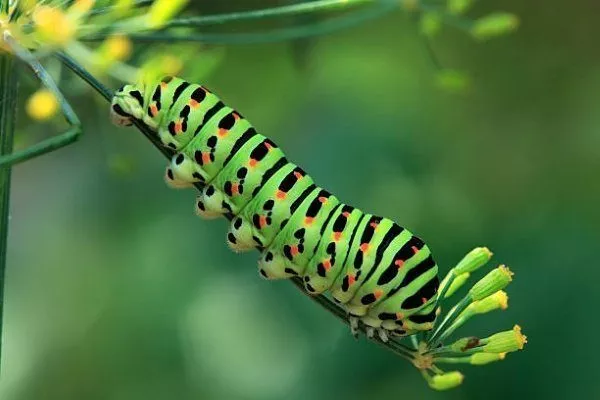
- Swallowtail caterpillar.A true beauty, it feeds on dill. Its delicate green body is adorned with orange and black spots, located across each segment. When it first emerges, it feeds on young dill shoots, and when mature, it prefers to eat the inflorescences and developing seeds.
To control caterpillars, simply use the natural food chain: caterpillar-ladybugs-birds. Don't destroy the ladybugs, as the birds will gather the caterpillars and eat them. You can also walk through your garden yourself, identifying and removing pests from your dill.
Spraying with an infusion of hot peppers is also possible. To prepare the solution, pour 1 kg of peppers into 10 liters of water and let steep for 2 days. Then boil the infusion for 45-60 minutes and let it steep for another 2 days. The resulting concentrate can be stored tightly sealed in a cool, dark place. For treatment, dilute 75 ml of the infusion in 5 liters of water and add 40 g of laundry or liquid soap.
Chemical treatment is the most effective, but also dangerous for other insects and humans. In this case, choose products that target a specific group of insect pests.
Prevention: Popular Methods
It's important to remember that using chemicals to control dill diseases and pests is highly undesirable. The crop is eaten fresh, and there's a high risk of poisoning from toxins. Therefore, preventative measures are especially important in protecting the crop from various pests.
Preventive measures against various diseases and insect pests include:
- Choose a well-ventilated area with adequate sunlight. Keep in mind that insufficient light will cause dill to stretch and become weak, while exposure to direct sunlight all day will cause sunburn.
- Disinfecting seeds before planting is as simple as soaking them in a light pink solution of potassium permanganate (1 g of potassium permanganate per 100 ml of water) for 20 minutes.
- Removing all plant debris from the previous season from the garden bed and treating the soil with an antifungal compound.
- Organize moderate watering to avoid over-watering and waterlogging of the area.
- Loosening the soil to remove the dense crust of earth that has formed on the surface.
- Thinning the planting to ensure air access to each plant.

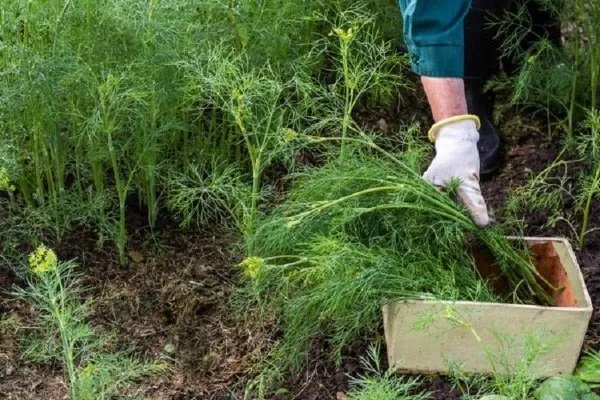
- Weed control: Weeds are a wintering ground for fungal spores and a potential source of infection. They must be removed by burning, or, better yet, by the roots.
- Digging up the garden bed in the fall so that low temperatures kill the larvae overwintering in the soil.
- Crop rotation helps prevent diseases and pests from developing in the same area. The best precursors to dill are plants from the cucurbitaceae, legumes, and nightshade families, but not from the umbelliferous family.
- Removing coniferous vegetation or planting dill away from them.
- Taking into account the proximity of crops when organizing crops.
- Create a living fence by planting thyme, nasturtium, marigolds, and wormwood. These are natural insect repellents.
When diseases and pests are not to blame
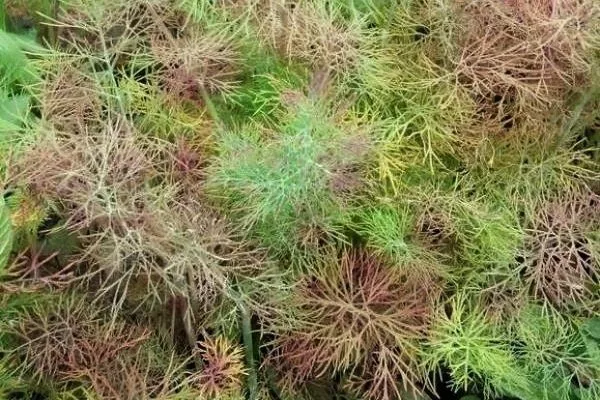
It happens that even in the absence of threats of disease and damage from pests, the dill crop still grows unhealthy, wilted, changes its rich color to pale, and loses its aromatic and flavorful qualities.
Dill turns yellow
Yellowing of dill leaves can be due to several factors:
- too dry or waterlogged soil;
- using cold water for irrigation;
- excessive exposure to sunlight;
- dense planting;
- nitrogen deficiency in the soil;
- characteristics of the variety.
Proper care and application of necessary fertilizers will correct the situation and eliminate the problem of dill turning yellow.
The dill is drying out
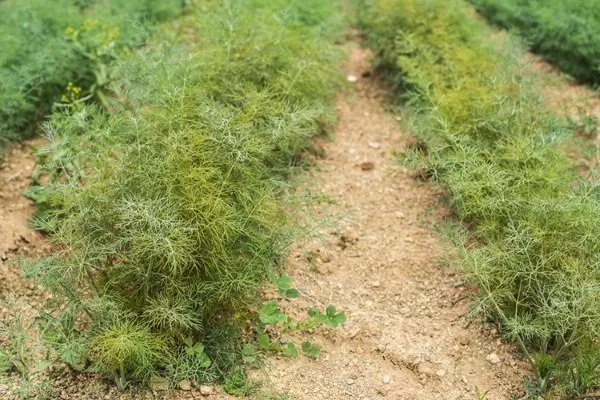
If there are nutrient deficiencies and nutritional problems, dill becomes weak, stops growing, and dries out. To save the greens, test the soil pH and bring it to a neutral level. Avoid using wood ash, as it reduces the plant's quality.
Fertilizer can be applied either directly to the roots or by spraying it onto the green parts of the dill. Use superphosphate or another complex fertilizer.
Bitter taste
Bitterness in dill can simply be caused by the plant being overripe. The plant contains bitter substances that accumulate in the leaves over time. The older the dill, the harsher it becomes and the more bitter its taste.
Violations in agricultural practices can also cause the appearance of an unpleasant taste in dill.
When growing dill, pay close attention to disease and pest prevention measures. Following simple procedures will save your harvest and preserve the flavor and aroma of this green herb. When combating disease and pests, remember that the choice of treatment directly affects the plant's edibility.