
Watering is one of the most important care measures when growing dill. The plant is easy to maintain, but either too much or too little moisture can be harmful. It's important to consider the growing conditions and development stages of the dill to choose the right frequency and method of watering.
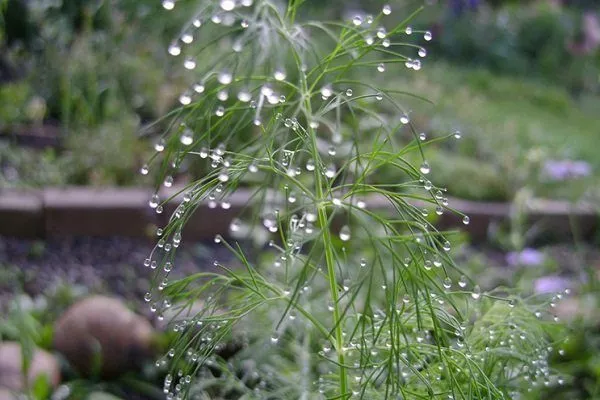
Frequency and methods of watering dill
In the garden, dill is grown in open ground or a greenhouse, and indoors, it can be harvested on a windowsill. Watering requirements depend on the chosen method and the plant's growth stage.
| Name | Soil type | Watering frequency | Features of watering |
|---|---|---|---|
| Growing in open ground | Sand, sandy loam, loamy | Once every 5-7 days | In hot weather up to 2-3 times a week |
| Growing in a greenhouse | Any | Once every 3-4 days | Regular irrigation every 2 days |
| Growing on a windowsill | Drainage is mandatory | According to the soil condition | Spraying every day |
Growing in open ground
Dill is planted outdoors from seeds. The soil is pre-moistened to ensure adequate moisture. At this stage, no watering is required, but only until the first shoots emerge.
During the rest of the growing and development period, the plant needs to be watered regularly. The frequency of watering should be adjusted to the soil condition—it should always be moist.
It's recommended to water dill once every 5-7 days. In hot weather, increase watering to 2-3 times a week, and it's best to mist the plant daily. During dry periods, watering twice a day is recommended.
On hot days, it's best to water dill in the evening after sunset or early in the morning. Watering during the day can cause the greens to burn. If it's cold outside, water in the morning or afternoon to allow the soil to dry out by evening. This reduces the risk of fungal diseases.
There are different ways to water dill:
- SprinklingThis is the ideal option for any greenery. You can use a dedicated irrigation system or a regular hose. In the latter case, it's easier to use a special nozzle, although you can plug the hole with your finger the old-fashioned way.
- Drip irrigationA very effective irrigation method. This system is suitable for large plots of 20 acres and larger. A constant water supply is essential for its use.
When growing dill in open ground, the frequency of watering should be based on the condition of the soil, but also take into account its type:
- SandIf it feels damp, but doesn't form a lump when squeezed in your fist, then it needs watering.
- Sandy loam soilWatering is required when it can be formed into a ball without pressure.
- Medium to heavy loamy soilYou need to form a ball of soil. If it falls apart when pressed in your hand, it needs watering.
To do this, you need to take a soil sample at a depth of 25-30 cm.
Unlike many agricultural crops, dill requires regular watering before harvesting. It's recommended to spray it with clean water a few hours before harvesting. This makes the greens juicier and helps them retain their marketable appearance and flavor longer.
Growing in a greenhouse
This method of growing dill is used in winter. The optimal indoor temperature is 15-17 degrees Celsius. Under these conditions, the plant needs to be watered every 3-4 days. It requires only a small amount of water.
In addition to watering, growing dill in a greenhouse requires regular irrigation, which is done every two days.
Sprinklers are effective in greenhouses. A mini-system is sufficient for dill.
Growing on a windowsill
If you're growing dill indoors on a windowsill, use a spray bottle. This method is especially helpful in winter, when radiators are hot and the air is quite dry. It's best to spray daily to keep the greens lush. Some of the moisture will also penetrate the soil. Spraying should always be done after fertilizing. This removes any fertilizer that may have gotten on the stems and leaves.
The specifics of watering dill on a windowsill depend on the season. When growing dill in the summer, you need to consider the soil conditions to ensure it doesn't dry out. This will depend on the room temperature, humidity, and the direction the window faces.
In winter, watering requirements are different. Don't water dill until the soil has dried out from the previous watering.
Watering dill on the windowsill is especially important when young shoots emerge. The plant begins to actively grow and develop, so water consumption increases.
When growing dill on a windowsill, ensure proper drainage. Fine pebbles or expanded clay can be used for this. Drainage helps remove excess moisture from the root system and reduce the risk of disease.
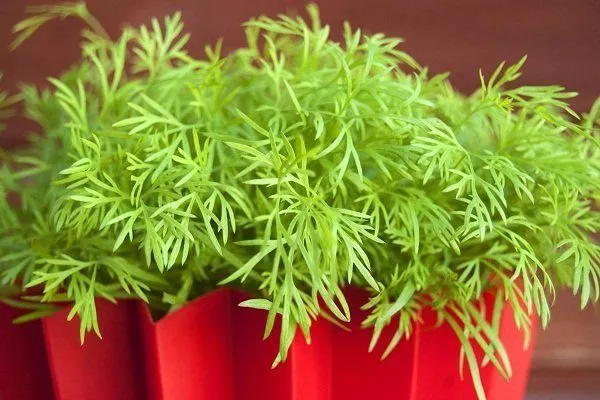
Water requirements
To ensure dill grows and develops well, you need to use the right water for irrigation. It should meet the following requirements:
- No chlorineIf you use tap water, let it settle for 24 hours. If possible, use melted snow for watering or run the liquid through a magnet. When growing dill outdoors, you can use rainwater.
- The right temperatureWhen growing dill on a windowsill, the water should be at room temperature; warm water is fine. Watering with cold water increases the risk of disease. If the plant is grown outdoors, the water should be warm. A few hours of sun exposure is sufficient for this.
- Salt contentA liter of water should contain 2-2.5 grams of these substances. You can check the salt content at home by pouring water into an enamel container and weighing the dry residue after it evaporates.
Water consumption for watering dill
When watering dill, always consider the condition of the soil and the plants themselves, as too little or too much moisture will affect their appearance. The optimal water consumption is 8-12 liters per square meter.
Watering rates increase on hot days, as moisture is quickly absorbed and evaporates rapidly. During this period, 20-30 liters of water are required per square meter of plantings using a drip irrigation system.
On hot days, sprinkler irrigation is used to refresh the plantings. In this case, 1.5-2 liters of water per square meter is required.
- ✓ Watering in the evening reduces water evaporation and increases its absorption by plants.
- ✓ Using drip irrigation on hot days prevents overheating of the soil and root system.
The dangers of too little and too much moisture for dill
Dill's soil should always be slightly moist. Insufficient moisture can lead to the following problems:
- yellowing of greenery;
- loss of taste;
- loss of healing properties;
- slowing down of cultural growth and development;
- poor harvest;
- accumulation of nitrates in greenery;
- leaf stiffness;
- insufficient absorption of nutrients.
The main danger of overwatering dill is the increased risk of disease. High humidity is an ideal environment for the growth and reproduction of fungi, bacteria, and other pathogens. One common problem is blackleg. The root collar darkens, weakens, softens, and thins. Root rot gradually sets in.
Overwatering dill can also lead to other problems:
- growth retardation;
- a significant reduction in the concentration of essential oils in greens, which leads to a loss of aroma and beneficial properties;
- land erosion;
- increasing the level of soil acidity.
Dill thrives on moisture but doesn't respond well to excess. With proper watering, the plant will reward you with a bountiful harvest of juicy, aromatic greens. For these results, other comprehensive care measures are also important: fertilizing, loosening the soil, weeding, and preventative maintenance. diseases and pests.