
Fertilizing is one of the comprehensive care measures for growing dill. Fertilizers are essential for the crop for various reasons. They can be purchased at the store or you can use folk remedies. Fertilizing is done at specific times.
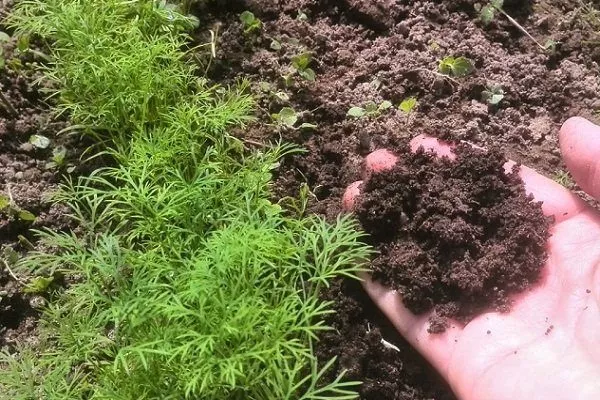
The need for fertilizing dill
To grow any agricultural crop, the plot is prepared in the fall. This includes applying fertilizer during digging.
- ✓ Consider the pH of your soil before choosing a fertilizer type, as some fertilizers can change the acidity of your soil.
- ✓ Check the micronutrient content of your soil to avoid excess or deficiency of certain nutrients.
During the growing season, dill requires fertilizing for the following reasons:
- Soil characteristicsIf the soil is not fertile enough, too acidic or alkaline, then fertilizers correct the situation, providing favorable conditions for crop cultivation.
- Poor germinationThe reasons may lie in poor seed quality or a lack of nutrients in the soil. Fertilizing stimulates crop growth.
- Slow growthAnother sign of nutrient deficiency.
- Yellow greensThis color change indicates a nitrogen deficiency.
- Reddening of leavesThis problem occurs due to excess potassium and can be solved with appropriate fertilizers.
Fertilizing is essential when growing dill indoors on a windowsill or balcony. In this case, the planting is denser, and the amount of soil is limited. Nutrients are used up more quickly, so they need to be replenished.
Timing for applying fertilizers
The timing of dill fertilization varies from plant to plant. If the plot was properly prepared in the fall, then during the growing season, fertilize as needed, based on the plants' appearance.
The feeding method and type of fertilizer are important. If using mineral fertilizers and applying them via watering, one application is sufficient. This is carried out two weeks after seed germination.
Dill can be fertilized by spraying, in which case the fertilizer should be applied 2-3 times. The first application should be done when the active growth phase is over, and the remaining applications should be done at two-week intervals.
Types of fertilizers for dill
You can use a variety of fertilizers for dill. Some are store-bought, while others can be made at home.
Ammonium nitrate
With proper fall soil preparation, the plant only needs one additional fertilization during the growing season. Ammonium nitrate stimulates bush formation and prevents yellowing of foliage. It should be applied two weeks after sowing. The recommended rate is 8 grams of fertilizer per square meter.
Another option is to fertilize newly emerged seedlings. In this case, the fertilizer application rate should be increased to 10 g per square meter. Two additional applications, spaced two weeks apart, are acceptable. In this case, use 5 g per square meter per application.
Ammonium nitrate should be applied according to the instructions. You can dissolve it in water or dig it into the soil. In any case, avoid getting the fertilizer on the above-ground parts of the plant.
Ammonium nitrate is deposited in greenery. It's important to strictly adhere to the fertilizer dosage and not apply it for at least two weeks before harvest.
Double superphosphate
This fertilizer is recommended for application before winter, but spring feeding is also acceptable. This can be done immediately before planting, applying 20-30 grams of the mixture per square meter.
You can fertilize the crop once the seedlings emerge. In this case, 10 grams of fertilizer per square meter is sufficient. Apply it dry to the soil.
Urea
This mineral fertilizer is applied when there is a nitrogen deficiency, indicated by yellowing or lightening of the foliage, or drooping stems. 20 grams of fertilizer per square meter is required.
Urea is applied after being diluted in water. Fertilizing is done two weeks after germination.
After adding urea, the crop no longer needs mineral fertilizers.
Organic fertilizers
Organic matter is essential for healthy green growth. It's recommended to apply it in the fall, but it can also be applied in the spring before planting.
You can choose one of the following options, while observing the norm per square meter:
- half a bucket of humus;
- half a bucket of pre-sifted compost;
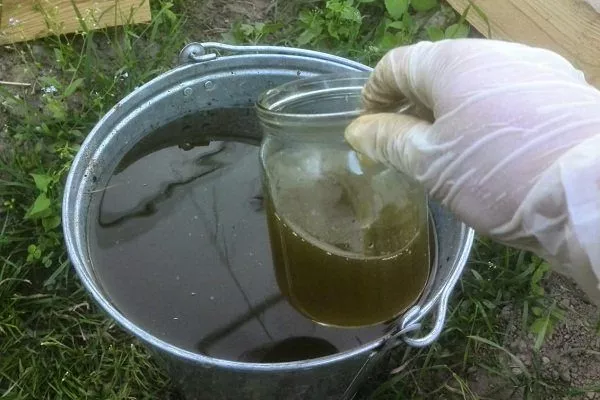
- dilute bird droppings in 20 parts water, leave for 3 days to ferment;
- Dilute mullein in 10 parts water and let it steep for several days.
Wood ash
The product serves as both a top dressing and a preventative measure diseases and pestsYou can apply it two weeks after the sprouts appear. Simply sprinkle the ash along the dill rows and water them. The soil should be loose, and the fertilizer should be applied in the evening or morning.
- ✓ Use only ash from clean wood, without any plastic or other chemicals.
- ✓ Check the soil moisture before applying ash, as ash may be less effective in dry soil.
If dill is grown for seed or needs umbels for pickling, wood ash can also be used to stimulate their formation. You can scatter it along the rows or add a cup of fertilizer to a bucket of water for irrigation.
Liquid humic fertilizer
This fertilizer can be purchased at the store. It's organic, as it can be based on compost, peat, or silt deposits. A great option is BIOUD fertilizer, which is made with several types of manure. It's sold as a concentrate that needs to be diluted in 20 parts water.
To prepare liquid humic fertilizers, use soft, settled water. Its temperature should be at least 15 degrees Celsius. For root application, dilute 10 ml of the product in a bucket of water; for foliar application, dilute the same amount in 15 liters of water.
Ammonia
This product is an aqueous ammonia solution, meaning it's used as a nitrogen fertilizer. It not only serves as a fertilizer but also as a pest preventative.
Dill is fertilized by spraying two weeks after the sprouts appear. Simply add 10 ml of the product to a bucket of water. Spraying requires dry, windless weather.
After another two weeks, it's recommended to repeat the fertilizing. Prepare the solution in the same proportions, but add a glass of wood ash. Use the resulting mixture for watering. It's beneficial to repeat the fertilizing every 10 days.
Nettle infusion
This fertilizer can be used throughout the growing season. Prepare it as follows:
- Prepare the plants. This must be done before the seeds form.
- Fill suitable containers tightly with nettles and add water. You can also add bread, yeast, or kvass. These ingredients enhance fermentation.
- Infuse the nettles for a week, stirring the mixture periodically.
- The fertilizer is ready when the mass darkens and the bubbles disappear from it.
- Before feeding dill, dilute the infusion in 10 parts water.
Use nettle infusion for irrigation. This can be repeated every two weeks, watering the roots.
Ready-made complex fertilizers
Such products are distinguished by their rich composition, which usually includes nitrogen, potassium, phosphorus, and various microelements.
The following fertilizers can be used to feed dill:
- Bio Absolute;
- Biohumus;
- Grow;
- Forte;
- Fertika;
- Razion;
- NovaTec Solub.
Prepared fertilizers must be used strictly according to the instructions, observing the dosage. These are concentrates.
Fertilizers ensure good growth and development of dill, along with high-quality greens. Fertilizing should be done sparingly. Excessive fertilizer can negatively impact the plant's health and the nutritional value of the greens, which are then consumed.
Thanks for the recommendations on fertilizing dill. I'd never fertilized it before, but when I tried it, I realized it makes a huge difference in the yield. I harvested five times more greens this year than usual. Thanks also for the dosages; everyone else gives approximate or completely obscure values, which are difficult for a beginner to understand.