
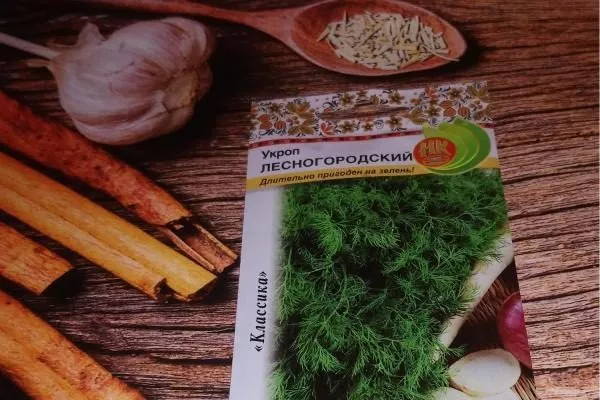
Lesnogorodsky is the name of a dill variety prized for its high yield, disease resistance, tolerance to adverse weather, pleasant flavor and rich aroma, and long harvest period. It is suitable for commercial cultivation. It can be sown several times during the season and in the fall.
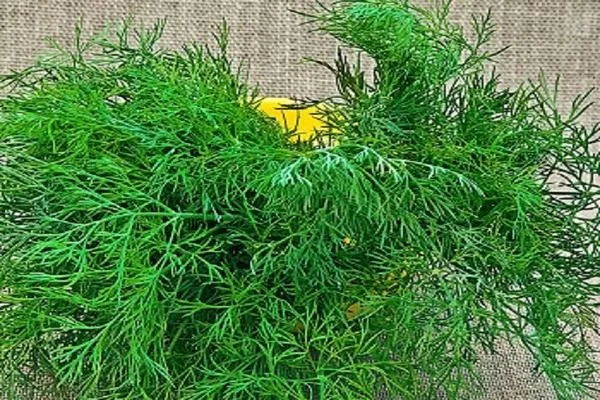
Characteristics of the Lesnogorodsky dill variety
This herb variety is renowned for its many excellent qualities. Familiarize yourself with the botanical description and technical characteristics of this aromatic plant before planting it in your garden.
Description and history of the origin of aromatic herbs
Lesnogorodsky is a variety long known to Russian gardeners and farmers. It was developed in 1986 thanks to the efforts of Soviet breeders. It remains in demand today.
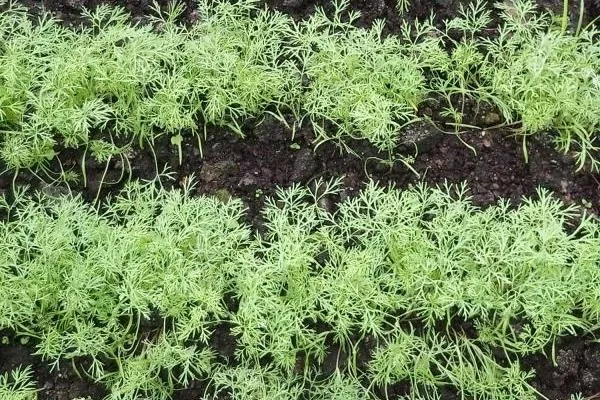
The plant is an annual belonging to the Apiaceae family. It has the appearance of a compact bush, the top of which is purple-blue. A description of its appearance includes the following characteristics:
- an upright rosette, the height of which reaches 30 cm;
- “height” during flowering period is 100-130 cm;
- weight - 26-48 g (50-77 g - upon reaching technical maturity);
- strong foliage;
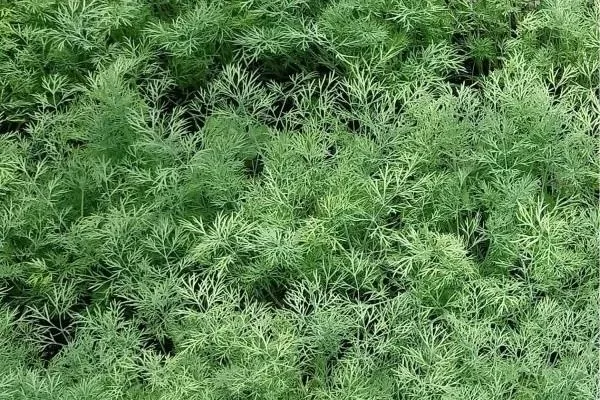
- leaves: large, dark green, with a slight waxy coating on the surface, deeply dissected, with short segments;
- umbrella: large (diameter 20-28 cm), semi-spreading, convex, with a large number of rays.
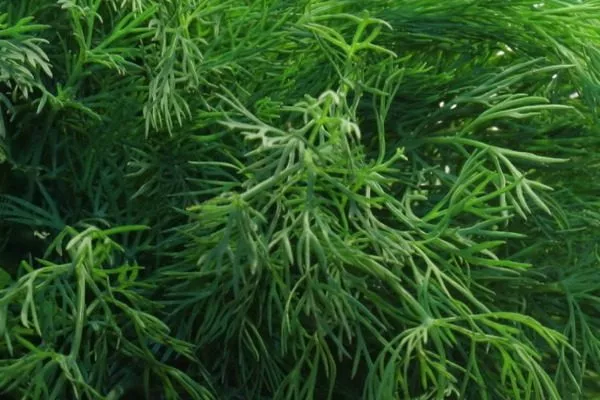
This variety is characterized by a slow rate of stem formation. Its plantings do not grow rapidly in height, allowing them to remain compact.
Comparison with other popular varieties
This variety, developed by Soviet scientists, remains in demand today, offering worthy competition to new varieties. You can compare the key characteristics of popular dill varieties in the table below:
| Name of the variety | The period of ripening of greens, from germination to technical maturity | Productivity (for greens) | Plant appearance, taste/aroma |
| Lesnogorodsky | mid-season, 35 days | up to 3.2 kg/sq.m |
|
| Alligator | mid-late, 42-45 days | 1.45-2.60 kg/sq.m |
|
| Mammoth | mid-season, 42 days | 1.7 kg/sq.m |
|
| Russian giant | late-ripening, 40-50 days | 2.4-2.6 kg/sq.m |
|
| Kibray | mid-season, 30-40 days | 1.3-3 kg/sq.m |
|
| Gribovsky | early maturing, 25-30 days | 1 kg/sq. m |
|
| Lord | mid-season, 40 days | 2.3-33 kg/sq.m |
|
Consumer properties and use in cooking
Lesnogorodskoye's harvest delights gardeners not only with its attractive appearance but also with its excellent nutritional qualities. The leaves have a delicate texture, are juicy, and have a pleasant flavor with spicy notes. They are highly aromatic thanks to their high essential oil content. They remain fresh for a long time after harvesting.
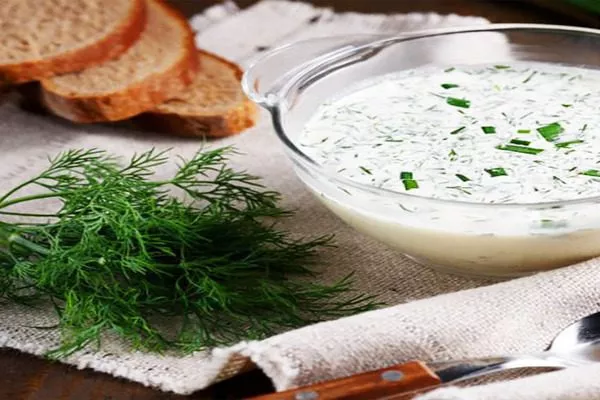
Dill has versatile uses. The herb is added fresh to salads, first and second courses. It adds a piquant flavor to food, making it more appetizing. It pairs well with a variety of ingredients:
- fish;
- meat;
- eggs;
- vegetables;
- fermented milk products such as cottage cheese, sour cream;
- mushrooms;
- with soft cheese;
- vegetable and butter;
- other herbs and spices.
Housewives use dill to make preserves for the winter. They dry and freeze it. They add it to sauces and marinades, and to savory baked goods.
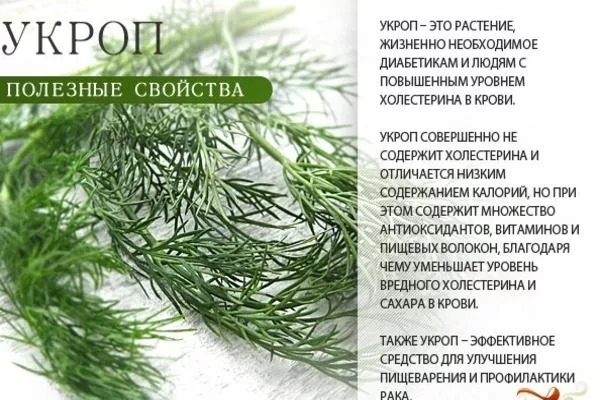
This herb is used not only in home cooking but also in cosmetology and folk medicine due to its rich vitamin and mineral content and numerous beneficial properties. Dill is used to make the following medicinal remedies:
- lotions for removing freckles and age spots;
- cosmetic masks (finely chopped herbs combined with honey), designed to nourish, tone, rejuvenate the skin of the face and décolleté, and enhance collagen production;
- Decoctions and infusions to strengthen the immune system, relieve anxiety, lower blood pressure and cholesterol, and treat bloating and stomach cramps.
Productivity and ripening time
This garden variety is considered high-yielding. It belongs to the mid-season category. Its main technical characteristics are as follows:
- the period of greens ripening (from germination to technical maturity) is 35 days;
- before flowering - 65 days;
- average productivity (output of leaf mass with stems) - 1.4-2.1 kg/sq.m;
- for spices - 5.5 kg;
- maximum amount of greens - 3.2 kg (with enhanced agricultural technology, in particular when growing the variety in a film shelter);
- The yield rate in field conditions is 21,000-32,000 per 1 ha (industrial cultivation).
Preparing the bed and seeds
By following proper agricultural practices for this herb, you'll reap a bountiful harvest. Pay special attention to choosing a site for planting Lesnogorodsky dill and preparing the seed. Read on for all the intricacies of growing dill outdoors. Here.
Soil requirements
Select a sunny, wind-free spot for your herb garden, protected from drafts, not prone to groundwater flooding. Plants in a well-lit area will be more lush and vibrantly colored than those in the shade. Grow them in soil with the following characteristics:
- lungs;
- loose;
- moisture-absorbing;
- well drained;
- fertile (fertilized with organic matter);
- free from weeds and their roots;
- sandy loam or loamy;
- neutral or slightly acidic.
To ensure dill brings you good health and a bountiful harvest, follow crop rotation rules in your garden. Plant it where you grew the following vegetables last season:
- cabbage;
- potato;
- tomatoes;
- cucumbers;
- onion;
- legumes.
Dig up the area you've chosen for growing the variety in the fall. Do this 1-2 weeks before the first frost. Apply fertilizer:
- humus or compost (consumption rate - 10 liters per 1 sq. m);
- mineral compositions: Superphosphate (30-40 g/sq. m), potassium salt (15-18 g/sq. m).
Experienced gardeners make raised beds for dill, since stagnant meltwater often occurs in the garden during the spring.
Seed preparation
If you plan to sow the crop before winter, use dry, untreated seeds. They won't germinate in the fall. Seeds intended for spring or summer planting should be treated with the following procedures to ensure faster and more uniform germination:
- soaking in warm water (+30°C) for 2-3 days;
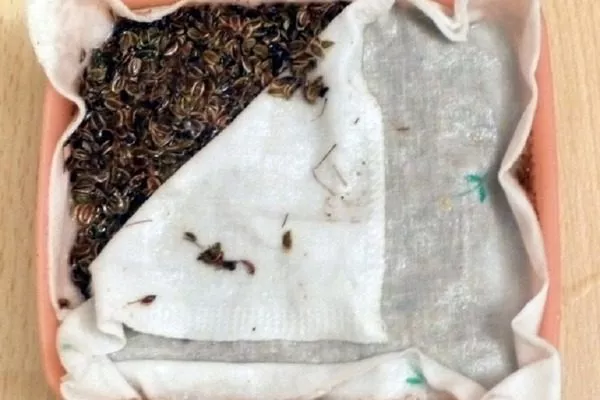
- warming up (first place the bag with seeds in hot water for 2 minutes, and then in warm water for 2 days);
- treatment with a fungicide, hydrogen peroxide solution or aloe juice to accelerate germination, disinfect, strengthen the crop's immunity, and increase germination.
Spring sowing technology
Begin planting in the first half of April. Sow Lesnogorodsky seeds outdoors, following these step-by-step instructions:
- Level the soil in the area. Make furrows in it. They should be 1.5-2 cm deep. The distance between rows should be 20 cm. Make the furrows wide to make it easier to tend to the greens.
- Place the seeds in the holes, watering the soil first and allowing the water to soak in completely. Use no more than 1 gram of seed per square meter.
- Cover the seeds with loose soil. There's no need to compact it.
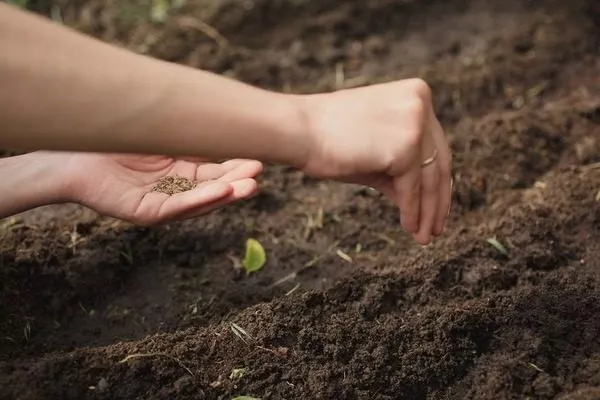
Avoid watering the dill bed for the first two days to prevent the seeds from being washed out of the soil or buried. Seedlings will appear in 5-10 days.
Winter sowing of dill
Begin sowing from late October to early November. Be mindful of the weather. It should be consistently cool. Plant the crop in an open bed before frost. The optimal temperature for sowing is:
- soil temperature - no more than +2°C (it should not be frozen)
- air temperature - 0°C (if it is warmer, shoots will appear, which will die before winter).
Enrich the soil in your garden with fertilizer: compost, humus, and a mineral fertilizer. Sow the seeds in furrows spaced 15 cm apart, planting them 3-3.5 cm deep. Do not water. Mulch the planting with straw or sawdust. Then cover it with snow. In the spring, the seedlings will be among the first to emerge.
You can grow herbs on your windowsill in winter. Read about growing them at home. Here.
Subtleties of care
Provide Lesnogorodsky dill with favorable conditions for its growth and development. Follow these care procedures:
- ThinningAfter 3-4 true leaves have formed, remove any excess plants from the bed. Leave 8 cm between the remaining plants.
- WateringWater the bed thoroughly and regularly. Water after the top layer of soil has dried. Avoid overwatering or waterlogging the soil. After watering, loosen the soil and remove weeds.
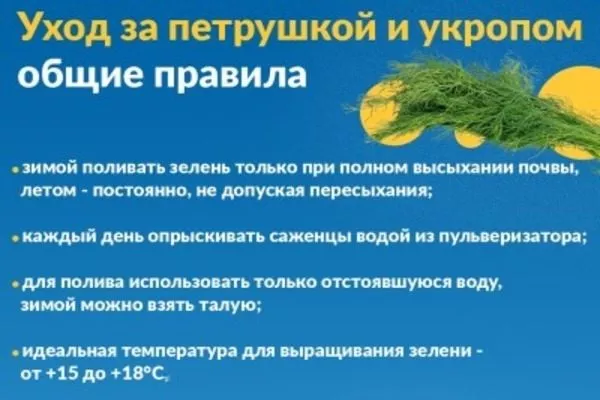
- FertilizationTo get lush and juicy dill apply fertilizerPhosphorus-potassium and nitrogen compounds, as well as complex preparations. Use them during the period of active leaf growth.
Lesnogorodsky responds well to watering with nettle infusion, which not only nourishes it but also provides protection from pests.
If the growth of green crops is slow, use urea and nitrophoska.
Immunity to diseases and resistance to insect pests
This variety delights gardeners with its strong immunity. It's rarely affected by fungal infections and parasites, which are repelled by its rich, distinctive aroma. Read on to learn about dill diseases and how to save it. Here.
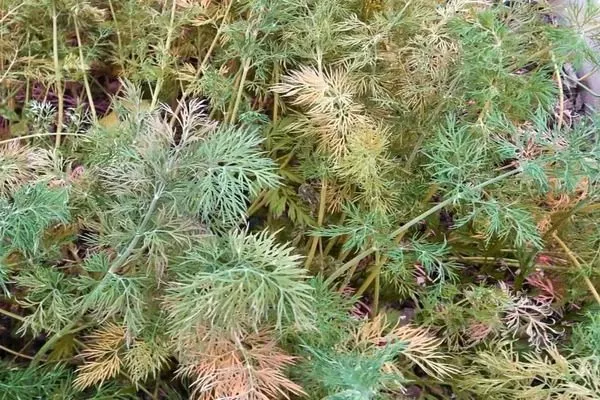
When growing a crop in unfavorable conditions and violating care rules, its planting may suffer from:
- powdery mildew;
- phomosa;
- aphids, which cause yellowing and drying out of bushes.
Recommendations for preserving and processing the harvest
Keep cut Lesnogorodsky greens in the refrigerator to keep them fresh for up to 1 week. For longer-lasting storage, try these tried-and-true methods:
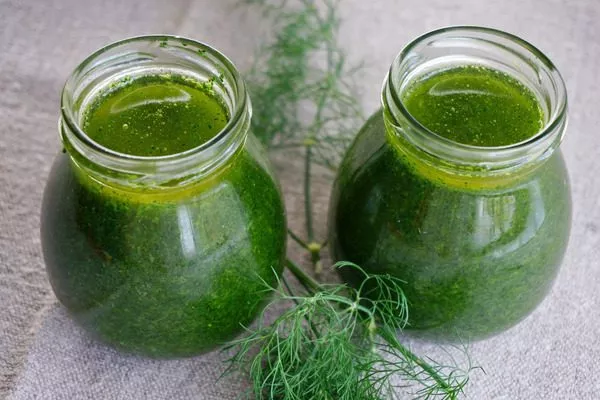
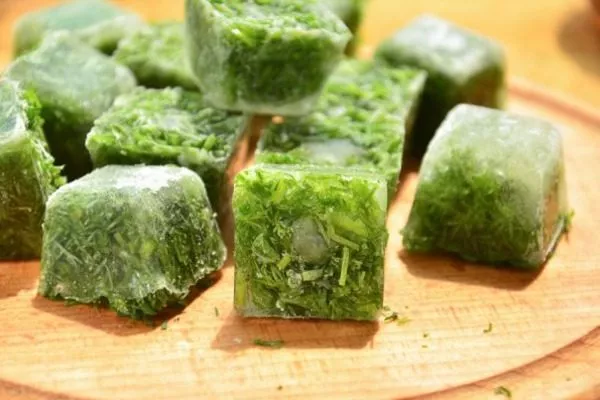
- FreezingWash, dry, and chop the sprigs. Divide the chopped mixture into molds and place them in the freezer. Pack the frozen dill into bags. Store for up to 1 year.
- DryingUse an electric dehydrator or oven. Set the temperature to 60°C. You can also leave the herbs outside under a canopy.
Transfer the finished product to a jar and store in a dry, dark place. It will keep for up to 1 year. - SaltingWash and dry the herbs. Chop finely. Sprinkle with salt (250 g per 1 kg of herbs). Place the mixture in a sterile jar, adding dill as it releases juice and settles. Close the jar with a lid. Store in the refrigerator for up to 10 months.
Pros and cons
Lesnogorodsky dill has both strengths and weaknesses. Gardeners list its undeniable advantages as:
The variety is not without some minor drawbacks:
Reviews
Lesnogorodsky is a popular dill variety, beloved by gardeners and farmers for its excellent productivity, low maintenance, and hardiness, as well as its slow flower formation. It is sown in spring and throughout the summer. It is used for winter cultivation. Its juicy and aromatic greens are excellent for fresh consumption, freezing, drying, and canning.