
Registered in the State Register of Breeding Achievements of the Russian Federation in 1991, Kibray dill is recommended for cultivation in all regions of Russia due to its undemanding growing conditions. Due to its simple cultivation techniques and long-lasting succulent foliage, the late-ripening Kibray has been ranked among the top twenty dill varieties.
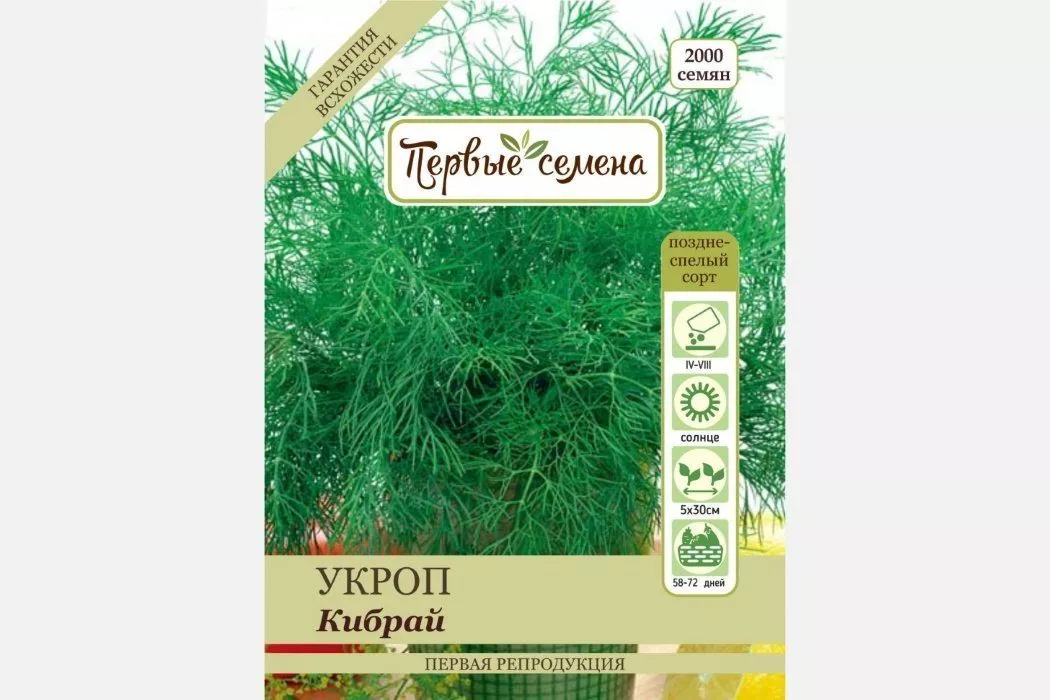
Dill variety Kibray
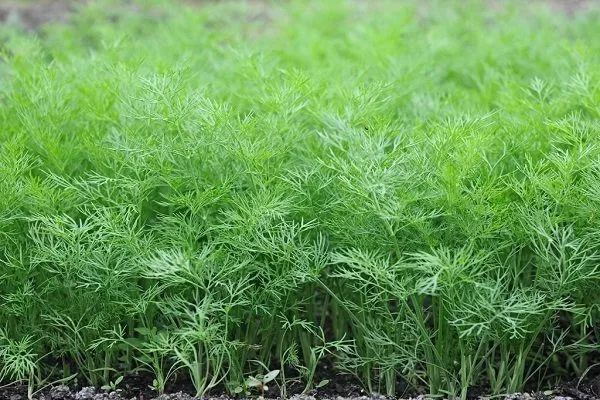
Dill Kibray is frost-resistant
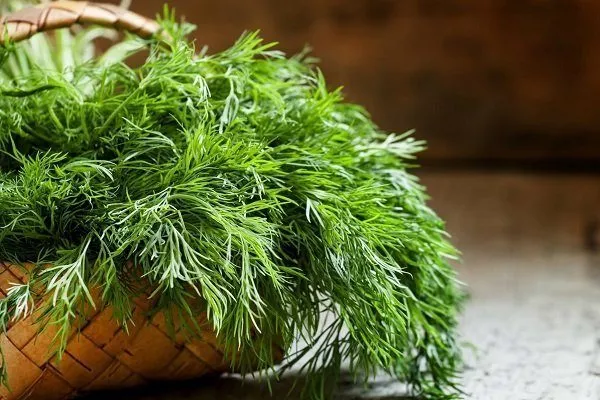
Dill Kibray has a spicy taste
Description of the culture, its advantages and disadvantages
Kibray dill is an upright herbaceous plant with a large rosette reaching a height of 0.4-0.5 m. The robust stem is resistant to lignification. The light green leaves, up to 25 cm long and up to 15 cm wide, are deeply dissected and covered with a waxy coating. The petioles are 10-15 cm long.
A characteristic feature of the variety is a slight yellowing of the greenery, which inexperienced gardeners mistake for signs of wilting.
Although Kibray is mainly grown for its greens, by the end of the season, multi-rayed convex umbrellas have time to form and the seeds have ripened.
The plant's chemical composition is rich in vitamins A, C, and B vitamins, as well as niacin and folate. Dill also contains potassium, calcium, magnesium, flavonoids, and pigments. Its distinctive flavor and aroma make it widely used in cooking.
Positive characteristics of the dill variety Kibray:
- high yield (up to 3 kg per 1 sq. m.);
- frost resistance (up to -5 degrees);
- long-term preservation of marketable appearance after cutting;
- balanced vitamin and mineral composition;
- spicy taste, strong smell;
- high foliage;
- use throughout the entire growing season.
The late ripening of the plant is considered both an advantage and a disadvantage of the crop.
Optimal conditions for growing
The Kibray dill variety prefers open, sunny, moist areas. Even slight shade significantly slows down foliage growth, and insufficient soil moisture leads to stiff leaves and premature wilting.
- ✓ Soil acidity levels should be strictly within the pH range of 6.0-7.0 for optimal growth.
- ✓ The water temperature for irrigation should not be below 20°C to avoid stress on plants.
The plant prefers loose, slightly acidic or neutral soil. If the groundwater table is too low, the plant's roots will rot. This problem can be solved by planting the seeds in raised beds.
The ideal air humidity for dill to thrive is 60-70%, and the soil humidity is 75-80%. Abundant green leaf formation requires 10-12 hours of daylight.
Kibray seeds can germinate at soil temperatures starting from 3°C (3°F) and air temperatures starting from 10°C (50°F). Germination time is halved if the seedlings are planted when the air temperature reaches 15-20°C (59-68°F).
Optimal predecessors and neighbors of Kibray:
- garlic;
- cucumbers;
- tomatoes;
- cabbage;
- beet.
It is not advisable to plant dill seeds next to or after growing onions, carrots, parsley, or celery in previous years.
Preparing and sowing seeds in open ground
To speed up germination, select viable specimens, and boost the immune defenses of future plants, Kibrai seeds are soaked before planting. Washing off the essential oils from the surface of the embryos accelerates germination from two weeks to one.
Step-by-step instructions for soaking Kibray seeds:
- Prepare spring water, melted snow, or still mineral water. Tap water should only be used after filtering or settling.
- Place the seeds in a cheesecloth bag and immerse it in warm water (30-35 degrees Celsius). Change the liquid until the water runs clear.
- Place the gauze on the bottom of the container or in a saucer, pour a thin layer of seeds over it, and cover with the free end of the napkin.
- The planting material is soaked for 2 days, maintaining the temperature in the range of 20-25 degrees.
- The swollen embryos are dried.
Kibray seeds are soaked before spring planting, but this method is not used when sowing in autumn.
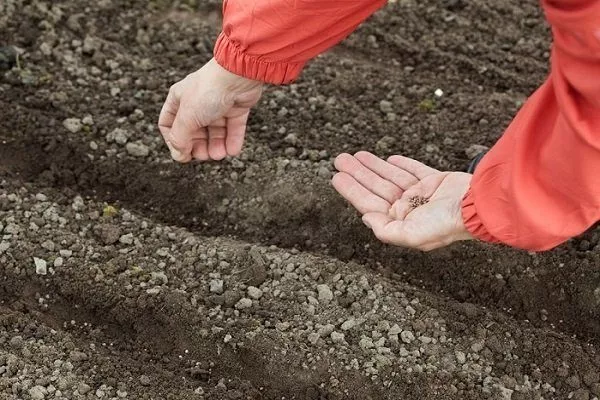
Other effective ways to prepare Kibray dill seeds for planting:
- burying embryos placed in gauze into the ground to the depth of a shovel blade 2 weeks before sowing;
- soaking in vodka for 15 minutes or in a manganese solution for 3-4 hours for disinfection;
- use of growth stimulants according to the instructions (Zircon, Epin);
- immersing a gauze bag with seeds in a solution of wood ash (2 tablespoons of dry matter per 1 liter of water) for 48 hours.
Dill beds are dug over in the fall. A mineral fertilizer is added, including 10 g each of potassium salt and superphosphate, and 15 g of ammonium nitrate per square meter. Mineral fertilizers are replaced with manure or humus—3 kg per square meter.
To cut the spicy greens throughout the season, the planting material is initially sown in April-May, then re-sown every 2 weeks until August.
Before planting Kibray dill, create 2-cm-deep furrows and moisten them. Leave a distance of 20-25 cm between rows. The planting rate is 15 g per square meter. After placing the seeds in the bed, cover them with soil and mulch with a mixture of sand and peat.
To prevent the embryos from being washed away, the tops of the seedlings are not watered. Early dill is obtained by planting the sprouted seeds in a greenhouse.
The seedlings are thinned out, leaving a distance of at least 5 cm between plants.
- ✓ Slight yellowing on the greens is a natural feature of the variety and not a sign of disease.
- ✓ The high foliage makes the variety especially valuable for culinary use.
Caring for a plant in open ground
Despite its low maintenance, Kibray dill requires a number of agricultural practices, including watering, weeding, and loosening the soil. Timely fertilizing, preventative measures, and disease and pest control increase the yield of this cultivar.
Irrigation
To preserve the plant's juiciness and flavor and prevent wilting, it is recommended to water the plant every three days, and twice a day during dry periods, at a rate of 6–8 liters per square meter. Water the dill at the roots in the evening with warm, settled water.
Weeding and loosening
Weeds are removed at the seedling stage to ensure better rooting of the fragile seedlings and to prevent soil depletion. Dill beds don't require spotless cleanliness, but an abundance of weeds can lead to waterlogging.
Simultaneously with weeding and after each artificial irrigation or natural precipitation, the crop is loosened to a depth of 5 cm.
Loosening the dill and breaking up the hard crust helps improve the structure and aeration of the soil, retain moisture, and combat pests that overwinter in the soil.
Top dressing
If dill changes color and is slow to grow new foliage, the plant requires fertilizing. Fertilize Kibray with a urea solution (1 teaspoon per bucket of water) or raw baker's yeast (100 g per 10 liters of water).
An infusion of green nettle is also effective. To prepare the remedy, fill a container 80% full with chopped nettles, add water, and let it sit for a week until the green mass has finished fermenting. A liter of concentrated infusion is diluted with 10 liters of water before use.
Kibray is fed no more than twice a month due to the plant’s ability to accumulate nitrates.
Methods of combating diseases and pests
The only disease to which the Kibray variety has low resistance is powdery mildew, which appears in August as whitish spots on the stems and leaves. Spraying with sulfur is effective in treating this disease. To prepare a solution, mix 20 grams of the suspension with 10 liters of water.
The most common insect pest on dill is aphids. These pests feed on the plant's cell sap, causing stunted growth and rapid wilting.
The following folk remedies are used to combat aphids:
- tar soap solution (200 g per bucket of water);
- water infusions of makhorka (200 g per 5 l), onion peel (2-3 handfuls per 3 l), chamomile (100 g per 5 l), ash (1.5 kg per 5 l);
- ammonia solution made from 1 tbsp of the substance mixed with 1 liter of water.
Solutions of table vinegar and iodine with the addition of milk help get rid of insect pests.
Because dill accumulates pesticides, using chemicals to control aphids in gardens is not recommended. These hazardous products can be replaced with the biological insecticide Fitoverm.

Measures to prevent occurrence diseases and pests:
- compliance with crop rotation;
- deep digging of the soil in autumn;
- regulation of irrigation and fertilizing.
Preventing powdery mildew and aphid attacks involves thinning seedlings, regular weeding, and ant control. Planting chamomile, fennel, and mint around the perimeter of the garden bed attracts insects that feed on aphids.
Harvesting and storage
Varietal dill is harvested for greens after 30-40 days, and for spices, it is harvested 2-2.5 months after emergence. The optimal harvesting time is early morning, after the dew has dried.
Green Kibray stored in a paper bag on the bottom shelf of the refrigerator will keep for up to a month. Frozen greens will keep for up to a year.
Drying leaves, stems, and seeds and placing them in glass jars or canvas bags extends their shelf life to two years. There are several drying methods: outdoors under a canopy, in an oven, or in a microwave. Seeds retain their nutritional value for a long time when stored in umbrellas suspended from the ceiling in cool, ventilated areas. Before drying and freezing, dill sprigs are sorted, damaged stems are trimmed, and washed.
If dill is not thoroughly dried before freezing, the leaves will stick together into a lump, making further use of the product difficult.
Kibray dill has deservedly become one of the most popular varieties among vegetable growers. Undemanding in growing conditions and requiring minimal care, Kibray can be grown both outdoors, in greenhouses, and indoors.