
Dwarf dill is a wonderful early variety with excellent flavor and a rich, spicy aroma. It grows very small and yet produces a high yield. Most importantly, the Dwarf variety is versatile, suitable for any purpose.
Who bred the Dwarf dill?
The Dwarf variety was developed in 2013. The originator of the variety is Agrofirm Aelita LLC. Authors: N. V. Nastenko, V. G. Kachainik, M. N. Gulkin.
The variety is suitable for cultivation in almost all regions of the country, including the Northern and Far Eastern regions.
Description of the Dwarf variety
The plant has a basal rosette located at the very base of the stem. The leaves are long, dark green, and deeply dissected. The terminal segments are medium in length and flattened and filiform. The stem is thick, medium in length, dark green with a bluish tint and a waxy coating.
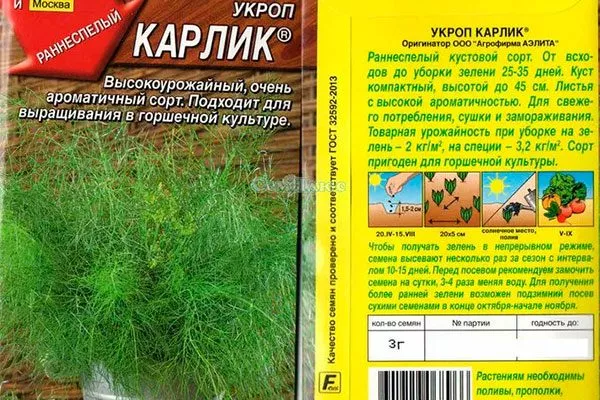
During the flowering phase, dill reaches a height of 75-85 cm. At the harvest stage, the plant weighs approximately 20 g. Later, when dill is harvested for spices, the plant can weigh up to 60-75 cm. The umbels of Dwarf dill are large and convex, with numerous rays.
Characteristics
Early-ripening dill Dwarf has excellent agronomic characteristics and is ideal for growing for food and commercial purposes.
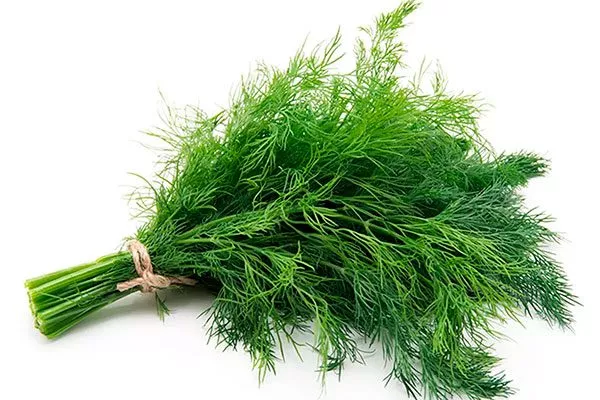
Productivity
This variety is considered high-yielding. Its average yield when harvested for greens is 0.9-2 kg/sq.m, and when harvested for spices, it's 2.8-3.2 kg/sq.m.
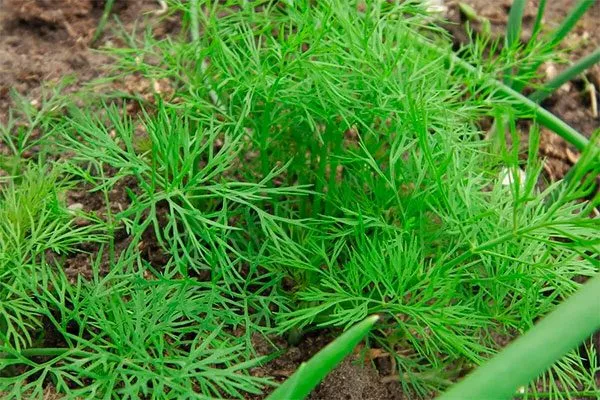
The yield is significantly affected by the quality of care, its correctness and regularity.
Cold resistance
The Dwarf variety is quite cold-hardy, allowing it to be grown successfully in a variety of climates. However, this dill does not tolerate drought well and requires regular watering.
Taste and uses
Dwarf dill has excellent taste qualities - it has an extremely pleasant and delicate flavor, and a rich, dill-like aroma.
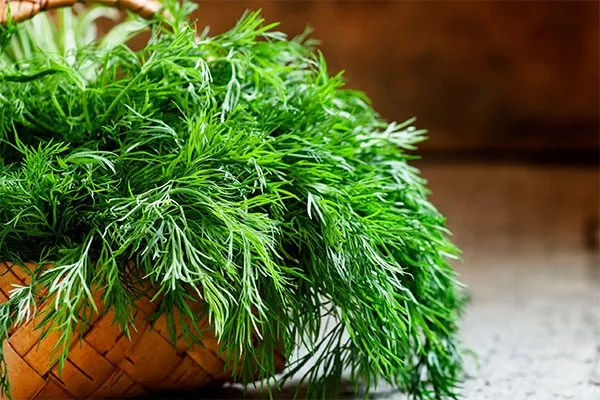
This versatile variety is eaten fresh, added to salads, first and second courses, and used as a spice in preserves. It is also dried and frozen, and added to marinades for meat and fish.
Pros and cons
Dwarf dill is popular with gardeners for good reason—it has many advantages that are valuable to both lovers of this crop and those who grow herbs for sale.
Landing
To get a good dill harvest, proper preparation and planting are essential. Dwarf dill is usually sown directly into the soil; seedlings are not used for growing it.
Seed preparation
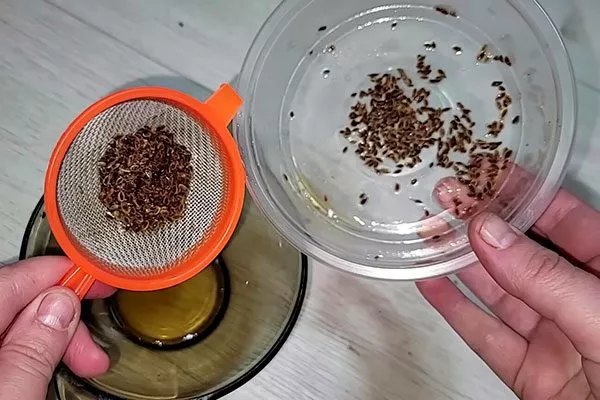
It's recommended to prepare seeds before planting, especially home-grown ones. Store-bought seeds are usually completely ready for planting, as they've already been treated. Otherwise, they should be soaked in water for 24 hours, then disinfected in a 1% potassium permanganate solution for 3-4 hours, and then rinsed in clean water.
Soil preparation
Dwarf dill grows best on light loamy or sandy loam cultivated soils with neutral acidity, fertile and well-moistened.
Features of site preparation:
- The planting site is selected taking crop rotation into account. The best predecessors for dill are grain crops, as well as cabbage and cucumbers. It is not recommended to plant dill after celery.
- The soil for dill planting is prepared in the fall. The area is cleared of plant debris and weeds, then dug to the depth of a spade.
- Organic matter is added during digging: 4-5 kg of compost or humus per 1 sq. m.
- In the spring, a couple of weeks before sowing, the soil is cultivated again. It is thoroughly loosened with a rake, mineral fertilizers are added, and the surface is leveled to create favorable conditions for seed germination. During this period, it is recommended to apply 20-30 g of nitrogen, 30-40 g of phosphorus, and 20-30 g of potassium fertilizer per square meter.
Sowing in the ground
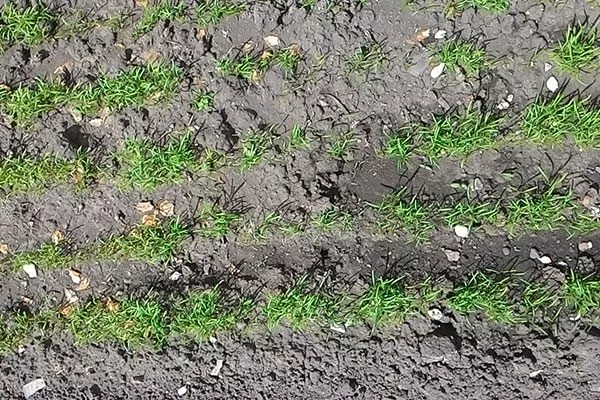
Dill is sown in the ground in late April or early May, depending on the regional climate. Choose open, well-lit areas for planting, as the Dwarf variety thrives in full sun.
Features of planting Dwarf dill:
- The seeds are planted to a depth of 1-2 cm.
- The intervals between adjacent rows are from 15 to 20 cm, between plants in rows - 5-10 cm.
- After sowing, the area is watered with warm, settled water (sprinkling).
To ensure a continuous supply of dill, re-sow dill every 2-3 weeks.
Care
Dwarf dill requires only standard care as stipulated by the crop's agricultural practices. Special attention should be paid to watering, as this primarily determines the quantity and quality of the harvest.
Watering
Watering dill is especially important during dry periods. It's important to keep the soil slightly moist, but avoid overwatering. If there's no rain, water the dill almost daily; if the summer is rainy, water less frequently.
The optimal water consumption per square meter is 8 to 12 liters. In hot weather, the rate increases two to three times. If drip irrigation is used, the water rate during drought periods is 20 to 30 liters per square meter.
Top dressing
It's recommended to fertilize Dwarf dill twice per season—before sowing and after the first shoots emerge. You can apply both mineral fertilizers and various organic matter, such as compost, humus, rotted manure, chicken manure, and herbal infusions (nettle, comfrey, etc.).
Mineral fertilizers suitable for dill include superphosphate, ammonium nitrate, urea, and various potassium fertilizers. When applying fertilizer, it's important to keep the solution away from the plants. After applying the fertilizer, sprinkle the dill with water and water it.
Protection from diseases
Dwarf dill has a fairly strong immune system, but under unfavorable conditions it can be susceptible to various infections, most commonly fungal. In damp weather, with sudden temperature fluctuations, and with nutritional deficiencies, dill can become susceptible to blackleg, powdery mildew, fusarium wilt, cercospora leaf spot, downy mildew, and other diseases.
To prevent dill diseases, it is recommended:
- Create favorable growing conditions: choose a sunny location with fertile soil. If the soil is acidic, it must be limed.
- Do not plant dill in the same place for several years in a row; it should be alternated with legumes, melons, and nightshade crops.
- Thin out the beds, preventing them from becoming too dense. Weed and fertilize the crops regularly.
Pest control
Dwarf dill can be affected by aphids, scale insects, parasol moths, carrot flies, and other pests. Folk remedies are widely used to combat them.
The following preventative measures are particularly effective against insect pests that affect dill:
- Spraying with infusion of dandelion, nettle or garlic.
- Planting aromatic herbs nearby—sage, lavender, and thyme—the strong scent of these plants effectively repels insect pests.
- Digging up the beds in the fall helps kill many of the larvae overwintering in the soil, thanks to the low temperatures.
It is not recommended to use chemical insecticides for spraying dill.
What can you spray dill with:
- With soapy water — It's prepared by diluting 100 g of detergent in 10 liters of hot water. You can add 150–200 g of wood ash to the solution.
- With tansy infusion. To prepare it, 15 g of dry leaves and flowers are poured with water and infused for 24 hours.
- Onion infusion. Pour 1 liter of water over the onion peels and add a few crushed garlic cloves. Let the mixture sit for 5-6 hours, then add grated laundry soap. Spray the bushes with the resulting mixture in the evenings (every other day).
- Biofungicides. For example, Fitoverm, Enterobacterin, etc.
Harvesting and storage methods
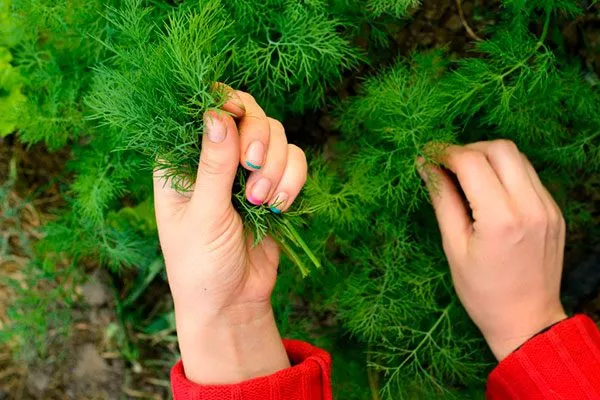
The harvest begins before the flowers appear, when the leaves are tender and fragrant. The greenery is cut, starting from the lower tiers, then moving on to the side shoots. The rosette is cut back, leaving the growing point—new shoots will soon appear.
There are different ways to store dill:
- Freeze. The herbs are washed, dried, and chopped. They are then arranged on a tray or in molds or trays and placed in the freezer. Frozen dill can be packaged in bags. In this form, the herbs will keep for about a year.
- Dry. Dill is dried in an electric dehydrator at 60°C until the stems become brittle. An oven can be used for drying, but it can also be dried under a canopy. Dried dill and seeds are stored in a dark, dry place, packaged in glass jars or kraft paper bags.
- SaltThe greens are washed and dried, chopped, sprinkled with coarse salt, and placed in sterilized jars. As the mixture settles, add more. Store them in the refrigerator, sealed with nylon lids, for up to 10 months.
Reviews
Dwarf dill is a reliable variety that will provide you with fresh herbs under any circumstances. The key is to water it on time and follow proper growing practices. This variety has excellent consumer qualities and is suitable for a wide variety of purposes—it can be grown for food and for sale, eaten fresh, dried, or frozen.