
Aurora dill has a pleasant flavor and rich aroma, making it a favorite among gardeners. This variety boasts numerous qualities: good productivity, frost hardiness, disease resistance, and ease of care. The lush, luscious foliage retains its freshness for a long time, and the plant's unique structure makes harvesting easy.
Description of the dill variety Aurora
This early-ripening, relatively new variety stands out among other cultivars for its dense foliage, late flower formation, and high resistance to powdery mildew. In 2001, Aurora was added to the State Register of the Russian Federation and recommended for cultivation throughout the country due to its frost resistance.
Morphological characteristics and features
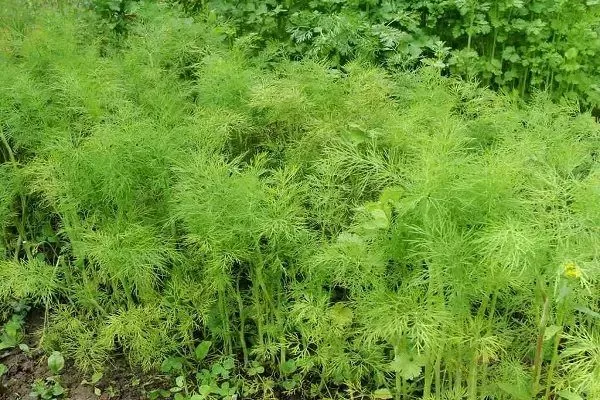
This is a low-growing bush variety with a spreading habit, making it easy to care for and harvest. Plants reach 25-30 cm in height. It can be grown both outdoors and in greenhouses.
Distinguishing features:
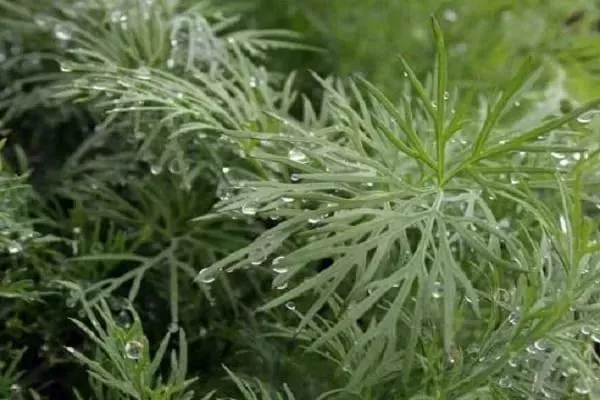
- leaves - dark green, slightly dissected, with a light waxy coating that gives them a bluish tint and reduces moisture evaporation; their color may change depending on growing conditions and stage of growth;
- rosette of leaves – raised, which helps keep the greenery clean after rain or watering, preventing contamination with soil;
- stem – straight, medium thickness, with a developed system of lateral shoots, providing density and high leaf yield.
The leaves have a rich aroma, highly prized for culinary use. Due to its dense foliage, this variety produces a bountiful harvest of greens. Its bushy habit and vigorous growth of lateral shoots allow this dill to be grown at high planting density, increasing the overall yield per unit area.
Ripening time and yield
Dill Aurora is an early-ripening variety, making it especially valuable for quickly producing greens. Key features:
- From germination to first harvest, it takes only 25-35 days. This quality allows for fresh greens to be harvested quickly, which is important for both personal consumption and commercial cultivation.
- Harvesting seeds for spices requires a longer period—60 to 70 days. This variety is versatile: it's suitable for both greens and spices.
- This variety is renowned for its high yields: under favorable conditions, it yields an average of 2 to 2.5 kg per square meter. Actual yield depends on soil quality, site illumination, and the frequency of watering and fertilization.
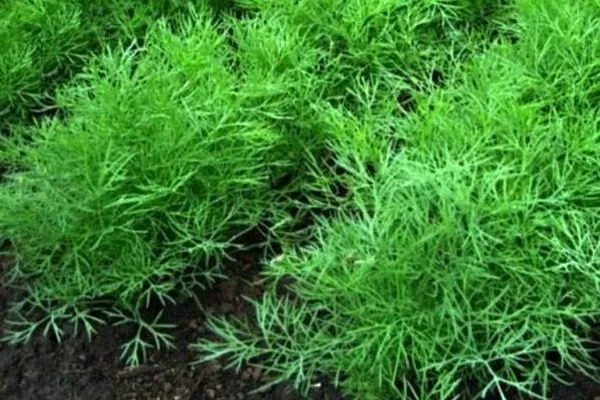
- Aurora is characterized by active growth and forms a powerful, densely foliated bush, providing a large volume of green mass.
- Thanks to its ability to quickly regrow after cutting, this variety is suitable for multiple harvests per season. When grown for spice, it forms large, fragrant umbels, demonstrating consistent productivity.
Resistance to adverse factors
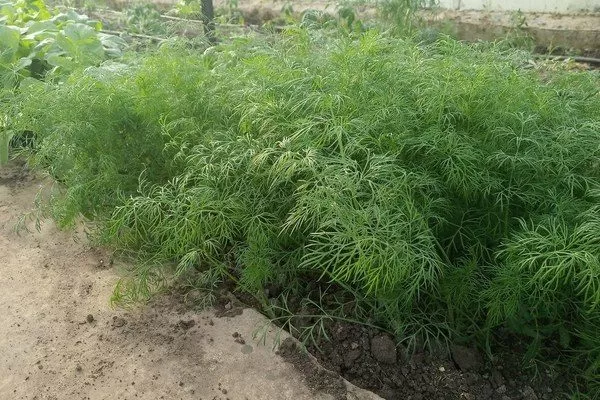
Dill demonstrates good tolerance to low light, as confirmed by numerous gardener reviews. It thrives in both sunny and partial shade areas.
Characteristic features of the culture:
- Even in severe shade, plant growth may only slow down slightly, but this has virtually no effect on productivity, provided regular fertilizing and weeding are provided.
- The bushes are frost-resistant: seedlings emerge at temperatures as low as +3°C to +5°C, and recurrent spring frosts do not cause significant damage to the plants. This makes Aurora ideal for early sowing in open ground.
- Gardeners pay special attention to the variety's resistance to powdery mildew—the disease rarely attacks dill, making it reliable even in high-humidity conditions. However, if agricultural practices are not followed, outbreaks of diseases such as blackleg, phoma, or downy mildew are possible.
- The crop is unattractive to most pests. Aphids pose the main threat. To combat them, it is recommended to use only natural remedies, as dill quickly absorbs chemicals, and their use can make the plant unsafe for consumption.
Useful properties of dill
The greens are rich in B vitamins, as well as vitamins A, C, E, and PP, and contain a wide range of macro- and micronutrients. Thanks to this rich chemical composition, the plant helps prevent kidney and gallstones (but is not a cure).
Dill is traditionally used to support lactation in nursing mothers. It is most beneficial when eaten fresh or dried. When cooked, it loses its characteristic aroma and many of its beneficial properties, so it is recommended to add it to dishes after cooking.
Harvesting and storage
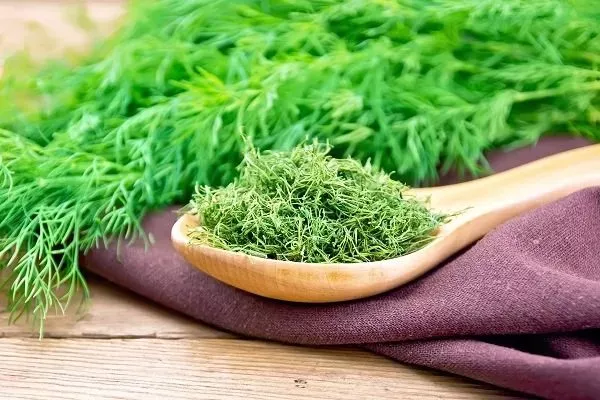
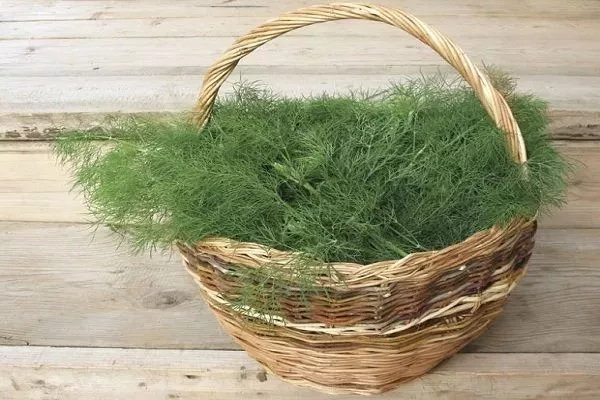
Every gardener tries to prepare fragrant greens for the winter. Aurora is ideal for drying – the plants are harvested after the first umbels appear.
General requirements:
- Before harvesting, thoroughly wash and dry the herbs, then place them in cloth bags – this will help preserve their flavor and aroma throughout the winter.
- Harvest in the morning, after the dew has cleared but before the heat of the day sets in—at this time, the leaves are juicier and more aromatic. After 11 a.m., the leaves begin to wilt, so harvesting them later is not recommended.
Landing rules
Growing and caring for the Aurora dill variety doesn't take much time or effort. Even beginners can easily handle these tasks.
Choosing a landing site
Dill achieves its best results when grown in areas that meet certain conditions. Follow these guidelines:
- The bed should be open and well-lit, although the plant tolerates partial shade without problems. If planted in the shade, dill will grow, but the yield may decrease slightly.
- The variety does not have any special soil requirements, but it is more productive on sandy loam and loamy soils.
- The best predecessors for Aurora dill are tomatoes, cucumbers, beets, and cabbage. Avoid growing it after carrots, fennel, and parsnips—the plant will grow poorly in such areas.
Planting dates
The optimal time for sowing dill seeds depends on the region's climate. In southern regions, sowing should be done slightly later than in northern regions. For central Russia, the ideal time is from October 15 to November 10.
By this time, the soil will usually have frozen to a depth of several centimeters. If September is cold and frosty, you can move the sowing forward 5-10 days. In southern regions, under similar weather, sow dill in late November, and in the north, as early as early October.
Suitable sowing times:
- Urals and Siberia – end of October;
- southern regions – second half of November;
- Moscow and the Moscow region – first half of November.
Moisten the soil before planting. Failure to do so will result in premature bolting and flowering of the plants, which will reduce the quality of the foliage. The ideal planting temperature is considered to be between 2°C and 4°C. If the temperature is higher, delay planting to avoid premature germination.
Soil preparation
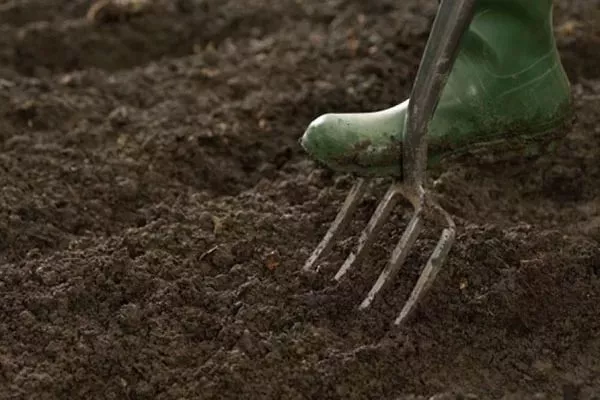
Before sowing dill, thoroughly prepare the area. First, perform a preliminary bed preparation: remove all debris, fallen leaves, remains of last year's plants, and branches from the selected bed. Neglecting this step increases the risk of pest infestation. Remove weed roots.
In March, loosen the bed with a rake, then add fertilizer to the soil at a rate of 1 square meter:
- 20 g potassium salt;
- 15 g urea;
- 30 g Superphosphate.
Seed preparation
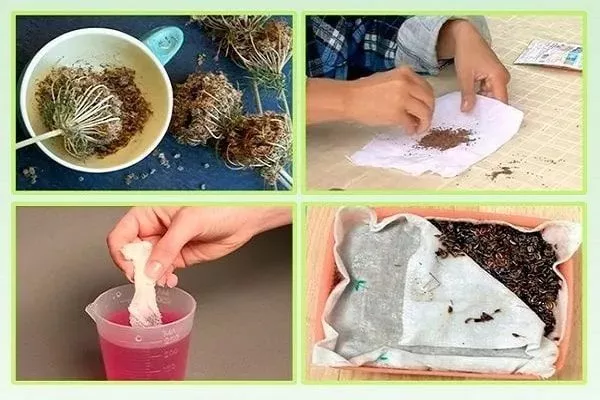
Dill seeds contain a large amount of essential oils, which prevent moisture from penetrating. If sown dry, the first shoots will appear in approximately 23-27 days. To speed up germination, first rinse the seeds in warm water and then soak them for 24 hours.
Add wood ash (20 g per 1 liter of water) or another general-purpose fertilizer to the water. Experienced gardeners recommend using water at a temperature of 18-22°C, changing the water every 4 hours and gently mixing the seeds. When about 1-1.5% of the seeds have sprouted, you can begin planting.
Seeding algorithm
Growing dill is easy. To ensure your garden is stocked with fresh herbs all season long, follow these step-by-step instructions:
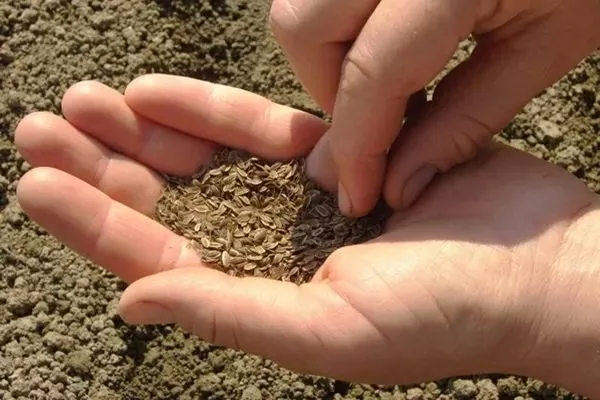
- Sow dried dill seeds in furrows approximately 2 cm deep, leaving a distance of about 20 cm between them – the Aurora variety has branched bushes and will interfere with each other if planted more densely.
- After planting the seeds, water the beds moderately.
- To better retain moisture and protect the soil, additionally mulch the area with peat in a layer of about 3 cm.
Growing technology
Further care includes regular loosening of the row spacing, weeding, moderate and timely watering, and fertilizing. To prevent overcrowding, thinning the seedlings is recommended, as dense planting promotes the development of fungal diseases.
Water the plants twice a day, using 20-30 liters of water per square meter. During heavy rainfall, reduce the amount to a minimum. Fertilizing is only necessary if dill is planted in poor or unprepared soil. The following methods are effective:
- fermented nettle infusion: pour 1 kg of fresh leaves and stems into 10 liters of water and leave for 5 days;
- a solution of 500 ml of mullein and 1 teaspoon of urea per 10 liters of water;
- potassium-phosphorus fertilizers – 10 g per 1 sq. m.
Diseases and pests
Through selective breeding, Aurora dill has developed a high level of immunity and is resistant to most diseases. However, if planted too densely, overwatered, or overgrown with weeds, it can be susceptible to fungal diseases. The most dangerous include:
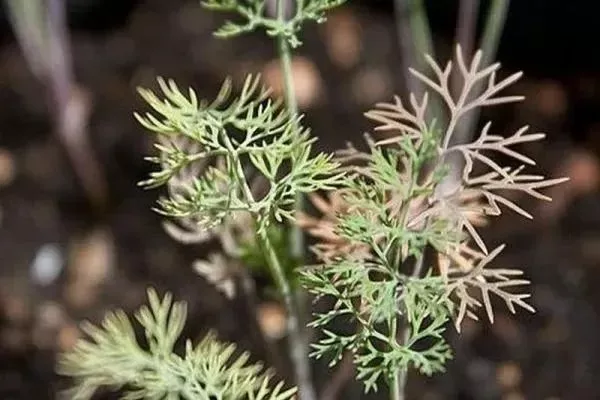
- Blackleg. It manifests itself as root collar rot. For treatment, use a Fundazol solution.
- Fomoz. Characterized by the appearance of brown spots on the leaves. To combat the disease, spray with a 1% Bordeaux mixture. Repeat at 10-day intervals, with the final application no later than two weeks before harvest.
- Peronosporosis (downy mildew). The first signs of the disease are light spots on the stems and leaves, which later turn brown. When symptoms appear, treat the beds with a copper oxychloride solution (30 g per 10 liters of water) or 1% Bordeaux mixture.
Of the insects, the most dangerous are:
- Carrot fly. It causes leaves to dry out quickly. Plants planted near carrot beds are particularly susceptible, as the pest is attracted by the smell of the tops. Apply a mixture of equal parts mustard powder, fine sand, hot pepper powder, dry peat, and ash, and spray between the rows.
If the pest continues to cause damage, use Vantex, Actellic, or Fitoverm. This is the safest option, as it is a biological insecticide that is harmless to humans. - Bedbugs, umbrella bugs and aphids. Chemical agents such as Arrivo, Vantex or Karate Zeon are effective.
Natural insecticides are considered the best: a decoction of potato tops or tomato shoots: chop 2 kg, add 10 liters of water, and boil for 30 minutes. After cooling, add 1 tablespoon of grated laundry soap and stir thoroughly. The soapy film on the leaves will protect the dill from being washed away by rain or watering.
Tobacco is a good pest repellent. Mix tobacco and mustard powder in a 1:1 ratio and sprinkle it on your plants. A tobacco solution works well: steep 100 g of tobacco in 10 liters of water for 24 hours.
To strengthen plants, it is useful to feed them with phosphorus-potassium fertilizers: pour 3 kg of ash into 10 liters of water and leave for 24 hours, then add 1 tbsp. of liquid soap.
Pros and cons
Advantages:
Aurora has virtually no drawbacks, but it is considered relatively young, which causes some mistrust among some gardeners who prefer time-tested varieties.
Reviews
Aurora is an excellent choice for those who appreciate delicious and aromatic herbs with minimal effort. Pest resistance, late stemming, and the ability to be harvested multiple times make this dill particularly appealing. This variety is suitable for both fresh consumption and preservation, ensuring a consistent harvest in any conditions.