
Dill Almaz is a late-ripening bush variety with large, aromatic leaves and high disease resistance. It boasts a long harvest period and the ability to retain freshness even in hot weather. These qualities make it ideal for both garden and commercial cultivation.
Description of the dill variety Almaz
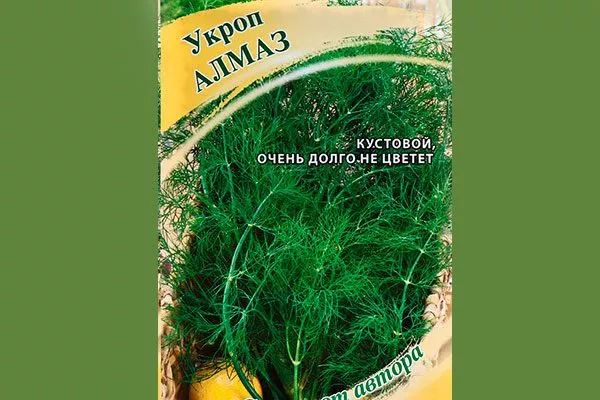
Recommended for commercial cultivation. The hybrid was developed and tested in 2004, and in 2008 it was included in the State Register of Varieties of the Russian Federation, allowing cultivation in all regions of the country. The originators were the Vegetable Crop Breeding Research Institute and the Gavrish company.
Morphological characteristics
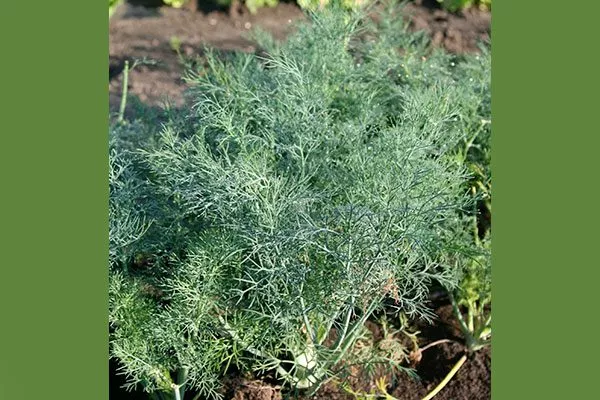
Diamond is a medium-height bush dill that forms a dense rosette of leaves. Distinguishing features:
- leaf blades – large, diamond-shaped, reaching up to 30 cm in length;
- coloring – green with a bluish tint, covered with a moderate waxy coating;
- leaves - strongly dissected, with wide and long terminal segments;
- stem – medium length and thickness, green, with a pronounced waxy coating and the presence of anthocyanin color;
- inflorescence (umbel) – large.
Ripening time and yield
Almaz dill is sown outdoors in April-May, and the first harvests begin in June. The period from germination to harvesting is 40-50 days, and continues until flowering, approximately 50-70 days.
Resistance to adverse factors and regionality
This new-generation hybrid was developed to address the plant's typical shortcomings: fragility, poor shape, and susceptibility to root rot. It rarely suffers from pest attacks and is virtually disease-free.
Dill Almaz is recommended for cultivation in various climatic zones of Russia, including the following regions:
- Far Eastern;
- Northern;
- East Siberian;
- Northwestern;
- West Siberian;
- Ural;
- Volga-Vyatka;
- Central Black Earth;
- North Caucasian.
The crop is successfully cultivated in the Central District, Lower Volga, and Middle Volga regions.
Useful properties of dill and its application
Diamond is prized not only for its aroma and flavor, but also for its rich nutritional content. The greens contain:
- B vitamins, as well as A, C, E, K;
- folic acid;
- iron;
- potassium;
- calcium;
- phosphorus;
- magnesium.
The high content of essential oils has a beneficial effect on digestion. Regular consumption of dill promotes:
- improving appetite;
- normalization of the gastrointestinal tract;
- reduction of flatulence;
- relief of spasms.
Dill Almaz, thanks to its bright aroma and mild, pleasant taste, has found wide application in cooking:
- Fresh leaves with a rich aroma and juicy texture are used as a seasoning for a variety of dishes, from soups and salads to meat and fish side dishes. Even a small amount of this herb imparts a rich aroma and flavor to food.
- Large leaves are especially prized by chefs: they are easy to process, and their flavor is preserved no matter how they are prepared. Frozen leaves retain their color and flavor, making them indispensable during the winter season. Dried dill is no less popular in cooking, imparting a distinctive spicy flavor to dishes.
Harvesting and storage
When the plants reach 15-20 cm in height, begin harvesting. Trim the dill with a sharp knife or scissors, carefully removing the outer leaves and leaving the central growth for further growth.
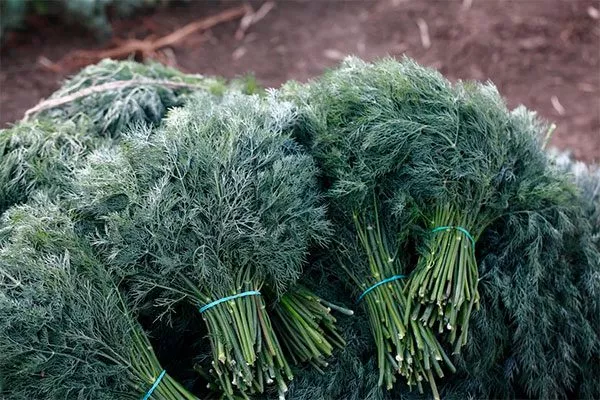
For short-term storage, keep dill in the refrigerator, wrapped in slightly damp paper or placed in a plastic bag - this will help the greens stay fresh longer.
Resistance to yellowing
Unlike many other varieties, Almaz's foliage retains its rich, vibrant green hue even in the later stages of growth. This quality is inherent in the variety's genetics and contributes to its successful adaptation to a variety of climatic conditions.
These qualities guarantee an extended shelf life and marketability of the product. Minimal yellowing reduces crop losses and extends the harvest period, which is especially valuable for farmers and commercial producers.
Growing dill Almaz
Even novice gardeners can easily manage growing herbs, as sowing seeds doesn't require any special skills or knowledge. However, it's important to follow a few rules.
Selecting a site and preparing the soil
Choose open, well-lit areas protected from strong winds. Dill prefers loose, permeable, and fertile soils with a neutral or slightly alkaline pH (6.5-7).
Follow these recommendations:
- Prepare the seedbed in advance, preferably in the fall. Dig the soil to the depth of a spade, remove weeds, and add organic matter.
- In the spring, 1-2 weeks before planting, loosen the soil and add mineral fertilizer. To prepare the soil, use the following per square meter:
- rotted humus or compost – 4-5 kg;
- Superphosphate – 20-30 g;
- potassium sulfate – 15-20 g.
If the soil is acidic, add dolomite flour or lime. Immediately before sowing, level the area and water with warm water if necessary.
Sowing seeds and caring for plants
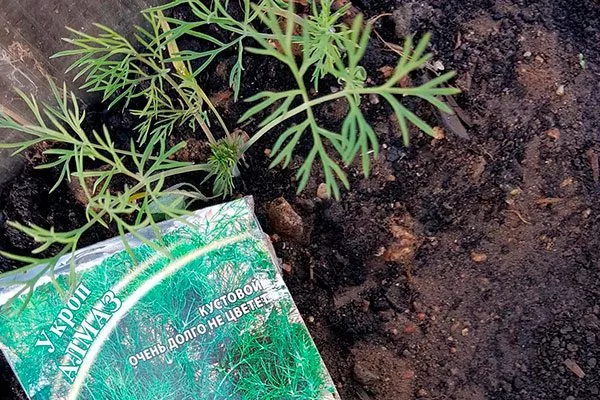
Dill seeds Almaz can be sown directly into open ground, as well as in containers or greenhouse beds. To improve germination, pre-soak the planting material in a damp cloth or cold stratify it.
After emergence of seedlings or transplanting seedlings into the ground, plants need regular care:
- watering;
- weeding;
- loosening.
For active growth, feed dill with nitrophoska or organic fertilizers.
Care technology
When the Almaz dill seedlings reach a height of 5-7 cm, thin them out for the first time, leaving 8-10 cm between plants. As the greens grow, increase the spacing to 20 cm to prevent the plants from interfering with each other.
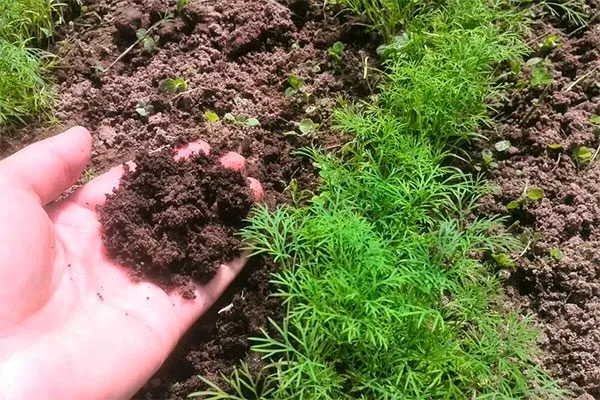
Dill thrives on moisture, so it's important to maintain consistent soil moisture. Water the plants twice a week, and in hot weather, mist the plants additionally to maintain freshness.
Feed them culture twice per season:
- after the appearance of 2-3 true leaves, using nitrophoska and urea;
- After three weeks: add 5 g of potassium salt and 7 g of urea per 1 sq. m.
Weed as needed, as weeds compact the soil and impede moisture flow. Perform the first loosening immediately after emergence, then regularly, to a depth of 10 cm. If the soil becomes too dense, thin the rows further.
In addition to watering, plants require periodic removal of wilted and damaged leaves, timely cutting of flower stalks, and maintaining optimal humidity and temperature conditions.
Diseases and pests
The crop is characterized by strong immunity. However, despite this, under unfavorable conditions or improper care, it may encounter certain problems:
- The most common dill diseases are black spot and powdery mildew. Black spot causes black spots to appear on the stems and leaves, while powdery mildew appears as a white, flour-like coating.
- Overwatering can lead to bacterial disease: the roots begin to rot and the leaves curl and become deformed.
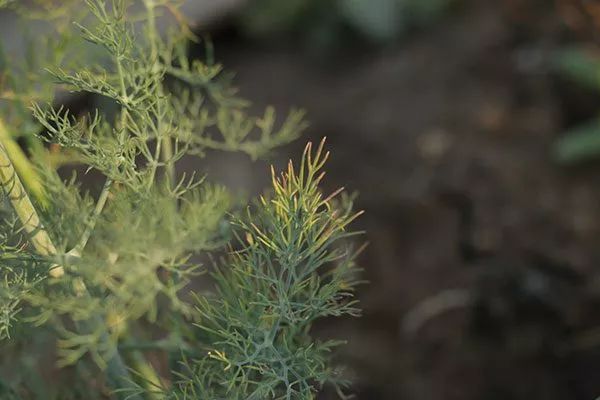
To prevent diseases, take preventative measures. To protect plants from fungal infections, disinfect seeds before sowing, promptly remove weeds, and regularly loosen the soil.
If the disease has already appeared, the harvest can be preserved by treating it with Mikosan-V or its equivalents. According to the instructions, dill can be consumed 2-3 days after spraying.
In addition to diseases, greens are susceptible to attack by insect pests:
- aphid;
- flea beetles and umbrella flea beetles.
A solution of potassium permanganate can help control aphids – just water the affected areas. Fitosporin is effective against fleas.
Pros and cons
Reviews
Almaz is prized for its consistent productivity, rich aroma, and long shelf life of herbs without losing flavor. Its resistance to disease and drought makes it a reliable choice for a variety of regions. Dill is excellent for fresh consumption, freezing, and drying, while retaining all its beneficial properties.