
At growing asparagusWhether growing in open ground or greenhouse conditions, be prepared for diseases and insect pests. Early recognition and appropriate action will help preserve your harvest.
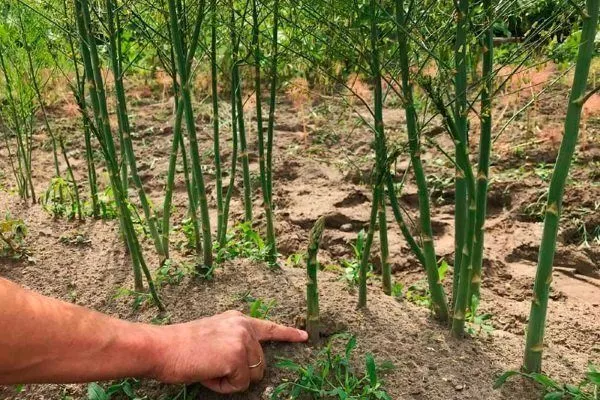
Asparagus diseases
Most asparagus diseases are fungal, causing spotting. They are caused by overwatering, weeds, and weather conditions. However, there are also viral diseases transmitted by insects.
| Name | Type of disease | Pathogen | Symptoms |
|---|---|---|---|
| Fusarium | Fungal | Fusarium Link | Brown spots, fluffy coating |
| Rust | Fungal | Not specified | Light spots that darken over time |
| Fomoz | Fungal | Phoma asparagina Tehon et Stout | Brownish-brown spots with black inclusions |
| Cercospora leaf spot | Fungal | Cercospora asporagi Sacc | Oval spots with a gray coating |
| Mosaic | Viral | Asparagus mosaic virus | Yellow spot |
| Root rot | Fungal | Not specified | Hollow roots, dark putrefactive formations |
| Red rot | Fungal | Rhizoctoma violacea Tul | Gray spots, purple-violet plaque |
Fusarium
This disease is caused by the fungus Fusarium Link. It manifests itself in June with the appearance of brown or wine-colored spots with a light, fluffy coating on the roots of plants. The plants turn yellow, become weakened, and dry out. The disease is focal, as it spreads quickly from diseased to healthy asparagus.
Affected asparagus quickly dies due to the destruction of the stem and root system. Waterlogged beds and dense plantings are most often at risk. The fungus prefers to develop in mature asparagus patches.
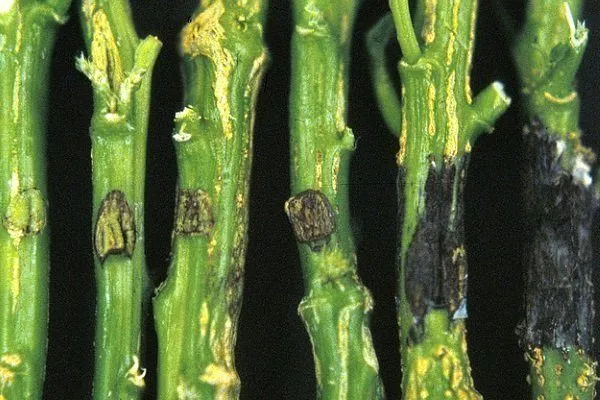
Sources of infection are affected plant residues and soil.
Control and prevention measures include:
- thinning asparagus plantings;
- shallow planting of seedlings and seeds;
- adjustable humidification;
- fungicidal treatment of soil and planting material.
Rust
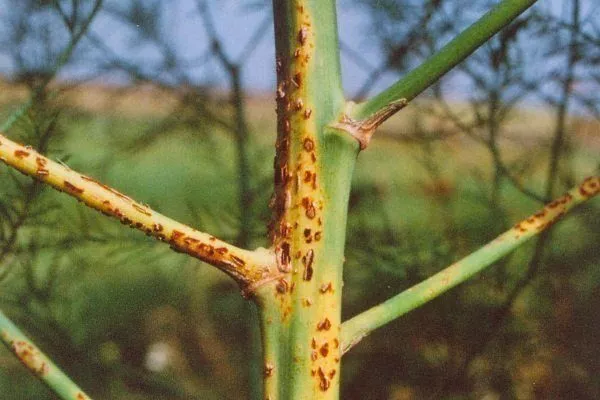
A fungal disease. In early May, light, raised spots appear on young asparagus stems. As the spores mature, the mycelium darkens. Eventually, it takes on a reddish-orange hue, reminiscent of rust.
The fungus prefers warm, humid weather. It spreads through rainfall, irrigation, and wind. Rust spores overwinter on asparagus debris and weeds.
The disease, developing annually in the same spot, strengthens its grip, dispersing spores everywhere. Asparagus yields decline year after year, eventually approaching zero.
Methods of prevention and control are reduced to:
- weed control;
- maintaining a distance of 300-400 m between young and old asparagus plots;
- removal and burning of affected asparagus;
- preparation of soil and seeds for planting using disinfection methods.
Fomoz
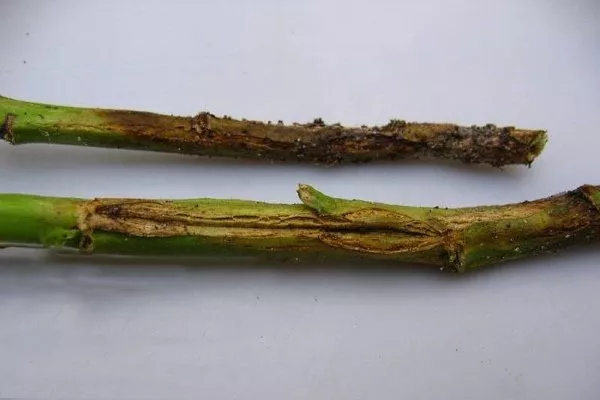
A fungal disease caused by the fungus Phoma asparagina Tehon et Stout. When infected, irregular brown spots with a bright border appear on asparagus. As the spores mature, black specks can be seen within the lesions. Asparagus stems affected by Phoma asparagus blight stop growing and gradually dry out. Yields drop sharply.
Cool and rainy weather, as well as waterlogged soil resulting from improper watering, are particularly favorable conditions for the spread of the disease.
To prevent asparagus blight, it is recommended:
- carefully remove plant debris before digging the area;
- burn plants affected by the fungus;
- observe crop rotation;
- carry out antifungal treatments.
Cercospora leaf spot
The causative agent of the disease is Cercospora asporagi Sacc. Affected asparagus is covered with small oval spots up to 0.4 cm in size. The spots are light-colored and covered with a gray coating. The broad border of the affected areas is bright red.
Diseased plants quickly wither and the yield decreases sharply.
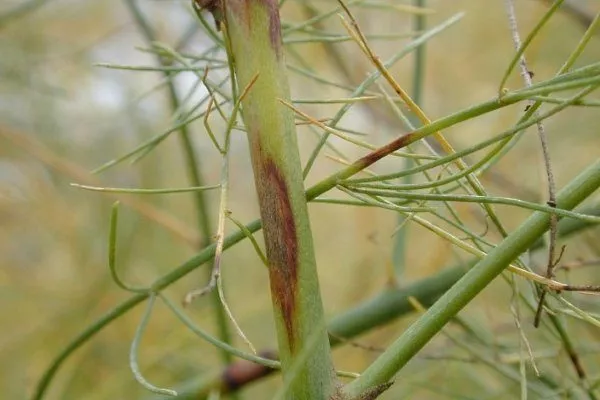
Precipitation and windy weather are favorable conditions for the spread of fungal spores.
Preventive measures and methods to combat cercospora leaf spot include:
- destruction of infected asparagus;
- competent and timely agricultural technology;
- compliance with the order of planting crops;
- antifungal treatment.
Mosaic
A viral infection caused by the Asparagus mosaic virus. The disease causes yellow spots on asparagus, which impair the taste and reduce the yield.
Asparagus mosaic virus is spread by aphid colonies. The virus remains intact in crop residues during the winter.
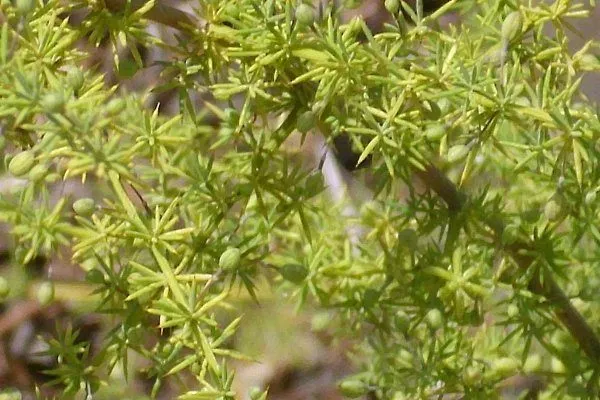
To combat viral infection and prevent its occurrence, you should:
- treat asparagus and surrounding crops with aphid control agents;
- take into account the proximity of plants;
- observe crop rotation;
- destroy weeds.
Root rot
A fungal disease that attacks the asparagus root system. When infected, the plant stops growing due to a lack of nutrients, which the roots cannot absorb. The roots become hollow inside and covered with a dark, rotting growth on the outside.
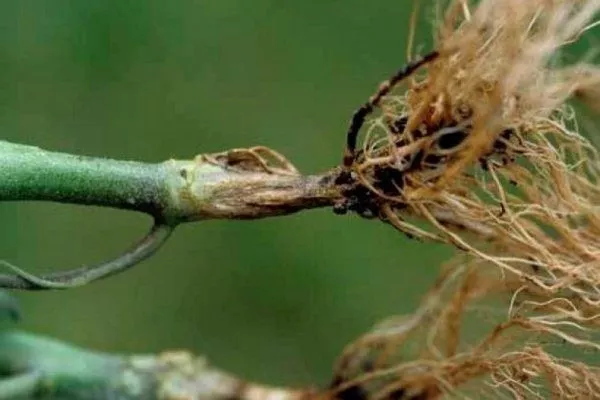
Root rot is especially common with heavy watering and precipitation.
It's virtually impossible to save plants with foliar treatments. Infection can only be avoided by treating the soil and seed with fungicides and antifungal agents, and by following crop rotation when choosing a planting site.
Red rot
The disease is caused by the fungus Rhizoctoma violacea Tul. When infected, gray spots are visible on the asparagus basal part and roots. As they mature, they become covered with a purple-violet bloom. Asparagus affected by red rot stunts and dies.
The fungus develops and spreads in high humidity and warm weather conditions. It overwinters in a dormant form on plant debris.
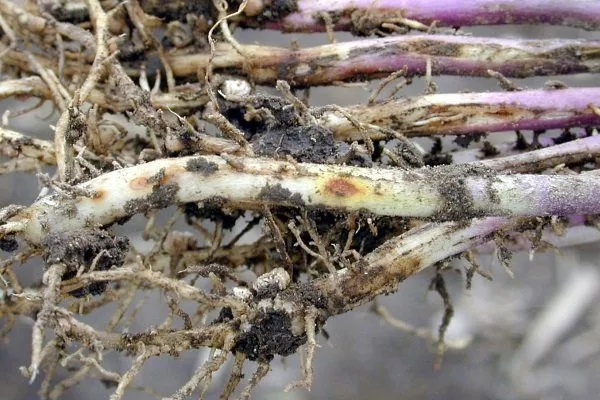
To combat red rot, the following measures must be taken:
- When choosing a planting site, give preference to areas on elevated areas where groundwater is located at a large distance from the surface and the wind has the ability to blow through the planting;
- water moderately and loosen the soil to avoid crust formation on the surface;
- Clean the garden bed thoroughly after harvesting;
- Do not plant asparagus in a bed where alfalfa, clover, potatoes, or sugar beets were previously grown.
In the fight against diseases of fungal origin, the following medications can help:
- Fitosporin;
- "Topsin-M"
- "Topaz"
- Bordeaux mixture;
- copper oxychloride.
Treatment is carried out every 10-14 days, diluting the product strictly in accordance with the instructions.
Pests
In addition to diseases, pests pose a threat to asparagus and its harvest.
| Name | Size | Color | Harm |
|---|---|---|---|
| Asparagus leaf beetle | 5 mm | Blue with red border | Destroys crops |
| Asparagus fly | 8 mm | Dark | Deforms the stems |
| Scale insect | 5 mm | Not specified | Feeds on plant sap |
| Greenhouse thrips | 2 mm | Dark with yellow-green wings | Sucks out the juice |
Asparagus leaf beetle
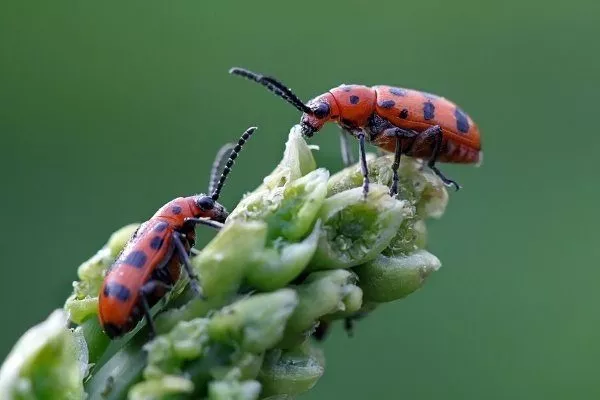
The asparagus leaf beetle is a 5 mm long beetle with three pairs of legs. The insect is vibrantly colored: its overall color is a deep blue, with a red border on its back and yellow ornamentation on its elytra.
Females lay eggs on the surface of asparagus leaves and stems, and the larvae descend into the root zone to pupate. After two weeks, the young generation of asparagus leaf beetles emerges.
These pests prefer to feed on the leaves and stems of mature asparagus, and later on, they also feed on young shoots. In this way, the insects cause irreparable damage to the crop, destroying the entire planting.
Control measures for the asparagus leaf beetle include spraying with Malathion after cutting shoots for edible use. Deep soil digging is recommended to destroy the insect pupae.
Asparagus fly
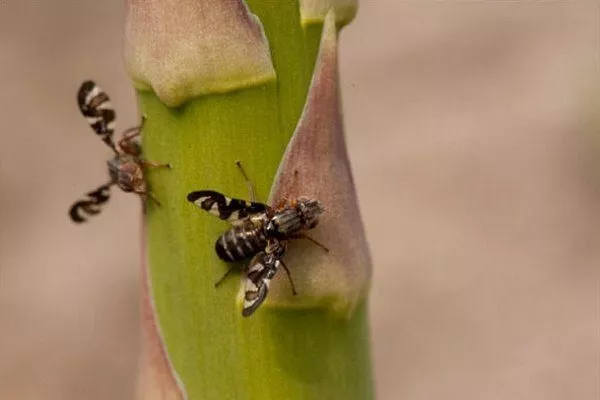
A dark insect up to 8 mm long. A zigzag pattern is clearly visible on its outstretched wings. The female has a long ovipositor. The asparagus fly is active from late March to early summer.
During the day, in warm weather, asparagus flies are active and mate. On cloudy, cool, or rainy days, as well as in the morning and evening, the insects sit quietly on the tops of asparagus plants or surrounding weeds. In unfavorable conditions, they do not fly.
An adult female lays up to 15 eggs on newly emerging asparagus shoots. On the fourth or fifth day, the larvae burrow deep into the young shoots, feeding on their sap and pulp. Upon pupation, the young generation of asparagus flies deforms the stems. As a rule, the asparagus eventually dies.
The older the asparagus plants, the more serious the threat posed by these insects. In affected areas, the crop is practically devoid of leaves, resulting in nutritional deficiencies. As a result, the number of new shoots decreases, and the yield declines annually.
If the shoots appear when the asparagus fly has completed its activity, then they are safe from insect attacks.
It is advisable to introduce measures against this pest in the second year:
- They involve removing all young shoots before the insects emerge. This prevents the insects from laying eggs and developing young. During the asparagus fly's active period, it is necessary to prune out any crooked shoots that are unsuitable for sale, along with healthy ones.
- In the fall, all asparagus stalks should be removed to prevent the development of asparagus fly pupae. Digging up the area and replanting the asparagus is recommended.
- Chemicals that are absorbed by the surface of asparagus leaves can be used. This will kill not only adult insects on the outside but also larvae inside the plant. Sprays should be applied every 5 days throughout the entire flight period.
Such chemicals include: "Vofatox Sp. 50 EC", "Methyl parathion WP", "Folithion 50 EC", "Methathion 50", etc. The preparation of the solution and its use must be carried out strictly according to the instructions for the drug.
Scale insect
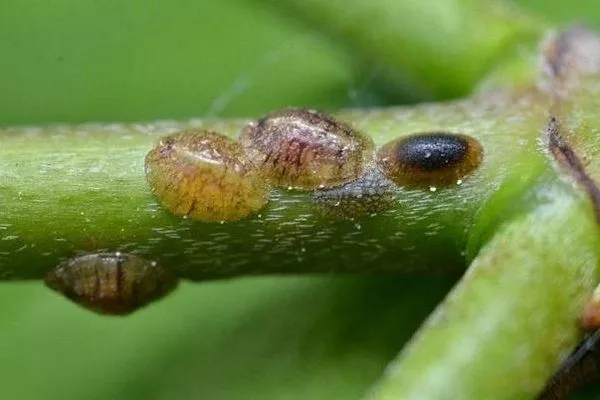
The scale insect is a small insect, up to 5 mm long, with a removable shell. After laying eggs, females cover them with their body until the larvae hatch. The offspring attach themselves to asparagus and remain motionless until their shells develop. Females have a lifespan of up to 4 months, while males live for 4 days.
Both adult scale insects and their offspring cause damage to the crop. The insects feed on the plant's sap, causing the asparagus to gradually wither and dry out.
Pests do not tolerate treatment with soap and salt solutions or alcohol-containing products. Special chemicals, such as Malathion, can be used according to the instructions. A single treatment of asparagus to completely eradicate the pests is difficult due to the plant's structure. Therefore, repeat spraying after 10-14 days.
Greenhouse thrips
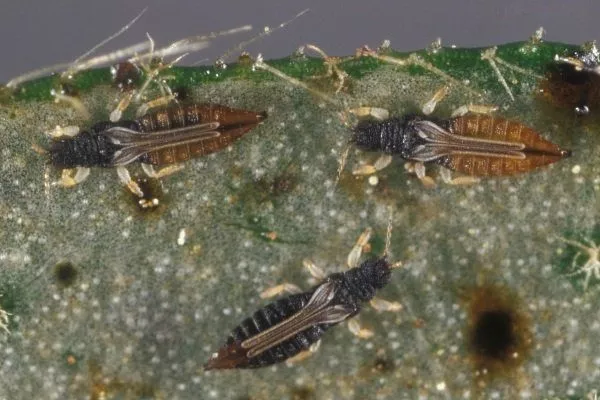
Greenhouse thrips are aphids with dark bodies and yellow-green forewings. They reach up to 2 mm in size. It takes about a month from egg laying to adulthood. Thrips larvae cause the most damage.
Pests suck the juices out of asparagus. This causes the plant to become pale, weak, and deformed. Stunted growth reduces the asparagus yield.
Measures to combat greenhouse thrips include daily irrigation of plantations and treatment of plants with Karbofos.
Asparagus is vulnerable to numerous diseases and pests. Knowing how to identify diseases and how to combat them can help protect the crop and save the harvest. Timely agricultural practices and preventative maintenance are the gardener's most important tools.