
Asparagus is a perennial plant belonging to the Asparagus family and closely related to onions and garlic. The shrub produces long, succulent, and dense shoots with small, needle-like leaves in shades ranging from whitish to purple. These shoots contain many vitamins and microelements, making them useful in both cooking and medicine.
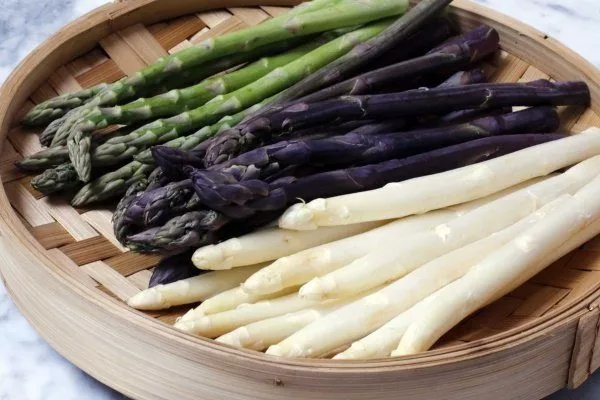
Varieties of asparagus
| Name | Color of shoots | Ripening period | Vitamin content |
|---|---|---|---|
| Green | Green | All year round | High |
| White | White | March-June | Average |
| Purple | Violet | Seasonal | Low |
| Soy | White/yellow | Depends on processing | High (B, D, E) |
There are several varieties of asparagus:
- GreenThe most popular type of asparagus, as it can be harvested year-round. Therefore, the vegetable is always available not only frozen but also fresh. Green asparagus is the young shoots of a bushy plant that grows outdoors. It remains juicy and crispy after cooking. The green variety contains more vitamins and minerals than its counterparts.
- WhiteIt ripens between March and June and is considered a seasonal delicacy. When growing, the bush is completely covered with well-fertilized, loose soil. This gardening technique protects the plant from sunlight, which is what gives the shoots their white color. This type of asparagus is expensive because it is difficult to cultivate. Unlike green asparagus, it has a more delicate flavor.
- PurpleThis is the rarest and rather unusual variety, characterized by a slightly bitter taste. It is grown in the dark with short periods of sunlight. When cooked, purple asparagus turns green.
- Soy (bean)This is a product obtained by heat-treating soybeans. It is often used in dietary nutrition.
- ✓ The soil should be well-drained, with a pH of 6.5-7.5, to prevent root rot.
- ✓ A minimum soil temperature of 10°C is required to initiate shoot growth.
Soy asparagus is also known as Korean asparagus. It's not a species of the Asparagus family, but rather the foam skimmed from boiling soy milk during the preparation of crushed soybeans, and then processed using the appropriate technology.
Composition and caloric content
Asparagus of any variety is rich in valuable vitamins and minerals, as can be seen from the following table:
| Substance | Concentration per 100 g |
| Vitamins | |
| A | 82.8 mcg |
| B1 (thiamine) | 0.1 mg |
| B2 (riboflavin) | 0.1 mg |
| B3 (nicotinic acid, vitamin PP) | 1.1 mcg (40% of the daily value of vitamin) |
| B9 (folic acid) | 262 m |
| C | 20.2 mg |
| E | 1.9 mg |
| Beta-carotene (provitamin A) | 0.6 mg |
| Macro- and microelements | |
| Iron | 1 mg |
| Potassium | 195.8 mg |
| Calcium | 21 mg |
| Magnesium | 20.2 mg |
| Sodium | 2 mg |
| Phosphorus | 62.1 mg |
| Chemical composition | |
| Water | 93 g |
| Carbohydrates | 3 g |
| Disaccharides and monosaccharides | 2.2 g |
| Squirrels | 2 g |
| Dietary fiber | 1.5 g |
| Starch | 1 g |
| Ash | 0.5 g |
| Organic acids | 0.1 g |
| Fats | 0.1 g |
| Caloric content | 21 kcal |
It should be noted that the exact composition of asparagus varies slightly depending on the specific variety:
- Soy asparagus is rich in vitamins B, D and E, lecithin (participates in cell regeneration processes, helps normalize the functioning of the nervous system and brain) and choline (increases cell resistance to harmful factors);
- White asparagus is rich in vitamins A, B1, C and E, calcium, potassium and phosphorus;
- Green asparagus has the richest composition – it contains vitamins A, B1, B2, B4, B9, E, C, K, the micro- and macroelements listed in the table, as well as manganese, copper, selenium and niacin.
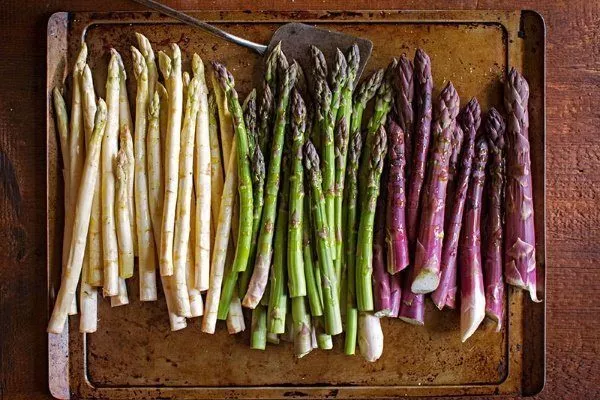
Beneficial properties
Thanks to its rich nutritional content, asparagus is particularly beneficial for the body, is easily digestible, and can be a regular part of a diet. Let's explore the specific benefits of this vegetable below.
General benefit
Eating asparagus is especially beneficial for the body, as the vegetable has the following properties:
- Gives energyDespite its low calorie content, asparagus contains carbohydrates, which provide the energy and vitality needed for daily work.
- Cleanses the bodyAsparagus stimulates kidney function thanks to its potassium salts and asparagusic acid content, facilitating the elimination of waste products. It also contains fiber, which helps eliminate waste and toxins.
- It has a diuretic effectThis is due to the vegetable's potassium content. Thanks to this effect, asparagus can be consumed for urinary problems, prostatitis, edema, and diabetes.
- Improves digestionAsparagus contains coarse insoluble fiber, which has a positive effect on intestinal microflora, reduces gas formation, and improves intestinal muscle tone.
- Stimulates diuresisAsparagus helps increase urine output, which can be explained by the presence of aspartic acid in its composition.
- Supports the functioning of the cardiovascular systemAsparagus contains coumarins, substances that strengthen blood vessel walls, regulate blood clotting, and prevent blood clots. It also contains asparagine, which dilates blood vessels and lowers blood pressure, removes ammonia from the body, and stimulates the heart muscle. Therefore, asparagus is recommended for people who have had a heart attack. Magnesium, potassium, and iron also have beneficial effects on the heart and blood vessels.
- Normalizes cholesterol levelsAsparagus contains saponins, which can restore lipid metabolism and reduce cholesterol levels.
- Removes phlegmSaponins irritate the gastric mucosa and stimulate increased secretion from all glands. This liquefies mucus, allowing the bronchi to clear mucus that has accumulated on the bronchial tree.
- Improves visionDue to its beta-carotene content, asparagus helps improve vision. Furthermore, carotenes prevent cancer and improve skin condition.
- Supports bone tissueAsparagus contains a large number of minerals, including calcium and phosphorus. These help strengthen tissues (bones and tissues).
- Accelerates regeneration processesZinc in asparagus promotes wound healing and strengthens connective tissue.
- It has a calming effectAsparagus helps normalize the nervous system by providing a calming effect, as it contains magnesium.
- Prevents various diseasesNicotinic acid, or vitamin PP, prevents and treats pellagra (a type of vitamin deficiency), hepatitis, liver cirrhosis, and atherosclerosis. Furthermore, the vitamin helps relax blood vessels, lower blood pressure, and improve circulation. Asparagus also contains folate, which maintains cellular health and prevents liver disease.
- Improves skin conditionAsparagus juice, due to its high antioxidant content, is used in cosmetics. This product has an exfoliating, cleansing, and softening effect. It also helps prevent premature skin aging.
Asparagus has a positive effect on the nervous system, heart, blood vessels, circulation, gastrointestinal tract, and respiratory system. It also supports genitourinary health.
The beneficial properties of asparagus are discussed in the program "About the Most Important Thing":
How is it useful for women?
Asparagus is extremely beneficial for the female body. It promotes the production of sex hormones, reduces bloating and pain during menstruation, has a calming effect, lifts mood, and alleviates chronic fatigue syndrome. Moreover, this vegetable contains iodine, which is beneficial for all women.
The benefits of asparagus during pregnancy deserve special attention. Its folate content supports fetal development and helps prevent congenital defects and other heart problems.
Women planning to have a child should regularly take folic acid several months before conception to reduce the risk of various birth defects in the child by five times.
How is it useful for men?
Asparagus is also of particular importance for men, as it stimulates their sexual desire and helps increase potency.
Men can also use asparagus as a hangover remedy. According to research by scientists at a Korean institute, the vegetable's juice contains elements and amino acids that accelerate the breakdown of alcohol byproducts, thereby helping to alleviate hangover symptoms.
Contraindications and harm
Despite all the benefits, asparagus can be harmful when consumed in large quantities:
- increases kidney function and, as a result, gives urine an unpleasant odor, since it consists of 94% water;
- causes the development of diabetes.
There are also indications that asparagus should be avoided. These include:
- individual intolerance to substances contained in this plant;
- increased susceptibility to allergies (in some people with this problem, even simple contact with asparagus can cause hives);
- gastric ulcer and duodenal ulcer;
- acute gastrointestinal diseases, since asparagus irritates the gastric mucosa;
- predisposition to urolithiasis, since the consumption of asparagus can lead to an excess of oxalic acid salts and provoke the development of the disease;
- acute cystitis, prostatitis;
- articular rheumatism.
If there are no contraindications, then asparagus can be confidently used not only in cooking, but also in cosmetology and medicine.
How to choose and store?
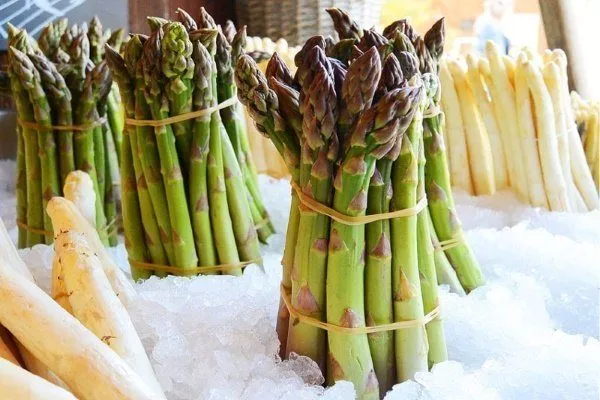
When buying asparagus in the store, it is worth paying attention to its freshness, as evidenced by the following signs:
- asparagus stalks are smooth, tender, elastic and have a slight shiny sheen;
- the shoots are hard and have closed heads;
- if you rub the shoots against each other, you should hear a creaking sound like freshly washed glass;
- the cut areas are dry and fresh, do not look dried out.
If asparagus is grown in the garden, then for consumption, young shoots should be prepared in the spring, while some differences should be taken into account depending on the variety of the plant:
- white asparagus shoots should be harvested while they are still in the ground so that they can retain their tenderness and softness (the lower part of the stems should be peeled using a potato peeler);
- Green asparagus shoots should be harvested when they grow to 20 cm, acquire a coarser structure, become green, elastic and smooth (you need to cut off the hard part of the petiole, 2-3 cm long).
Fresh asparagus should be stored in the lower compartment of the refrigerator for 3-4 days. If you recut the sprouts and soak them in water, they can be stored for about 5-7 days. Overcooking asparagus will cause it to lose its nutritional value. For longer storage, asparagus can be frozen, but it must be cooked first.
The rhizomes, grass, and fruits of asparagus are used for medicinal purposes, so attention should be paid to their preparation:
- Harvest the roots in early spring or fall, after the above-ground portions have withered. Dig them up, remove any soil, rinse under running water, and cut into pieces. Dry them outdoors under a canopy, spreading them in a thin layer on paper or cloth. The roots can also be dried in an oven preheated to 45 degrees Celsius (113 degrees Fahrenheit). The dried roots can be stored for up to two years.
- Young shoots should be harvested during the flowering period—in spring or early summer. Cut the tops to about 30 cm long and dry outdoors in the shade or in a well-ventilated room. Spread the herb in a thin layer on paper or cloth.
- The fruits are harvested after they are fully ripe—from August to September. Follow the same principles as when harvesting shoots.
Store the blanks in paper or canvas bags, as well as in wooden containers.
Use of asparagus in medicine
Asparagus is widely used in folk medicine. The specific remedy is selected depending on the ailment being treated.
An infusion of rhizomes is used as a diuretic for the following ailments:
- dropsy;
- kidney stone disease;
- inflammation of the bladder;
- especially difficult urination;
- pain in the vessels;
- arthritis;
- rheumatism.
An infusion of the roots is also used for tachycardia and epilepsy, but as a sedative.
A decoction with a sedative effect is also prepared from the roots, which is used for problems such as:
- neuroses;
- hysteria;
- diabetes mellitus (the decoction lowers blood sugar);
- pyelonephritis;
- cystitis;
- urolithiasis;
- prostate adenoma.
An infusion of the underground part and young stems can be used to treat stomach ailments, while an infusion of the aboveground part is useful for kidney, bladder, and heart diseases.
A decoction of the fruits is especially indicated for such pathologies as:
- diarrhea;
- dysentery;
- impotence.
Asparagus seeds can also be used as a diuretic. They can also be used to make an infusion that helps with impotence and promotes cleansing of the body of waste and toxins.
Here are some medicinal recipes based on asparagus:
- Grind the root, grass, and young shoots. Mix and take 1 tablespoon of the mixture, place it in a thermos, and add 200 ml of boiling water. Let the mixture steep for a couple of hours, then take 1 tablespoon every 2-3 hours. This infusion can also be used externally as a compress for skin rashes.
- Grind 60 g of roots and pour 1 liter of boiling water over them. Cool and take 1 tablespoon three times daily. This infusion is effective for arthritis and rheumatism.
- Grind the shoots, take 3 teaspoons of the raw material, and brew it with 1 cup of boiling water. Drink 1-2 tablespoons three times daily. The course of treatment is 3-4 weeks. This remedy helps with musculoskeletal disorders.
- Chew a piece of fresh root to relieve toothache as it has an analgesic effect.
- Regularly consume boiled or canned shoots to prevent heart attacks and strokes.
It's worth noting that asparagus-based products are available at pharmacies to help normalize blood pressure, slow heart rate, increase diuresis, and dilate peripheral blood vessels. These medications are often prescribed for cardiovascular diseases, dropsy, and swelling of the lower extremities.
In many countries, asparagus extract is prescribed intravenously for high blood pressure and arrhythmia.
Application in dermatology and cosmetology
In dermatology, asparagus is used in the complex treatment of vesicular dermatitis due to its anti-inflammatory properties. Furthermore, the rhizome and young shoots are useful for conditions such as:
- allergic dermatoses;
- pyoderma;
- vitiligo;
- lichen planus;
- psoriasis.
In addition, the plant's rhizome is used as a blood purifier for skin conditions such as eczema and exudative diathesis.
Asparagus is also used in cosmetology to treat aging skin cells, preventing their aging and maintaining a youthful appearance. For this purpose, spas prepare skin and neck masks made from young asparagus shoots. Furthermore, these skincare products help combat skin problems, promoting deep cleansing, softening, and nourishing the skin with beneficial elements.
With regular use of asparagus masks and consumption of the product, the skin will look young, toned and elastic.
Of course, you can also make asparagus-based masks at home. You can use different varieties of the plant, from green to Korean. Here are some of the best face mask recipes:
- With honeyGrind the young shoots, take 1 tablespoon and mix with 3 tablespoons of honey and 3 drops of lemon essential oil. Apply the resulting mixture to your face, which you should have washed and toned beforehand. After half an hour, rinse the mask off with cool water, dry your face with a towel, and apply thermal water.
- With cucumberMix 1 tablespoon of chopped asparagus and 3 tablespoons of cucumber pulp. Blend the mixture until smooth, add 3 drops of rosemary essential oil, and mix thoroughly. Wash your face with warm water and cleanse with toner, then apply the mask and leave it on for 30 minutes. Rinse with cool water, dry your face with a towel, and apply thermal water.
- With butterFinely grate fresh asparagus spears, place them on cheesecloth, and squeeze out the juice. Mix the juice with an equal amount of olive, peach, or almond oil. Soak cotton pads in the mixture and gently apply to your eyes. After 20-30 minutes, remove the pads and rinse off any remaining mixture. To effectively combat wrinkles around the eyes, use this asparagus-oil compress daily for 2-3 weeks.
Any asparagus-based mask should be applied immediately after preparation.
Culinary uses of asparagus
Asparagus is ideal for a healthy and dietary diet, as it is low in calories and promotes fat burning, including visceral fat. It also has a beneficial effect on digestion, helping to remove waste from the intestines, harmful salts, and excess fluid. Furthermore, asparagus has antioxidant properties and significantly lowers blood sugar levels, making it recommended for diabetics.
Asparagus pairs beautifully with a variety of sauces and can be eaten hot or cold. However, it should be cooked within a few days of harvesting, as it is a perishable vegetable and gradually loses its flavor.
Below you can find recipes for asparagus-based dishes that you can safely prepare even while on a diet.
Boiled asparagus
Boiled asparagus can be served as a side dish to a main course or used as a salad ingredient. In either case, prepare it as follows:
- Peel green asparagus from the center of the stalk to the very bottom, and white asparagus just below the tip. It's best to use a potato peeler for peeling.
- Cut a 2 cm long piece from the end of the stem, and then make all the shoots approximately the same length.
- Tie the stems into a bundle and place it in the pot, bottom side down, as it's stiffer. It's also a good idea to attach a small weight to the end of the bundle to help it stay in place.
- Add enough water to the pan to cover the tops of the spears by about 5 cm. The remaining tops will cook under the hot steam. If the asparagus begins to wilt, add 1 tablespoon each of sugar and lemon juice to the cooking water.
- Cook green asparagus, covered, for 3-4 minutes, and white for 10-15 minutes. Be careful not to overcook it, as it won't be tender and won't be as flavorful. You can check for doneness by using a knife blade—it should cut through the asparagus easily. You can also pierce it with a fork.
- Two weeks before planting, add compost to the soil at a rate of 5 kg per 1 m².
- Check the soil pH and adjust it with lime or sulfur if necessary.
- A week before planting, loosen the soil to a depth of 30 cm to improve aeration.
To ensure green asparagus retains its vibrant color after cooking, rinse it with cold water immediately after cooking and only then use it as directed.
Asparagus can be boiled or stewed after pre-cooking. Learn how to do it properly in the video below:
Cream soup with milk
Ingredients:
- asparagus – 500 g;
- small onion – 1 pc.;
- chicken broth – 0.5 l;
- milk – 250 ml (glass);
- sour cream with 21% fat content – 1/2 cup;
- butter – 2 tbsp;
- flour – 2 tbsp;
- salt, black pepper – to taste.
Preparation:
- Peel the onion and chop finely.
- Place the asparagus and onion in a saucepan, pour in the broth, and simmer for 15 minutes. Season the mixture with salt and pepper and blend until smooth.
- Melt the butter in a frying pan and add the flour. Cook for 2-3 minutes, stirring constantly. Add this mixture to the chopped asparagus, pour in the milk, and bring to a boil. Remove from heat after a couple of minutes.
- Add sour cream to the soup, mix and put it back on the stove, but do not bring to a boil.
Casserole with Cheddar Cheese
Ingredients:
- asparagus – 1 kg;
- eggs – 5 pcs.;
- shredded cheddar cheese – 1 cup;
- crushed saltine crackers – 1 cup;
- butter – 3 tbsp;
- flour – 3 tbsp;
- milk – 2 glasses;
- salt, pepper – to taste.
Preparation:
- Boil the asparagus and drain in a colander.
- Boil the eggs hard, peel and slice.
- Melt the butter in a frying pan, add the flour and simmer, stirring constantly. Pour in the milk and mix well. Season with salt and pepper. The sauce is ready.
- Layer half the asparagus, eggs, cheese, and sauce in a baking dish, then repeat. Sprinkle with crackers.
- Place the pan in a hot oven and bake for 30 minutes or until done.
Quiche with asparagus and ham
Ingredients:
- asparagus – 1 kg;
- ham – 300 g;
- eggs – 3 pcs.;
- grated hard cheese – 1.5 cups;
- shallots – 2 medium-sized pieces;
- milk – 1/2 cup;
- sour cream – 1/2 cup;
- olive oil – 2 tbsp;
- salt, black pepper – to taste.
Preparation:
- Peel and chop the onion, cut the ham into cubes.
- In a separate bowl, combine the milk, sour cream, and eggs. Season the mixture with salt and pepper. The sauce is ready.
- Heat olive oil in a frying pan and fry the onion until golden brown. Add the asparagus and sauté for 10 minutes until half-cooked.
- Place half the cheese, all the asparagus, and the ham in a round, rimmed baking dish. Drizzle with the sauce, season with salt and pepper, and sprinkle with the remaining cheese. Bake in a warm oven for 30 minutes or until done.

Pasta casserole with asparagus
Ingredients:
- asparagus – 500 g;
- Ziti or Penne pasta – 400 g;
- ham – 200 g;
- mozzarella – 200 g;
- olive oil – 3 tbsp;
- garlic – 3 cloves;
- salt, black pepper, basil - to taste.
Preparation:
- Boil the pasta in salted water until half cooked and drain in a colander.
- Boil the asparagus until half-cooked and also drain in a colander.
- Heat olive oil in a frying pan and sauté the minced garlic. Add the pasta and asparagus and sauté. If necessary, add a little of the pasta cooking water to the pan.
- Cut the ham into cubes or strips and the mozzarella into slices. Add to the pasta, season with salt and pepper, and mix well. Sprinkle with basil to taste.
- Remove from heat when the pasta is fully cooked, cool slightly and serve.
White asparagus with salmon
Ingredients:
- white asparagus – 2 bunches (about 24 pieces);
- smoked salmon – 8 thin slices;
- grated Emmental cheese – 120 g;
- milk – 0.5 l;
- flour – 40 g;
- butter – 30 g;
- nutmeg, salt, pepper – to taste.
Preparation:
- Boil the asparagus in salted water and drain in a colander.
- Melt the butter in a small saucepan, add the flour, and whisk. Add the milk and grated nutmeg, stirring constantly. Season with salt and pepper. Once the sauce boils, it will thicken. At this point, remove it from the heat and add the grated cheese.
- Wrap 3 asparagus spears in each salmon slice and place in a baking dish. Drizzle with the sauce and grill until golden brown. If you don't have a grill setting, set the thermostat to high and use only the top heat.
- Serve on plates with boiled new potatoes and parsley. A glass of white Muscat wine makes a wonderful accompaniment.
In this recipe, salmon can be replaced with dry-cured ham, and white asparagus with green.
Sauces for asparagus
Asparagus cooked in the usual way can be served as a standalone dish, if accompanied by a sauce. This could be:
- Hollandaise sauceThis is a classic accompaniment to asparagus. To prepare it, heat 2 tablespoons of lemon juice and melt 100 g of butter. Place the saucepan over low heat or a double boiler, pour in 3 egg yolks, and whisk until the mixture begins to thicken. Then gradually pour in 4 tablespoons of hot boiling water, stirring constantly. Next, pour in the lemon juice, remove the sauce from the heat, and continue whisking, gradually adding the melted butter. Season the mixture with salt and pepper, adding a pinch of cayenne pepper (chili) if desired, and whisk again. The asparagus sauce is ready.
- Flemish sauceA simpler sauce requires finely chopping 4 hard-boiled eggs, mixing them with 75g of melted butter and a bunch of chopped parsley. Season the sauce with salt and pepper and serve.
Video: Unknown Facts About Asparagus
Asparagus is a healthy vegetable with its own unique characteristics, which you can learn about in the following video:
Asparagus is a low-calorie food rich in vitamins and beneficial microelements, making it recommended for daily consumption. This vegetable can be used to prepare quick breakfasts and creative dinners. It can also be used for medicinal and cosmetic purposes, but it's always recommended to consult a specialist first, as the possibility of an individual intolerance cannot be ruled out.