
Fat-leaf spinach is not only tasty and healthy, but also beautiful, making it a popular garnish for holiday appetizers. This variety is considered early maturing, completely undemanding to grow, and versatile in its uses.
Botanical description
Fat-leaf spinach has common names such as green spinach and deer sponge. It belongs to the annual vegetable spinach family Amaranthaceae. Its native land is considered to be South Asia.
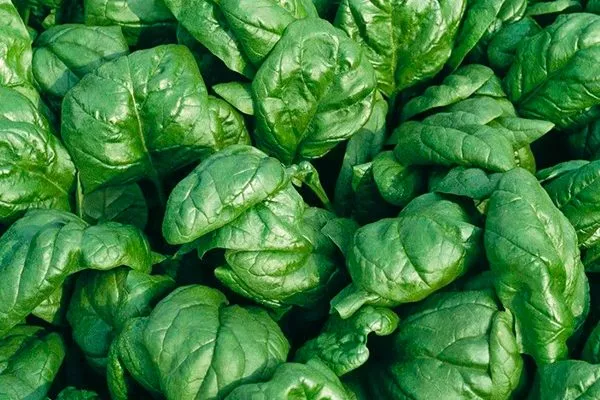
Botanical features:
- leaves - exceptionally green and tender, type - slightly blistered;
- taste – distinguished by increased juiciness and tenderness of structure;
- root system – taproot with small branches;
- The rosette is medium in compactness and semi-elevated, the diameter varies from 20 to 30 cm.
The Latin name is spinacia oleracea jirnolistniy.
Characteristics of Fat-Leaf Spinach
This fat-leaf spinach variety is characterized by high yields. It's a good choice even for beginners, as it's easy to maintain. Key characteristics:
- stress resistance – at a high level;
- cultivation – in open ground, on a windowsill, in a greenhouse, etc.;
- variety type – early;
- ripening period – from 28 to 30 days;
- vegetation period – from the beginning of May to the end of September;
- yield – from 1 sq.m you can collect about 3 kg 500 g;
- light requirements – yes, loves the sun;
- moisture requirements: moderate.
Story
History is silent on how long the Fat-Leaf spinach has been around and who specifically bred it, but it is known for certain that this variety was registered in the USSR state register in 1971.
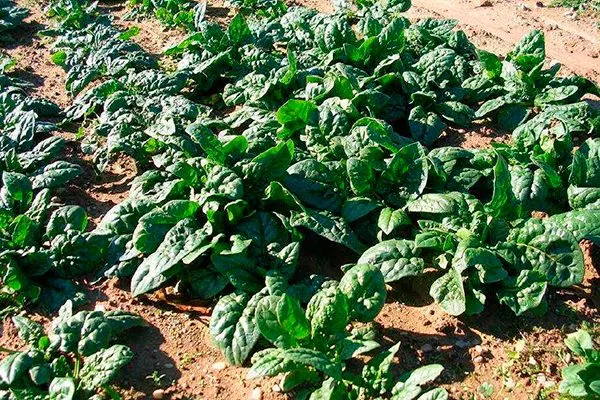
At that time, Fat-Leaf Spinach was mid-season, but in 2017, breeders refined the variety, making it more fleshy and juicy, and most importantly, early ripening.
Advantages and disadvantages
Medicinal properties and chemical composition
Fat-leaf spinach is a dietary product because it contains minimal calories—only 22 kcal per 100 g. However, it's rich in nutrients:
- vitamins – C, H, K, A, E, PP, choline, beta-carotene, group B (1, 2, 5, 6, 9);
- calcium and magnesium;
- zinc and iron;
- potassium and sodium;
- folic acid and many others.
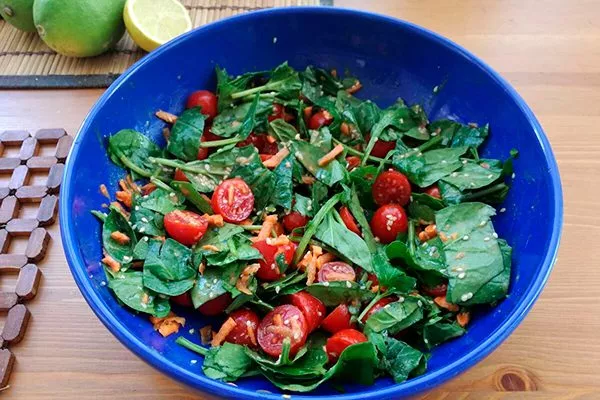
Thanks to the rich composition of spinach, the Zhirnolistny variety has a host of beneficial properties, among which the following stand out:
- strengthening the immune system;
- general health improvement;
- improving performance – both physical and mental;
- diuretic and mild laxative effect;
- stress management;
- restoration of strength;
- elimination of insomnia;
- improving visual acuity;
- rejuvenation of skin and internal organs.
Contraindications
There are no specific restrictions on the consumption of spinach, but it is best to avoid this product if you have urolithiasis, gallstones, rheumatism, gout, or duodenal pathologies.
Where is it used?
Spinach is most often used in cooking, and throughout the world. However, it is also recommended in folk medicine. Moreover, even doctors include spinach in their list of essential foods for various ailments.
In cooking
Spinach is most often used in salads with various ingredients, but its uses are far broader. What else is spinach good for?
- fillings for pies and cakes;
- first courses;
- sauces;
- cold and hot appetizers;
- sandwiches;
- cutlets;
- meat dishes;
- baking;
- side dishes.
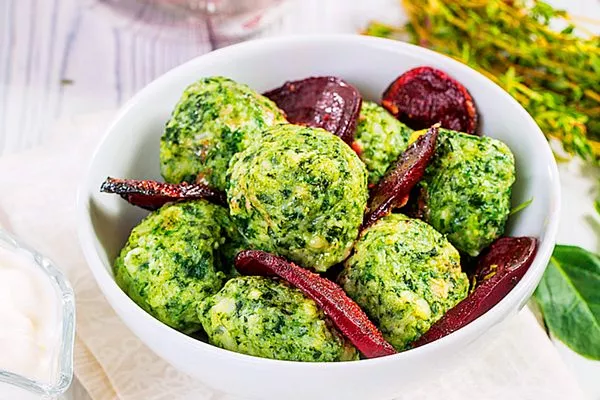
Spinach pairs best with fish and meat, cheese, and eggs. It's considered a natural coloring agent, and is added to foods during canning.
In medicine
The list of conditions for which spinach is recommended is not very long. These are:
- gastritis;
- thyroid problems;
- hypertension;
- anemia;
- enterocolitis;
- chronic fatigue;
- eye strain;
- inflammation of the gums.
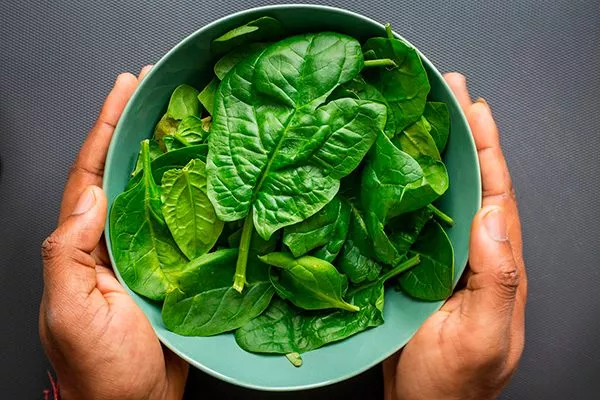
How does the taste differ from other varieties?
According to numerous consumer reviews, Fat-Leaf Spinach has a neutral flavor with creamy notes. It's easily digestible.
How to plant in a garden bed in open ground?
To ensure a bountiful spinach harvest, it's important not only to plant the seeds deep, but also to follow specific planting guidelines—choosing a suitable site, preparing it and the planting material, and deciding on a planting pattern.
- ✓ The optimal soil temperature for sowing seeds should not be below +3-5°C.
- ✓ To prevent fungal diseases, it is necessary to ensure good ventilation between plants.
Choosing a suitable landing site
Fat-leaved spinach requires full sun before midday and partial shade afterward. Direct sunlight all day will damage the leaves.
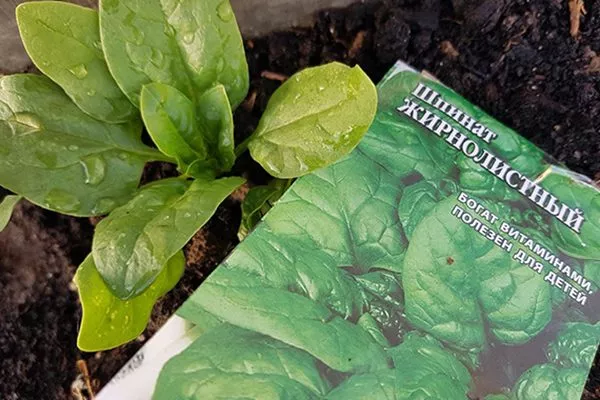
Other features of the place:
- Due to the dense planting, which is typical for all varieties of spinach, the plant requires ventilation, so the Fat-leaved variety should not be planted near buildings;
- the influence of winds from the north is excluded;
- the best place is south, southeast;
- soil type – loose, with acidity of about 7.0 pH.
Pay special attention to crop rotation:
- optimal predecessors are potatoes, early cabbage, radishes, cucumbers, beets;
- the worst predecessor is late-ripening cabbage;
- The best neighbors are cabbage, eggplant, onions, tomatoes, dill, legumes, lettuce;
- Undesirable neighbors: asparagus, zucchini, beets, watercress, celery.
Timing and sowing scheme
The exact planting time for butter-leaf lettuce is difficult to determine, as it depends on various factors, including the region and current weather conditions. Therefore, it's important to consider the air temperature (it shouldn't fall below 7-10 degrees Celsius) and the soil temperature (around 3-5 degrees Celsius).
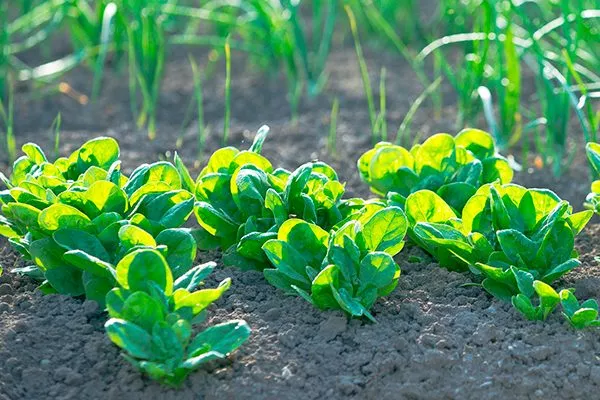
Fat-leaved spinach can be planted at other times, but no later than August, allowing you to enjoy healthy greens from spring until late autumn.
The seed sowing pattern can be different:
- distance between seeds: for dense planting, which is acceptable, 2-3 cm; for medium planting, 7-10 cm; if there is a lot of space, up to 20 cm;
- The distance between rows is from 10 to 25 cm, but every 3-5 rows you need to make a technical passage about 50 cm wide.
Preparing the soil and planting plants
Spinach, like any other crop, thrives on fertile soil, especially when planted, allowing the seeds to quickly take root and sprout. Spinach can be planted directly in open ground or indoors to produce seedlings.
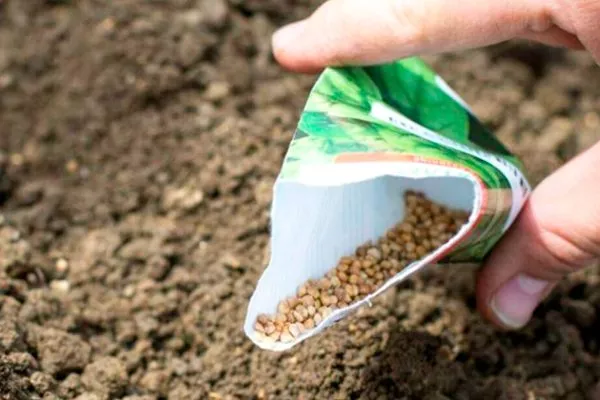
Seeds in open ground
About 2-4 weeks before, but ideally in the fall, you need to fertilize the beds with organic fertilizer. Here's how to do it right:
- Remove all debris, branches and leaves from the area.
- Dig to the depth of a spade, adding organic matter at the same time. This could be humus, rotted manure, or compost. The recommended dosage for 1 square meter is 10 kg, but the exact dosage depends on the fertility of the soil in the bed. The main thing is not to exceed the specified values.
Be sure to add 150-200 g of wood ash per square meter. - Immediately before planting, add 2 tablespoons of nitrophoska and 1 teaspoon of urea per square meter. Another soil composition for spinach is 200 g of wood ash, 1 liter of vermicompost, and 2 kg of vermiculite or perlite.
- 2-4 weeks before planting, apply organic fertilizer at a rate of 10 kg per 1 sq. m.
- Before planting, add 150-200 g of wood ash per 1 sq. m to the soil to reduce acidity.
- The day before planting, loosen the soil to a depth of 20-25 cm to improve aeration.
Planting material also requires preparation. This includes the following:
- Select the fullest and healthiest specimens by placing the seeds in a glass of water.
- After 10 minutes, inspect the eggs. Collect and discard any that float to the surface (they're empty). Place the remaining eggs in a light pink solution of potassium permanganate for 25-30 minutes to disinfect.
- Take a piece of gauze, wet it – it should be well moistened.
- Place the seeds on gauze and cover with the same cloth.
- Leave the seeds on the saucer to germinate. Once they sprout, plant them outdoors.
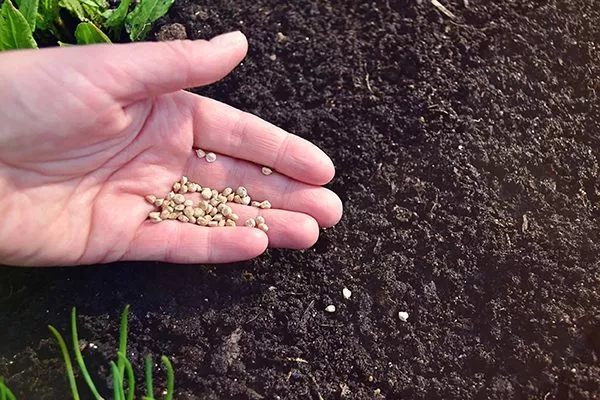
On planting day, lightly dry the seedlings so they separate easily. To do this, spread the seeds on a paper towel. Then, proceed as follows:
- Level the surface of the soil in the garden bed.
- Make grooves 2-2.5 cm deep.
- Distribute the seeds according to the chosen pattern.
- Fill with soil using a garden tool and level it.
- To ensure uniform germination, additionally go over the beds with a hand roller or use an inverted rake (with the teeth facing up).
- Water from a watering can with a spray bottle. Use warm, settled water.
- Cover with burlap. You can use plastic film or any non-woven covering material.
Seedling
The seedling technology for fat-leaf spinach is used when the greens are grown on a windowsill, when an earlier harvest is needed, and in regions with harsh climates. Two substrate options are available:
- peat tablets – no need to pick them out later, the sprouts are transplanted together with the tablet;
- purchased or home-made soil mixture - 3 parts garden soil, 1 part sand and 1 part humus.
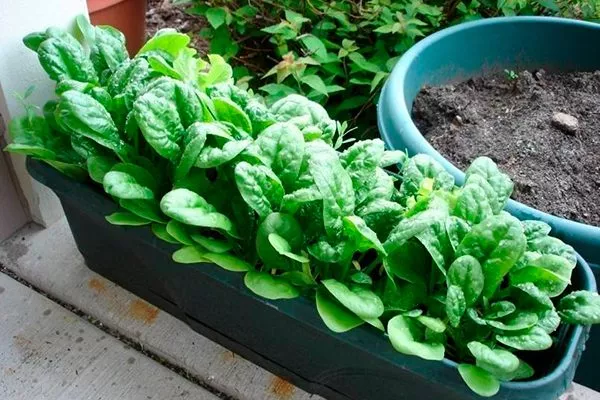
Planting process:
- Fill the container (peat pot, disposable cups, containers, etc.) with substrate.
- Form furrows 1.5-2.0 cm deep.
- Spread out the prepared seeds.
- Sprinkle with the rest of the soil mixture.
- Moisten the soil.
- Cover the container with plastic or glass.
Until the sprouts appear, open the containers daily for 15-30 minutes to ventilate. Remember to monitor the humidity level – the substrate should be moderately moist. The time for transplanting outdoors is from April to May.
Growing rules
Caring for the Fat-leaved Spinach is quite standard: the plant needs to be watered, fertilized, weeded, and protected from the heat – this will help the leaves retain their freshness and elasticity.
Fertilizers
There's no need to fertilize spinach during its development, provided all recommended fertilizers were applied at planting. However, even then, it will be necessary in poor soils. This is especially true for non-chernozem soils. What can be applied per square meter:
- 8 g phosphorus;
- 15 g potassium;
- 10 g of nitrogen.
The second option involves using organic matter: add 1 liter of liquid mullein to 10 liters of water. Fertilizer is applied only when leaves turn pale or growth slows.
Watering
Fat-leaved spinach is a crop that dies without moisture, so avoid allowing the soil surface to dry out. It's especially important to water frequently when the seedlings and first leaves are forming.
Rules that are important to follow:
- do not allow over-watering, this will lead to putrefactive diseases - the soil should not be waterlogged;
- If the weather is hot and very dry, add water daily;
- During rainy periods, categorically avoid moisturizing;
- Under normal conditions, water spinach every other day;
- If the weather is cool or cloudy, it is enough to water the plant two or three times a week;
- Try not to let drops fall on the green mass - it is better to pour water into the root zone using a watering can with a spray;
- The best time for watering is early morning or evening, when the sun has already set.
Thinning
As soon as the seedlings develop three true leaves, be sure to thin them out, especially if you're planting them densely. This is necessary for several reasons:
- the leaves will grow larger;
- insect pests will have nowhere to hide;
- fungal diseases will not occur;
- the plant will be ventilated, which is very important for this variety.
Weeding
The second important step is removing weeds. If you don't, the grass will absorb all the moisture and nutrients, while the spinach will suffer from a shortage. Furthermore, when harvesting, weeds won't end up in the pile of edible foliage.
Peculiarities of weeding under different circumstances:
- In a small garden bed, a common garden tool, such as a hoe, can be used to remove weeds. You can also pull the grass by hand.
- If the farming operation is large-scale, specialized equipment designed for soil harrowing will have to be used. However, this can only be done in the early stages of development, when the leaves are no more than 5-7 cm tall.
Weeding is best done the day after watering or rain, when the soil is still soft enough. This will allow you to remove the grass along with its root system.
Loosening the soil
Loosening the soil allows the necessary amount of oxygen to penetrate the soil structure, which subsequently reaches the spinach root system. But this isn't the only reason to loosen the soil. This procedure helps retain moisture and prevents crust formation on the soil surface.
Loosening and weeding should be done the day after watering, but do this as carefully as possible, as the leaves and roots of the Fat-leaved Spinach are quite fragile.
Mulching – necessary or not?
This is a controversial issue—some gardeners prefer to mulch spinach, while others refuse. Experts believe mulching the oily leafy green is only advisable in regions with arid climates. This is because mulch significantly retains moisture, maintaining optimal conditions in the root zone for a long time.
Both organic and artificial materials can be used as mulch: straw, sawdust, leaves, grass, agrofibre.
Shelter in the heat
Scorching direct sunlight destroys spinach, so if the crop was planted outdoors, it needs to be provided with shelter. This is especially true in the southern regions of Russia. Experts recommend shading spinach when the air temperature is 27 degrees Celsius or higher.
How and what to cover with:
- use non-woven materials or protective nets;
- Install support posts along the rows and create a canopy.
When and how to harvest?
To ensure that fat-leaf spinach is tasty, juicy, and healthy, it's important to harvest it early, as overripe leaves become tasteless and tough. You can begin harvesting when the rosette has 6 to 8 leaves.
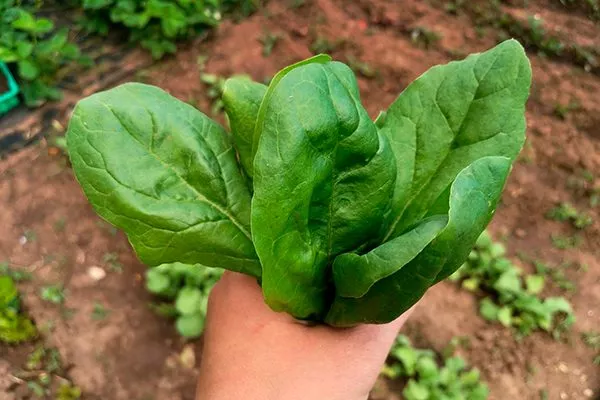
Harvesting methods:
- Selectively. In this case, only the mature leaves are trimmed, while smaller ones are best left until ripe. This method allows for repeated harvesting in large quantities.
- Solid option. This involves cutting the entire bush. This can be done in various ways: using a sharp knife to cut the plant just below the first leaves, or carefully removing it from the ground along with the root system, which allows for longer harvest preservation.
Diseases and pests
Spinach is sometimes susceptible to pest infestations and diseases, which are important to identify early to save the crop. These diseases are dangerous:
| Type of disease | Reasons | Symptoms |
| Peronosporosis | There is too much moisture, but the mushrooms can also be carried in by the wind. | The upper side of the leaf is covered with light yellow spots, and on the reverse side a grayish coating is visible (this is an accumulation of fungal spores). |
| Fusarium | Waterlogging of the garden bed during warm weather. | The leaf blades become dry and pale, the peripheral roots die off, resulting in the death of the plant. |
| Cercospora leaf spot | High humidity with a sharp change to dry weather. | Initially, yellow-white spots of different sizes form; as they progress, they become grayish and take the form of one large spot. |
| Anthracnose | Weakened immunity, fungal transmission by wind, rain, etc. | Grey spots appear on the leaves, inside which a swollen and dark mycelium develops. |
| Ramulariasis. | High humidity, swampiness. | Spinach leaves become covered with light brown spots with a reddish tint. |
| The fungus is carried by the wind and appears during rains. | A light-colored coating appears on the stem and leaves. |
Fungal diseases are treated only with chemicals, and their use on foliage crops is strictly prohibited, so affected bushes should be destroyed.
Among pests, only aphids and snails are considered. They can be controlled with folk remedies. For aphids:
- Infusion of wood ash. To prepare, take 20 liters of hot water and 1 kg of crushed ash. Mix thoroughly and let sit for 3 hours. Be sure to strain the solution before spraying.
- Wormwood tincture. Pour 500 g of fresh herbs into 6 liters of boiling water and let it brew for 24 hours.
- Laundry soap. For 10 liters of boiling water, you'll need 4 bars of brown soap. Grate it finely and dissolve it completely in the water.
Special traps and preparations work well against snails:
- Storm. The product should not be sprayed on the leaves, so it is applied to the soil around the spinach.
- Homemade trap. Take a plastic bottle, pour some beer into it, and place it near the plantings. The snails will crawl inside but won't be able to get out.
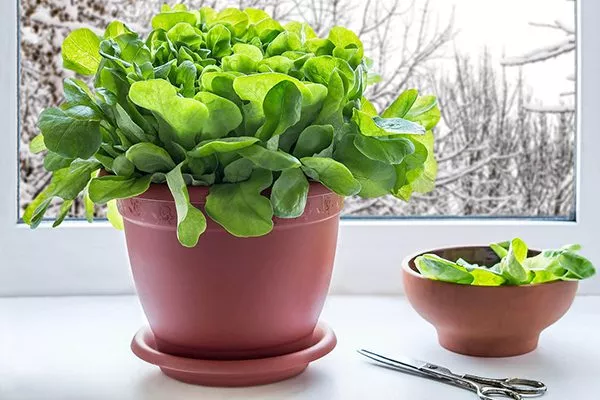
How to grow spinach on a windowsill in an apartment?
To enjoy spinach year-round, you first need to grow seedlings and then create the necessary conditions:
- Location. The optimal window location is south or east. If there's a north-facing window, additional lighting will be needed.
- Temperature conditions. It should range from +15 to +20 degrees.
- Daylight hours. Its duration is a minimum of 12 hours, a maximum of 14 hours.
- Care. Just like outdoors, spinach needs watering and trimming (there's very little grass).
Storage, processing and transportation
Only leaves that are not cut, but rather harvested with the root, are suitable for storage. If dried spinach is placed in a perforated plastic bag and then refrigerated, its shelf life is 10-14 days. However, this green can also be stored in processed form:
- Dried.Wash the leaves thoroughly and chop them into large pieces. Lay them out on a towel to dry thoroughly. Place them in cloth bags or plastic containers. Store for up to 6-8 months.
- Frozen. Place the washed and dried spinach in vacuum-sealed bags and freeze. It will keep for up to a year, provided it isn't defrosted.
- Canned. There are two options:
- without sterilization - sprinkle the raw materials with salt, place in jars and store in the refrigerator for up to six months;
- with sterilization - pour boiling water over chopped greens and roll up.
To prevent fat-leaf spinach leaves from spoiling during transportation and to keep them looking fresh longer, place them in a cardboard or wooden container on a bed of ice.
Reviews from those who planted
Oksana Melnikova, 34 years old, Dolgoprudny. I've been growing fat-leaved spinach for about four years, and only once did it get sick. But then we had rain all summer. But overall, I like the delicate flavor; the leaves are very juicy, perfect for salads and toast. I even put them on hamburgers instead of lettuce. I recommend them.
Victoria Savelnikova, 47 years old, Kaluga region. Our climate isn't ideal for such crops, but I've managed to grow large quantities of spinach in greenhouses. It transports well, especially if you pack it in a cardboard box—the foliage doesn't suffer because the material is breathable. Growing it hasn't been a problem.
Maxim Khairullin, 52 years old, Kazan. Fat-leaved spinach ripens quickly. We grow it on our windowsills in winter (my wife is a big fan), and in the garden during the rest of the seasons. We try to harvest it as it grows, i.e., by the leaves. One thing I want to point out is that it's crucial to provide shade in the summer, otherwise the leaves will burn in the sun. This is the most important thing.
Fat-leaf spinach is a versatile crop characterized by its excellent flavor. It's easy to grow, with seeds having a nearly 100% germination rate. It's ideal for novice gardeners.