
Spinach is a source of iron, vitamins, protein, and fiber. To enjoy this healthy plant year-round, you can not only freeze it but also grow it indoors on a south-facing windowsill. Within a few weeks of planting, the greens will sprout, ready to be harvested and eaten. Read on for more information on planting and caring for the plant.
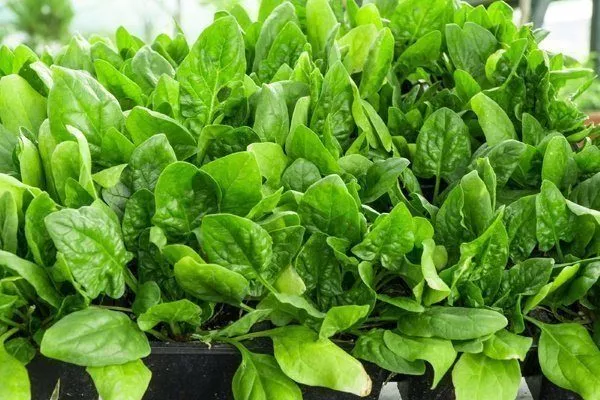
Which varieties to choose?
| Name | Ripening period (days) | Yield (g/plant) | Sheet size (cm) |
|---|---|---|---|
| Victoria | 25-30 | 25-28 | 8-10 |
| Matador | 35-50 | not specified | 18-22 |
| Gigantic | 21-23 | not specified | about 20 |
| Fat-leaved | 30-35 | not specified | 18-20 |
Varietal characteristics determine the early maturity and quantity of the future harvest, so choosing a variety should be done carefully. Experienced gardeners recommend choosing early-ripening varieties that yield an average of 30 days after sowing, have a good rosette, and large, fleshy leaves.
Based on the above criteria, the following varieties are best grown at home:
- VictoriaThis is a very early and fast-maturing leafy variety – the harvest can be collected 25-30 days after germination. This variety is characterized by rounded leaves (8-10 cm long), which form a small rosette and are pressed tightly to the ground. 'Victoria' has a thick and short petiole (3.4-4.7 cm long), and a single plant weighs 25-28 g.
- MatadorThis is a high-yielding hybrid with dark green oval leaves (18-22 cm long) and a slightly raised rosette. After sowing, the plant matures within 35-50 days. 'Matador' is resistant to frost and other adverse conditions, making it a popular choice for growing on balconies.
- GiganticThis variety has a delicate flavor, so the leaves are often used in various children's dishes. The harvest can be completed 21-23 days after the first shoots appear. The soft, light green leaves are medium-sized (approximately 20 cm long) and form a dense, slightly raised rosette.
- Fat-leavedThis early-ripening variety matures within 30-35 days after the first shoots emerge. The green foliage is fleshy, oval-shaped, textured, and medium-length (18-20 cm). Numerous leaf blades form rosettes 25-30 cm in diameter.
Each variety has its own characteristics. If you're having trouble choosing, you can sow several packages of seeds of different varieties in separate containers. Once they ripen, you can compare them and choose the best type of spinach for you.
It's worth noting that the plant also comes in two varieties: common and New Zealand. Both varieties can be grown at home, but the latter variety won't quickly bolt and will produce a more abundant crop, which can be harvested over the course of 2-3 months.
Growing conditions
To ensure spinach grows well indoors, favorable conditions must be provided, from lighting to humidity. Each parameter is important, so they should be considered separately.
Temperature conditions
Spinach doesn't require high temperatures for normal development. Seeds can germinate at 4°C, but subsequent growth and development require temperatures of 14°C to 18°C. The ideal temperature is 15°C, as the plant quickly gains vigor and reaches its optimal size under these conditions. Leaves also don't scorch or wilt.
It's worth noting that the shrub will also thrive at temperatures between 7 and 10°C, but leaf growth will be somewhat slower. Temperatures above 18°C should also be avoided, as this will cause the plant to bolt, rendering its leaves unfit for consumption.
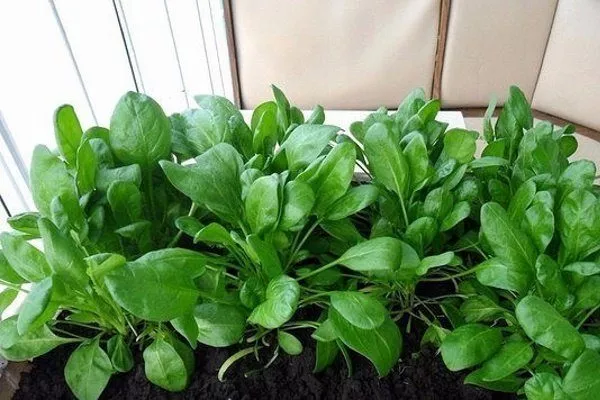
The plant can also be kept on a glazed loggia, since it is easy to maintain an optimal temperature in such a room.
Air humidity
Spinach is a moisture-loving crop, so it's important not only to water and mist regularly but also to maintain high humidity—around 50-60%. Otherwise, the plant will wilt and won't produce a full harvest. Therefore, in hot weather or during the heating season, it's recommended to regularly mist the plants with a spray bottle or place containers of water around the planters.
Lighting
Spinach is a sun-loving plant, so it should be grown on well-lit south-facing windowsills. Alternatively, plant pots can be placed on southeast or southwest-facing windowsills.
However, it is worth taking additional measures depending on the time of year:
- In the spring and summer, plants should be shaded to prevent overheating and burning of delicate leaves;
- During the autumn and winter, especially during cloudy or rainy weather, it is worth turning on fluorescent lamps in the room to ensure adequate daylight.
It's worth noting that for normal growth, the bush requires approximately 10 hours of light at any time of year. For additional illumination, fluorescent lamps can be used, placing them 60 cm from the spinach containers and turning them on in the evening for 2-3 hours or more.
Excessive exposure to light is also contraindicated for seedlings, as it can delay the onset of the flowering period.
Necessary equipment
To grow spinach on a windowsill, it needs to be sown in a spacious container. For this purpose, you can use boxes or containers at least 15 cm deep. Seeds can also be sown in flower pots, but their capacity should be no less than 1 liter and no more than 2 liters. When choosing a container, consider several factors:
- will they fit on the windowsill;
- Are there drainage holes to drain water?
- Is it possible to prepare two layers - drainage (at least 3 cm) and soil (about 12-15 cm);
- Will it be possible to maintain the optimal interval for planting seeds (to calculate this, divide the container into equal squares and see how many seeds can be sown).
If the container meets the listed requirements, it can be used for its intended purpose. It's also worth considering whether or not the seedlings will be transplanted once they've grown:
- If the harvest will be cut without replanting the plant, that is, without picking, a shallow, long and wide pot or flowerpot can be used for sowing the seeds, which must have holes for draining excess water;
- If the grown seedlings will be transplanted into another container, it is worth initially using small containers for sowing seeds, from which it will be convenient to transplant the seedlings in the future.
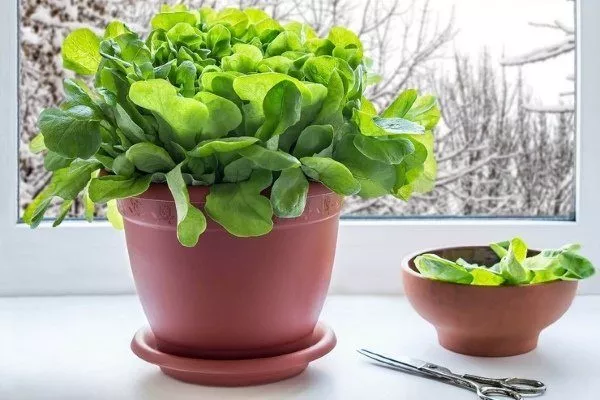
Selecting and preparing soil
Spinach can only grow successfully in loose, nutritious soil with a slightly alkaline or neutral pH. Therefore, the plant should not be planted in soil with added peat, as it increases soil acidity, which negatively impacts the plant's growth.
- ✓ Check the soil pH before planting, the optimal level is 6.0-7.0.
- ✓ Ensure the soil has good drainage to avoid waterlogging.
So, the plant can be planted in any store-bought soil, except acidic ones. Of course, you can also prepare your own soil mixture. Here are the most popular substrate options for growing spinach:
- Combine 1 part vermicompost and 2 parts coconut fiber, which will retain moisture and prevent water stagnation in the container. This mixture is highly nutritious, moisture-absorbing, and lightweight.
- Mix 1-2 teaspoons of perlite (vermiculite) for every 100 cubic centimeters of vermicompost. This substrate can be prepared if you can't find coir at a gardening store. Perlite or vermiculite will retain moisture and impart the same properties to the soil as coir, but it won't rot and will last even longer.
- Combine 2 parts garden soil, 1 part each of compost (cow or leaf mold), and sand. Before sowing the seeds, scald the mixture with boiling water or disinfect it with a solution. Then, spread it on a baking sheet to a depth of 5 cm and bake in the oven for 30 minutes at 100°C for additional disinfection.
It is recommended to pre-pierce any soil mixture in the oven to disinfect it.
Regardless of the type of substrate used, a drainage layer must be placed at the bottom of the container before adding the soil. Spinach requires ample watering, and a 2-3 cm drainage layer will prevent nutrient-rich water from stagnating. Various materials can be used for drainage, including:
- crushed stone;
- expanded clay;
- brick chips;
- regular foam plastic, cut into small pieces.
Preparation of seed material and planting
Spinach seeds are quite large and germinate quickly and uniformly, guaranteeing almost 100% germination. To achieve this, they must be properly treated before sowing, following these instructions:
- The day before sowing, rinse the seedlings, cover with warm water, and let them sit for 24 hours. This will speed up germination and ensure uniform emergence of the young shoots.
- In the morning, drain the water from the container. If the seeds previously had a dense outer structure, they will soften and swell somewhat after soaking.
- Soak the seeds in a weak solution of potassium permanganate or potassium permanganate 2-3 hours before sowing to disinfect them from diseases. Soak for 30 minutes.
- Dry the seedlings slightly and use for planting.
Spinach can be sown as seedlings or directly into its permanent growing location. In either case, before planting, lightly moisten the soil and prepare furrows 1 to 1.5 cm deep. The optimal distance between furrows is 2-3 cm. Place the spinach seeds in the prepared holes and then cover them with soil.
Until the seedlings emerge, cover the container with plastic wrap or glass. Seedlings typically emerge within 5-7 days.
How to sow spinach is clearly demonstrated in the following video:
Planting care
Spinach containers should be placed on a south-facing surface, and the room should be properly lit, maintained at a constant temperature and humidity. After this, the plant needs proper care to ensure the first shoots emerge quickly. Let's explore what this care entails.
Watering
Immediately after planting, lightly moisten the newly planted seeds. Subsequently, they should be watered frequently and thoroughly. As mentioned above, spinach is a moisture-loving plant and does not tolerate dry soil.
In addition to regular watering, it's a good idea to mist the greens with room-temperature water from a spray bottle. This will nourish the plant and increase the air humidity around it, preventing premature bolting. Low humidity causes the plant to produce flower stalks very quickly, making the greens tough and unfit for consumption.
During cold seasons, heating devices should not be placed close to the plant. However, if the room temperature is low, to prevent the soil from becoming soft due to abundant watering, it is sufficient to spray only the leaves with a spray bottle.
Top dressing
If spinach was planted in garden soil, it should be fertilized with liquid fertilizer at the beginning of the growing season. For example, ammonia, hydrogen peroxide, or Fitosporin can be used as fertilizer.
If the soil mixture was enriched with nutrients before planting, there's no need to add fertilizer. Excessive fertilization negatively impacts leaf blade performance.
Picking
This is only done when growing spinach from seedlings. The plant should be transplanted to its permanent location when 2-3 leaves appear. This typically occurs 2 weeks after sowing the seeds.
When transplanting, water the pots thoroughly, carefully remove one plant at a time without damaging the roots, and plant them in their permanent location. Afterward, water moderately again.
Possible diseases
When grown on windowsills, spinach seedlings are protected from various pests that can attack plants grown outdoors. However, even indoors, the shrub is vulnerable to the following diseases:
- AnthracnoseBrown or grayish-dirty spots appear on the leaves, which can be of varying sizes.
- Root rotIt most often poses a threat to young plants. The disease manifests itself as spots on the leaves with fungal growths inside.
- FusariumThe leaves stop developing normally, and their color changes—becoming somewhat darker, and then turning yellow. Eventually, the plant dies.
When fighting any disease, it is necessary to remove the damaged areas, and if the entire plant is sick, unfortunately, it will have to be completely removed from the soil, since it is impossible to cure the leaves.
Harvesting
Three to four weeks after sowing, the first green shoots will appear on the plant. The harvest can begin when the spinach reaches 7-10 cm and forms 5-6 large, dense leaves. Keep in mind that the plant will grow very slowly at first, but after 20-25 days from emergence, the rosettes will begin to grow rapidly. Depending on the spinach variety, leaf cuttings can begin as early as 25-40 days later.
The foliage should be trimmed with scissors or carefully broken off at the stem. Pulling or tearing out the leaves is avoided, as this can damage the entire root system. You can harvest all the foliage at once, leaving only the very young leaves, but experienced farmers advise harvesting the plant as needed, as the leaves have a short shelf life—they wilt within a day. Harvesting should be done in the morning or evening.
During the growing season, leaves can be harvested from a single bush 4-5 times, with cuttings occurring every 7-10 days. Once the plant forms a flower stalk, it should be removed and replanted, if desired.
Spinach is an annual plant, so its growth cycle is short. After the first cutting-ready leaves emerge, the plant will actively grow new leaves for another two months. After several prunings, it will begin to produce flower stalks, making its leaves unfit for consumption. Therefore, to ensure a continuous supply of fresh spinach, it's best to sow new batches of the plant every two months, and remove old rosettes by the roots.
You can grow spinach indoors at any time of year. To do this, sow the seeds in small, low pots, using nutritious soil to ensure rapid germination. Of course, to ensure a good harvest, you'll also need to provide proper care for the seedlings.