
Growing spinach isn't difficult; you just need to follow a few rules and techniques. With proper care, spinach will grow healthy, nutritious, and delicious. We'll discuss which spinach variety to choose and how to get a bountiful harvest later in this article.
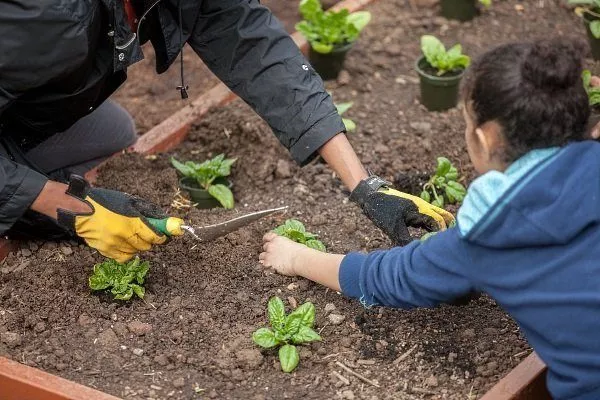
Brief description of the culture
Spinach, as a vegetable crop, originated in ancient Persia. It was also favorably received in the Arab world, but Europe and Russia were slow to embrace the plant.
Spinach is an annual crop of the Chenopodiaceae family. Its maturation period lasts no more than a month. During flowering, green flowers form, which ripen into small, round fruits within 90 days.
Young spinach leaves are eaten. They are dark green and rounded at the top. The smoothness or roughness of the leaf blade, as well as the richness of the color, depend on the variety.
Spinach is rich in vitamins and minerals and is high in fiber. The leaves contain up to 90% water. Heat treatment significantly reduces its nutritional value. Therefore, it is recommended to eat it raw in salads, smoothies, and other dishes.
Recommended types and varieties of spinach
The variety of spinach is divided into the following groups:
- Leaf spinach.Characterized by green, rounded leaves. Reddish-brown veins may be present.
- Strawberry spinach. It differs from other varieties in that its edible berries, reminiscent of strawberries, taste like a nutty, strawberry-strawberry mixture. The leaves of this variety are small and have a sweetish flavor. They are only suitable for consumption in small doses due to the presence of toxins.
- Water spinach. A plant from the morning glory family. Its shape resembles green onions: the leaves in the rosette are narrow and elongated. Both the leaves and stems are edible. It grows in waterlogged soils, near rivers and lakes.
All varieties of spinach are divided into three types:
- early maturity;
- medium ripeness;
- late ripening.
When choosing seeds, be sure to consider this characteristic and select seeds according to your climate. Here are some examples for each variety group:
- Virofle.Suitable for seed planting in the earliest spring. Complete germination occurs within a month. The lush rosette produces bright green, medium-sized leaves, and the stems are sturdy.
- Gigantic.Seedlings emerge two weeks after sowing. The quality of the greens is excellent. In warm climates, this variety can be sown 2-3 times per season.
- Uteusha.This hybrid is characterized by frost resistance and early germination. Spinach can be sown in late winter. It is suitable for adding to animal and poultry feed to replenish vitamins and minerals.
- Bloomsdelsky.A mid-season Dutch variety. Its dense rosette consists of elongated leaves. It is frost-sensitive, so it's best to sow in late April or early May.
- Strongman. A mid-season, frost-resistant variety. Produces a good harvest in northern regions. Full-fledged leaves, suitable for consumption and storage, are obtained in 26-27 days.
- Fat-leaved.A late-ripening variety. The rosette leaves aren't particularly dense, but each one is firm and juicy. Recommended for salad bases.
- Victoria. A late-ripening spinach. Prefers warm, humid conditions. Sowing is recommended in early summer. It is characterized by resistance to pest attacks and bolting.
Timing of sowing seeds
Frost-hardy spinach varieties can be sown outdoors in early spring when temperatures remain stable at 3-5°C. Depending on the climate, these conditions typically occur between early March and June in each region.
If you sow spinach in late summer, you can enjoy a harvest of greens until frost. Frost-hardy seeds can be sown in winter. After sprouting a few leaves, the plant will survive the cold season under the snow, and after the snow melts in spring, it will begin to actively grow. The first harvest can be harvested in 14-16 days.
According to the lunar calendar
Many gardeners take a responsible approach to growing crops, and conduct all their work according to the lunar calendar, which is updated annually. It reflects the relationship between gardening and the phases of the moon.
Using the lunar calendar, you can only take into account unfavorable days for planting, and adjust the rest of the time to suit your needs. This method is considered the most optimal among gardeners and vegetable growers. A second option is to follow precise dates specific to the planting of specific crops.
Prohibited days for gardening in 2019, depending on the full moon and new moon:
- in January - 6, 21;
- in February - 5, 19;
- in March - 6, 21;
- in April - 5, 19;
- in May - 5, 19;
- in June - 3, 17;
- in July - 2, 16;
- in August - 1, 15, 30;
- in September - 14, 28;
- in October - 14, 28;
- in November - 12, 26;
- in December - 12, 26.
Conditions
To ensure spinach grows vigorously, ensure the following conditions are met:
- The soil must contain enough nutrients.
- Moisten the soil and maintain moisture throughout the spinach growing period.
- The amount of daylight should be sufficient for the plant to grow.
- There should be no weeds in the garden bed.
- Periodically loosen the soil in the garden bed.
- ✓ Optimum soil pH for spinach: 6.0-6.5.
- ✓ Required depth of the fertile layer: not less than 20 cm.
Choosing a location
Don't choose a site for planting spinach based on the amount of available space. Choose a small bed that receives good sun throughout the day. Swampy or shady areas are not suitable. Make sure the planting site is protected from strong winds.
Preparing the site for planting
Spinach thrives in light, non-acidic soils rich in micronutrients and nutrients. Therefore, choosing and preparing a site carefully is essential:
- In the fall, remove all plant debris. It may contain fungal spores or serve as a wintering ground for pests. Therefore, burning is the best option for removing grass.
- Dig the area and add fertilizer. For acidic soil, add chalk, ash, and limestone. While digging, you can add organic matter, such as humus. This will make the soil lighter and more airy, and the flow of nutrients to the future crop will be gradual and continuous.
- If the site is located in a lowland, it is better to construct artificial beds from boards or make an embankment of fertile soil, creating a raised area for planting.
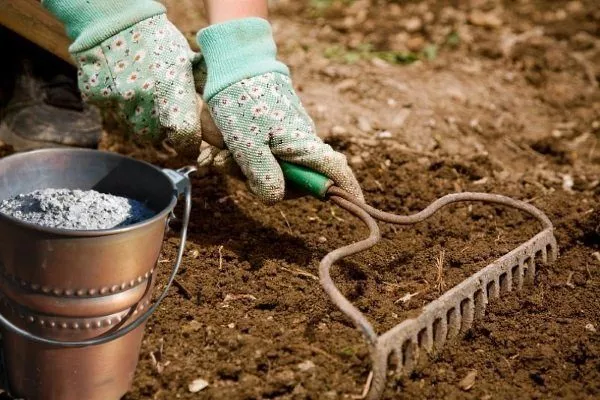
Preparatory work on the plot for autumn planting of spinach is carried out in the spring, and for spring sowing - in the fall.
Predecessors
The optimal bed for spinach would be one where cucumbers, potatoes, early varieties of cabbage and beets, and radishes were previously grown.
The crop grows poorly after late-ripening varieties of carrots and cabbage.
Seed preparation
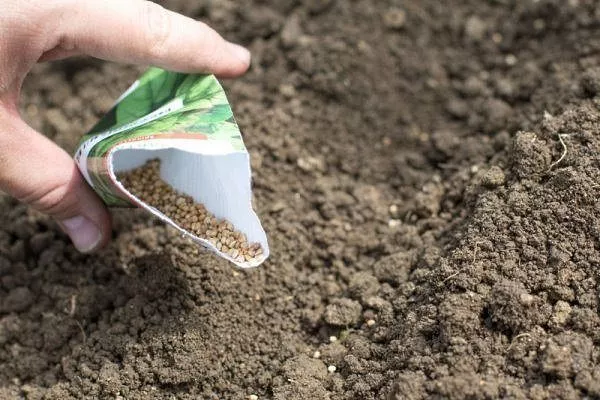
Spinach seeds can be sown directly into the soil without preparation, but softening the seed coat promotes earlier germination, and disinfection will help prevent disease.
- Soak the seeds in warm water (25-30°C) for 12 hours.
- Disinfect in a solution of potassium permanganate (1%) for 20 minutes.
- Rinse the seeds under running water and dry until loose.
The following measures will help prepare the seed material:
- After scattering the seeds on a flat surface, remove any damaged or misshapen ones. Ideally, select the largest seeds for planting.
- Place several layers of cheesecloth on the bottom of a small plate. Spread the seeds evenly over the cheesecloth. Cover with a double layer of cheesecloth and pour water over the seeds so that they sit on a very moistened cushion.
Leave the seeds overnight before planting, changing the water in the saucer every 4-5 hours and keeping the top layer of gauze damp. Dry the seeds slightly in the morning.For soaking seeds, you should use rainwater, melted water, or tap water that has been left to stand for 24 hours.
- To disinfect the seeds, soak them in a light pink solution of potassium permanganate for 15-20 minutes. Then rinse under running water and dry until free-flowing.
Sow the treated seeds in the garden as soon as possible.
Spinach Planting Instructions
Spinach is most often grown from seeds in open ground. However, it is also possible to grow seedlings. Care must be taken when transplanting, as the plant's root system is very delicate and easily damaged. Therefore, it is recommended to use peat pots or pellets for growing seedlings rather than reusable containers.
Seeds
The seed planting pattern depends on the spinach variety, or more precisely, the size of the leaf rosette. Therefore, maintain a distance of 7 to 20 cm between seeds. Leave rows 20-40 cm wide.
Planting process:
- in the selected area, prepare furrows no more than 2 cm deep and water them thoroughly;
- spread the seeds according to variety and planting pattern;
- fill the furrows with soil, compacting it slightly;
- To speed up the emergence of seedlings and protect the seeds from the cold, it is recommended to cover the bed with film.
If the seeds are of high quality and properly prepared, the first shoots will appear within a week.
The following video explains how to sow spinach seeds outdoors:
Seedlings
Seedling planting is used to quickly harvest heat-loving spinach varieties. Seeds are sown in individual containers in February, and when favorable weather conditions arrive, the seedlings are planted in the ground. Before planting, the seedlings must be hardened off by gradually lowering the air temperature over 10-14 days.
The planting pattern for spinach seedlings suggests a distance of 20-30 cm between bushes, and a width of at least 30 cm between rows.
Spinach seedling planting technology:
- on the site, dig holes of such a size that a peat container with seedlings or plants with a root ball of soil will fit;
- place a seedling in the hole and cover with soil;
- provide root watering for the seedlings;
- When the temperature drops below 5°C, cover the bed with film.
Caring for the crop
Like most garden plants, spinach depends on the quality and frequency of agricultural practices.
Fertilizers
Fertilizer is applied only when preparing the soil for planting. During spring and fall digging of the garden bed, the following is used per square meter:
- wood ash - 400-500 g;
- humus - about 5 kg;
- nitrogen fertilizers - 10 g;
- phosphorus fertilizers - 15-20 g.
Additional potassium and phosphorus fertilizers during spinach growth in open ground lead to accelerated emergence of shoots and flowering.
If spinach lacks minerals, its leaves will turn pale and growth will slow. In this case, you can water the plants with mullein, mixed with water at a ratio of 1:10.
Watering
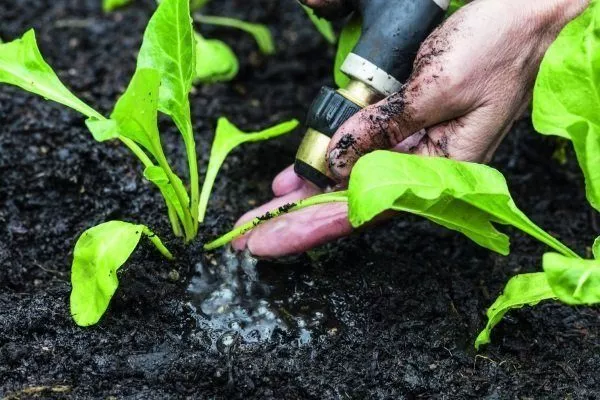
Spinach is a moisture-loving plant. It especially needs watering when the seeds germinate and the first leaves appear. It's important not to overwater, otherwise the roots and above-ground portion of the stem will begin to rot.
The optimal watering schedule for a garden bed depends on weather conditions. In dry, hot weather, daily watering is necessary. In cloudy weather and cooler periods, watering three times a week is sufficient.
It's best to water the soil early in the morning or after sunset using a watering can. A strong stream of water from a hose can wash away the root system and kill the plant.
Weeding and loosening
When 2-3 permanent leaves appear in the rosette, thin the planting if necessary. This will prevent fungal diseases and increase aeration capacity.
Weed as soon as weeds appear to prevent them from interfering with the spinach during the growing season. Otherwise, the spinach will wither due to a lack of sunlight, nutrients, and the mechanical impact of weeds.
Loosening the soil is a particularly beneficial measure for crops, as it helps maintain soil moisture and increases air penetration to the plant's root system. It should be done frequently to prevent a soil crust from forming after watering.
When weeding and loosening the soil, you should be extremely careful not to pull out the spinach bush along with the weeds and not to cause mechanical damage to the delicate plants.
Shelter in the heat
Spinach doesn't tolerate scorching sunlight, so when temperatures rise above 27 degrees Celsius, shade the plants. This can be done using non-woven fabric.
By properly organizing the beds, natural shading can be achieved by trees or taller plants. Spinach thrives when planted between rows of peas and beans.
Covering spinach beds during hot weather prolongs the formation of the rosette, delaying flowering.
Diseases and pests and their control
To distinguish between nutrient and microelement deficiencies and spinach diseases, it's important to understand their types and manifestations. Only then can control and preventative measures be selected and implemented.
Spinach diseases:
- Peronosporosis. It manifests itself when the soil is overwatered, causing light yellow spots to appear on the upper surface of the leaf blade. A cluster of gray fungal spores can be seen on the underside of the leaf. The disease affects the crop at any stage of growth. It is spread by wind and irrigation.
- Fusarium.It's considered the most dangerous fungal disease for spinach. It appears at any stage of growth. The leaves of affected plants turn pale and dry out, starting from the bottom. The plant gradually dies.
By attacking the root system, the Fusarium fungus causes the peripheral roots to die. Spinach initially relies on the main rootstock for nourishment, making it very difficult to detect the disease in its early stages.
Ideal conditions for the spread of fusarium are moist and well-warmed soil. - Cercospora leaf spot.A fungal disease characterized by the appearance of white and yellow spots of varying sizes on spinach leaves. As the fungus matures and spreads, the spots turn gray and merge.
Spores are spread by insects, watering, rain, and wind. - Anthracnose.A disease caused by a fungus. It manifests itself as gray spots on the trunk and leaves, with a darker, slightly swollen center (the mycelium).
- Ramulariasis.When the fungus attacks the plant, it forms myceliums on the leaves. This causes light reddish-brown spots to appear on the leaves. The spinach stunts, weakens, and may even die.
- Powdery mildew.Its appearance is identified by a white coating on the surface of the bush. As it matures, the color changes to gray. The spinach withers and dies. Fungal spores are spread by watering and wind.
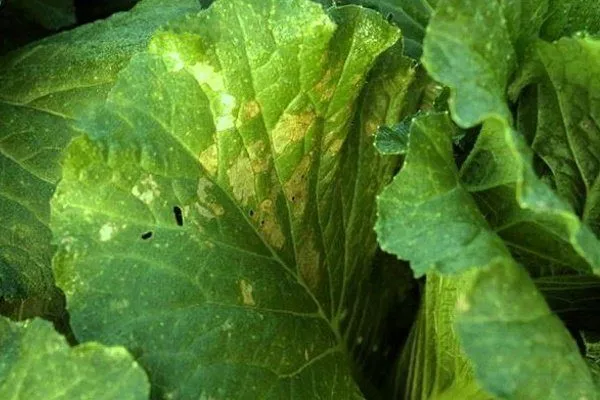
Spinach downy mildew
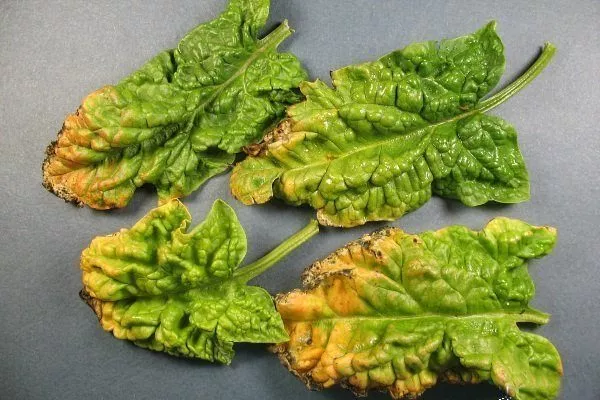
Fusarium wilt of spinach
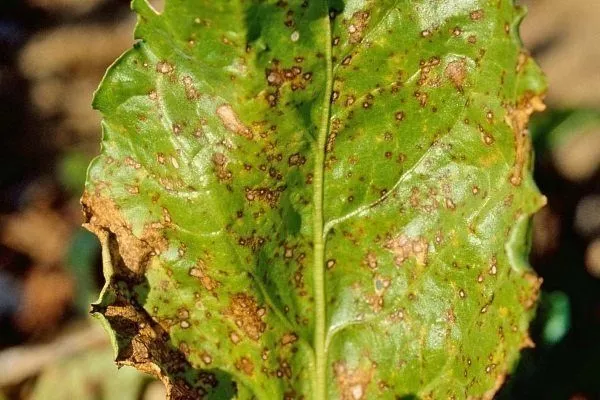
Cercospora leaf spot of spinach
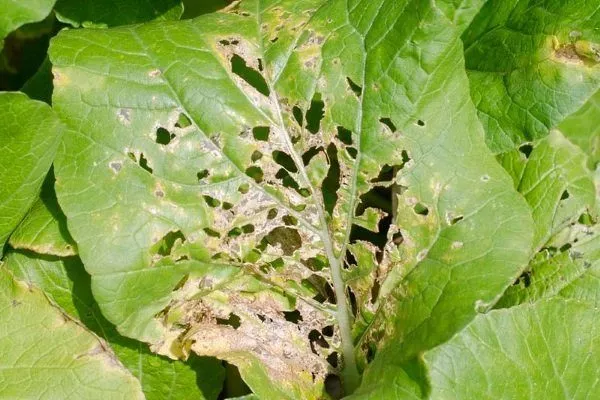
Anthracnose of spinach
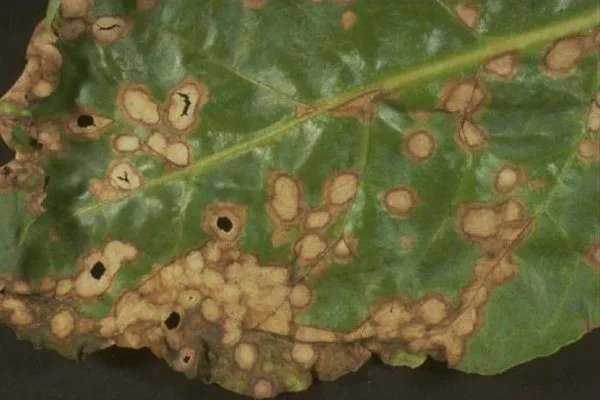
Ramularia of spinach
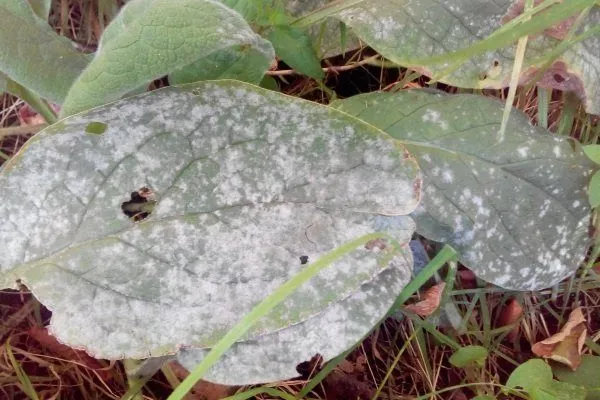
Powdery mildew of spinach
Methods of control
Avoid using chemicals to combat spinach diseases, as the plant accumulates harmful substances in its leaves. Therefore, use traditional remedies and focus on preventative measures.
Spinach's main enemies are snails and aphids. To combat these insects, try one of these folk remedies:
- Ash infusion.Mix ash and hot water in a 1:20 ratio. Let it steep for 2-4 hours, stirring occasionally. Spray the plants with the resulting solution, straining it through several layers of cheesecloth.
- Wormwood tincture.Collect wormwood and chop it into small pieces. Pour 3 liters of water over 250 g of the herb. Let it steep for 24 hours, then use it as a foliar treatment for spinach.
- A solution of laundry soap. Grind two bars of soap using a grater. Dissolve in 5 liters of water. Treat plants with the resulting solution. You can add ash to the mixture.
To protect plantings from snails, use traps or special pesticides:
- Enclose the planting area with rings of plastic bottles cut crosswise. Snails won't be able to climb over the sharp edges of the fence.
- Remove the bottom of a plastic bottle. Place it next to the spinach and pour some beer inside. The snails, attracted by the aroma, will gather in the container, and all you have to do is kill them.
- Use the "Groza" product. Sprinkle it around the perimeter of the garden bed. The product takes effect immediately upon contact with a snail, killing it.
- Purchase a snail and slug repellent from a specialist store. Spray it over your garden bed, and its scent will deter these pests.
Combination with other plants on the site
Spinach grows well alongside:
- eggplants;
- various types of cabbage;
- onions;
- legumes;
- salad;
- dill;
- tomatoes.
Doesn't get along with:
- zucchini;
- asparagus;
- beetroot;
- celery;
- watercress.
Harvesting
Begin harvesting when the spinach has 6-7 leaves. Don't delay harvesting to prevent the plant from becoming overripe and bolting. The plant's leaves will become tough and lose their pleasant, distinctive flavor.
There are 2 types of harvesting:
- Solid.The bush should be cut below the first leaf, or pulled out of the ground with the entire root system. This harvest preserves the harvest well.
- Selective. Only large leaves are plucked as they ripen. This method of harvesting produces a higher quality of product and volume, but it takes time.
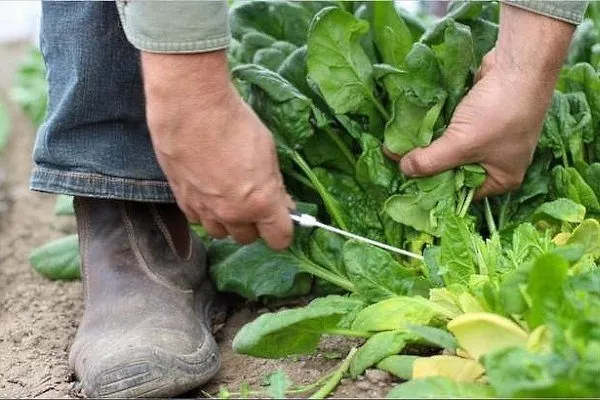
continuous harvest of spinach
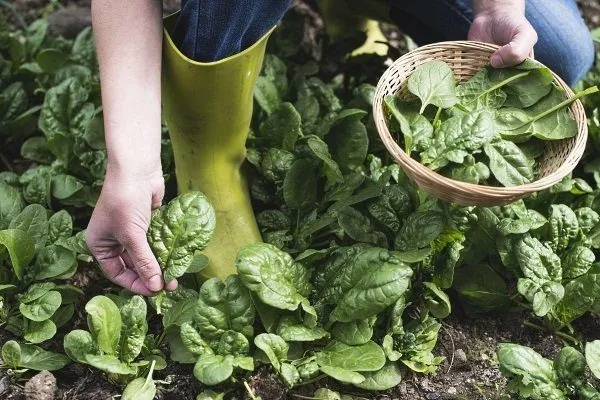
selective harvesting of spinach
It's best to harvest early in the morning or in the evening. It's important that the dew doesn't settle yet—the spinach plant should remain dry.
Storage, purpose, processing and transportation
To store the plant for a couple of weeks, simply place it unwashed in a plastic bag and refrigerate. For long-term storage, use the following processing methods:
- Freezing.Wash the spinach leaves and dry them thoroughly. Place the greens in bags or containers and store in the freezer. You can also make a spinach puree and freeze it. It has a shelf life of 7-9 months.
- Drying.Wash the plant and chop it into large pieces. Spread paper over the chopped spinach, spreading it evenly over the surface. Store in a well-ventilated area, away from direct sunlight. Once the leaves are dry, store them in containers or cloth bags.
- Canning.Chop clean spinach leaves and sprinkle with salt, then place them in glass jars. Another method involves sterilizing the chopped greens in jars and pouring boiling water over them.
The prepared herbs can be used in cooking and in traditional medicine recipes for various ailments.
Freshly cut spinach should be transported in a covered container placed on an ice pack. This maximizes the shelf life of the crop.
Spinach can be grown without much effort. It's important to follow the proper seed preparation, planting, and care procedures. A bountiful harvest can be preserved for several months using various methods. This way, the beneficial properties of spinach greens are available year-round.