
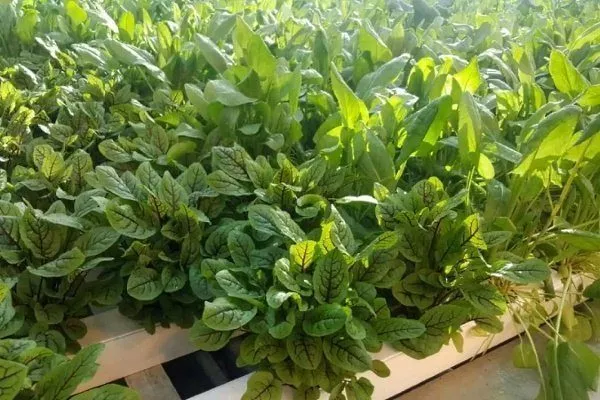
Growing sorrel in a greenhouse requires no special attention. This task is suitable for both experienced gardeners and novices. Sorrel thrives in the shade and is not affected by cold. The leaves can withstand temperatures as low as -7°C. To obtain a good harvest, ensure soil fertility and moisture levels are maintained.
Which variety should I choose?
| Name | Ripening period | Cold resistance | Resistance to bolting |
|---|---|---|---|
| Belleville | 40-45 days | Yes | No |
| Large-leaved | 40-45 days | Yes | Yes |
| Odessa 17 | 40-45 days | No | No |
| Broadleaf | 40-45 days | Yes | Yes |
| Altaic | 40-45 days | Yes | No |
| Lyon | 40-45 days | No | No |
Sorrel's variety isn't as extensive as that of other green crops. The most popular and widespread varieties are the early-ripening ones, meaning that only 40-45 days pass from the first shoots to harvesting the leaves:
- Belleville — a variety with large, light-green leaves with a mild, slightly tart flavor. The leaves grow up to 15 cm long and 5-10 cm wide.
- Large-leaved — This variety was bred from the Belleville variety. Unlike the previous variety, it is resistant to bolting and can withstand harsher cold temperatures. The leaves are no more than 14 cm long and 6-10 cm wide.
- Odessa 17 — a drought-tolerant variety. The leaves reach 16 cm in length and 7 cm in width.
- Broadleaf - sorrel with small leaves, up to 6-8 cm wide and up to 15 cm long, resistant to bolting, winter-hardy.
- Altaic — the variety is distinguished by its sharp sour taste and the color of its leaves—they are green with a reddish tint.
- Lyon — not a winter-hardy variety with beautiful yellow-green foliage.
- ✓ Consider bolting resistance, especially if the greenhouse is not equipped with a temperature control system.
- ✓ For year-round cultivation, varieties with high cold resistance are preferred.
Planting dates
Seeds are sown in the greenhouse throughout March. They germinate at 2-3°C, but the optimal temperature range is considered to be 15-23°C. The plant's rhizomes are planted even earlier—in late February or early March.
Preparing a greenhouse bed
Sorrel prefers fertilized loamy soil. To achieve this, dig the soil in the fall and add semi-rotted manure or humus (6 kg per square meter). In the spring, a few weeks before planting, water the soil with warm water and add fertilizer. Dissolve ammonium nitrate (2-3 g), superphosphate (4-5 g), and urea (40 g) in 12 liters of water.
The crop is grown in one place for no more than three years. If cultivated in the same place for a long time, the quality of the greens deteriorates, the leaves become smaller, and the yield drops significantly.
Growing sorrel from seeds
Seed sowing is used when growing new varieties or primary crops. The seeds are pre-soaked in water for two days before planting and then sown in moist soil.
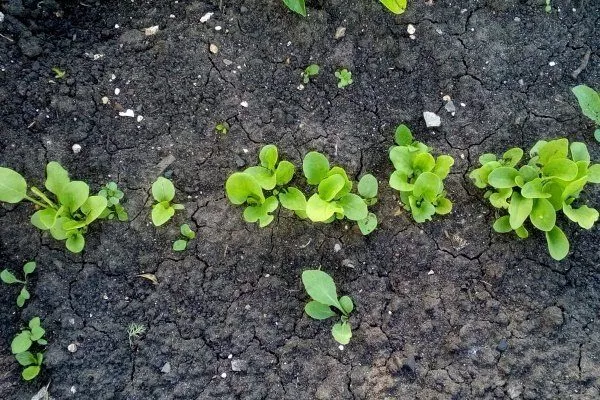
Make furrows 1.5 cm deep and sow the swollen seeds. Leave 12-15 cm between rows. Plant the seeds 5 cm apart. After sowing, fill the furrow with soil mixture to a depth of 2 cm. Water thoroughly with a sprinkler, and mulch the soil with humus. Seedlings appear in 10-12 days.
To speed up seed germination, cover the bed with plastic film. The first sprouts will appear 5 days earlier. Maintain a temperature of 10-12°C in the greenhouse and ventilate as needed.
You can also read more information about growing sorrel in open ground in our article. Here.
Forcing from rhizomes
Experienced gardeners use old rhizomes of two- to three-year-old plants, which are usually discarded, to propagate sorrel. These are harvested in late November, before the cold weather sets in. The leaves are trimmed, taking care not to damage the buds, carefully dug up with the soil, and stored in a cellar or basement. Store at 0-1°C.
At the end of February, furrows 10-12 cm deep are made in the prepared beds, with a 10 cm distance between them. The rhizomes are placed at an angle, spaced 6 cm apart. The seeds are watered well. The first harvest is reaped within 15-20 days.
Care
To ensure that sorrel grows strong and juicy, follow these rules:
- Water the plant with warm water in a timely manner.Sorrel is demanding of moisture, disliking both stagnant water and water deprivation. In the former case, leaf growth is stunted, while in the latter, the leaves become coarse and the plant produces shoots early. After watering, the soil must be loosened.
- Thin out the sorrelTo encourage more vigorous plant growth, thinning is performed for the first time as soon as the seedlings emerge. Leave a 5 cm distance between plants. Thinning is repeated later at the 3-4 leaf stage, leaving 7 cm between plants.
- Remove weeds, otherwise the plant will suffer from a lack of nutrients, which will negatively affect the quality of the greens.
- Remove arrowsTo prevent sorrel from blooming, as the leaves of flowering plants become coarse and lose their flavor. If the goal is to collect seeds, the flower stalks are left on, but the leaves are not harvested.
- Feed the plant after each harvest of greens. — 10 g of ammonium sulfate and 30 g of superphosphate per square meter. This stimulates faster growth of new leaves. Unlike other green crops, sorrel accumulates few nitrates, so it's best to continue fertilizing.
- Water in the morning to avoid excess moisture at night.
- Use drip irrigation to evenly moisten the soil without overwatering.
- Check the soil moisture at a depth of 5 cm before each watering.
Diseases and pests
Proper plant care reduces the incidence of diseases and harmful insects. However, if pests do appear, they must be dealt with.
The following usually settle on the culture:
- Aphid. It's easy to spot by looking at the underside of the leaf. Because it feeds on plant sap, the leaves begin to turn yellow and wilt, weakening the plant, and, if the infestation is severe, it dies. To combat it, spray the plants with an infusion of tomato or potato tops, onions, or garlic, or treat the leaves with an infusion of wood ash and laundry soap.
- Sorrel leaf beetle. You can tell the leaf beetle is present in the spring by the "ragged" leaves; by summer, it lays up to two or three clutches. A new generation of beetles grows within a season. Leaf beetles don't tolerate the presence of the flower pyrethrum. If you plant it near sorrel, the insects are unlikely to visit. Alternatively, treating the sorrel with an infusion of the flower also repels the beetles.
- Sawfly caterpillars. The sawfly actively raises its voracious offspring in sorrel beds. Its larvae cause significant damage to green crops, completely devouring leaf blades, leaving only their "skeletons." Timely weed and grass control in the row spacing helps prevent the pest from appearing. Treating the leaves with chamomile infusion and laundry soap is effective against sawflies.
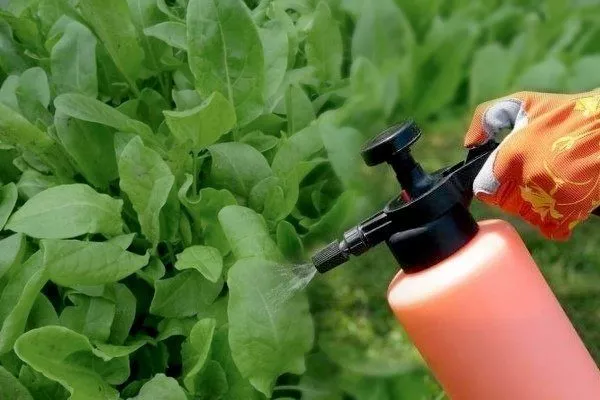
If there are a large number of pests, you will have to use suitable insecticides.
The most common diseases that affect sorrel are:
- Peronosporosis The undersides of the leaves become covered with a bluish coating, the leaves themselves become wrinkled and brittle, and their edges curl downward. Diseased leaf blades are removed, and weeds are removed promptly.
- Rust Yellow or orange "blisters" appear on the leaf blades; when they mature, they burst, releasing spores. Diseased leaves are cut off from the infected plant, and the soil must be dug over in the fall. A good preventative measure is mulching the soil in the spring with peat, sawdust, or compost.
- Various spottings — all of them are characterized by the appearance of spots on leaves of varying sizes, shapes, and colors. Prevention is also important here: promptly remove and destroy infected leaves, thoroughly remove plant debris from the area, and apply mulch in the fall.
- Gray mold The disease begins with the appearance of burgundy spots on the leaves; over time, the leaf blades become waterlogged, wither, and rot. The most common cause of the disease is overcrowding and stagnant air in the greenhouse. To prevent the disease, mulch the soil surface with peat and regularly control weeds.
Treatment of plants with a solution of Bordeaux mixture, which is stopped 15 days before harvesting, or with Fitosporin, a biological preparation, has proven effective against diseases.
Harvesting
Sorrel is harvested when the leaves reach 10 cm in length. When grown in a greenhouse, the first harvest is 3 weeks after sowing. The greens are harvested 3-4 times per season. Harvesting is done in spring and early summer, as harvesting later causes the leaves to accumulate large amounts of oxalic acid, which can be harmful to human health.
Growing sorrel in a greenhouse is not difficult, but it's important to know and follow the basic care and planting guidelines, observe the timing, and choose the right variety. By following all these guidelines, the greens will delight you with their juicy flavor and bountiful harvest.