
Sorrel is an easy-to-grow vegetable that's one of the first to delight gardeners with its fresh greens. Growing sorrel is easy – it's cold-hardy, grown without seedlings, and requires little care. Let's learn how and when to sow sorrel to ensure you'll have a healthy supply of vitamin-rich greens by the right time.
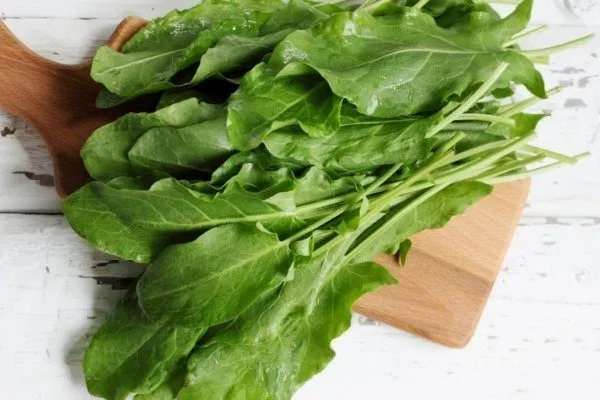
Description and characteristics
Sorrel is a dioecious herbaceous plant. It can be either annual or perennial. It belongs to the Buckwheat family. Botanical characteristics:
- Root. Taproot type, branched, fleshy, penetrates deep into the soil.
- Stem. Erect. Reaches 1 m in height. The base is dark purple. At the top is an inflorescence.
- Leaves. The basal leaves are long-petioled, 15-20 cm long. They have an arrow-shaped base and a prominent midrib. The cauline leaves are arranged alternately. They are ovate-oblong in shape, with an arrow-shaped base.
- Inflorescences. Panicle-shaped. Polygamous. Flowers are pink or pale red. Bloom in June-July.
- Fetus. A pointed, smooth achene with sharp ribs and convex edges. Color: brownish-black. Length: up to 1.7 cm.
Sorrel grows wherever plants can survive, but prefers temperate latitudes. It settles on ravine slopes, forest edges, the shores of swamps and lakes, and grows in meadows and along roadsides.
The first harvest appears in May and ends in July. During the season, the leaves are harvested 4-5 times, every 10-15 days. As the leaves mature, their oxalic acid levels increase, making them less nutritious. Sorrel is rich in ascorbic acid, carotene, various vitamins, flavonoids, proteins, organic acids, and trace elements.
Characteristics of sorrel as a vegetable crop:
- It is resistant to winter and spring frosts. In spring, it can withstand temperatures down to -7°C.
- It is distinguished by its early germination. The first shoots appear when the soil warms up to +3°C.
- Prefers moist soil. If moisture is insufficient, it begins to sprout stems, and the leaves become rough. However, it does not grow well in areas where water constantly accumulates; moderate moisture is required.
- Prefers slightly acidic or neutral soils.
- Capable of producing stable yields in one place for 4-5 years.
- Grows well in shaded areas – near trees, sheds, fences.
- Cultivated sorrel has larger leaves and a less acidic taste than its wild counterpart.
What varieties are there?
Breeders have developed high-yielding sorrel varieties. Specialty stores sell sorrel varieties that differ in leaf shape and size, flavor, cold tolerance, and other characteristics. Sorrel should be reseeded every 3-4 years, otherwise the plantings will degenerate. The planting pattern for any variety is 20 x 5-8 cm.
There are varieties of sorrel that are used as ornamental plants to decorate flower beds. Their leaves are also quite edible.
Popular varieties of sorrel:
- Emerald snow. A high-yielding variety. From germination to harvest, it takes 46-52 days. Seeds are sown in spring, before winter, and in summer. The leaves are slightly blistered, gathered in a spreading, raised rosette. It produces shoots late. The yield per square meter is 7.5 kg. The leaves have a pleasant taste and are used in salads, soups, pickles, frozen, and canned.
- Belleville. An old, tried-and-true variety, it remains popular – gardeners love this frost-hardy sorrel with its thick petioles. Up to 7 kg of leaves can grow per square meter. This versatile variety is eaten fresh, boiled, or preserved.
- Malachite. An early, winter-hardy variety. It boasts rapid leaf regrowth, taking 40-45 days from germination to harvest. The leaves are wavy at the edges, slightly blistered, and 12-15 cm long. The rosette is upright and loose.
- Large-leaved. A very early and frost-hardy variety. Ripens 30-45 days after the first shoots emerge. The light green leaves have a pleasant flavor. Relatively resistant to stemming.
- Broadleaf. One of the most popular varieties. Early maturing – harvested in 40-45 days. The leaves are elongated-ovate, with long petioles. 8 kg of greens can be harvested from 1 square meter. The leaves have a slightly acidic taste, making them ideal for salads. A drawback is that they tend to bolt easily in wet summers. The last harvest is mid-August.
- Odessa broadleaf. An early, winter-hardy variety. The harvest is 45 days after germination. The leaves are dark green and elongated-ovate, 16 cm long and 7 cm wide. The rosette is loose and upright. One square meter yields 3 to 8 kg of greens. The leaves are used in salads, soups, and winter preserves.
- Altaic. The leaves are lance-shaped. Young leaves are dark green, later acquiring a reddish tint. The petioles are thin and long. The flavor is medium-acid to sour. High frost resistance. The rosette is upright.
- Lyon. The leaves are large, fleshy, and greenish-yellow. The shape is ovoid. The petioles are thick. This is a high-yielding variety. A drawback is its low frost resistance.
- Bloody Mary. An ornamental variety. A new addition. The leaves have a pattern of burgundy veins. The leaves are edible and can be used like those of other varieties.
- Red veins. An ornamental variety. The plant grows to 40 cm tall. The leaves are green and lance-shaped, with burgundy-red veins on their surface. The rosette is upright. The plant looks beautiful surrounded by rocks. The pattern is especially vibrant in plants grown in full sun. The seeds germinate in about three weeks, so this variety is best grown from seedlings. The leaves are edible; they are eaten young, before they become rough.
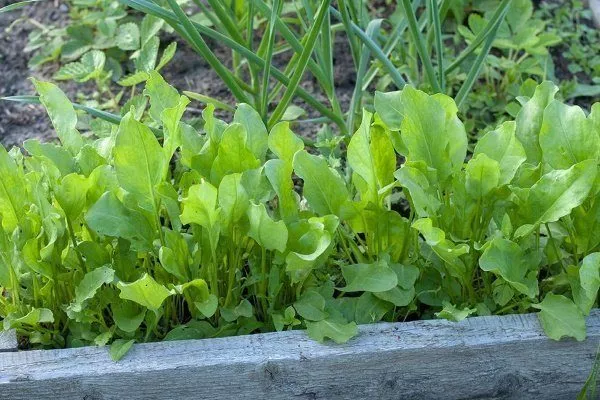
Emerald Snow variety
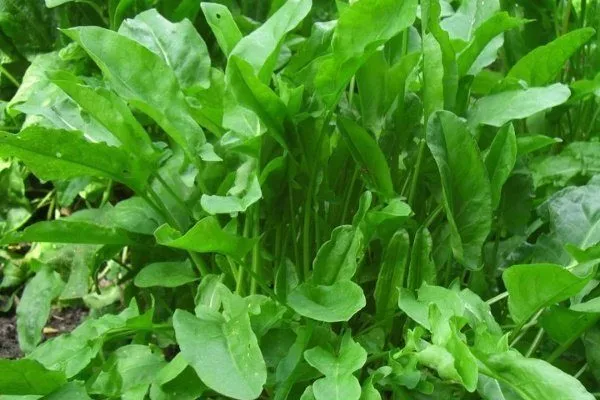
Belleville variety
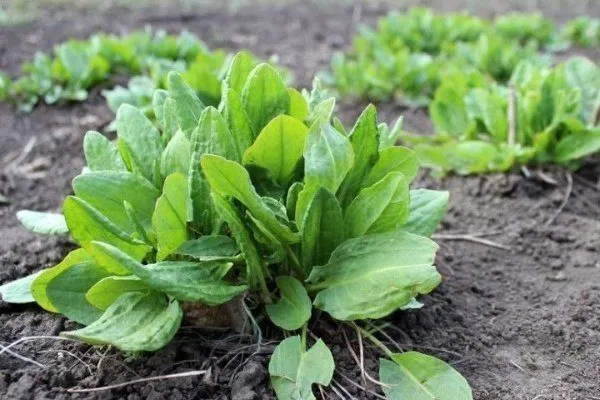
Malachite variety
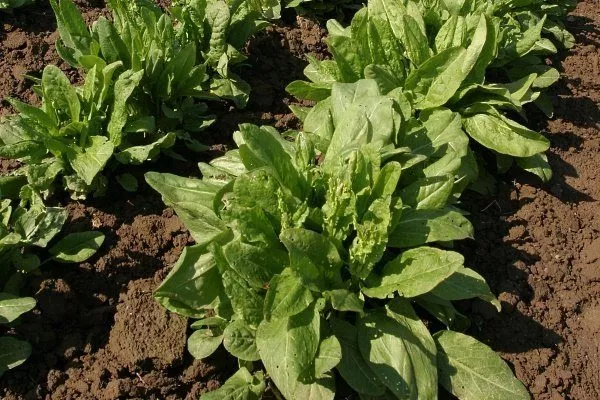
Large-leaved variety
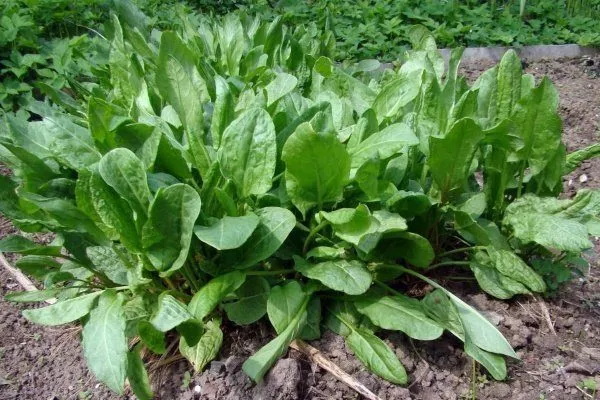
Broadleaf variety
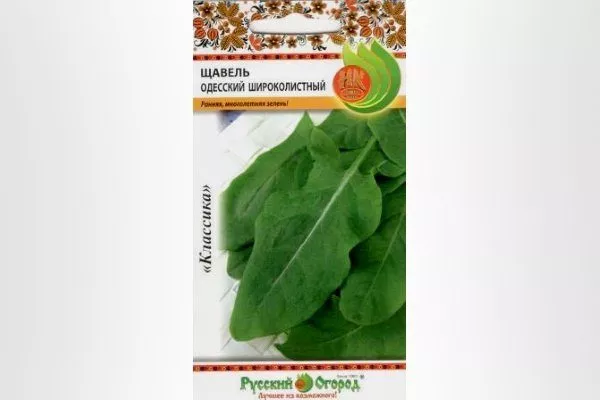
Odessa broadleaf variety
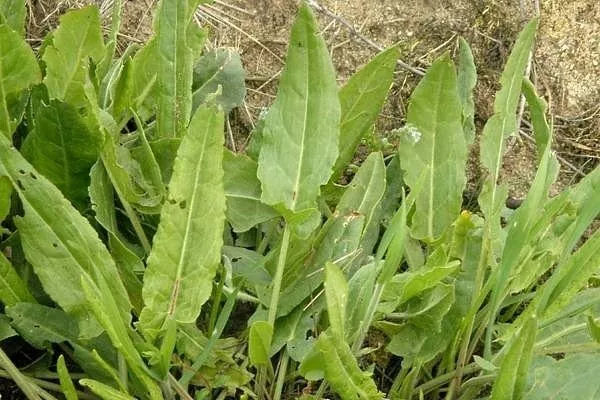
Altai variety
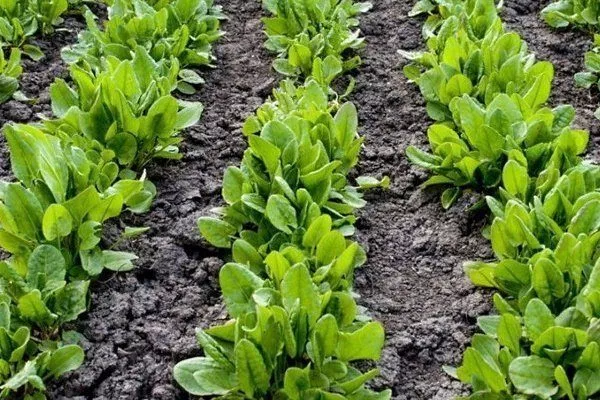
Lyon variety
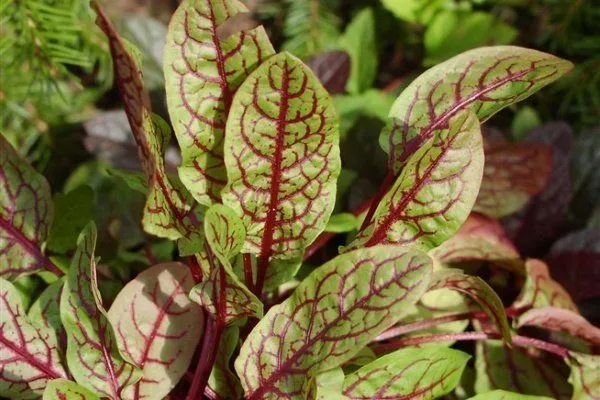
Bloody Mary variety
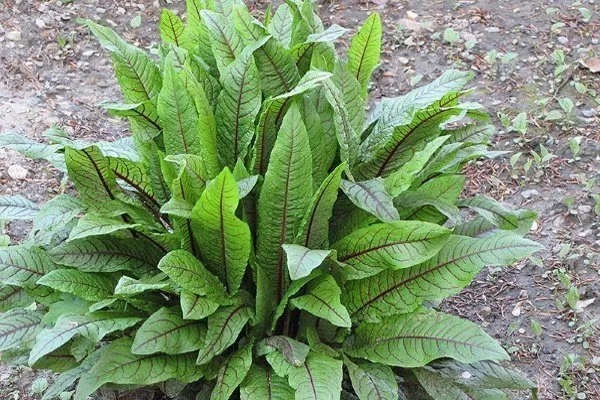
Red Veins variety
Gardeners interested in new varieties can also appreciate the following varieties: Trapeza, Vegetarianets, Avdeevsky, Shchi-borscht, Sanguine.
Choosing a landing site
A sorrel bed is planted in a location that receives shade during the hottest part of the day. It's best to plant it in partial shade under trees. Soil conditions aren't important—sorrel yields in any conditions. The planting site should be chosen in the fall to ensure proper soil preparation. When choosing a site, consider crop rotation rules—sorrel grows well after greens, onions, and pumpkins.
If sorrel is being planted for personal consumption, 1-2 square meters of space is sufficient – the harvest from this area is quite sufficient for a large family.
Soil preparation
Soil preparation begins in the fall. Here's the procedure for cultivating a plot for sorrel:
- they are digging;
- remove weeds;
- in the fall, organic fertilizer is added - ash and compost;
- a couple of weeks before sowing, nitrogen fertilizers are applied;
- Before sowing seeds, the beds are loosened and leveled.
- ✓ Optimum soil pH for sorrel: 5.5-6.5.
- ✓ The depth of the fertile layer should be at least 20 cm to ensure good growth of the root system.
The timing and volumes of fertilizers applied when planting sorrel are shown in Table 1.
Table 1
| Fertilizer | Weight, g (for 1 sq. m) | Time of year |
| humus + potassium + phosphate (6:1:1) | 2 | autumn |
| ammonium nitrate + potassium salt (1:1) | 4 | spring |
| superphosphate | 4 | spring |
| urea | 40 | spring |
| humus | 3000 | spring |
Seed preparation
To increase germination, sorrel seeds are soaked in water, wrapped in cheesecloth. Soak for two days. Having absorbed the moisture, the seeds will germinate faster than dry ones. Nutritious fertilizer can be added to the water. However, all these steps are optional. If you don't want to bother, sow without soaking; the sorrel will germinate under any circumstances. However, without special seed preparation, it won't grow as large and strong.
How and when to sow sorrel seeds?
Sorrel is a very cold-hardy plant, so seedlings are not required for its cultivation – the seeds are sown directly into the ground. Optimal sowing times:
- Early spring. Harvest – 40-45 days after germination.
- In summer. Seeds are sown in June, after the early-ripening vegetable crops have been harvested. The plant has time to establish roots before the winter frosts.
- Late autumn. Sowing takes place before winter—in October or early November. Sow after the onset of cold weather, in dry weather; there should be no overnight frosts—under these conditions, the seeds will not germinate and will survive the winter safely.
Conditions for sowing sorrel seeds:
- Depth. The seeds are planted 2 cm deep into the prepared soil.
- Distance between seedsSeeds are sown at intervals of 4-5 cm.
- Row spacingThe optimal distance between rows is 15 cm.
The planting is mulched with peat and covered with film.
Watch a video on how to sow sorrel seeds:
When do the first shoots appear?
If the seeds are covered with plastic film, the first leaves will appear in just 5-7 days. Without film, the seeds will germinate in two weeks, not earlier. As soon as the first green shoots appear, thin the plantings to leave a 10 cm gap between adjacent plants.
When planting late, it's advisable to use agrofibre instead of film, as it creates a favorable microclimate underneath. This option is ideal during hot weather, when the soil dries quickly.
Caring for sorrel
Sorrel is easy to grow and requires minimal care. Once the seedlings emerge, gardeners' main task is to loosen the soil and water the plants regularly. Regular feeding also ensures several bountiful harvests.
When and how much to water?
Sorrel responds to soil moisture and therefore requires regular watering. At temperatures above 26°C, the plant is stunted, grows poorly, and flowers quickly fade. The quality of the harvest decreases. Watering generously, but without allowing water to stagnate, can help prevent yield declines.
A break in watering and drying out of the soil provokes the production of flower stalks.
Is weeding and loosening necessary?
Sorrel, like any garden crop, requires loosening to prevent crusting and allow air to reach the roots. In the spring, the row spacing is always loosened, adding compost mixed with ash to the soil. Weeds are removed simultaneously with loosening.
Mulching and fertilization
To make weed control easier, the soil is mulched. Mulch is placed between rows. The following are used as mulch:
- peat;
- humus;
- fallen leaves.
Spring fertilization will provide sorrel with nutrients and stimulate the growth of young plants. Suitable fertilizers include superphosphate, potassium chloride, urea, and nitrogen fertilizers. When choosing a fertilizer, consider the weather conditions. During rainy weather, scatter dry fertilizer, and in dry weather, water the plant with liquid fertilizers.
After spring loosening of the soil, add fertilizer per 1 sq. m:
- mullein solution (1:6) – 1 bucket;
- potassium-phosphorus fertilizers – 10-25 g.
- ✓ The appearance of reddish spots on the leaves may indicate a lack of phosphorus.
- ✓ Yellow leaf edges often indicate a potassium deficiency.
To maintain high yields, plants are fed with complex mineral fertilizers after each harvest, with an emphasis on the nitrogen component.
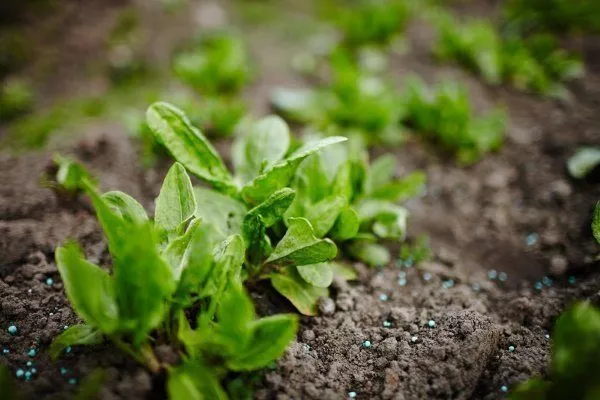
Autumn care
The final pruning should be done no later than mid-September, otherwise the plant will not have time to recover before winter. For every square meter, apply:
- superphosphate – 30-40 g;
- potassium chloride – 15-20 g.
After fertilizing, mulch the space between the rows with humus or compost to a depth of 3-5 cm. Cover the sorrel roots with mulch if they are exposed. Two buckets of mulch are sufficient per square meter. If the weather is dry, water the plants, remembering to remove any flower stalks. There's no need to cover the plants for the winter, as sorrel is quite frost-hardy.
Diseases and pests
There are plenty of people in the garden who want to enjoy the sour leaves. Sorrel pests and control measures are listed in Table 2.
Table 2
| Pest | Damage/Signs of disease | Control measures |
| Sorrel leaf beetle | Eats the leaves of the plant | Spraying with ash, laundry soap and garlic solutions, and tobacco dust is recommended. Planting pyrethrum between the rows will prevent sorrel leaf beetles from appearing. |
| Aphid | It drinks the juice from the leaves – they turn yellow, wither, and the plants die. | Spray with an infusion of wood ash, tomato tops and burdock, adding a little liquid soap. |
| Sawfly | Caterpillars gnaw at the leaves, leaving only skeletons of veins. | Prevention: remove weeds. Spray with chamomile infusion mixed with liquid soap. |
| Winter moth | It eats leaves all summer long, and in autumn it moves closer to the ground. | Digging up the area, setting up traps - containers with fermenting liquid (compote, honey water, molasses) are suspended at a height of 1 m. |
| Wireworm | These are the larvae of the click beetle. They damage roots and foliage. | Timely removal of weeds. Neutralization of acidic soil. Digging the plot after harvest. |
| Powdery mildew | There is a white coating on all above-ground parts of the plant. | Spraying with Bordeaux mixture. |
| Rust | All above-ground parts are covered with small brown spots. These spots swell and burst, releasing harmful spores. | Mulching, application of phosphorus-potassium fertilizers, treatment with copper-soap solution, Fitosporin, and various fungicides. |
| Peronosporosis | The undersides of the leaves become covered in gray spots. The leaves curl and become brittle. | 10 days before harvesting, plants are sprayed with Bordeaux mixture. |
| White spot | On the above-ground parts – petioles, stems, leaves – dirty white spots with black dots appear. | Timely removal of diseased plant debris. Treatment with fungicides. |
| Gray mold | The causative agent is a fungus. Brown spots appear on the leaves; they grow rapidly and become water-soaked. The leaves rot, turning into a gray, dusty mass. | The disease appears in high humidity conditions. Mulch the soil with peat and dust the soil with slaked lime/ash near the plants. |
Harvesting
Mass cutting of foliage begins approximately two months after sowing. Sorrel sown in spring will be ready in June. If you sow the seeds in the fall, the first greenery will appear much earlier—as soon as the snow melts.
The optimal time for harvesting is morning, when the leaves are at their juiciest. Finished sorrel leaves are harvested by cutting or tearing them off. It's recommended to leave the central leaves—they're smaller than the others and will be used for the next harvest.
If proper agricultural practices are followed, 4-5 harvests can be achieved per season. Harvesting ends in August. Leaves that emerge after the last harvest are left on the plant—they will help it survive the winter better.
The best way to preserve sorrel is by freezing it. This method of storage preserves the maximum amount of nutrients.
Combination of sorrel with other plants
Sorrel is considered a neutral plant, so it grows well in any environment. However, there are still some recommendations for combining sorrel with other crops:
- Black currant. Sorrel grows well in the shade of its bushes. Currants benefit from this proximity – their leaves become juicier and healthier, and their fruits acquire a pleasant flavor.
- Raspberry. Sorrel is planted around the perimeter of the raspberry patch. Its strong roots prevent root suckers from spreading throughout the garden. Shade from the raspberry patch benefits the sorrel, making its leaves brighter and juicier.
Sorrel has a beneficial effect on the yield of radishes and carrots, and its presence won't harm cabbage. The plant also grows well with strawberries, gooseberries, lettuce, mint, and lemon balm.
It is undesirable to plant sorrel next to:
- spicy herbs;
- tomatoes;
- legumes.
Why doesn't sorrel sprout?
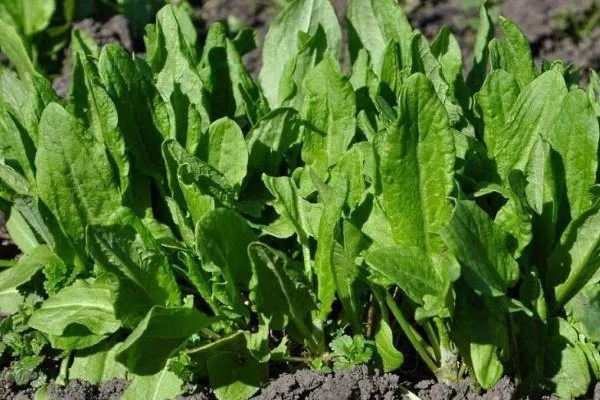
If sorrel seeds are high-quality and tested for germination, but for some reason sprouts don't appear within the timeframe specified by the growing method, the problem is likely due to the sowing depth. Many gardeners don't know that sorrel seeds should not be planted deeper than 1 cm. The seeds of this crop are very small, and if sown deeply, they simply cannot penetrate the soil layer.
When sowing seeds, don't make deep furrows—just make a small depression with a hoe. Lightly sprinkle soil over the seeds.
The value of sorrel
Sorrel is especially prized in early spring, when there are no vegetables yet in the garden. Its tart leaves are added to soups and borscht, salads, and pie fillings. The green part of sorrel (100 g) contains 3% of the daily protein requirement.
Young leaves are the most nutritious and beneficial. Sorrel should be consumed in moderation, as the acids it contains can negatively impact the kidneys.
Sorrel is a source of potassium, iron, manganese, iodine, organic acids, ascorbic acid (vitamin C), vitamins A, E, K, H, PP, B vitamins, and many other beneficial substances. In folk medicine, this plant is used as a choleretic, antiseptic, astringent, anti-inflammatory, antiscorbutic, antitoxic, and hemostatic agent. Sorrel normalizes stomach function and metabolism.
Sorrel is an affordable source of vitamins, tasty, and healthy. Simple farming techniques allow you to have fresh sorrel from early spring to late fall. And thanks to the variety of sorrel cultivars, everyone can find a sorrel to suit their taste—sour, medium, or slightly sour.