
Sorrel can be planted in either spring or fall. Many gardeners prefer the latter option. Knowing all the nuances of winter planting can help you reap an excellent harvest and ensure you have enough sorrel seeds of the right variety for years to come.
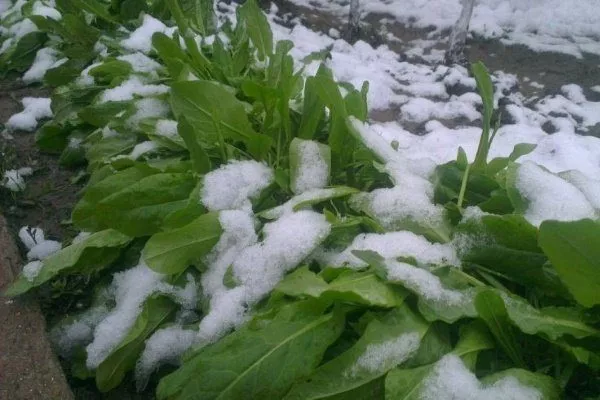
Preparing for winter planting
Before planting sorrel in winter, the first step is choosing a site for the bed. Sorrel is easy to grow, but with fertile soil and proper care, the harvest will be significantly larger.
Sorrel grows best in sandy loam or loamy soil, in partial shade from trees.
As a perennial plant, sorrel requires a weed-free space to thrive, so it's important to take care of these pests in advance. The bed shouldn't be located near groundwater, although the plant itself is quite moisture-loving.
The soil for planting needs to be loose and easily permeable, so the bed is dug deeply and all other plants are removed from the soil. Fertilizer is then applied (per 1 square meter):
- 1 bucket of compost or light humus;
- half a bucket of peat;
- 30 g superphosphate;
- 20 g potassium chloride;
- 10 g of ammonium nitrate.
Peat is added to increase the acidity of the soil – sorrel prefers a low pH level.
Furrows about 3 cm deep are made lengthwise or crosswise in the bed, with a distance of 20-30 cm between rows. Before sowing, the finished bed is covered with plastic to prevent damage. To fill the furrows after sowing, use loose soil mixed with humus, dry leaves, or other mulch materials.
- ✓ Use only dry leaves or loose soil mixed with humus to prevent the seeds from rotting.
- ✓ The mulch layer thickness should be at least 1 cm for effective protection against frost.
Sorrel seeds can be prepared before planting by soaking them in cheesecloth for two days. They can also be treated with a special nutrient solution to increase the likelihood of a larger harvest. Seeds that are two years old are considered optimal for sowing.
Selecting a variety
| Name | Ripening period | Yield (kg/m2) | Frost resistance |
|---|---|---|---|
| Broad-leaved | Early | 5 | High |
| Emerald snow | Mid-season | 6 | High |
| Belleville | Mid-season | 7 | Very high |
| Malachite | Early | 5.5 | High |
| Odessa | Early | 4.5 | Average |
For winter sorrel planting, use proven varieties that consistently produce high yields and are resistant to low temperatures. These varieties include:
- Broad-leaved. A relatively new variety, it has already earned the trust of gardeners. It ripens early, features large oval leaves on tall petioles, and has a low oxalic acid content, making it ideal for various vitamin-rich salads. A drawback is its tendency to bolt frequently when there's insufficient moisture in the summer.
- Emerald snow. High-yielding, mid-season variety, it boasts a high content of nutrients beneficial to the human body. It takes a long time to bolt. Its flavor is quite pleasant, making it widely used in cooking.
- Belleville. A long-known variety among gardeners. It is highly frost-resistant and rich in vitamins. Thanks to its large leaves, up to 7 kg of harvest can be harvested per square meter of garden bed per season.
- Malachite. It also stands out for its resistance to low temperatures and rapid ripening of its leaves. A distinctive feature of this sorrel is its particularly beautiful leaves, which are not typical of other varieties.
- Odessa. It ripens early and is often used in soups and salads. The leaves are dark green and form loose rosettes that grow at right angles.
The seeds of these sorrel varieties are excellent for winter sowing and have high quality and taste.
We recommend reading this article, which will tell you about growing some of the presented sorrel varieties in a greenhouse.
Timing and conditions of sowing
Sorrel is a cold-hardy crop, so it's planted in the fall after consistent night frosts set in—usually in late October or early November, depending on the region. When planning the planting time for sorrel, keep in mind that it may begin sprouting at 2°C.
In the northern regions of the country, the average time for autumn sowing of sorrel is mid-to-late October, for the middle zone it is the end of October and mid-November, for the southern regions – up until mid-December.
Sorrel is planted in cold or already frozen soil, so it is important to prepare the beds in advance, while it is still warm.
Features of autumn planting
When planting, sorrel seeds must be completely dry. Remove the plastic film from the bed, which is often already covered with a layer of snow, and begin sowing.
The bottom of the prepared furrows is covered with mulch to a depth of 1 cm, and the seeds are laid on it. For winter sowing, use a quarter to a third more seeds than for sowing at any other time of year. The optimal seed spacing is 4 cm; this figure takes into account the likelihood of seedling failure; if necessary, the sorrel can be easily thinned in the spring.
Cover the bed with mulch; in dry weather, the plant doesn't need any further protection. If it rains, cover the sorrel with plastic. This planting provides the plant with all the conditions it needs for normal growth in the spring.
Although sorrel is a perennial plant, it's best to rotate its bed every couple of years. This will prevent its leaves from becoming small and will maintain their high vitamin levels.
Care and cultivation
In spring, when the first sorrel shoots appear, thin the bed—leaving 5 cm between mature plants is sufficient. After two weeks, repeat the procedure, increasing the distance by 2-3 times. Weed and loosen the soil between the rows, promptly removing flowering shoots—leaving a couple of shoots is sufficient for seed production.
- Carry out the first thinning of seedlings, leaving 5 cm between plants.
- After 2 weeks, increase the distance between plants to 10-15 cm.
- Weed and loosen the soil between rows regularly.

Sorrel should be watered generously, but infrequently. Proper watering is crucial for this plant, as it determines the taste of its leaves. If the leaves are dehydrated, they produce excessive oxalic acid, making them too sour and rough.
By autumn, the exposed rhizomes require mulching: about 5 kg of humus or compost is added per 1 square meter of the bed.
In the second spring, sorrel needs additional feeding - 30 g of superphosphate, 20 g of urea and 15 g of potassium chloride will be enough.
When is the harvest?
Sorrel is harvested when the plant has 4-5 leaves of the standard size for its variety. Sorrel is in season from May to July, during which time up to four harvests can be made. The best time of day for harvesting is morning or late evening. Ripe leaves are cut with a knife, leaving about 4 cm of petiole attached to the stem.
After each sorrel harvest, the soil needs to be fertilized, mulched and watered.
Planting sorrel in the fall is easy, especially considering how easy it is to grow. By following simple sowing, care, and harvesting guidelines, a bountiful harvest will be yours. Simply choose your desired variety and make the necessary preparations—and then anyone can enjoy the full flavor of sorrel.