
Watering sorrel is a necessary part of growing the crop, as the plant isn't drought-resistant and doesn't tolerate excessively hot weather. Sorrel won't die without sufficient water, but its flavor and leaf structure will deteriorate—they'll become tough, tasteless, and small. And after cutting off the green mass, new leaves won't regrow.
When to start watering?
Seeds can be sown at any time, from early spring to July, but for rapid growth and increased yield, adequate watering is essential. It's recommended to sow seeds in well-moistened soil, so add sufficient water before planting.
The first watering is done 2-4 days after planting, depending on weather conditions. Until the first shoots appear, water every other day or two, but not less frequently. Otherwise, the seeds will take longer to germinate.
If planting is done in early spring, when there is still a lot of melt water in the garden, the frequency of watering is reduced.
Features and regularity of soil moisture
Depending on the climatic conditions of a particular region, soil moisture standards change for growing sorrelIt's easy to check whether watering is needed – there shouldn't be any dry or cracked crust on the soil surface.
But there is another method: dig down the soil layer by 5 cm. If the soil is dry, it needs to be moistened.
- ✓ Use only settled water to avoid leaf chlorosis.
- ✓ The water temperature should be at least 18°C to prevent stress on plants.
Basic requirements:
- The water should be warm, not cold, since the latter will cause the plant to stop growing green mass or die.
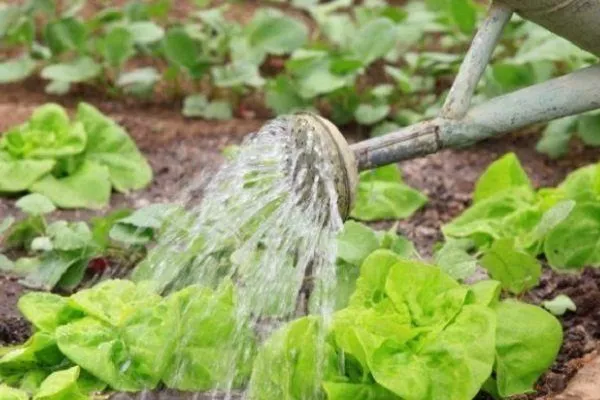
- Water from a watering can with a spray, avoiding the liquid getting on the leaves (they will begin to become covered with mold spots and rot, since the greenery is quite delicate).
- Rainwater is suitable for moistening, but tap water (be sure to let it sit) can also be used. To do this, fill a large container with the liquid, let it sit for 2-3 days, and then apply it directly to the root system.
- The best time for the procedure is early morning or evening, when there is no heat.
- To prevent moisture from evaporating, experts recommend mulching. Peat, weeds, leaves, straw, and any other natural material can be used as mulch. It is spread between the sorrel rows immediately after watering, in a layer of 1-3 cm (depending on the level of aridity in the climate).
- Avoid overwatering, which can lead to stagnant water in the garden bed. This leads to root rot and the development of fungal diseases.
- The average frequency of watering for sorrel crops is once every 4-7 days.
The watering requirement depends on the season, climate, and weather conditions. Immediately after sowing the seeds, more water is needed than after foliage has formed. However, the amount of water is gradually reduced.
- Increase the intervals between waterings during the rainy season to 10-14 days.
- In hot weather, reduce the intervals to 3-5 days and increase the water volume by 20%.
When do you stop watering sorrel?
Since sorrel is planted even in summer, it can be harvested right up until the first frost, but it is advisable to stop watering 1-2 weeks before the last harvest.
If you want to obtain seed material, then stop watering earlier, since drought promotes the release of the flower stalk.
By watering sorrel according to the basic guidelines, you can not only increase the yield but also produce tasty, juicy foliage. Be sure to pay attention to the weather—if it rains heavily, reduce the amount and frequency of watering.