
The best sorrel varieties have certain advantages. Among them, gardeners primarily highlight high yields, resistance to frost and stem loss, the ability to be grown in one place for long periods, and the crop's wide range of applications.
| Name | Ripening period (days) | Yield (kg/m2) | Resistance to stemming |
|---|---|---|---|
| Belleville | 48-50 | 7.3 | High |
| Emerald snow | 46-52 | 7.5 | High |
| Malachite | 40-45 | 6 | High |
| Odessa 17 | 40-45 | 4.9 | Average |
| Broadleaf | 45-50 | 5-6 | Average |
| Large-leaved | 30-35 | 5-6 | Low |
| Bloody Mary | 45-50 | High | |
| The Emerald King | 30-40 | 10 | High |
| Champion | 40 | 7 | High |
| Sanguine person | 40 | 5 | Average |
Belleville
One of the first varieties bred specifically for garden cultivation. The plant is perennial.
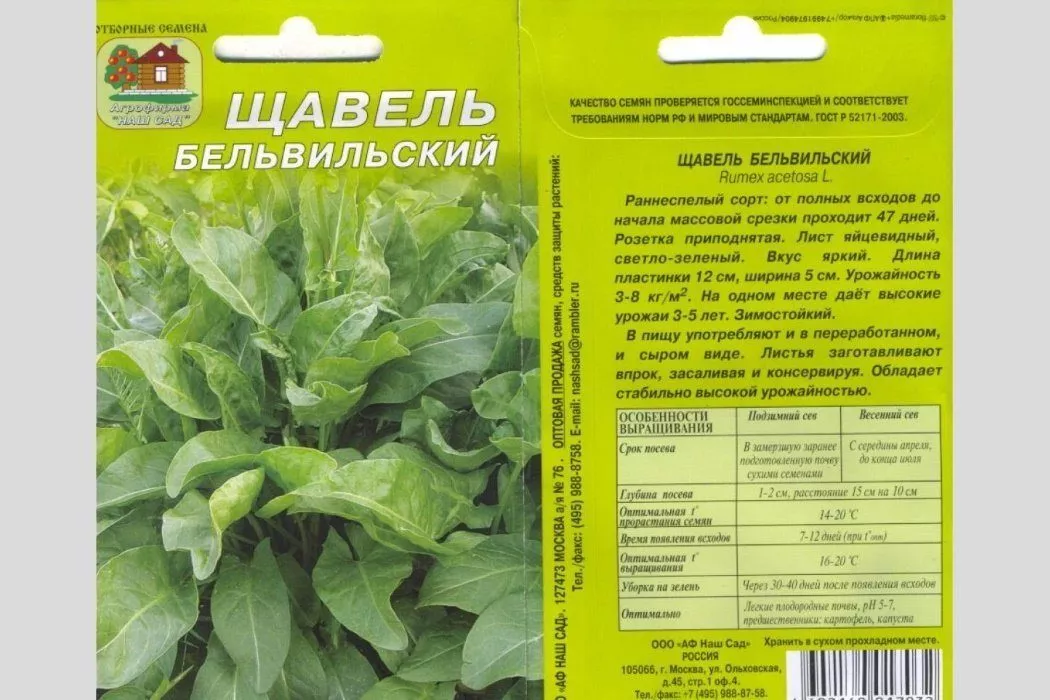
The characteristics of the variety are as follows:
- ripening period is 48-50 days, the variety is mid-early;
- a spreading and raised rosette of leaves up to 15 cm high;
- the leaves are slightly or moderately blistered, ovoid in shape, with a smooth or slightly wavy edge, light green in color;
- seed germination at a temperature of 6-8 degrees;
- seedlings appear in 1.5-2 weeks;
- yield - up to 7.3 kg per 1 sq. m.
The Belleville variety is quite popular, which is explained by its advantages:
- possibility of early sowing;
- cold resistance;
- high content of ascorbic acid, carotene, B vitamins, valuable organic acids;
- resistance to stemming;
- rapid growth of young leaves;
- excellent yield;
- versatility of application.
Belleville sorrel can be eaten fresh or added to salads. It's ideal for canning and cooking, and is good for soups and baked goods.
Its unpretentiousness and excellent yield make Belleville sorrel suitable for industrial cultivation.
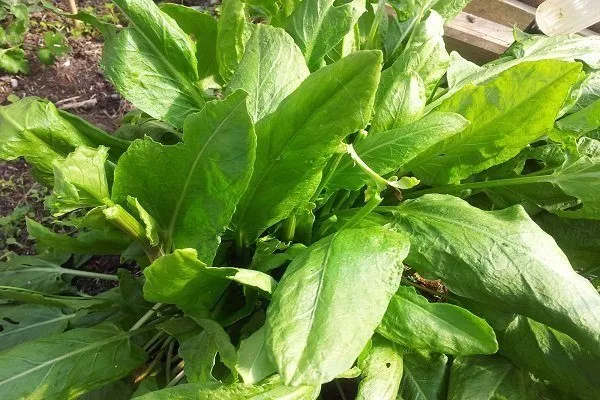
Emerald snow
This variety is a perennial hybrid. Its characteristics are as follows:
- maturation takes 46-52 days;
- spreading and raised rosette;
- slightly blistered leaves, ovoid shape, green color;
- yield - up to 7.5 kg per 1 sq. m.
Sorrel Emerald Snow has many advantages:
- cold resistance;
- possibility of growing in sunny areas and in partial shade;
- early sowing (April-May);
- possibility of summer and winter sowing (carried out in September), which allows for an early harvest the following year;
- high content of ascorbic acid, carotene, B vitamins, valuable organic acids;
- resistance to stemming;
- rapid growth of greenery;
- high yield;
- versatility in application;
- excellent option for freezing.
Emerald snow is used as a food crop. The harvest can be from June to September. It is recommended to freeze the greens in small portions, after drying them first.
Fresh Emerald Snow sorrel is eaten unprocessed, boiled, and salted. Frozen sorrel is added to entrees, side dishes, casseroles, and pies.
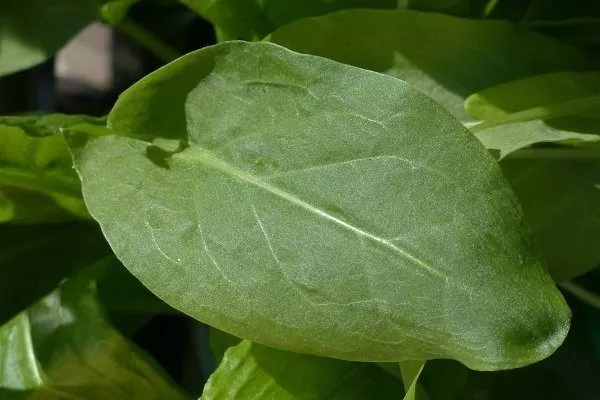
Malachite
A perennial variety of sorrel with the following characteristics:
- mid-season variety, ripening period is 40-45 days;
- formation of an erect, loose rosette;
- the leaves are smooth and slightly blistered, 12-15 cm long, with a wavy edge and a bright, rich green color;
- in the spring-summer period grown in open ground;
- seedlings appear together approximately 1.5-2 weeks after sowing the seeds;
- greens with a rich sweet taste and a slight sourness;
- yield - up to 6 kg per 1 sq. m.
Sorrel Malachite has many advantages:
- winter hardiness – this variety is not afraid of frost, it survives the winter perfectly;
- possibility of cultivation in winter-spring period in closed ground conditions;
- resistance to adverse weather conditions;
- accelerated growth of greenery;
- resistance to stemming;
- low acidity;
- increased vitamin content;
- high yield, and over the course of 3-4 years in one place;
- harvest several times per season, 2-2.5 weeks pass between cuttings;
- versatility of application.
Malachite sorrel is eaten fresh and used for canning. The greens can be frozen.
Odessa 17
The variety was developed by the Odessa State Regional Agricultural Experimental Station, based on a local plant variety. Recommended cultivation regions include Ukraine, Kabardino-Balkaria, North Ossetia, the Smolensk region, and the Non-Black Earth Zone of the Russian Federation. Odessa Sorrel 17 has been cultivated since 1969.
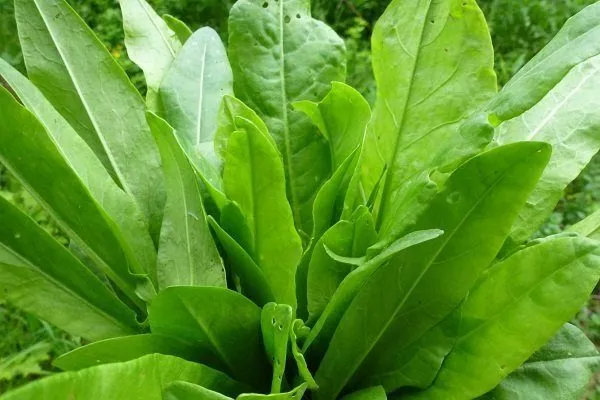
The characteristics of the variety are as follows:
- average ripening period, 40-45 days before mass cutting;
- spreading and raised rosette;
- slightly bubbly leaves, elongated-oval shape, green color;
- leaf blade width is 5-8 cm, blade length is 12-16 cm, petiole is 11-18 cm;
- the crop is planted in April, June or October;
- yield - up to 4.9 kg per 1 sq. m, for the first cutting - up to 3.6 kg per 1 sq. m.
This variety has many advantages:
- winter hardiness;
- drought resistance;
- the possibility of winter planting, which provides an early harvest the following year;
- good shade tolerance;
- good yield in one place for 3-4 years.
Odessa Sorrel 17 is delicious fresh and can be added to salads and entrees. This variety is also used for canning.
Broadleaf
Another perennial variety of the crop, called old, since it was among the first to appear in 1961. Its characteristics are as follows:
- mid-season variety, vegetation period 45-50 days;
- loose and erect rosette;
- the leaves are elongated-ovate in shape and dark green in color;
- the length of the leaf blade is 14 cm, the width is half as much;
- emergence of seedlings in 1-1.5 weeks;
- harvesting begins when the leaves reach 10 cm in length;
- yield - up to 5-6 kg per 1 sq. m.
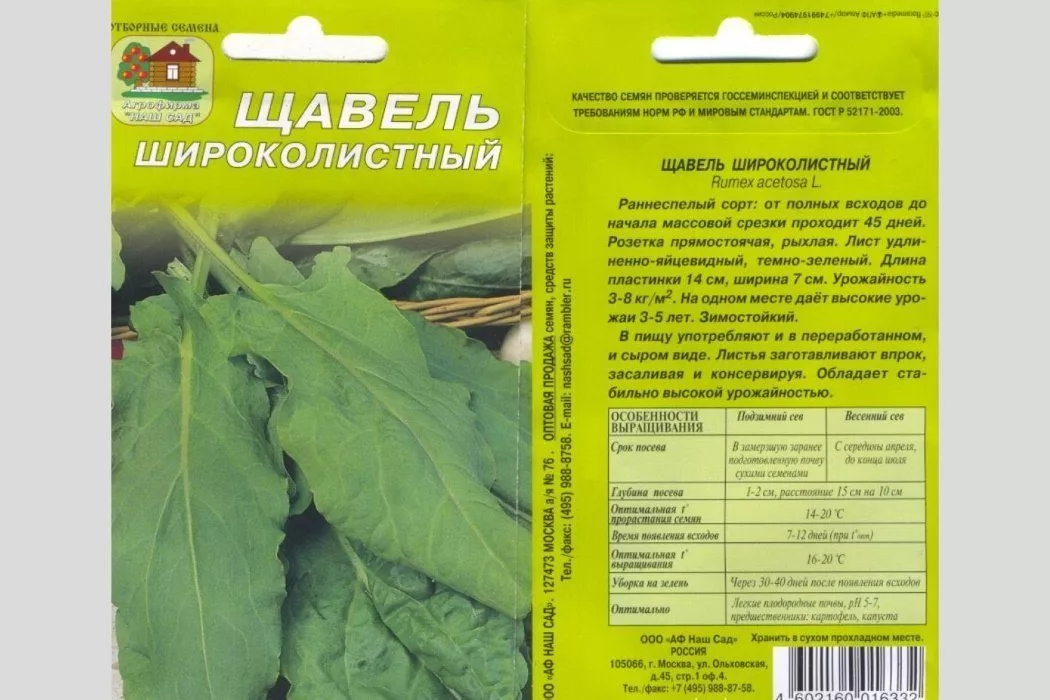
Advantages of the Broadleaf sorrel variety:
- fast germination;
- growing in one place for 4 years;
- cold resistance;
- possibility of growing in sunny areas and in partial shade;
- resistance to bolting in cool weather;
- the possibility of growing in spring or before winter, the second option provides an early harvest the following year;
- greens are rich in vitamin C, carotene, B vitamins, organic acids;
- good yield;
- tender greens;
- versatility in application.
Broadleaf sorrel is eaten fresh and added to salads. It also cooks well, making it an excellent addition to soups and side dishes. This variety is excellent for canning, pickling, and freezing.
Large-leaved
This perennial sorrel is one of the first cultivated varieties. It appeared in 1961 and has the following characteristics:
- early ripening variety, 30-35 days before mass cutting;
- the leaves are elongated-oval, delicate, light green;
- the surface of the leaves is smooth, slightly bubbly, width - 5-10 cm, length - 10-14 cm;
- the taste is pleasantly sour;
- sowing can be done from mid-April to August;
- the first cutting is carried out when the leaves reach 10 cm;
- yield - up to 5-6 kg per 1 sq. m, such figures are achieved after 2 cuttings.
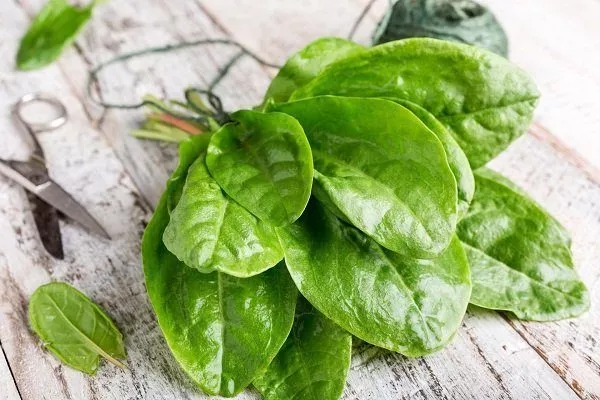
Advantages of the Large-leaved sorrel variety:
- early ripening;
- fast regrowth after cutting;
- growing in one place for 5-6 years;
- winter sowing is possible;
- cold and frost resistance, possibility of wintering without shelter;
- high content of ascorbic and other acids, providing a sour taste;
- high content of vitamins B, A, potassium and iron salts;
- high yield;
- versatility in application.
Large-leaved sorrel is used fresh and in soups, where it adds a pleasant tartness. This variety is also suitable for canning and freezing.
Bloody Mary
This variety is unique due to its appearance. This perennial is considered ornamental, but is also used for food.
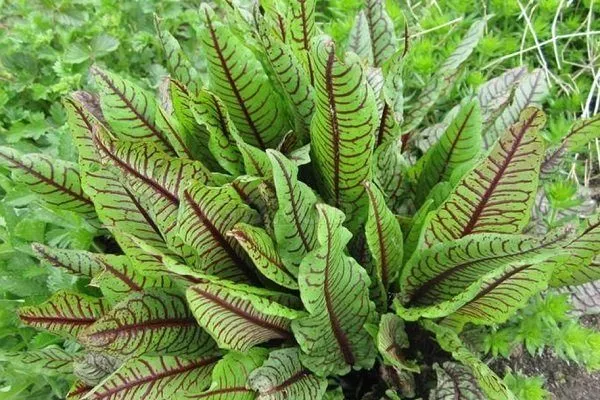
Bloody Mary's characteristics are as follows:
- average ripening period, 45-50 days pass before mass cutting;
- rapid growth with the formation of compact rosettes, height up to 30 cm;
- the basal rosette is neat;
- lance-shaped leaves that are streaked with dark burgundy veins;
- the length of the leaves can reach 15 cm, width - 10 cm;
- the taste of the greens is reminiscent of spinach;
- flowers are tiny, star-shaped, color from green to red-brown;
- flowering in June-August;
- emergence of seedlings in 1.5-2 weeks.
Sorrel Bloody Mary has many benefits:
- the possibility of growing not only in sunny areas, but also in partial shade or shade;
- high content of ascorbic acid, B vitamins, carotene, valuable organic acids;
- growing in one place for up to 4-5 years;
- decorativeness;
- versatility of application.
Bloody Mary sorrel is eaten fresh, added to salads and soups, and pickled. Its decorative qualities make it a wonderful addition to flower beds. Sorrel can also be grown as a potted plant.
The Emerald King
This perennial with a majestic name has the following characteristics:
- early ripening variety, mass cutting in 30-40 days;
- delicate smooth leaves, oval-elongated shape, light green color;
- pleasant slightly sour taste;
- yield - up to 10 kg per 1 sq. m.
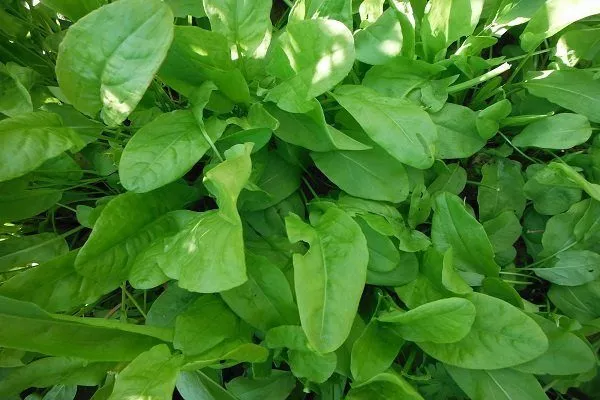
The advantages of the Emerald King sorrel variety are as follows:
- early ripening;
- tender greens;
- growing in one place for 4-5 years;
- winter hardiness;
- good taste;
- high yield;
- versatility in application.
Emerald King sorrel is used in homemade green cabbage soup. This variety is excellent for canning.
Champion
The variety is perennial, the main characteristics are as follows:
- medium ripening period, mass cutting after 40 days;
- plant height - up to 40 cm, diameter - up to 30 cm, rosette erect;
- the leaves are large and juicy, green in color, the petioles are small;
- the leaves have an elongated oval shape, a smooth surface and a slightly wavy edge;
- pleasant slightly sour taste of herbs, delicate consistency;
- yield - up to 7 kg per 1 sq. m.
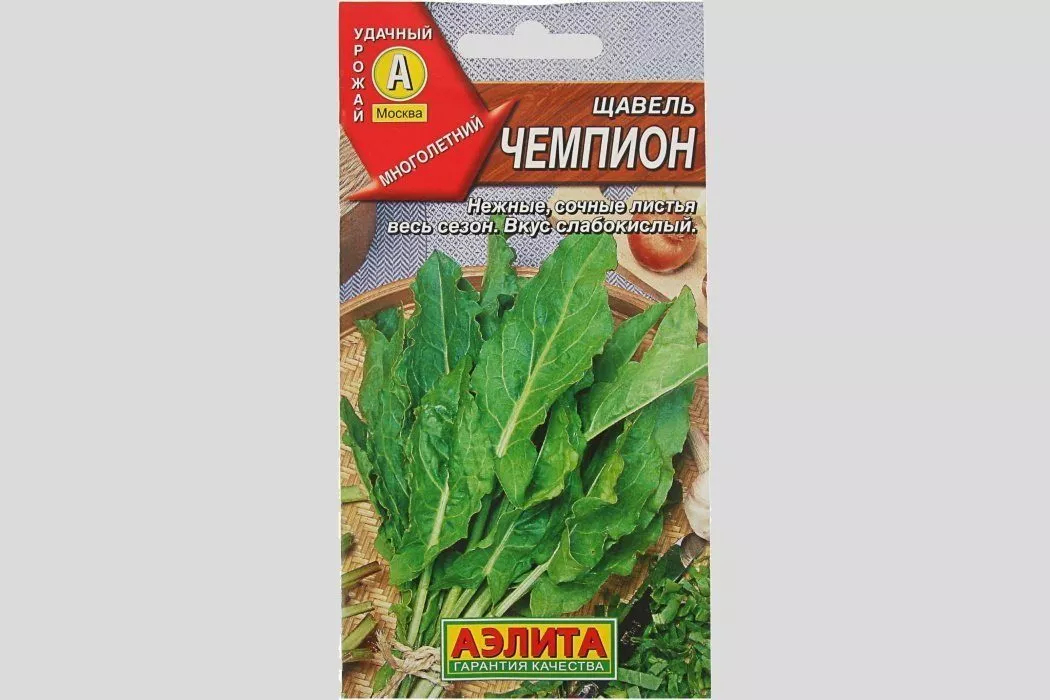
Sorrel Champion has the following advantages:
- tenderness and pleasant taste of greenery;
- the possibility of summer and winter sowing, which ensures an early harvest the following year;
- cold resistance;
- possibility of growing in a sunny area or in partial shade;
- greens are rich in carotene, ascorbic acid and B vitamins;
- good yield;
- versatility in application.
Champion sorrel is delicious fresh. The greens are added to salads, soups, and side dishes. This variety is also suitable for canning.
Sanguine person
This variety deserves special attention because it differs from others in its appearance and application. Sanguine's characteristics are as follows:
- early ripening, first cutting is done after 40 days;
- raised and upright rosette;
- plant height - up to 30-40 cm;
- the stem is branched, reddish-yellow in color;
- the leaves are large, oblong-ovate in shape, green in color with red veins;
- the greens have a slightly sour taste;
- leaves can be smooth or slightly blistered, petioles are of medium length;
- yield - up to 5 kg per 1 sq. m;
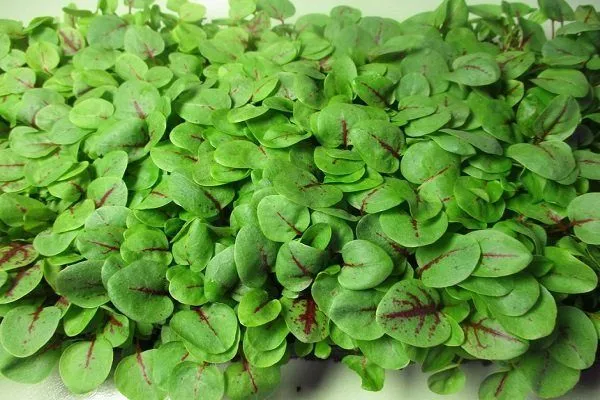
Sorrel Sanguine has a number of advantages:
- early ripening;
- the possibility of growing in open or closed ground, the crop feels great in pots and containers;
- good taste characteristics;
- increased vitamin content;
- good yield;
- decorativeness;
- healing properties of some parts of plants;
- versatility of application.
Sorrel Sanguine is considered an ornamental and potted plant. It can be grown in garden beds, flower beds, and indoors. This variety is edible and can be eaten fresh or used for canning.
Sorrel sanguineum is also used in folk medicine for the treatment of cancer. A decoction of the plant's roots has healing properties.
All of the listed sorrel varieties are edible (some are also ornamental) and offer beneficial properties due to their vitamin and mineral content. When choosing the best variety, consider the desired outcome—whether it's decorative appeal, taste, and yield, and whether the greens are intended for fresh use or further processing.