
Yuta is a mid-season stalked celery variety. Domestic gardeners appreciate it for its abundant yields, attractive appearance, excellent taste, and excellent shelf life. Gardeners grow it for both private consumption and commercial sale. This variety is also of interest to farmers engaged in industrial-scale vegetable production.
Introduction to the variety
Yuta is the highest-yielding celery variety, both stalked and leafy. Homeowners and farmers choose this variety for its vitamin-rich greens in a short season, as they can be harvested at any stage of growth. It is distinguished by its increased resistance to bolting and flowering.
Features of selection
This variety is a product of domestic breeding. It was developed by scientists A. N. Khovrin, S. V. Maksimov, and N. N. Klimenko. It was added to the Russian State Register in 2007. It is intended for cultivation in open beds in the following climates:
- Northern;
- North-West;
- Central;
- Volga-Vyatka;
- Central Black Earth Region;
- North Caucasian;
- Middle Volga;
- Lower Volga;
- Ural;
- West Siberian;
- East Siberian;
- Far Eastern.
Description of appearance
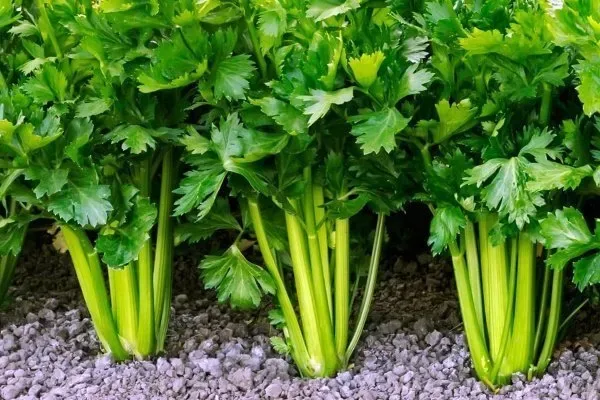
Utah plants are characterized by a tall, erect or semi-erect rosette made up of tightly packed petioles. Their height ranges from 45 cm to 70 cm (average height is 65 cm). The rosette weighs 350-450 g.
The petioles for which gardeners grow this variety have the following characteristics:
- rich green color, varying from light green to dark green;
- long, slightly curved shape;
- slightly ribbed surface;
- fleshy texture, not fibrous, tender;
- a small number of leaves crowning the petiole, green, medium-sized.
Taste and application
The Utah variety is known for its excellent flavor and rich, piquant aroma. The petioles and leaves contain many valuable nutrients: vitamins, amino acids, minerals, fiber, and essential oils. They are considered a dietary food.
Celery greens are best used fresh and in home cooking. Home cooks use the juicy, fleshy stalks in the following ways:
- added to salads, vegetable appetizers;
- steamed;
- baked;
- added as a flavoring and aromatic additive to soups, broths, meat and fish dishes, vegetable stews;
- dried to produce a piquant seasoning.
Experienced cooks avoid using the bottom of the stalk (the white part) in fresh salads because it's not tender enough. It's best to cook it. Add the bottom of the stalk to broth or stews. This ingredient literally transforms soup made with freshwater fish.
Ripening time and yield
This vegetable variety belongs to the mid-season cultivars and hybrids. The harvest matures in 130 to 160 days. Under unfavorable growing conditions, it can take up to 180 days. Gardeners can harvest up to 3.7 kg of celery stalks per square meter of garden bed.
Landing
To grow Utah seedlings, use light, loose soil rich in nutrients. A substrate containing humus and peat is preferable. Vegetable growers grow Utah celery using seedlings, adhering to the following timing:
- February-March - sowing seeds to obtain seedlings;
- the second half of May (with established warmth, from +16-18°C during the daytime) - transfer of seedlings to an open garden bed;
- From July to September – harvest.
- ✓ The soil should not only be light and loose, but also have high moisture capacity to provide optimal conditions for seed germination.
- ✓ Soil acidity should be within the pH range of 6.0-7.0, which is optimal for celery.
There's no need to plant the seeds deep. Simply scatter them over the soil surface and sprinkle with warm water. Cover the seeds with glass (or plastic film). Place them on a sunny windowsill. Maintain soil moisture and ventilate the area. When sprouts appear, cover them with soil (0.5 cm).
- ✓ The presence of 4-6 true leaves before planting in open ground.
- ✓ No signs of stem elongation, which indicates the correct light regime.
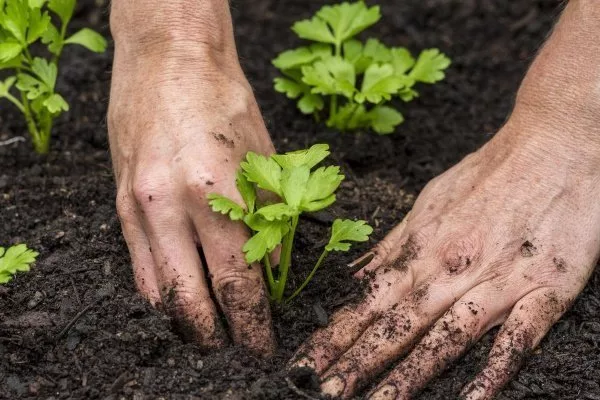
After the seedlings emerge en masse, remove the glass (or film). Keep the seedlings in a bright room with a temperature of 15°C. These conditions will prevent the seedlings from stretching and will ensure they grow strong and healthy. Transplant them into the garden in May, maintaining a 35x40 cm pattern.
The location for the celery bed must meet the following requirements:
- be sunny (the petioles grown in partial shade or shade have too strong an aroma and reduced taste);
- windless;
- with fertile, light and loose soil of neutral acidity (the vegetable does not grow on heavy, dense, acidic soils).
Care instructions
Stalk celery requires more care than other garden crops like parsley and carrots. It requires regular watering, fertilizing, loosening the soil, and hilling. The vegetable also requires stems to be bleached, which is done by wrapping them in thick paper 14 days before harvesting.
The intricacies of watering and fertilizing
This crop is very moisture-loving. It requires frequent and generous watering at the roots to ensure a bountiful harvest. Avoid allowing water to drip down past the stems and leaves. Overwatering is just as damaging to celery as drought, leading to stem rot. The irrigation regimen is as follows:
- watering frequency - once every 2-3 days (increase watering frequency 5 weeks before harvesting, and do the last, most abundant watering 10 days before);
- water consumption (necessarily warm and settled) - 20 liters per 1 sq. m of the garden bed;
- After watering, mulch the soil with clean sawdust or mown grass to retain moisture;
- Total water consumption for the entire growing season is 5-6 cubic meters (if you use sprinkling, the consumption rate increases to 9 cubic meters).
The soil in the garden bed needs to be loosened after rain and watering. Do this at least six times per season. Be sure to hill up the plants.
Fertilize the vegetable crop according to the following scheme:
- Four weeks after transplanting the seedlings to the garden bed, fertilize them with ammonium nitrate (20 g per 1 sq. m), superphosphate (15 g per 1 sq. m), and potassium salt (10-15 g per 1 sq. m). You can also use a solution of chicken manure (1:10).
- Fertilize the celery again toward midsummer. Use any potassium-rich fertilizer. It's also a good idea to add magnesium and boron during this period.
Disease incidence, pest hazard
If planted improperly or poorly, petiole celery suffers from diseases. It's particularly susceptible to overwatering and neglected soil loosening (due to the dense soil crust, air doesn't reach the plant roots). Nutritional deficiencies also weaken the plant's immunity.
Of the diseases, green vegetables are most susceptible to the following infections:
- Cercospora leaf spotThis fungal disease manifests itself as spots on leaves and stems. The spots have light centers and red edges. They begin to dry out over time. Applying fungicides to planting material is an excellent preventative measure.
If the planting has been damaged by fungus, apply mineral fertilizers and spray the plants with Fitosporin, Fitoverm or another fungicide. - SeptoriaGardeners diagnose the disease by yellow, elongated spots on the foliage. It appears at the end of the summer season. Treating the planting with fungicides such as Trichodermin, Alirin-B, or Vitaplan helps combat the infection.
- RustCold weather in summer favors the disease. It manifests itself as brown growths on plants. Fitosporin can help combat this problem.
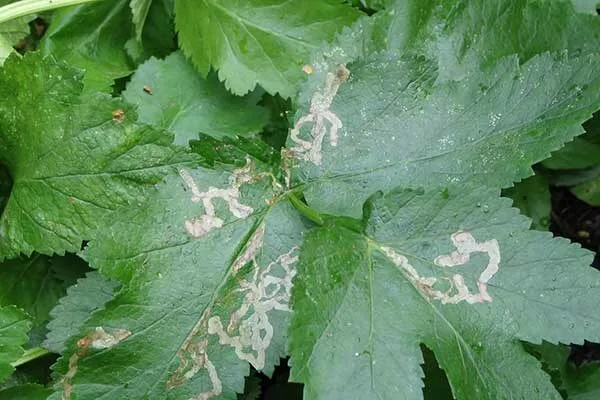
Vegetable crops are also susceptible to attacks by harmful insects, such as the celery and carrot flies. Their larvae are particularly dangerous, chewing holes in petioles and damaging leaves. Plants affected by these pests not only lose their marketable appearance but also develop a bitter taste.
These folk remedies will help you save your celery bed from insect infestation:
- wood ash;
- dry mustard powder;
- tobacco dust.
Positive and negative qualities
Reviews
Yuta is a wonderful mid-season variety of petiole celery. Domestic gardeners love it for its high marketability, pleasant flavor, and piquant aroma. It is widely grown not only for private consumption but also for commercial use, thanks to its excellent yield and the shelf life of the finished vegetable product.