
There are three types of celery: root, petiole, and leaf. It is grown for its greens, juicy petioles, or fleshy roots. The resulting product is consumed as a stand-alone product, as an ingredient in dishes, and for processing. Each type has numerous varieties, which are described in this article.
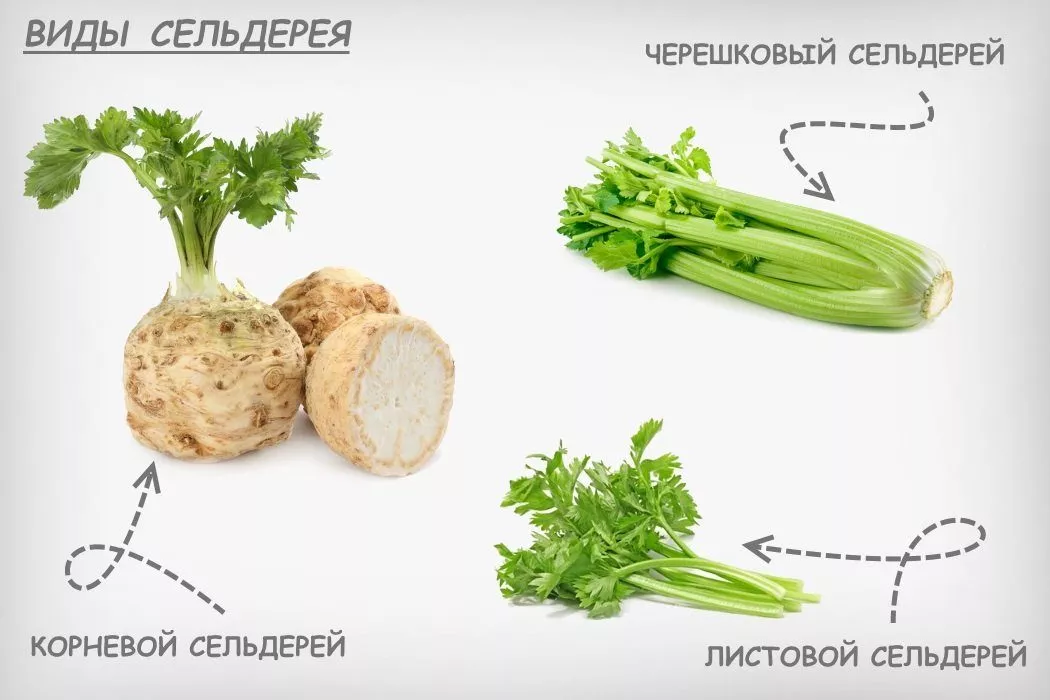
Celery is a vegetable with a spicy smell and a pungent taste.
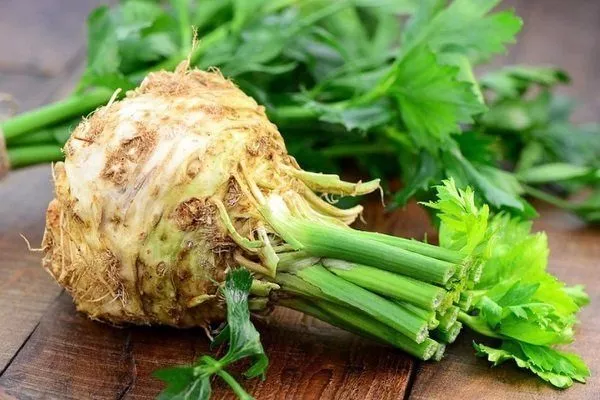
Root celery produces a small rosette of leaves and a round, angular root about the size of a fist. The root is grated and added to meat dishes.
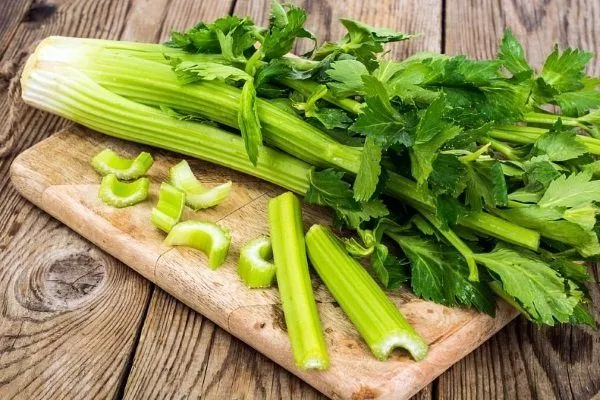
Stalk celery varieties have thick, juicy stalks, but they don't form roots. This type of celery is used fresh in salads.
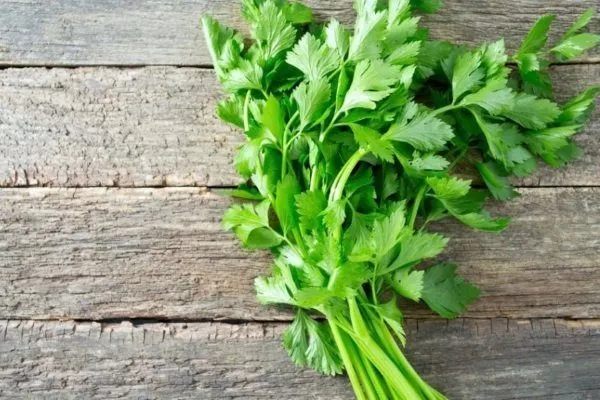
Leaf (curly) celery is similar in appearance to parsley: it does not form a root vegetable, the stems are thin, and the leaves are lush. The greens are used in the preparation of first and second courses, and are dried for subsequent use in the winter.
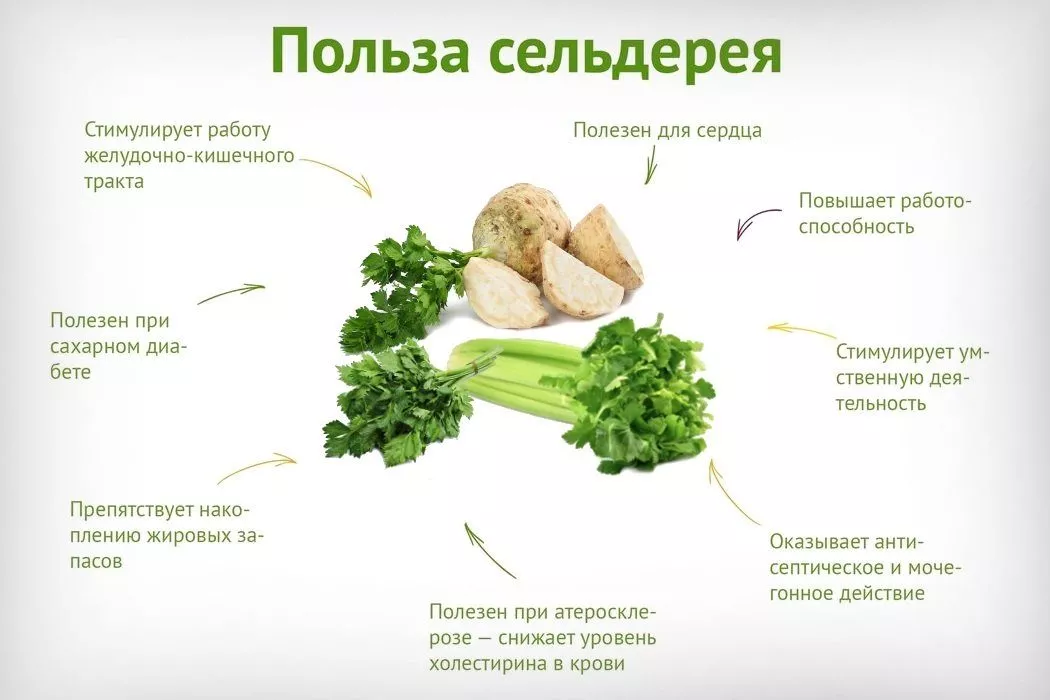
Useful properties of celery
Root
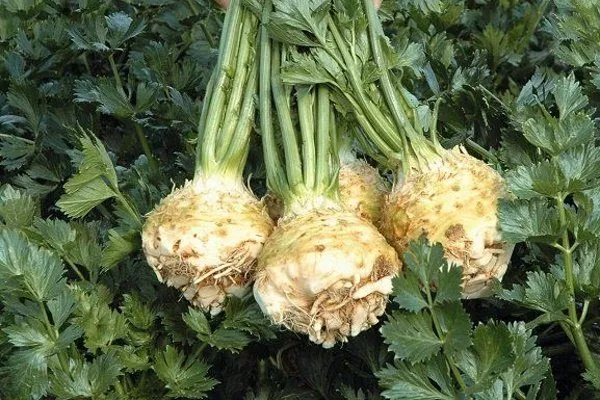
This variety of celery is grown not for its tops, but for its roots. The round, juicy, and massive root weighs 300-500 g. Some specimens weigh up to 1 kg. The leaves of root celery are also edible. The roots are boiled, fried, and added to salads—a highly valuable vitamin-rich food.
| Name | Ripening period | Root crop weight | Productivity |
|---|---|---|---|
| The Prague Giant | 130 days | 0.5-0.7 kg | 1.5-3 kg/sq.m |
| President | 140-160 days | 0.3-0.5 kg | 3-3.4 kg/sq.m |
| Diamond | 145 days | up to 1.5 kg | 2.3-4.9 kg/sq.m |
| Ivan Tsarevich | 150-160 days | 0.2-0.3 kg | 3-3.5 kg/sq.m |
| Esaul | 150-160 days | 0.25-0.3 kg | 3-3.5 kg/sq.m |
| Cascade | 185 days | up to 0.5 kg | 3-5 kg/sq.m |
| Apple | 140-150 days | 0.15-0.2 kg | 2.3-4.7 kg/sq.m |
| Kornevoy Gribovsky | 120-150 days | 0.07-0.15 kg | up to 3 kg/sq.m |
| Albin | 160-170 days | 0.4-0.6 kg | up to 6.5 kg/sq.m |
| Strongman | 140-150 days | up to 0.4 kg | 3-4 kg/sq.m |
| Egor | 170-180 days | 0.2-0.6 kg | 3-3.5 kg/sq.m |
| Maxim | 120-140 days | 0.1-0.2 kg | 3.8 kg/sq.m |
| Yudinka | 130-160 days | 0.2-0.6 kg | 3-3.2 kg/sq.m |
| Russian size | 150-170 days | up to 2.5 kg | |
| Casanova | 170 days | up to 0.4 kg | 3.5 kg/sq.m |
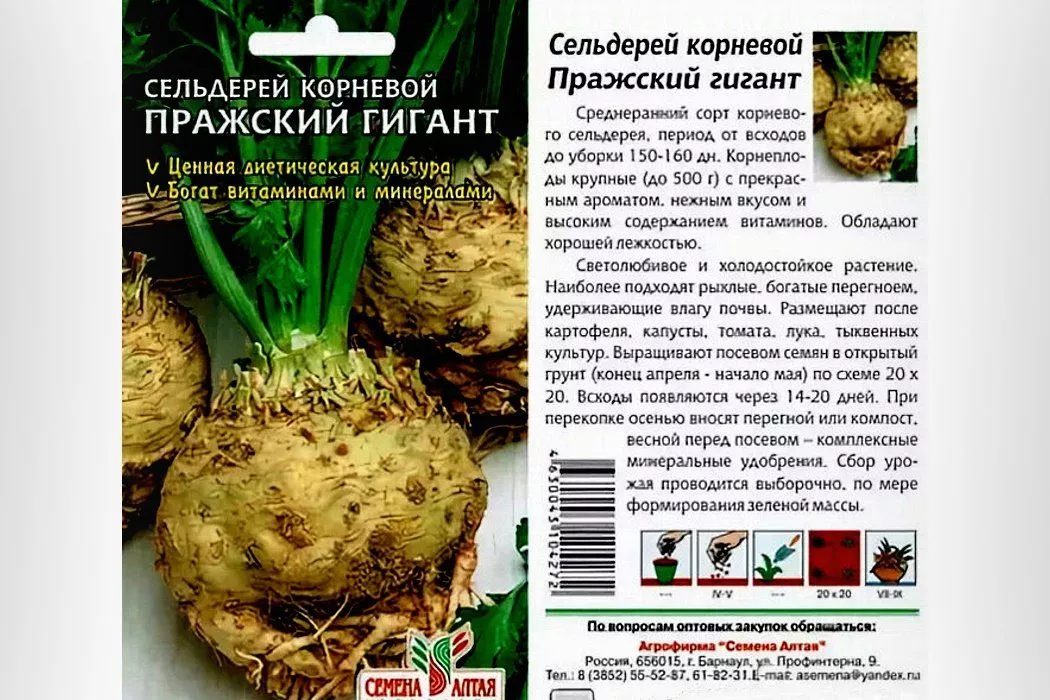
The Prague Giant
A large-fruited, mid-early, and high-yielding variety, its fruits weigh 0.5-0.7 kg. The shape is slightly flattened, like a turnip. The flesh is juicy, aromatic, and white, appealing to celery lovers for its tenderness and pleasant flavor. This "giant" variety ripens in 130 days (here and below, this refers to the period between the first shoots appearing and the time it is ready for harvesting/pulling).
Cultivation: Seedlings. Transplant at 70 days of age. Planting time: the second half of May. Planting pattern: 35x40 cm. Harvesting begins at the first frost. Yield: 1.5-3 kg/sq. m. To achieve high yields, apply organic fertilizers in the fall.
Celery is a natural antibiotic. It contains unique polysaccharides with a strong anti-inflammatory effect. People who eat celery rarely suffer from colds and infectious diseases.
President
A mid-season variety. It has a strong, upright rosette. The growing season is 140-160 days. Height is up to 40 cm. The tops are dark green. The petioles are light green. The roots are medium to large in size. They are round, with white flesh, weighing 0.3-0.5 kg. They are easy to harvest and clean. Suitable for long-term storage. Lateral roots are concentrated at the bottom of the root.
This variety is recommended for growing in both home gardens and on farms. During the growing season, regularly loosen the soil, water, and feed 2-3 times with complex fertilizers. It is grown from seedlings. Seeds are sown in February. The seedling planting pattern is 25 x 35 cm. The yield per square meter is 3-3.4 kg. The variety is disease-resistant.
Diamond
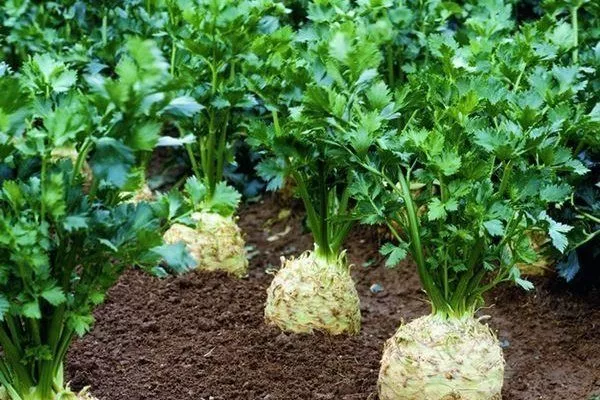
A mid-season variety. Ripens in approximately 145 days. A plus: large fruits. The spherical, fleshy "turnips" weigh up to 1.5 kg. The surface is smooth and white. The leaves are dark green and medium in height. The roots are eaten both raw and processed. They store well in cellars – they keep well.
The fruit has few lateral shoots. The variety is resistant to bolting and transports easily. It has exceptional fragrance. 2.3-4.9 kg are harvested per square meter. It is grown primarily from seedlings. The sowing and planting pattern is standard.
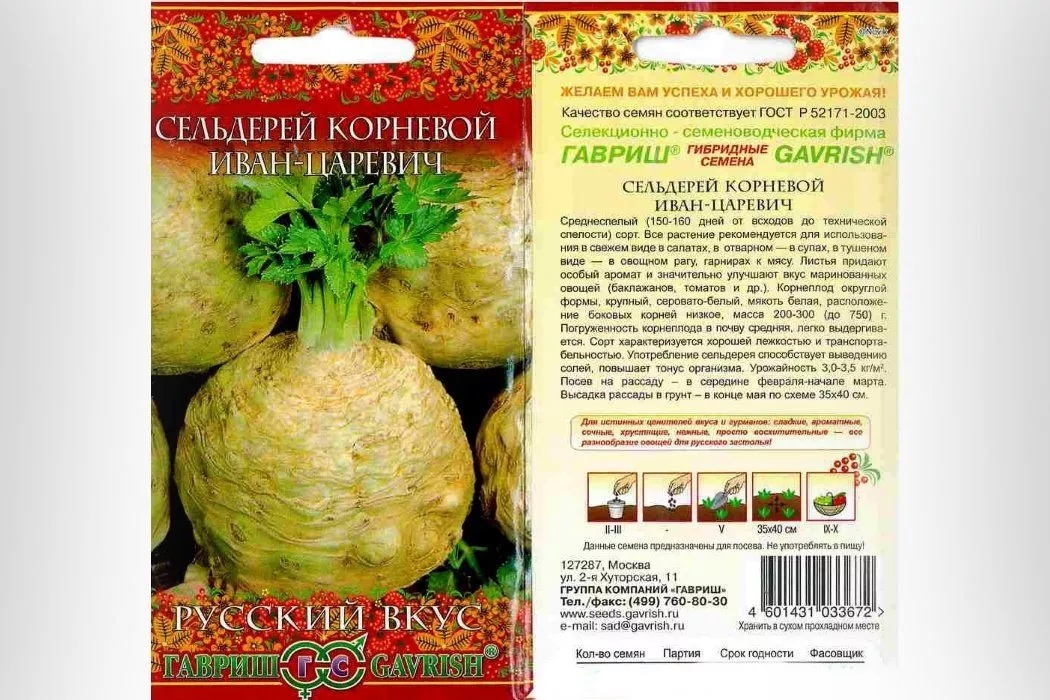
Ivan Tsarevich
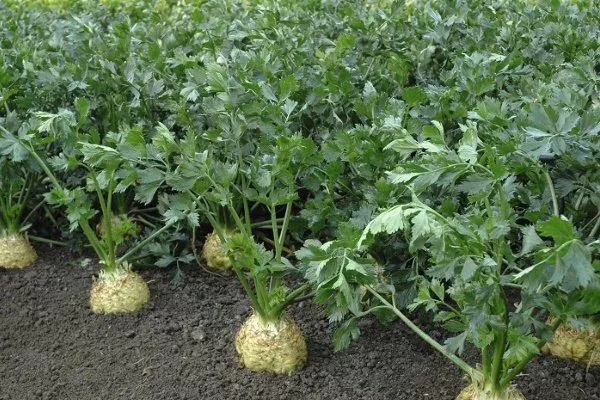
A mid-season variety, it ripens in 150-160 days. All parts of the plant are edible. They can be eaten fresh, boiled, or stewed, and the leaves are added to pickles. The roots are large, round, and grayish-white, with low-growing roots and white flesh. Fruit weight is 0.2-0.3 kg, with a maximum yield of 0.8 kg.
The "turnips" are slightly embedded in the soil and are easily pulled out. They have good shelf life and transportability. The yield per square meter is 3-3.5 kg. Seedlings are planted in late May in a 35x40 cm pattern.
Esaul
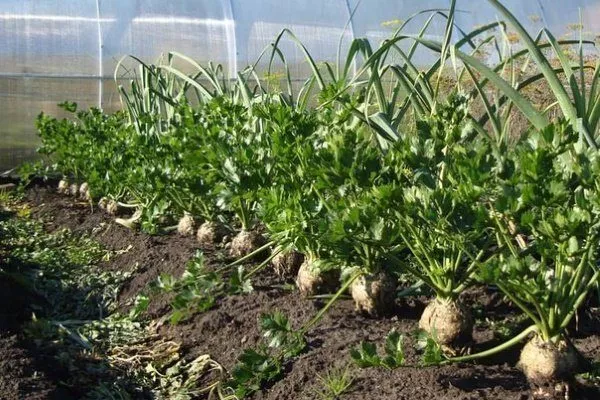
A mid-season variety. Ripening period: 150-160 days. The roots are round, smooth, and elongated at the top. Lateral shoots are located low. Weight: 0.25-0.3 kg. Maximum: 0.9 kg. The grayish-white roots are shallowly embedded in the soil and are easy to pull out.
Good shelf life and transportability. The root crop yield per square meter is 3-3.5 kg. Seeds are sown for seedlings in February-early March. Seedlings are planted in May. The planting pattern is 35x40 cm.
Cascade
A mid-season, high-yielding variety. Ripens in 185 days. Lateral shoots are located at the bottom of the fruit, making them easy to peel. The spherical root vegetable has white flesh with yellow spots. It weighs up to 0.5 kg. It offers high commercial quality. The rosette of leaves is medium-sized, not very spreading. The leaves are large, green and semi-green.
The yield per square meter is 3-5 kg. The leaves cover the roots, protecting them from frost. Planting method: wide rows. Sowing pattern: 30x20 cm. Sowing time: February. Good transportability. There are no voids in the cross-section. Standard care: watering, fertilizing, and loosening the soil. The variety is resistant to various diseases, especially cercospora leaf spot.
Apple
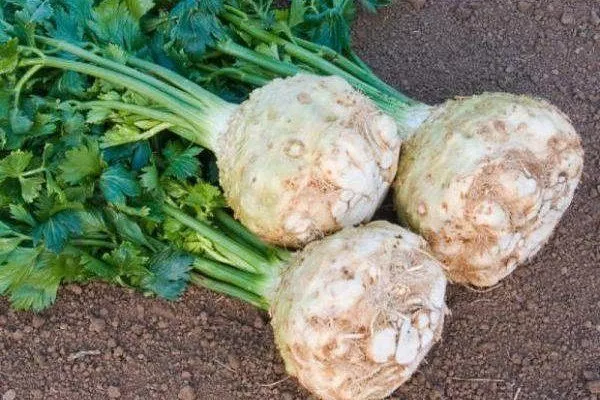
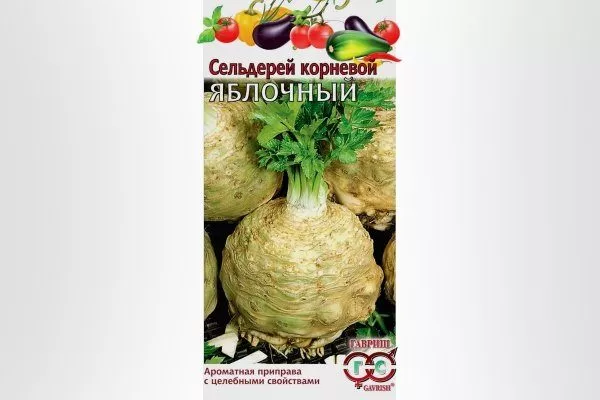
An early-ripening variety. The period from germination to maturity is 140-150 days. The rosette is medium-sized, semi-spreading, with dark green leaves. The petioles are greenish-purple. The "turnips" are grayish, rounded, slightly flattened, 4-8 cm in diameter. The flesh is white. The whole plant weighs 0.2-0.5 kg. The root itself, without the tops, weighs 0.15-0.2 kg. The leaves have a strong fragrance.
Transports well. Plant yield is 3.7-5.7 kg/sq. m, root yield is 2.3-4.7 kg/sq. m. Excellent shelf life and disease resistance. Recommended for fresh and dried consumption. Sowing pattern: 25 x 10 cm.
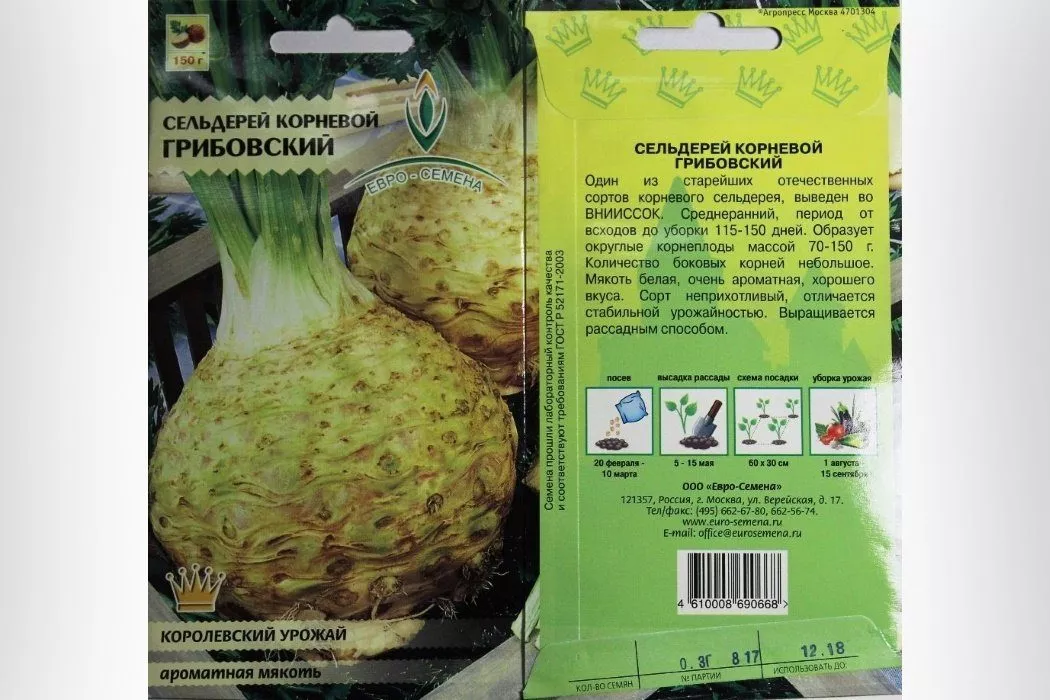
Kornevoy Gribovsky
The oldest domestic variety. It ripens mid-early, taking 120-150 days from germination to maturity. The rosette is low, 45 cm, with dark green leaves. The roots are round, weighing 0.07-0.15 kg, with white, aromatic flesh. It has minimal lateral roots, a feature prized in root varieties.
The advantage is its relative ease of maintenance, and most importantly, "Gribovsky" produces a consistently productive crop. Sowing occurs in late February. Seedlings are planted in May. The planting pattern is 30x60 cm. Harvesting takes place from August to September. One square meter can yield up to 3 kg of gray "turnips." The variety is resistant to bolting in the first year.
Albin
A mid-season variety from Czech breeders, ripening in 160-170 days. The plant has a semi-erect rosette, 35 cm tall. The leaves are green. The petioles lack anthocyanin, and the "turnips" are rounded, with fragrant, snow-white flesh. It retains its color after cooking. The diameter is 12-13 cm. The leaves are suitable for eating as greens. There are few lateral shoots. The upper part of the fruit is greenish, the flesh is white. A "turnip" weighs 0.4-0.6 kg.
The yield is high – up to 6.5 kg per square meter. Cultivation is from seedlings. Sow in late February to early March. Seedlings are planted in mid-May. The harvest begins in mid-September.
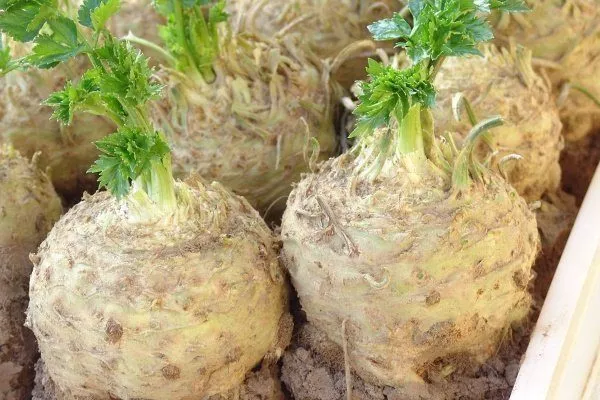
Strongman
A mid-season variety with a ripening period of 140-150 days. The round roots are 8-12 cm in diameter and weigh up to 0.4 kg. The "turnip" color is yellow. The flesh is tasty, juicy, and fragrant. The flesh is ivory-colored. It is eaten fresh, dried, and frozen, canned, and used in various dishes.
Seeds are sown for seedlings in late February. Seedlings are planted in late May. The planting pattern is 20x40 cm. Harvesting begins in late September. Lateral shoots are concentrated at the bottom of the root. Up to 3-4 kg of root vegetables are harvested per square meter.
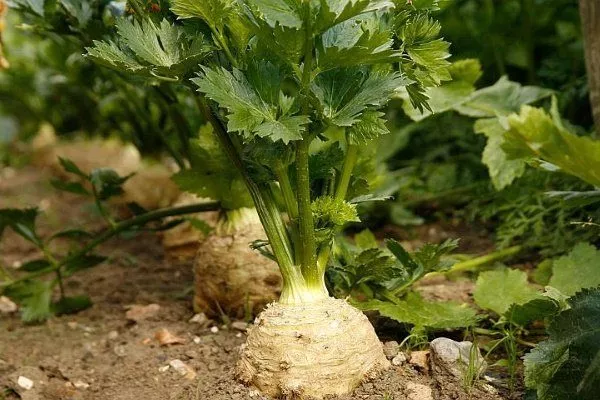
Egor
A mid-season variety, ripening in 170-180 days. The plant has a semi-erect rosette. The "turnips" are round, becoming longer at the top. The fruits are gray, with a slight green tint. The snow-white flesh has light yellow spots. Lateral roots are located at the end of the "turnip." The fruits weigh 0.2-0.6 kg. The root is completely free of cavities. The fruit length is 5-10 cm. Excellent taste.
The roots are easily pulled from the soil. Cultivate from seedlings. Planting pattern: 40x20 cm. Yield: 3-3.5 kg per square meter. Organic fertilizer should be applied in the fall. They are easy to transport. Harvest before frost; delaying harvesting will result in poor storage.
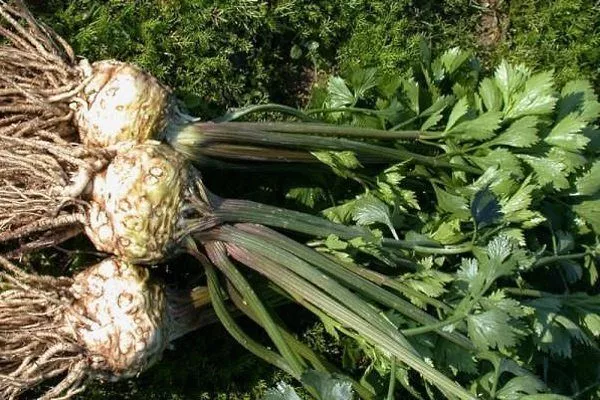
Maxim
A late-ripening variety. Ripening period is 120-140 days. The roots are beige-white, round, with creamy-white, aromatic flesh. They are eaten fresh, canned, and stored. The leaves are dark green. The roots are 6-8 cm in diameter and weigh 0.1-0.2 kg. They have excellent flavor.
Cultivated from seedlings. Planting pattern: 50x40 cm. Resistant to bolting. Its shelf life allows for long-term storage. Yield: 3.8 kg/sq. m.
Yudinka
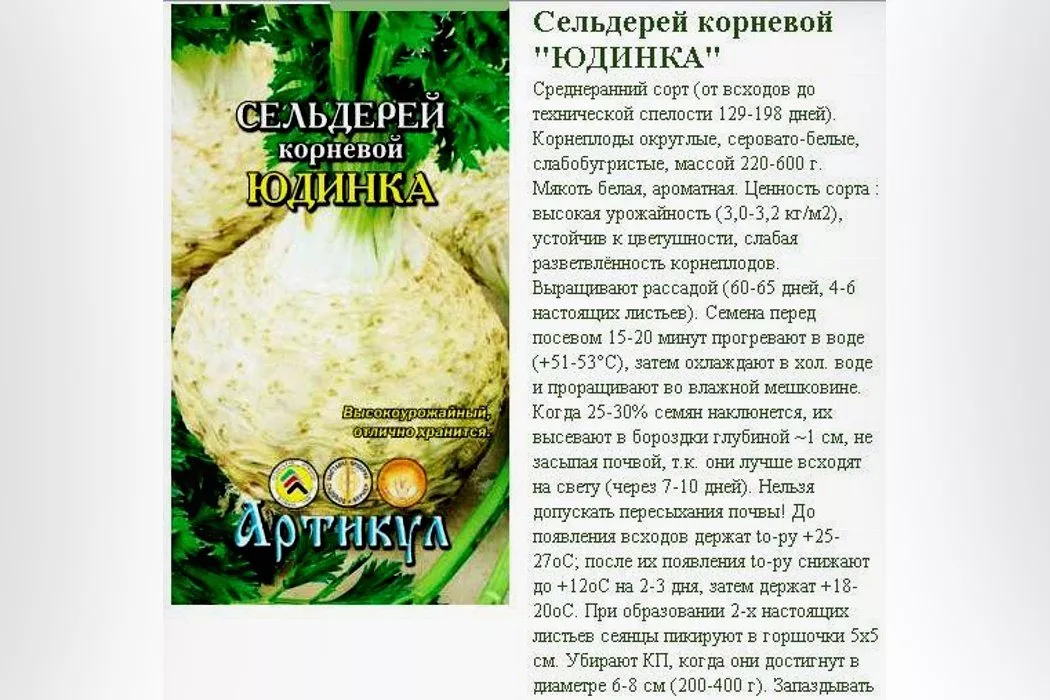
A mid-early variety. Ripens in 130-160 days. The plant has an upright rosette, with leaves up to 30 cm long. The fruits are grayish-white, round, with a slightly bumpy surface. The diameter is 10-11 cm. They are half-buried in the soil and are easy to pull out. They weigh 0.2-0.6 kg. The flesh is aromatic and white. The leaves are dark green and highly aromatic.
Cultivation: Seedlings. Yield per square meter is 3-3.2 kg. Yield including leaves is up to 7 kg per square meter. Harvesting takes place before the first frost. Storage quality is excellent – "turnips" stored in a cellar will keep well until late spring. "Trifles" are used in winter for forcing greens.
Russian size
A mid-season, high-yielding variety. Ripening period is 150-170 days. The roots are very large, weighing up to 2.5 kg. Connoisseurs find a nutty flavor in the juicy flesh. It's excellent as a stand-alone product, used as a seasoning, and for canning.
Seedlings are planted outdoors at 60-70 days old. They require regular watering. Fertilize with complex fertilizers three times per season. Planting pattern: 30x40 cm. Grow outdoors or indoors. Harvest in September-October.

Casanova
A mid-season variety, maturing in 170 days. The plant has a semi-erect, vigorous rosette. The roots are round, large, white, and smooth, with a yellowish tint. They weigh up to 0.4 kg. The lateral root shoots are low in the ground.
Produced from seedlings and direct sowing. Seedlings are planted 70-80 days after sowing. Harvest before frost. Yield: 3.5 kg per square meter.

Petiolate
These varieties of celery are grown for their fleshy and juicy stalks. They are eaten fresh, cooked, and processed in all known ways.
| Name | Ripening period | Plant weight | Productivity |
|---|---|---|---|
| Malachite | 80-90 days | 0.7-1.2 kg | up to 4 kg/sq.m |
| Gold | 160-170 days | 0.8 kg | 5 kg/sq. m |
| Pascal | 100 days | up to 0.5 kg | up to 4 kg/sq.m |
| Triumph | 130 days | 4 kg/sq. m | |
| Tango | 170 days | up to 1 kg | 2-4 kg/sq.m |
| Anita | 90 days | 3-4 kg/sq.m | |
| Atlas | 160 days | 0.3-0.4 kg | 2.8-3.3 kg/sq.m |
| Male valor | 150-165 days | 0.75-0.8 kg | 3.3-3.8 kg/sq.m |
Malachite
A mid-early variety, it reaches technical maturity in 80-90 days. The plant height is 0.4 m. The foliage is rich green, and the petioles are light green. 'Malachite' is distinguished by its thick, fleshy petioles. The plant weighs 0.7-1.2 kg. It has a good flavor and a pleasant, spicy aroma. The foliage and petioles are eaten fresh, dried, or frozen.
Cold resistance. Minus 5°C is a safe temperature for 'Malachite.' It is demanding in terms of care and soil composition, requiring regular watering. When growing from seedlings, seeds are sown in late February. Seedlings are planted when they reach a height of 12-15 cm and have 3-5 leaves. Planting pattern: 60 x 20 cm. One square meter yields up to 4 kg of greenery (leaves and petioles).
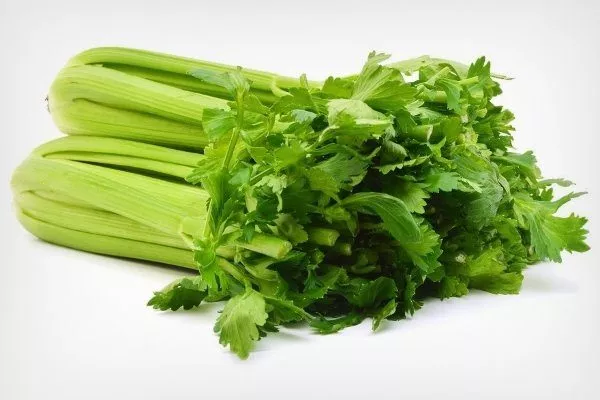
To determine the freshness of celery stalk, break the stalk - if you hear a crunch, the product is fresh.
Gold
A productive mid-season variety with excellent flavor and a strong aroma. The growing season lasts 160-170 days. Plant weight is 0.8 kg. The petioles are golden-green. Suitable for salads and cooking. The petioles retain freshness for a long time and can be frozen.
This is a self-bleaching variety. Yields 5 kg/sq. m. To ensure white and tasty petioles, the plant is earthed up in the second half of summer. Planting pattern: 60 x 30 cm. Sow in late February-early March. Transplant seedlings in the first half of May. Sow in open ground in the second half of spring.
Pascal
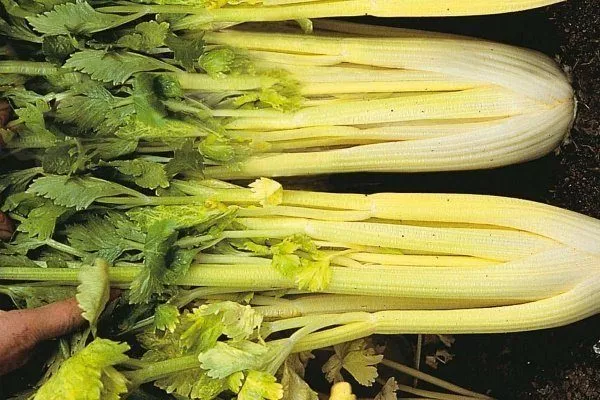
A mid-season variety. Requires bleaching. Ripens in 100 days. Yields up to 4 kg/sq. m. Plant weight up to 0.5 kg. Petioles are deep green, 20-22 cm long. They are eaten fresh, canned, and added as a spice to various dishes.
For seedlings, sow seeds in mid-March to early April. Planting begins in late May, when the plants have 5-6 leaves. The planting pattern is 35 x 40 cm. 3-5 kg of greens are grown per square meter. To improve the quality of the petioles, bleach them two weeks before harvesting, shifting them and wrapping them in paper.
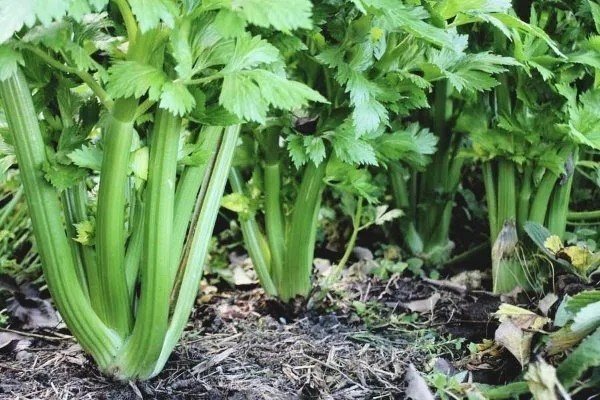
Triumph
A mid-late variety. Suitable for growing in open ground. Height up to 0.65 m. Leaves are 30 cm long. Petioles are emerald green, juicy, fleshy, with a delicate aroma.
Reaches technical maturity in 130 days. Yield: 4 kg/sq. m. The petioles are used in salads, soups, and various dishes.
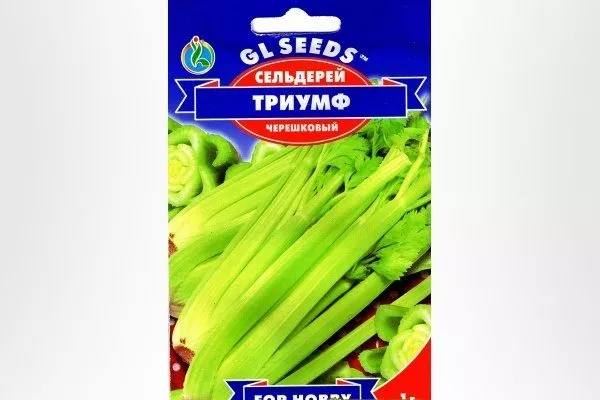
Tango
This is a productive, mid-season variety. The growing season is 170 days. The petioles are long, up to 50 cm. The color is bluish-green, and the pulp is free of coarse fibrous tissue. The plant weighs up to 1 kg. This variety is highly aromatic, retains its marketable appearance for a long time, and the flesh has an excellent flavor, is tender and juicy.
Requires watering, loosening, and fertilizing. Yields 2-4 kg/sq. m. Planted in wide rows, 45-50 cm apart. Seed depth: 0.5 cm. Resistant to low temperatures.
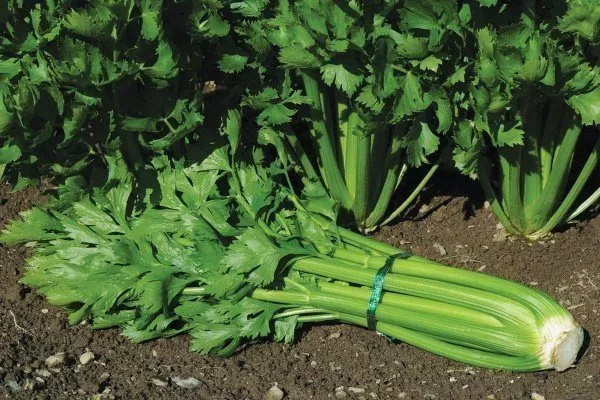
Anita
An Italian-bred variety. Quite tasty. The plant has an upright rosette, 60-65 cm tall. The petioles are green, very juicy and crisp, with an excellent aroma, and are not fibrous. One square meter can easily yield up to 3-4 kg of petioles.
The growing season, from germination to technical maturity, is 90 days. It is used as a seasoning for dishes, eaten fresh, and preserved. It retains its marketable appearance for a long time. The bush height is 30-60 cm. It is highly frost-resistant. Cultivation methods include both seedlings and direct-seeding.
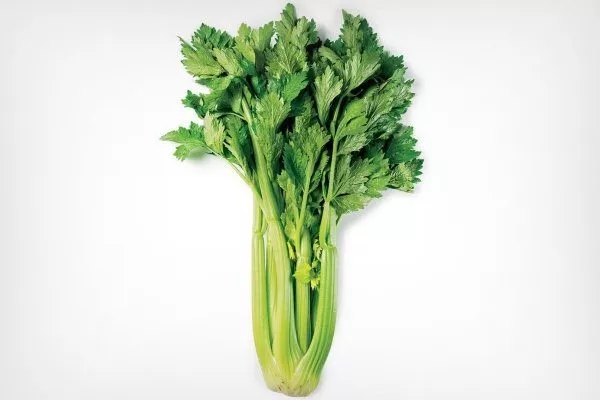
Celery is a superfood for weight loss. It contains a special type of fiber, and 100 g contains only 16 kcal. But most importantly, digesting celery causes the body to expend many times more energy than it receives.
Atlas
A mid-season variety. Ready for consumption in 160 days. The rosette is erect, 45 cm in diameter and 40 cm in height. The leaves are medium-sized, green, and glossy. The petioles are medium-sized, green, and slightly ribbed. The petiole weight per plant is 0.3-0.4 kg.
Cultivation: Seedlings. Requires bleaching to improve the flavor of the petioles. The petioles are wrapped in paper two weeks before planting. Yield: 2.8-3.3 kg per square meter. Planting pattern: 35x40 cm. This variety responds well to additional fertilizers: humus, manure, ash, and complex fertilizers. Mulching with humus is also practiced. The plantings are loosened and watered.
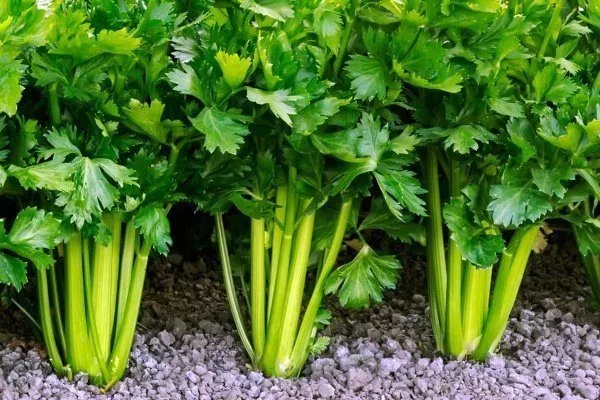
Male valor
An early-ripening variety. Ripening time is 150-165 days. The rosette is strong and upright. The leaves are medium-sized, green, and glossy. The plant weighs 0.75-0.8 cm. The petioles are thick, fleshy, light green, and aromatic. Petiole weight is up to 0.65 g. The plant length is 55 cm. It is eaten fresh, pickled, preserved, and added to salads.
Seedling planting pattern: 20x50 cm. Yield per square meter: 3.3-3.8 kg. Cultivated in open ground. Good marketability and excellent taste.
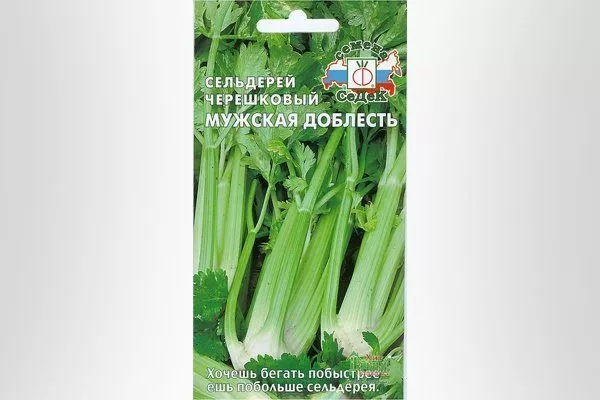
Sheet
These varieties lack massive roots or thick petioles. Their value lies in their vitamin-rich, aromatic leaves, rich in essential oils. The leaves are constantly renewed, from spring to fall. Read more about leaf celery. here.
| Name | Ripening period | Plant weight | Productivity |
|---|---|---|---|
| Kartuli | 60-70 days | 0.2-0.3 kg | 3 kg/sq.m |
| Vigor | 70 days | 0.2-0.3 kg | 2.4 kg/sq.m |
| Zakhar | 90 days | 2.4 kg/sq.m | |
| Gentle | 100 days | 3.2-3.5 kg/sq.m | |
| Samurai | 80 days | 0.65 kg | 3.8-4 kg/sq.m |
| Sail | 80 days | 3.3-4.9 kg/sq.m |
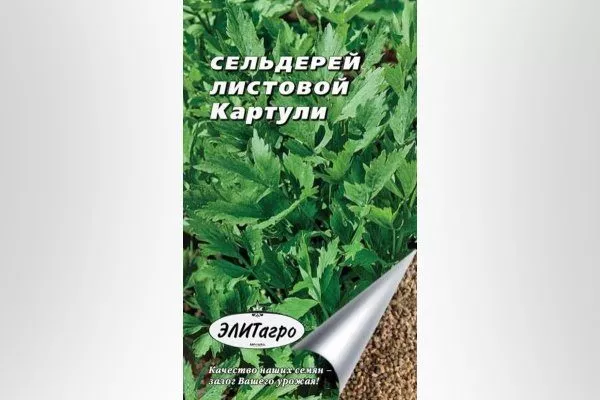
Kartuli
A mid-season Georgian variety. The rosette of leaves is medium-sized, semi-spreading. The leaves are a rich dark green. The leaves have a strong, spicy aroma. Ripening period is 60-70 days. They are consumed fresh and processed. The leaves are dried in shaded areas to prevent the essential oils from evaporating in the sun. Fresh leaves can also be stored in the freezer.
Standard care includes loosening, watering, and fertilizing. Yield: 3 kg/sq. m. High resistance to disease and bolting. Sow directly into the ground in May. Plant at a depth of up to 1.5 cm. Wide-row planting is used, leaving 60 cm between rows. The distance between plants is 10-15 cm. The harvest begins in mid-July, when the leaves have reached their full maturity. After 30 days, harvest again. The last time the leaves are harvested is in mid-October.
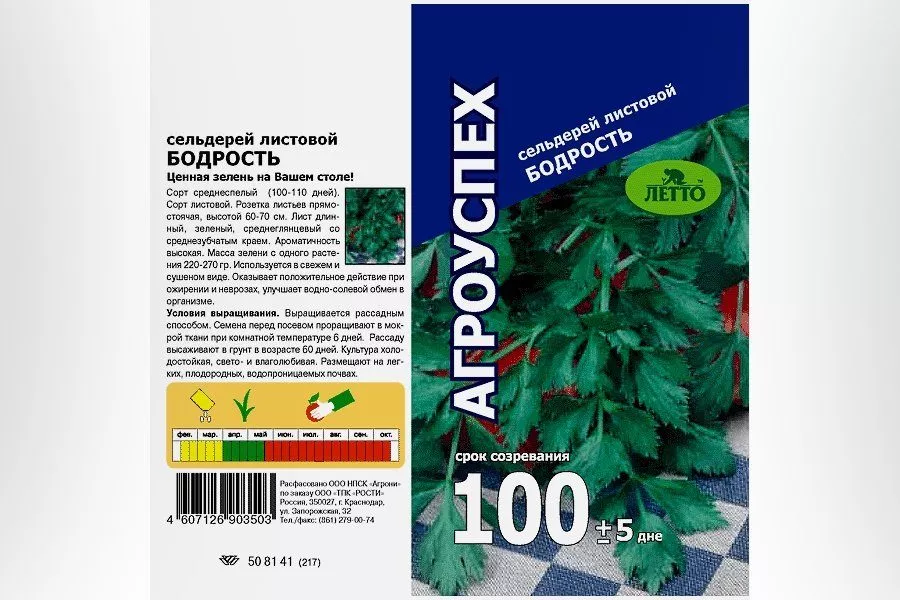
Vigor
A mid-season variety. The foliage has an intense, spicy aroma. It takes 70 days from germination to harvest. The plant has a robust rosette with deeply dissected, smooth leaves. It can be harvested several times during the summer. The leaves are versatile – eaten fresh and processed, dried, and frozen.
This variety is drought and cold resistant. Yields 2.4 kg/sq. m. Each plant weighs approximately 0.2-0.3 kg. Seeds for seedlings are sown in the second half of March. The seeds are planted 0.3-0.5 cm deep. Seedlings are planted at 40x50 cm spacing. It requires generous watering. Fertilize 3-4 times per season.
Zakhar
A mid-season variety. Foliage is ready 90 days after germination. The rosette has semi-upright foliage. It is distinguished by narrow, medium-length petioles. It has excellent flavor and is highly aromatic. Cut leaves regrow quickly. It is eaten fresh, canned, and used in cooking.
High yield – 2.4 kg/sq. m. Grown by direct sowing, seeds are planted 0.5 cm deep. Sow according to a 25 x 10 cm pattern. After the leaves emerge, thin out the seedlings. Thirty days after the first leaves appear, season the seedlings with table salt – 2-3 g per 1 sq. m.
Gentle
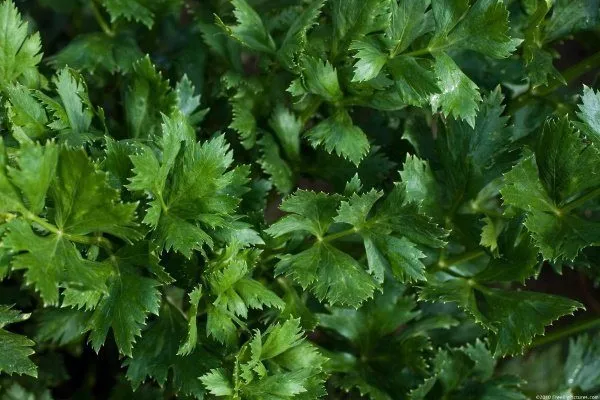
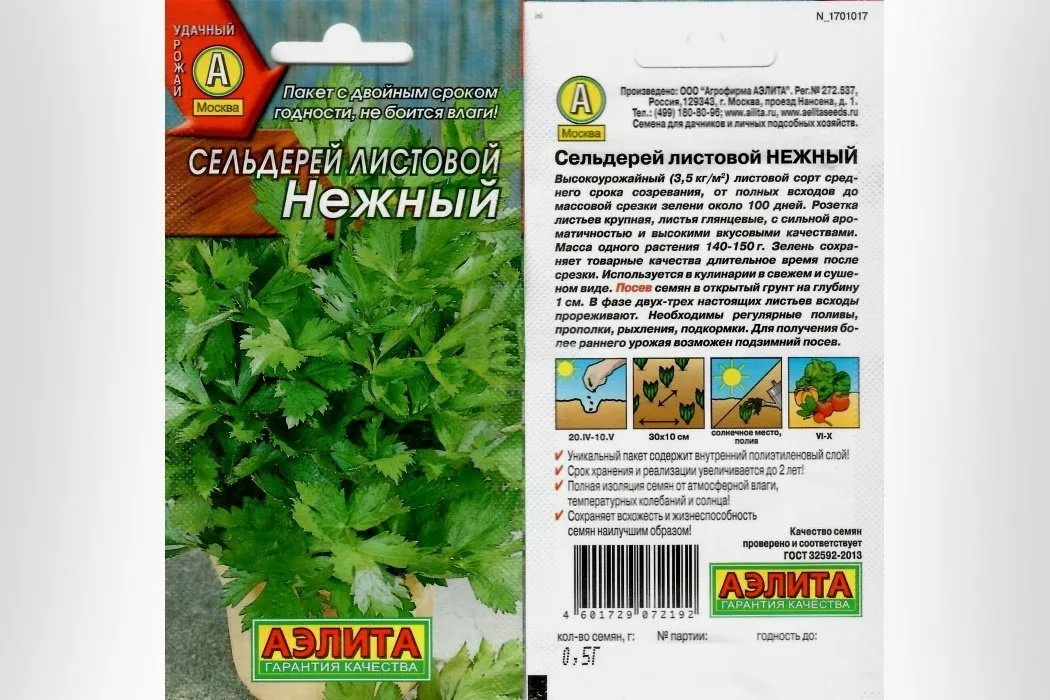
A mid-season variety. High yielding. Growing season: 100 days. Numerous lateral shoots. Dark green, slightly glossy leaves of medium length. Highly aromatic. Can be eaten fresh or dried.
The yield of 'Nezhny' is 3.2-3.5 kg/sq. m. It is distinguished by accelerated foliage growth after each harvest. Sow directly into unprotected soil. Timely thinning is essential. The maximum seed depth is 0.5 cm. The sowing pattern is 25 x 10 cm.
Samurai
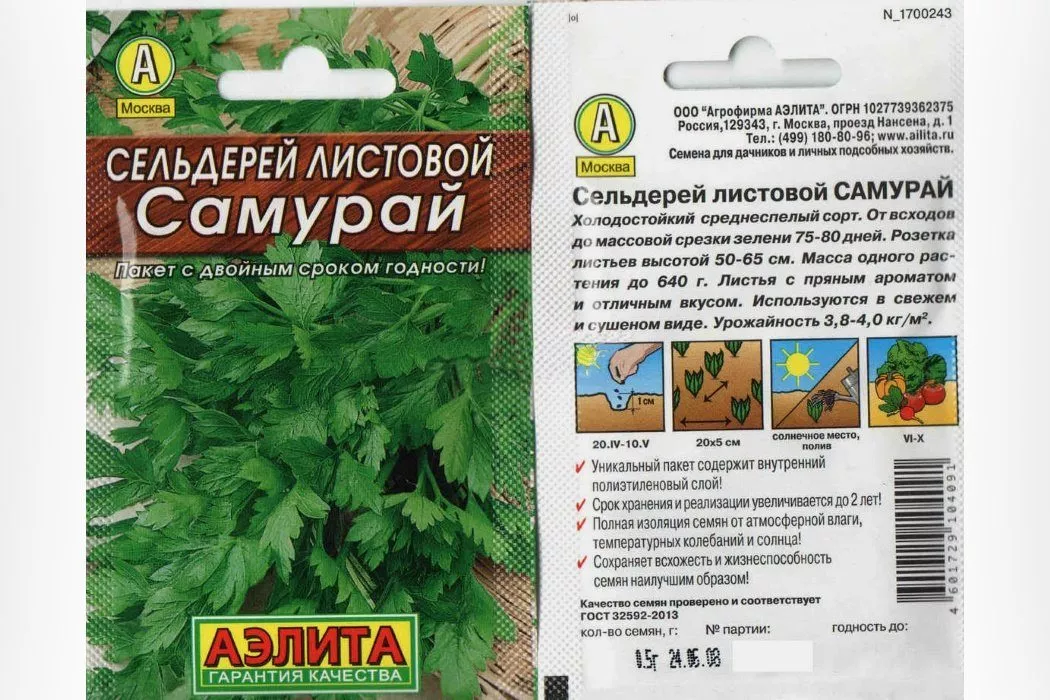
A mid-season variety with high cold tolerance. It takes about 80 days from germination to harvest. The rosette height is up to 65 cm. One plant weighs 0.65 kg. The leaves have a spicy aroma and delicious flavor. They are eaten fresh or dried.
The yield per square meter is 3.8-4.0 kg/sq. m. Sow seeds for seedlings, planting them 1 cm deep. Thin out the seedlings when they have 2-3 true leaves. The harvest is cut several times per season, fertilizing the plants each time. Sowing seeds at the end of October ensures an early start to greening.
Sail
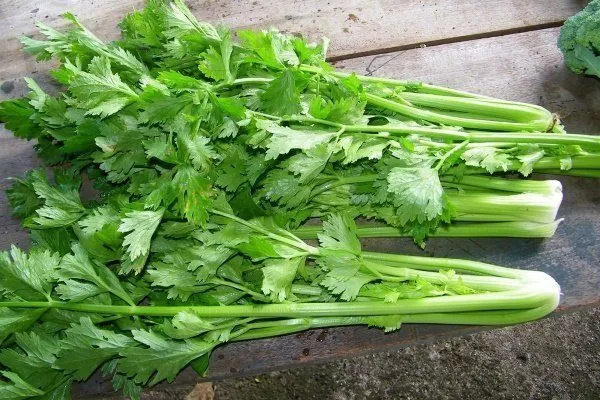
A mid-season variety. Ready in 80 days. The foliage is green and medium-glossy. The petioles are long, hollow, slightly curved, with slightly prominent veins. Excellent flavor and aroma. Can be eaten fresh or dried.
The greens yield 3.3-4.9 kg. They are resistant to leaf rot. Cultivation is from seedlings and direct sowing. The sowing pattern for open-ground cultivation is 25 x 10 cm. The greens retain their marketable appearance for a long time.
Celery's demanding care is more than compensated for by its bountiful yields. By planting this crop in your garden, you'll enrich your table with a valuable, vitamin-rich vegetable. Growing celery can also become a profitable business – its cultivation techniques are simple and accessible even to novice farmers and gardeners.