
Celery is known for its good cold tolerance. Its seeds don't freeze in winter and germinate much earlier in the spring. Planting celery before winter and caring for it during the growing season in early spring requires following certain guidelines.
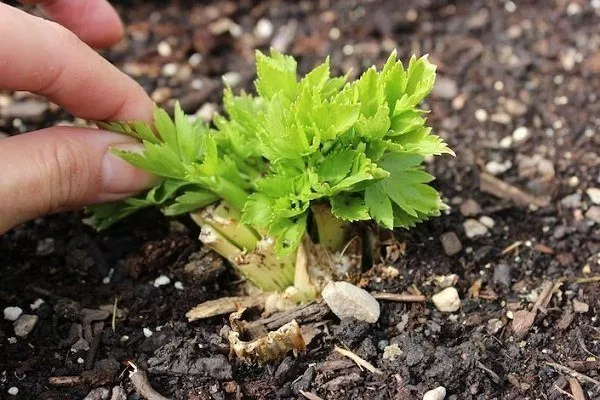
What kind of celery is suitable for winter planting?
| Name | Disease resistance | Soil requirements | Ripening period |
|---|---|---|---|
| Leaf celery | High | Light, loose | Early |
| Petiole celery | Average | Moist, fertile | Average |
| Celery root | Low | Deep, loose | Late |
Any celery can be sown before winter – sheet, petiolate, root, and this method is recommended for sowing root crops, as the crop has a fairly long growing season—5-6 months. Plants sown in the fall will emerge 2-4 weeks earlier, extending the growing season and yielding a larger harvest.
Planting dates
It's crucial to time the sowing correctly. The vegetable seeds must not have time to germinate before the onset of cold weather, otherwise they will die.
The optimal time to plant the crop is when daytime temperatures are low and nighttime frosts are avoided. In central Russia, this time occurs in October and November. Sowing can even be done in the snow if a thaw is expected soon.
It's convenient to sow celery together with parsley. These plants are related and share many similarities, including growing requirements.
Requirements for the site and its processing
Celery thrives best in open, sunny, south-facing areas with good heat and ventilation. Shaded areas near buildings or under large trees are not recommended.
The surface of the beds should be level, and they shouldn't be located in a low-lying area. This is extremely important for plants sown in the winter, as seeds can become waterlogged in damp, flooded areas.
The soil for celery should be nutritious, light, loose, and permeable. It should be prepared at least two weeks before sowing. First, remove all plant debris from the beds, then dig the soil and add 6-8 kg of compost per square meter, 10 g of phosphorus fertilizer, and 5 g of potassium fertilizer. Level the soil and leave it until the day of sowing.
Planting celery
Seeds for winter sowing are not treated or soaked; they should be dry. They can be pelleted or sown on tape. It's important to use fresh seeds, collected this year, as they have the highest germination rate.
The sequence of works is as follows:
- Make shallow furrows on the prepared area.
- Sow celery into the beds at a depth of 2-4 cm. You can sow more densely than in the spring, in case some of the seeds don't sprout. You can thin the plants out in the spring.
- The distance between rows (15-35 cm) depends on the variety and cultivar - leaf celery is sown more densely, root celery - less densely.
- Cover the furrows with a layer of soil or peat.
There's no need to water the beds. After all the seeds have been sown, be sure to cover them with at least a 5 cm layer of mulch. During snowless winters, you'll need to cover the celery with an additional layer of insulating material.
- ✓ Use only organic mulch (peat, humus, sawdust) in a layer of at least 5 cm.
- ✓ Check the weather forecast before mulching: expected thaws may cause seeds to germinate prematurely.
Caring for celery planted in winter during the growing season
In spring, as soon as all the snow melts, remove the winter cover immediately. The sun will warm the soil faster, and the seeds will begin to germinate.
When the soil has dried out slightly, loosen the soil for the first time. The plant generally prefers light, airy soil, so loosening the beds more frequently is necessary, especially for rootstock varieties.
Celery plants love moisture and need to be watered to keep the soil consistently moist. Without water, neither leaves nor roots will thrive. Water celery at the roots, being careful not to allow moisture to seep into the rosettes, which can cause rot.
Celery is fed 2-3 times per season with a fertilizer mixture of urea, potassium sulfate, and superphosphate. Use 1 tablespoon of each fertilizer per bucket of water.
Harvesting
Leaves are harvested once they reach 10-15 cm, and petioles, 20 cm. Harvesting continues throughout the summer. Root celery is harvested at the end of the growing season, when the roots reach the size typical for their variety. The timing of harvesting varies.
Store petioles and leaves in the refrigerator, and root vegetables in a cool, damp cellar. Only completely whole vegetables, free from damage, rot, or signs of disease, should be stored. They should be dried for 2-3 days beforehand.
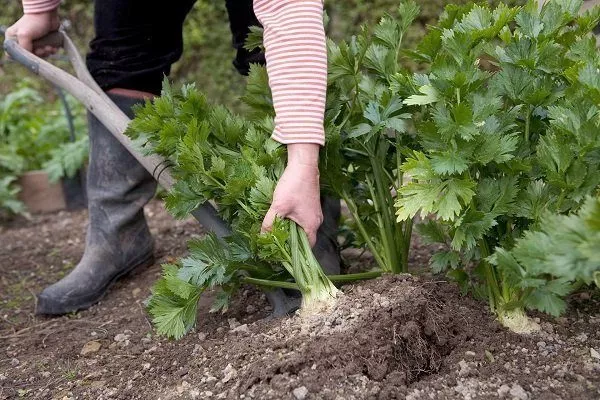
Celery can be sown in both spring and fall. Winter sowing is even preferable, as the seeds germinate earlier, resulting in stronger, fuller plants and a more bountiful harvest.