
Tender Celery is an excellent choice for those who want juicy and flavorful greens. Its excellent taste, rich vitamin content, and strong immune system make it the best choice for growing in garden beds. By following care and prevention recommendations, you'll be able to reap bountiful harvests.
Introduction to the variety
This petiolate and leafy variety offers high yields and is easy to care for, making it ideal for a variety of conditions. It has excellent flavor and aroma and is rich in vitamins and minerals.
Features of selection
Developed through collaboration between the Russian agricultural company Semko Junior and the Czech company Moravoseed, the variety was developed by breeders Horal Jiri, Yuri B. Alekseev, and Petr Klapste.
Description of appearance
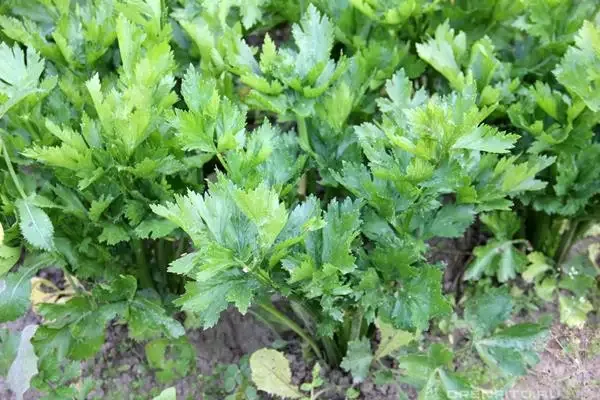
The plant has numerous shoots, reaching a height of up to 40 cm. It forms a large, semi-upright rosette of 30-80 medium-sized, dark green leaves with a moderate glossy sheen. The petioles are elongated and green.
Taste and application
Celery is characterized by its pleasant taste and vibrant aroma. It is rich in vitamin C, mineral salts, and carotene, making it a healthy addition to the diet.
The plant is consumed fresh and dried and is widely used in home cooking to prepare a variety of dishes.
When does it ripen?
This is a mid-season variety. It typically takes 100-105 days from sowing to full maturity.
Productivity
Up to 3 kg of aromatic greens can be harvested per square meter. Store the harvest in the refrigerator at 4 to 6°C, where it will stay fresh for up to two weeks.
Celery wrapped in plastic will last from 2 to 4 months, dried or frozen – up to 1 year, and pickled – up to two years.
Landing
Grow the crop using seedlings and sow from late February to early March. Step-by-step instructions:
- Prepare the planting material in advance: soak it in warm water for 10-12 hours (no more than 24 hours), changing the water every hour. Alternately soak it in water and then in a weak solution of potassium permanganate.
- Dampen the gauze and place the seeds in it. Leave for 24 hours.
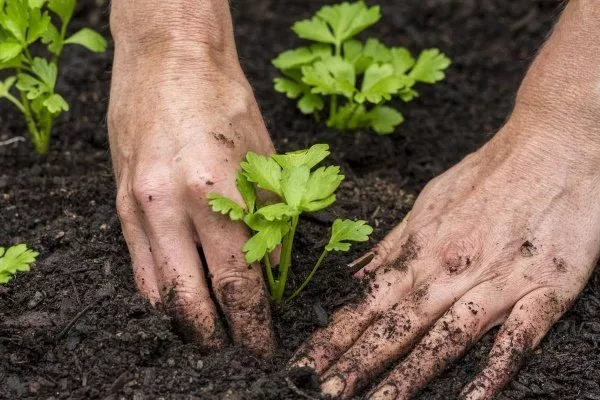
- Lightly bury the seeds in the prepared nutrient soil mixture (soil mixed with humus and sand).
- To create a greenhouse effect, cover the seedling containers with transparent film or glass.
- Plant seedlings in open ground from May to June using a 30x30 cm pattern.
- ✓ The optimal soil temperature for sowing seeds should not be below +10°C.
- ✓ The seeding depth should not exceed 0.5 cm to ensure good germination.
Prepare holes for the seedlings that are deep enough to accommodate the root system, then cover the plants with soil.
Care instructions
To ensure a bountiful celery harvest, it's important to follow basic care guidelines. Avoid allowing the top layer of soil to dry out. Water the soil once a week, using approximately 20 liters of water per square meter, irrigating only at the roots.
The frequency of fertilizing depends on the soil quality. Apply the first fertilizer 14 days after planting the seedlings, and the second 30 days later. To do this, prepare a solution: dissolve 15 g of ammonium nitrate, 20 g of potassium salt, and 40 g of superphosphate in 10 liters of water.
Disease incidence, pest hazard
Celery is susceptible to various problems. It's important to address them promptly:
- Celery fly. The pest often attacks greenery in late May, laying eggs on the leaves. To prevent this, follow crop rotation rules, lime acidic soils, thin out seedlings, and deeply till the area in the fall.
- Carrot fly. In spring, the insect lays eggs, which can damage crops. To protect plants, remove weeds promptly, fertilize, and regularly loosen the soil. In early June and August, sprinkle the soil between rows with a mustard-tobacco mixture.
The crop may suffer from cercospora leaf spot, a disease that manifests itself as the appearance of round spots with a red border on the leaves.
Preventive measures include treating seeds before planting, destroying weeds and spraying greenery with Fundazol.
Positive and negative qualities
Growing celery isn't difficult, but a new variety requires careful consideration. Nezhny has many advantages:
There is one drawback - the need for cultivation only through seedlings.
Reviews
Tender celery has gained popularity among gardeners due to its excellent characteristics. It is characterized by high productivity, excellent flavor, and ease of care. It is important to carefully study its features, including its benefits, growing requirements, and potential problems.