
The Diamant variety, developed by the breeding company, ensures high celery yields under a variety of weather conditions and cultivation methods. This variety is distinguished by increased resistance to the undesirable, early development of excessive stems and offers protection against many common diseases characteristic of this crop.
History of origin
In Russia, the cultivation of celery began in the 18th century. During the Soviet era, special attention was paid to root celery varieties, which led to the development of the Diamant variety. It was registered in the State Register in 1993.
Introduction to the variety
Diamant is a biennial plant with a large rootstock and minimal adventitious roots. This makes it ideal for gardeners, as it requires little effort to harvest. Diamant is also frost-resistant.
Diamant is a semi-spreading celery. Unlike other varieties, it lacks fleshy stems and long leaves, which lack the anthocyanin tint that gives them their distinctive aroma. Although this variety lacks a distinct aroma and is rarely used as a spice, it is prized for its large roots.
It is successfully and widely cultivated throughout Russia. It doesn't tend to grow green mass and is resistant to diseases such as septoria and rhizome. It stays fresh for up to a week indoors.
Description of appearance
The plant's top is low and only slightly branched. Despite its small size, the Diamant root's leaves effectively protect it from early spring frosts, allowing this variety to be planted even outdoors without fear of harvest losses at the end of the season.
Varietal characteristics:
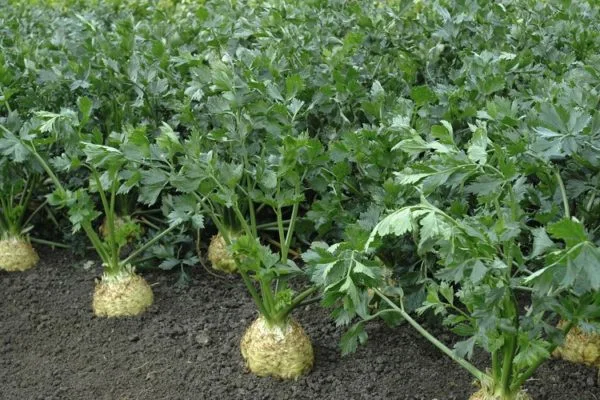
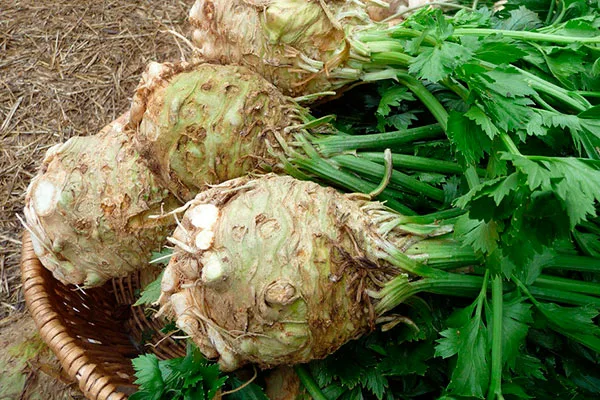
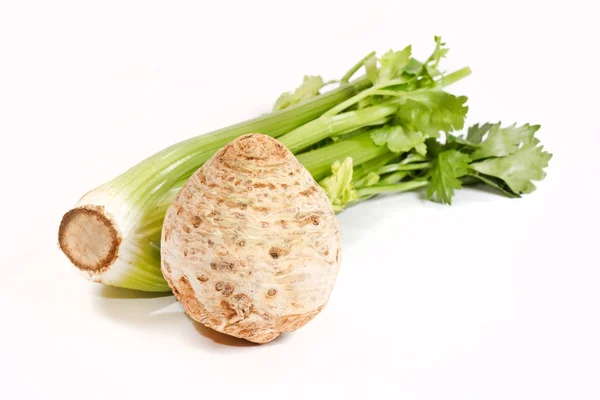
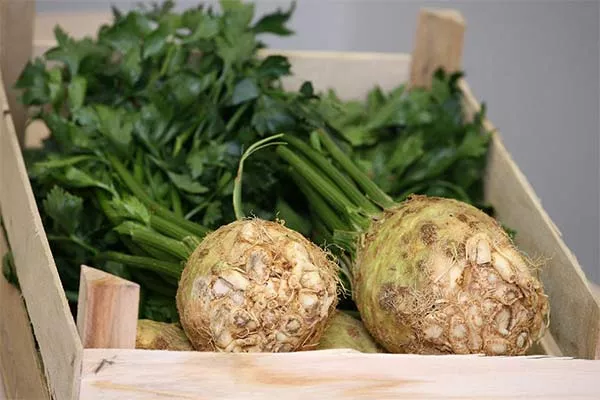
- The roots are round, half-exposed above the ground, and grayish-yellow in color.
- Like other celery varieties, Diamant has a taproot system. However, its distinguishing feature is the almost complete absence of lateral root shoots.
- The average weight of an edible root vegetable ranges from 200 to 1200 g, and the maximum recorded weight reaches 3 kg, provided intensive feeding.
- The Diamant variety is easily recognized by its leaves, which are firm and glossy. They are dark green and have a firm feel.
- Medium-sized petioles connect the foliage to the upper part of the root crop that protrudes above the ground.
- The fruit is grey, white or light yellowish, characterized by a bumpy, uneven surface and whitish, porous pulp.
- The length of the root crop can vary from 4 to 10-15 cm, and in diameter it can reach 10-20 cm.
Taste characteristics and application
Celery Diamant is a variety in which all parts of the plant are useful. The roots serve as the basis for a variety of dishes, and the leaves are used as an additive to culinary sauces and as an ingredient in traditional medicines. The cosmetics industry also requires the leaves and roots of this plant.
Ripening time and yield
Diamant is a mid-season variety. It takes approximately 150-165 days from planting to harvesting. This celery variety is considered one of the most productive: 10 kg of root vegetables can be produced per square meter of field in industrial production. When planted in home gardens, the yield is 2.8-5 kg.
Varieties with similar characteristics
| Name | Growing period (days) | Root shape | Pulp color | Resistance to flowering |
|---|---|---|---|---|
| Diamond | 150-165 | Rounded | White | High |
| Monarch | 170-180 | Rounded | White | Average |
| Albin | 140-150 | Rounded-oblate | White | High |
| Apple | 120-130 | Flattened | White | Low |
Diamant has several similar varieties that can be planted if you cannot purchase seeds of this celery.
- Monarch. The size and weight of this root vegetable rivals that of the famous Diamant. The Monarch's flesh is white but firmer. Unlike Diamant, Monarch darkens with increasing temperature. This variety is considered mid-late.

- Albin. This celery variety grows into large roots up to 12-14 cm long and 13-15 cm in diameter, weighing up to 1 kg. Albin is a mid-season variety.
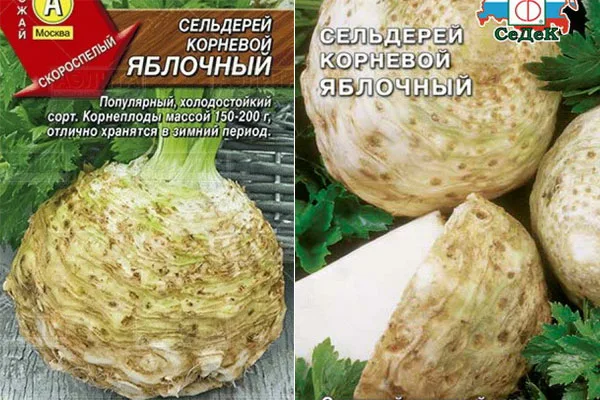
- Apple. The roots of this variety are slightly lighter than those of Diamant, weighing between 150 and 450 g. The shape of the Apple Celery root is not round, but slightly flattened. This variety is considered early maturing, making it suitable for growing outdoors without pre-sowing.
Basic rules of cultivation
The plant can be cultivated either by sowing seeds in open beds or by using seedlings. The latter option allows for a slightly earlier harvest, but this approach is not recommended for large-scale Diamant cultivation.
Preparing for landing
Despite its excellent frost resistance, it's preferable to grow Diamant using seedlings. This will reduce the time until the first green shoots appear by two weeks. After purchasing the seeds, sort them, retaining only those that sink to the bottom when immersed in warm water.
- ✓ Seed moisture content should not exceed 8% to ensure long-term storage
- ✓ Germination energy must be at least 85% to guarantee germination
- ✓ No mechanical damage to the seed coat
- ✓ Uniformity of color and size of seed material
Empty seeds won't germinate and can be discarded. Good seeds should be treated before planting. Seeds are coated with essential oil, which can hinder germination. To speed up the process, use bubbling:
- Place the seeds in oxygenated water for one day.
- Then soak in a light pink solution of potassium permanganate for 30 minutes.
- After this, immerse it in a growth stimulating solution for 18 hours.
- Next, the seeds should be washed.
Sowing and care
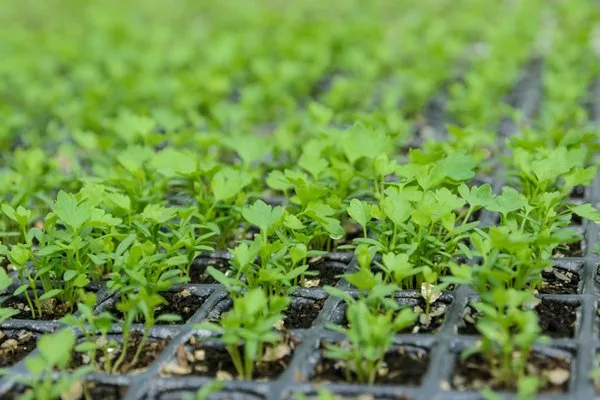
Sowing seeds for seedlings occurs in the last ten days of February. Please note a few nuances for this variety:
- First, prepare a mixture of leaf mold, humus or rotted compost, and peat, then scatter the seeds to a depth of 1.5 cm. Diamond seeds are very small, making them difficult to plant in rows, so scatter them randomly.
- To ensure germination, maintain the temperature between +17…+20°C.
- Two weeks after germination, you can begin transplanting. For this, you'll need a larger container with prepared soil. Make furrows in the soil using a pen or individual containers. Remove each sprout from the soil mixture using a tablespoon or teaspoon.
- Now the temperature should be reduced to +16°C, and after another week the seedlings should be moved to a glazed balcony, where they will be kept at +8…+10°C.
- Steam the mixture components at a temperature of +80°C for 30 minutes to disinfect.
- Add perlite at a ratio of 1:5 to the volume of soil to improve aeration.
- Add wood ash (100 g per 10 l of mixture) to normalize pH
- Moisten the soil to 60-65% humidity one day before sowing.
The roots of Diamant seedlings are particularly fragile and prone to damage. Therefore, it is recommended to water before transplanting to protect the root system.
Planting in open ground
When the seedlings reach 60 days of age, they are ready for transplanting into the garden. The diamond should have four to six leaves and a developed root system. Instructions:
- The distance between plants in a row is 30-35 cm, and between rows – 20-25 cm.
- For Diamond, it is important to sprinkle the prepared soil in the garden bed with a thin layer of sawdust to limit weed growth and make weeding easier.
- After planting, each plant must be watered generously.
- ✓ The length of the main root is at least 8-10 cm with well-developed lateral roots
- ✓ The thickness of the stem base at the root collar is 3-4 mm
- ✓ Internodes no longer than 1.5-2 cm for compactness of the plant
- ✓ Absence of etiolated (elongated) sections of the stem
Caring for a plant in open ground
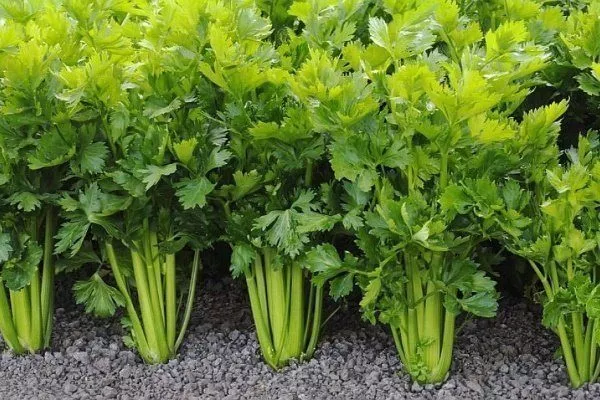
Caring for the Diamant celery variety involves maintaining an ideal soil moisture level around the plant, which should be around 55%. For efficient water use, a drip irrigation system is recommended, using 2 to 4 liters of water per plant per irrigation.
Celery does not tolerate rain or excess water, so it is enough to water it three times a week, especially in the absence of precipitation.
Other care measures:
- Adventitious roots that appear on the soil surface can be removed if desired. However, it's essential to remove any lateral stems that are leaning or not holding upright to ensure proper root development and prevent contact with the soil (this can lead to infection and rot during watering or rain).
- If the bed was fertilized during planting, no additional feeding is required. Otherwise, herbal or ash infusions can be used to enrich the soil.
During the initial stages of celery development, nitrogen mixtures such as urea are added to the soil. As the plant begins to form roots, nitrogen gives way to phosphorus and calcium. - To get rid of weeds, weeding is recommended every two weeks - this is the maximum interval.
- If the plantings are mulched, which is highly desirable, you can use wood shavings, leaf or grass waste, or dried plant compost with added peat. A 5 cm thick mulch provides shade for weeds, which slows their growth.
Moreover, it acts as a slow-release fertilizer: after being moistened, the mulch decomposes, enriching the soil with organic matter that plants quickly absorb. This also helps reduce the amount of watering by two to three times, which is especially valuable for summer cottage owners who can only use their gardens on weekends.
- Phase 3-4 leaves: foliar feeding with 0.1% urea solution
- Beginning of root formation: application of superphosphate (20 g/m²) with incorporation to a depth of 5-7 cm
- Phase of active root growth: potassium nitrate (15 g/m²) with watering
- 3 weeks before harvesting: stop all fertilizing to improve shelf life

Harvesting and storage
To harvest, dig up the plants and carefully remove any excess green matter and shoots that have recently appeared on the roots. Before storing the roots, dry the cut areas. It's important to ensure all green matter has been removed, otherwise it may sprout new shoots during storage.
A common recommendation for storing celery is to keep it at temperatures between 4°C and 10°C. Large celery should be stored separately and covered with vermiculite, sawdust, or sand. A dark room is required to preserve the vegetables.
Diseases and pests
Despite its relative resistance to infections, weakened immunity can lead to disease. Diamant celery root is susceptible to diseases and pests such as viral mosaic, blackleg, heart rot, white rot, slug attacks, whiteflies, carrot flies, and cutworms.
Prevention
First of all, it's important to remember that most Diamant diseases are transmitted by flies, slugs, and cutworms. Therefore, regular pest control is essential. To prevent unwanted consequences, it's recommended to follow a few basic rules:
- replant celery in a timely manner to avoid overcrowding;
- nourish plants to maintain their defenses;
- irrigate properly, avoiding over-watering of the soil, which can contribute to the development of rotting processes;
- Regularly treat plantings with biological preparations and a solution of potassium permanganate.
Struggle
To eliminate the problem, it is recommended to resort to the use of biological products. The use of chemicals can lead to poisoning, given that the leaves and roots of the Diamond plant are food products.
To protect plants from various diseases, you should use biological products such as Trichodermin, Fitosporin, Biofungicide Planriz, and in cold climates and high humidity, Fitodoctor.
For insect control, it is recommended to use plant-based insecticides. These include Bitoxybatsin, Fitoverm, Gapusin, and Lepidocide.
Positive and negative qualities
The Diamant celery variety can grow almost anywhere in Russia thanks to its ability to quickly adapt to local conditions. This variety boasts a number of advantages. However, despite these benefits, it also has some drawbacks.
Reviews
Diamant can be planted throughout Russia. It is highly frost-resistant, allowing it to thrive in areas bordering Siberia. Unlike other root celery varieties, Diamant does not form additional roots.