
Emerald Lace is the name of a mid-early, curly-leaved lettuce variety. It has won the hearts of Russian gardeners thanks to its high yields and excellent flavor, as well as its exceptional ornamental value. These plants, with their beautiful, lacy, rich green foliage, adorn not only vegetable beds but also flowerbeds, seamlessly pairing with a variety of flowers.
History of origin
The authorship of this variety belongs to the employees of the Scientific and Production Corporation NK LTD:
- Korochkina V. L.;
- To V. M.
In 2001, it was added to the Russian Federation State Register as a vegetable crop variety intended for cultivation in open ground and unheated greenhouses in several rotations per season, allowing for harvesting until the beginning of October.
Emerald Lace salad is successfully grown by summer residents and farmers in many regions of the country:
- Northern;
- North-West;
- Central;
- Volga-Vyatka;
- Central Black Earth Region;
- North Caucasian;
- Middle Volga;
- Lower Volga;
- Ural;
- West Siberian;
- East Siberian;
- Far Eastern.
Introduction to the variety
Curly-leaf lettuce belongs to the Butterhead cultivar. It is characterized by rapid growth and early ripening of the greens. The crop is ready for harvesting 42-45 days after germination. Under unfavorable growing conditions, the harvest period can increase to 55 days.
Emerald lace has many excellent technical characteristics:
- high yield - from 3 kg to 5 kg per 1 sq. m of salad planting, one plant produces from 365 g to 500 g of lacy greens;
- excellent cold resistance;
- the ability to withstand temperature changes;
- shade tolerance (plants are able to grow and produce crops even in poorly lit garden beds);
- resistance to diseases and pest attacks;
- lack of genetic tendency to stem formation and flowering.
Description of appearance and taste
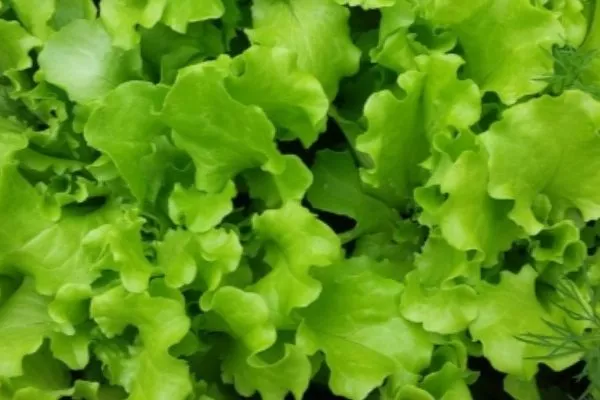
An experienced gardener can easily recognize a vegetable variety by the plants' elegant appearance and beautiful, lacy foliage. They are distinguished by their appearance:
- height - 25-30 cm;
- a powerful rosette structure, semi-raised, vertically directed, dense, consisting of a large number of leaves;
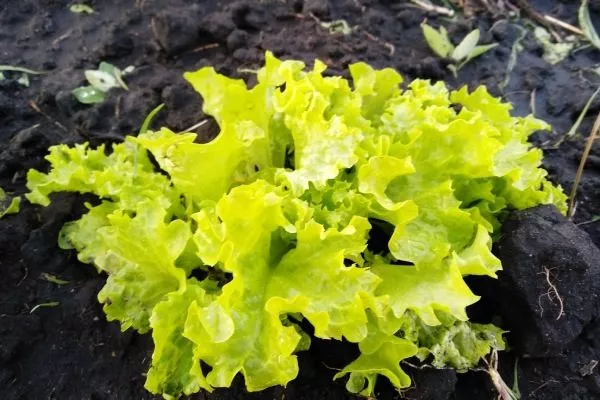
- Foliage: medium-sized, rich light green, with an oily (glossy) surface, strongly corrugated, the edges appear wavy-curly.
The highly decorative qualities of Emerald Lace bushes make them ideal for landscaping. A fashionable trend in recent years is the kitchen garden (vegetable garden), where curly lettuce is planted alongside flower beds, basil, oregano, and cherry tomatoes.
The taste of this variety of lettuce is excellent. Its leaves are crisp, juicy, have a delicate texture, and a slightly sweet flavor, without any bitterness. They contain many beneficial substances, including vitamin E (tocopherol).
The curly greens are harvested for fresh consumption. Housewives use them in cooking in the following ways:
- added to summer vegetable salads, in particular combined with other types of leaf lettuce.
- used to decorate appetizers, sandwiches, open sandwiches, and main courses.
Salad greens pair beautifully with baked vegetables, grilled meat and fish, sauces, herbs, and spices. They are torn by hand rather than chopped with a knife. The tastiest part of the cabbage is the inner leaves. Professional chefs avoid using the outer leaves and thick petioles.
Landing
Grow the Emerald Lace vegetable variety in one of two ways:
- direct sowing of seeds into an open bed;
- through seedlings.
- ✓ Optimum soil temperature for sowing seeds: +15°С.
- ✓ Seeding depth: 1-1.5 cm.
- ✓ Distance between plants: 25x25 cm or 25x30 cm.
Choose a sunny, shade-free, and draft-free spot in your garden for your lettuce planting. The soil should be loose, well-drained, neutral in pH, and fertilized in the fall. Lettuce grows well in both light and heavy soil.
Follow crop rotation rules to reduce the risk of pests and diseases and increase yields. Avoid growing this variety in the same location two years in a row. It grows best after vegetable crops:
- legumes;
- tomatoes;
- cucumbers;
- potatoes.
Sow curly lettuce seeds outdoors in the second half of April or in May. For germination, the soil in the bed should be at least 15°C. Before sowing, apply calcium ammonium nitrate (30-50 g per square meter). Till the soil with a harrow.
When sowing, follow the seed manufacturer's recommended pattern:
- 25x25 cm or 25x30 cm;
- seeding depth: 1-1.5 cm.
In the future, sow lacy lettuce once every 15 days until the end of summer (until mid-September, if the climatic conditions of the growing region allow it).
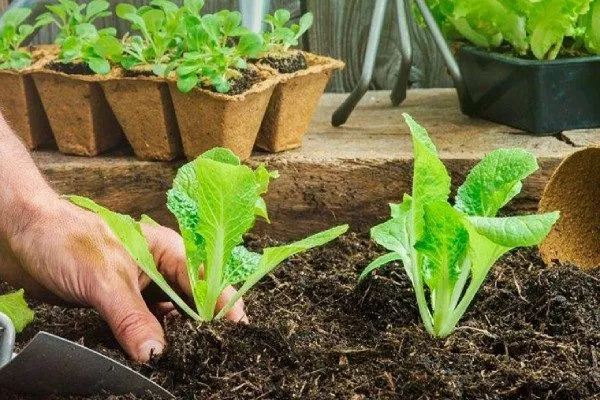
Grow the Emerald Lace variety using seedlings, sowing seeds in containers in the second half of March or in April. You can transplant the seedlings into the garden in May.
Follow these steps to sow seeds for seedlings:
- Fill the planting containers (boxes) with nutritious soil mixture. Water it.
- Make furrows in the soil, 1.5 cm deep, with 6-8 cm between rows.
- Sow the seeds in furrows. Cover them with soil mixture.
- Cover the seed trays with plastic film. Remove it after the seedlings emerge.
Lettuce seeds will germinate in 7-10 days if you provide them with a room temperature of 15°C to 22°C. A week after the sprouts appear, loosen the soil in the container. After another 7 days, thin out the seedlings. In May, transfer the seedlings to an open bed or an unheated plastic greenhouse.
How to care further?
Further care for this vegetable crop is straightforward. It consists of the following mandatory procedures:
- GlazeWater the salad bed according to rainfall. At the beginning of the growing season, moisten the soil under the bushes moderately. During the final stages of the growing season, water more thoroughly when planting Emerald Lace, but avoid waterlogging the soil. In hot weather, water in the evening or early morning.
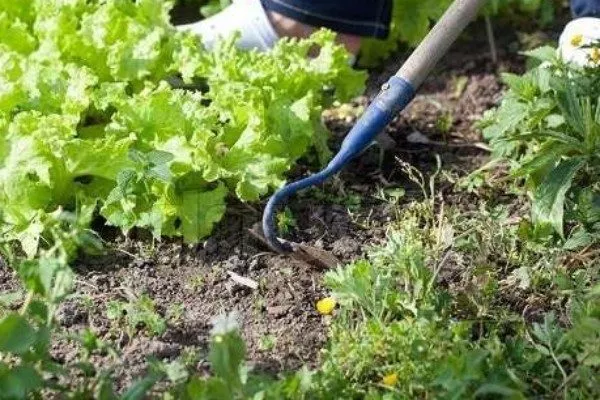
Apply water through furrows. Drip or sprinkler irrigation is also recommended. - Weeding and looseningThese measures help improve the structure of the garden soil, retain nutrients, and ensure unimpeded oxygen access to plant roots. Gently loosen the soil under lettuce plants. Do this after watering and rain to prevent a hard soil crust from forming.
Remove weeds as they appear in the garden bed. They create a favorable environment for the proliferation of pathogens and pests. - Top dressingThe best fertilizer for vegetable crops is organic matter (rotted manure or compost). Apply it in September, using 4-5 kg per square meter.
- For mineral fertilizers for curly lettuce, use nitrophoska. Apply 60-70 g per square meter.
Every week, feed the bed of greenery with complex fertilizers that have a high nitrogen content.
Positive and negative qualities
The Emerald Lace variety of greenery has become a favorite among domestic gardeners for its many advantages:
Reviews
Emerald Lace is an excellent variety of ruffled lettuce that even a novice gardener can grow. It's the best choice for those who love delicate salad greens rich in vitamin E. These plants require little care. They are very low maintenance, rarely affected by disease, and produce a bountiful harvest in any climate.