
Khrustik lettuce is a wonderful cabbage variety that will be appreciated by lovers of fresh greens. This lettuce is a great addition to any garden, cottage, or allotment plot. It's very easy to grow, making it a savvy choice for even the most inexperienced gardener.
Description of Khrustik salad
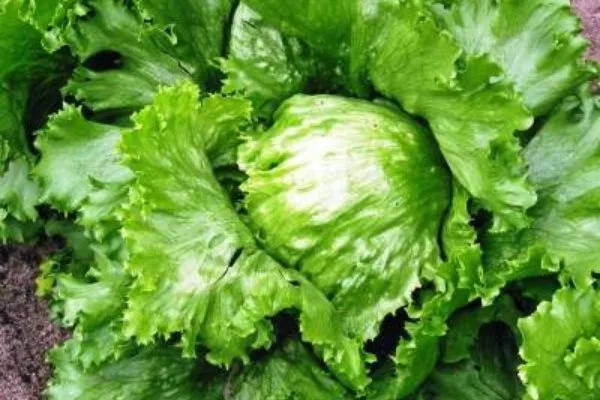
The plant has a semi-erect, semi-erect rosette and a closed head. The maximum head height is 22 cm, and its diameter reaches 30 cm. The head weighs approximately 220 g. The leaves are large to medium-sized, slightly blistered, dark green, and flattened and obtusely triangular in shape.
- ✓ Resistance to stem loss even with long daylight hours.
- ✓ Ability to maintain the crispy properties of the leaves even after harvesting.
The leaf edges are slightly wavy, with small notches at the tips. The head is round, smooth, and dense, greenish-white when cut.
History of creation
The Khrustik lettuce was bred in 2014 by breeders of the famous agricultural company Gavrish. Authors of the Khrustik variety: Gavrish S.F., Gavrish D.S., Tsiunel A.M., Tsiunel M.M., Baranov A.V. Read about other popular varieties here.
This head lettuce can be grown in almost all regions of the country, including the Northern, Far Eastern, Volga-Vyatka, West and East Siberian regions.
Taste and purpose
Khrustik lettuce is considered one of the tastiest among its competitors. Its leaves are crisp and have an excellent flavor, without bitterness or acidity, perfect for fresh greens.
Main characteristics
This is a late-ripening variety. It takes 85-95 days from germination to leaf ripeness. 3 to 3.5 kg of fresh greens can be harvested per square meter.
Lettuce Khrustik is recommended for growing in open ground and film shelters.
Pros and cons
Khrustik has quite a few advantages and practically no disadvantages. These are mostly related to growing requirements, so they can be considered relative. This is a truly successful variety that can be confidently recommended to any herb lover.
Pros:
Cons:
How to plant lettuce?
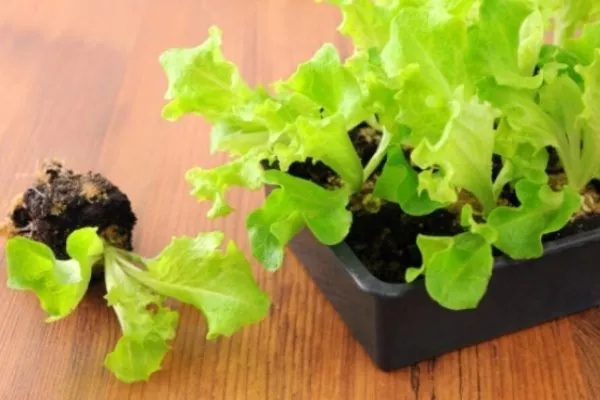
Khrustik lettuce is planted in a sunny, warm area, away from shade. It can be sown directly into the ground or started from seedlings.
- ✓ The optimal soil temperature for sowing Khrustik lettuce seeds should not be below +5°C.
- ✓ To prevent diseases, it is necessary to ensure good air circulation around the plants, avoiding their thickening.
How to plant lettuce:
- Seeds are sown for seedlings in March-April, and in open ground in April-May. The timing depends on the local climate. Seedlings are planted in May, after the threat of frost has passed.
- The optimal planting pattern is 30x30 cm. The planting depth is 1-1.5 cm. You can also plant lettuce in parallel furrows. Cover the planted seeds with soil and water.
- If the weather isn't warm enough, the crops are covered with plastic film. Once the seedlings emerge, the cover is removed.
- The soil in the area is pre-dug and fertilized with organic matter (compost, old humus, peat) and mineral fertilizers. If planting in heavy loam or clay soil, generous amounts of sand and peat are added during digging to promote lush growth.
Care Features
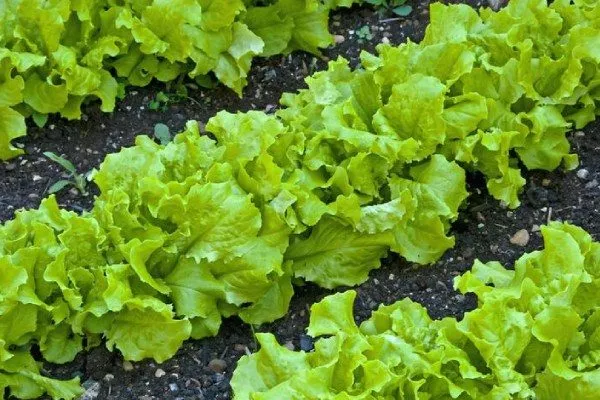
To get a good lettuce harvest, it's important to care for it properly. This crop requires watering, fertilizing, weeding, and loosening the soil.
How to care for lettuce:
- To ensure juicy, flavorful, and bitter-free leaves, lettuce needs adequate water. Water shortages are especially common in hot weather. In loose, well-drained soil, lettuce should be watered twice a day—morning and evening.
Lettuce can be watered at the roots or on the leaves. Sprinkling keeps lettuce leaves firm, fresh, and clean. However, it must be done carefully to avoid watering the heads. - After watering, the spaces between the rows are weeded and loosened to prevent the formation of a hard soil crust that would impede the flow of oxygen to the roots.
- Khrustik lettuce is a head lettuce, so it requires fertilization. This is especially important in poor, low-fertility soils. Liquid organic fertilizers, such as diluted mullein and wood ash and herbal infusions, are recommended. Concentrated mineral fertilizers, especially nitrogen-based ones, should not be used.
- Fertilizer is applied in the evening, simultaneously with watering. One to two additional applications are carried out per season, depending on the soil fertility and the condition of the lettuce.
Pest and disease control
Khrustik is resistant to stem loss and has a fairly high immunity to various diseases. Under unfavorable growing conditions and lack of care, plants can be affected by blackleg (which occurs with overwatering), gray or white mold, and downy mildew.
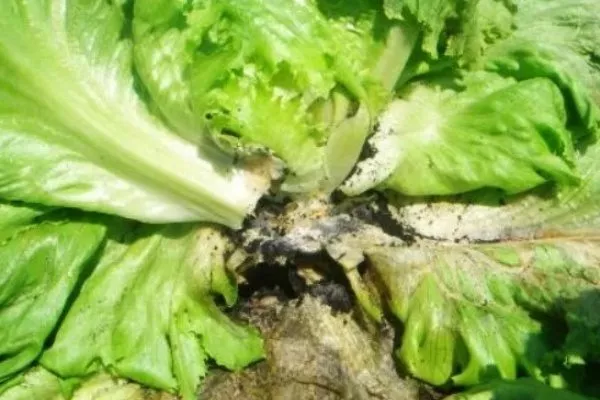
To combat lettuce diseases, mainly preventative measures are used:
- Maintaining proper watering regime. The soil should not be over-watered.
- Crop rotation. Cabbage or cucumbers are considered the best predecessors for lettuce. It is not recommended to plant lettuce after celery and parsley.
- Use of fungicidal preparations. Before sowing, the area is watered with Fitosporin or a solution of potassium permanganate.
- Thinning of seedlings. Excessive plant density and shade negatively impact lettuce growth and development. It is also recommended to remove damaged plants from the beds.
Harvesting and storing lettuce
The Khrustik variety, as befits this crop, grows very quickly and is prone to overgrowing. It's best to eat the lettuce leaves fresh; you can store them on the bottom shelf of the refrigerator for a while. If the lettuce overgrows, its leaves become rough and tough.
It's best to harvest lettuce in the evening or morning. Heads are removed from the ground or cut when they are firm. You can determine if the heads are ready by pressing them with your palm. When cutting, leave 2-3 flattened leaves and a 1-1.5 cm stalk.
At 0°C, the salad can be stored for at least 3 weeks. Optimal humidity: 96-98%. The salad can be kept fresh for a long time if stored in plastic or glass containers with lids.
Reviews
Khrustik lettuce is an ideal choice for lovers of fresh greens and cabbage varieties. This wonderful lettuce boasts excellent flavor and is very easy to care for and grow, making it a valuable choice for both inexperienced gardeners and those growing greens commercially.