
Dionysus lettuce is a good choice for gardeners who want to enjoy fresh, tasty leaves with minimal time and effort. Its resistance to bolting, high yield, and excellent flavor make it indispensable in the garden. With proper care and a little attention, you can produce a good amount of greens.
Who is the originator?
Developed in 2000 by R. A. Komarova and S. M. Strikunova at the Sortsemovoshch Agricultural Breeding and Production Enterprise, JSC, the variety is characterized by uniform plant growth and highly stable yields.
Description of the plant
This mid-season variety ripens in 32-35 days after germination. Seeds are sown outdoors in March. The crop thrives in both full sun and partial shade.
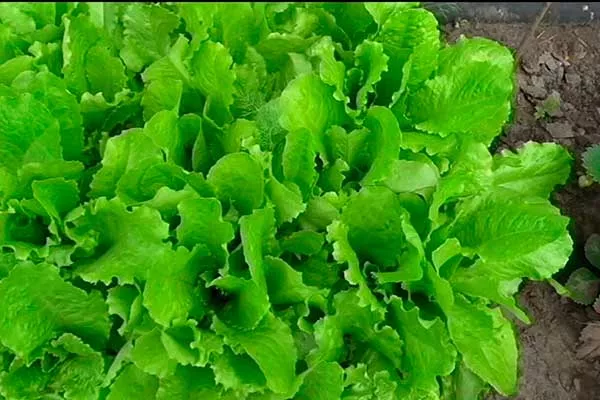
The lettuce is resistant to bolting and demonstrates stable yields, averaging 4.1 kg per 1 sq. m.
Features of appearance and taste
The plants form a semi-erect rosette with oblong-elliptical, entire green leaves with smooth edges. The weight of a single head ranges from 200 to 234 g.
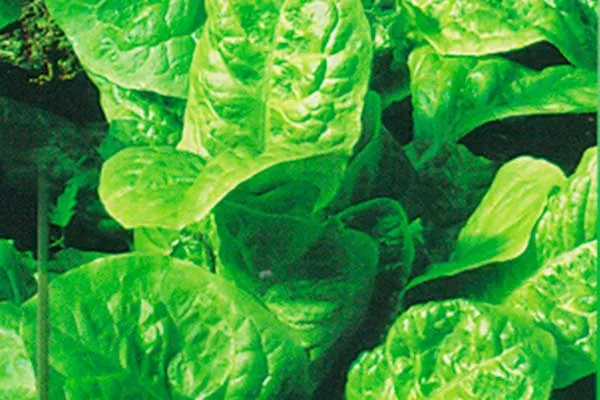
The salad has an excellent flavor and buttery texture, making it ideal for eating fresh.
Agricultural technology for cultivation and care
For successful cultivation, consider several important aspects. Follow these recommendations:
- The crop grows successfully in both sunny and partial shade areas. However, to obtain a high-quality harvest, choose a location where the plants will receive sufficient sunlight for at least half a day. The site should be protected from strong winds, which can damage the plants.
- Choose light, fertile, and well-drained soil with a neutral or slightly acidic pH (6-7). Prepare the soil in advance by digging it and adding organic fertilizers such as compost or humus. This will improve the soil structure and provide the plants with essential nutrients.
- Sow seeds outdoors starting in March. Plant them 1-2 cm deep in prepared rows, spaced about 20 cm apart. For more uniform germination and faster germination, soak the seeds in water for several hours before sowing.
- Provide regular watering, especially in dry weather. Avoid allowing the soil to dry out, as this can slow plant growth and reduce their quality. Water moderately, avoiding standing water in the soil, as this can lead to root rot. Water in the morning or evening when temperatures are cooler.
- The crop doesn't require much care, but regular attention will help ensure a stable yield. Regularly weed and loosen the soil to prevent competition from weeds and improve root aeration.
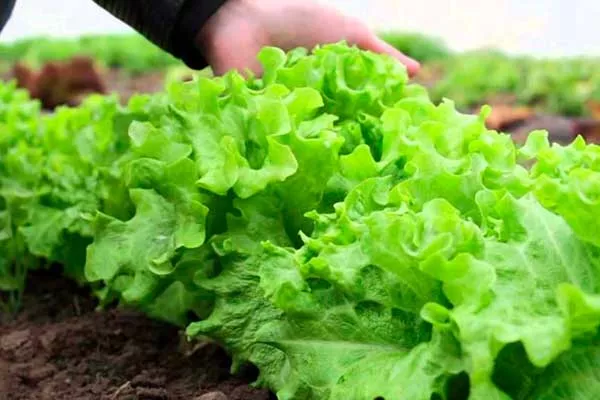
The crop has a strong immune system, but if agricultural practices are improper, it can be susceptible to diseases and pest attacks:
- Powdery mildew. White powdery coating on leaves, yellowing and tissue death.
Use fungicides - Topaz or Fundazol, regularly ventilate the greenhouse and remove affected parts. - Fusarium. Yellowing and wilting of the lower leaves, general slowdown in plant growth.
Apply Maxey fungicide, improve soil drainage and reduce moisture levels. - Black rot. The appearance of black spots on the leaves, which grow over time.
Treat the bushes with copper-containing preparations (Bordeaux mixture), improve growing and care conditions. - Aphid. Leaves curl, become covered with a sticky coating, and plants weaken. Spray with insecticides such as Aktara and Karbofos or folk remedies such as garlic infusion.
- Cabbage moth. The appearance of holes on the leaves and larvae on the back of the leaf.
Decis and Confidor insecticides are effective. Collect the larvae by hand. - Slugs. Damaged leaves with characteristic slime marks. Barrier agents (chalk, ash), bait, or special pest traps will help.
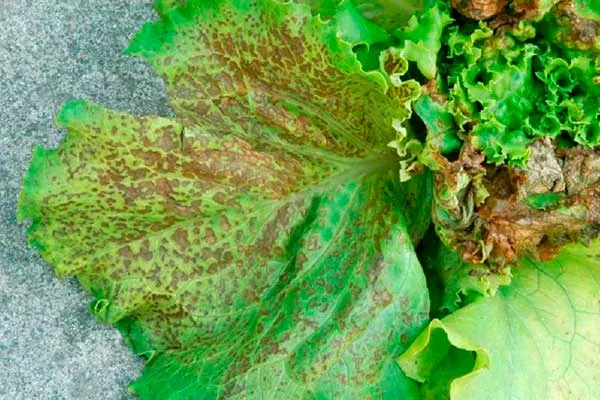
Dionysus lettuce is an unpretentious variety that, with proper care, will provide a good harvest with excellent taste.
Reviews
Dionysus lettuce is a popular leaf lettuce variety, appealing to gardeners for its ease of cultivation, early maturity, and pleasant flavor. It has a rich nutritional profile and is beneficial for the body when consumed regularly. Growing fresh greens is quite easy with simple care and a little TLC.