
Many people are familiar with the delicious and versatile iceberg lettuce, which is used in a variety of dishes. In this article, we'll cover the basic rules for planting, caring for, and protecting this crop, so even a novice gardener can reap a bountiful harvest.
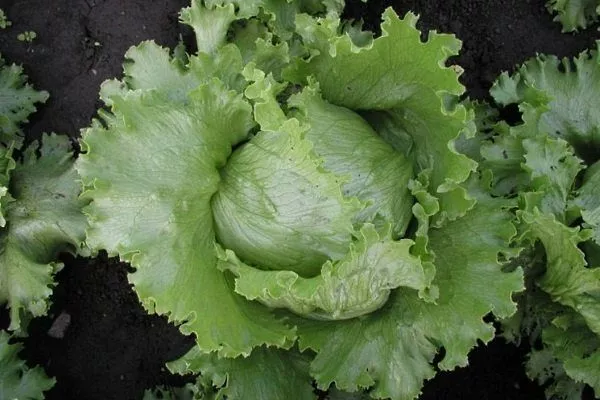
Iceberg lettuce
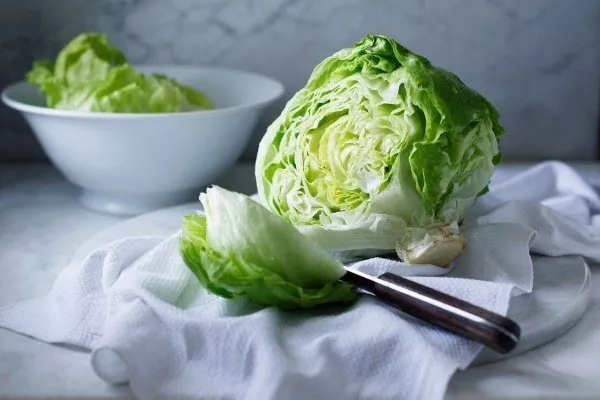
Regular consumption of iceberg lettuce helps improve blood composition and reduce salts in the body
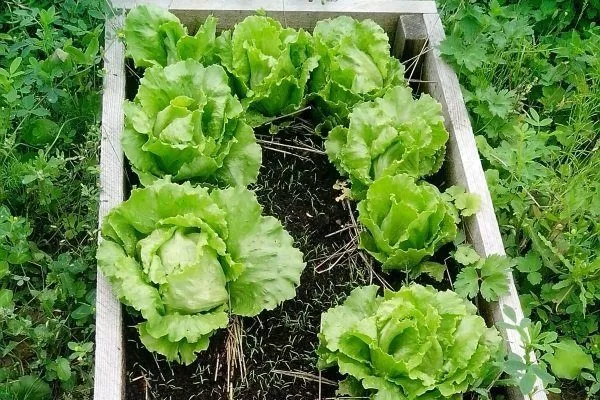
Iceberg lettuce is an incredibly tasty and healthy vegetable.
The origin of iceberg lettuce
Iceberg lettuce originated in the early 20th century in America. It was originally called "crispy lettuce" for its tender, crisp leaves curling into a head. To keep the lettuce fresh, an "ice cushion" was used—crushed ice was poured into the lettuce container. This led to the name "ice" being used for the lettuce, which later evolved into "iceberg."
Other names for it include ice mountain, ice salad, criphead, or ice salad.
Characteristics
Main characteristics of Iceberg lettuce:
- the leaves are whitish-green, tender and crispy;
- head of medium density;
- the weight of a head of cabbage varies from 300 g to 1 kg;
- the taste is not bright, sweetish, there may be a slight bitterness;
- used in salads, side dishes, when decorating appetizers and sandwiches;
- The dense leaves hold their shape well, so you can serve the finished salad in them.
Advantages and disadvantages
The advantages of the salad are:
- the leaves are dense and crispy;
- keeps longer than other salads - up to 3 weeks;
- has its own taste, unlike salad;
- The harvest can be collected from early spring to late autumn.
Flaws:
- requires a larger area to grow than leaf lettuce;
- susceptible to rot (there are resistant varieties);
- Snails and slugs are very fond of it.
Information about iceberg lettuce, from its benefits to storage, is presented in the video below:
Features of planting and growing from seeds
To ensure a continuous harvest, it is advisable to sow the seeds in several stages in the spring:
- the first 3 times sow every 2 weeks;
- summer crops - in a week;
- the last 2 visits - again with a frequency of 2 weeks.
Temperature conditions:
- it is preferable when the daytime temperature does not exceed +30 °C, and at night it does not exceed +18 °C;
- It is important to follow a 3-4 year crop rotation, with a 2 year interval required when growing Asteraceae.
Selecting a site for sowing
To ensure your salad produces healthy, even sprouts, it's best to follow a few rules when choosing a planting location:
- Choose light loamy soil with good structure and high humus content.
- Avoid acidic soils; neutral or alkaline soils are suitable. The optimal soil pH is 6-7.
- Neutralize overly acidic soil by adding dolomite flour, chalk, slaked lime, ash or peat.
- Adjust the location of your salad based on sun intensity:
- sow in sunny areas in spring and autumn;
- in summer - in partial shade to avoid the formation of flower stalks;
- Maintain crop rotation every 3-4 years.
- ✓ The optimal soil moisture should be 60-70% of the total moisture capacity.
- ✓ The organic matter content in the soil should be at least 4%.
Avoid growing lettuce in the same spot for several years in a row, and avoid sowing it after cruciferous vegetables. Good lettuce predecessors include vegetables such as cabbage, celery, and leeks, as well as grains, legumes, and potatoes.
Seed preparation
To ensure the quality of the seeds, it's best to purchase them from specialized stores. If the seeds aren't zoned and there's no guarantee of their quality, it's recommended to plant them more densely. If the seedlings emerge evenly, you can thin the rows or replant the plants.
Before sowing, prepare the seed material:
- Quality.To calibrate large and heavy seeds and separate the "empty" ones at home, soak them in a 3-5% salt solution and stir. After 15 minutes, collect and discard any seeds that float to the surface. Rinse the remaining seeds under running water, dry them, and then sow.
- GerminationTo test, wrap a pinch of seeds in a damp cloth and see how many sprout. Germinated seeds can be planted in soil.
- Disinfection.Soak the seeds in a 1% solution of potassium permanganate, rinse with running water after 10-15 minutes.
- Fertilizing and stimulating germination. Before sowing, soak the seeds in a nutrient solution such as Ideal, Epin, Zircon or another similar preparation.
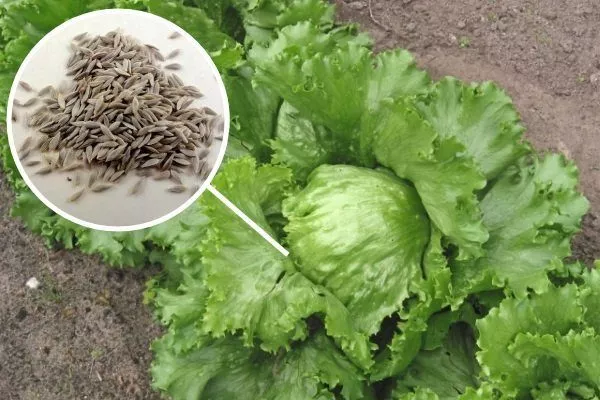
It is preferable to choose pelleted seeds - they are easy to sow, they are protected from various diseases and have a good germination rate.
Sowing seeds in open ground
Basic recommendations for sowing seeds in open ground:
- Grow lettuce in raised beds; they are warmed up by the sun earlier, allowing for a more even germination of seeds and an earlier harvest.
- Prepare the planting area in the fall: dig the soil to a depth of a shovel and add organic matter: a bucket of compost per 1 kg of wood ash and 3 tablespoons of complex mineral fertilizer per 1 sq. m.
- Prepare the beds for sowing starting in the first half of April, when the snow melts:
- loosen the soil thoroughly;
- cover with covering material or film so that the soil warms up well;
- If you covered the ground with film, it should be removed periodically for ventilation;
- when the outside temperature reaches 15-17 degrees Celsius (late May-early April), make furrows 3 cm deep in the beds every 40 cm;
- you can make rows according to the 30X20 or 30X30 cm pattern;
- compact the soil and water it.
- Sow seeds at a distance of 20-30 cm, covering with a 1 cm layer of soil. You can increase the seeding density by thinning the plants.
Sowing seedlings
Sowing for seedlings is carried out as follows:
- In pressed peat cubes, simply place the seeds on top and moisten, no need to cover with soil.
- In glasses, cassettes or special containers with cells:
- use store-bought soil or soil from the area where you plan to plant seedlings;
- fill the cups with soil, compact the soil;
- Sow 2-3 seeds in each glass to a depth of 1 cm.
- Special boxes with fertile soil - make small furrows and place the seeds in them:
- water and cover with film to retain heat and moisture;
- until seedlings appear (approximately 48 hours), try to maintain a temperature of 16-17°C;
- After the sprouts appear, increase the temperature to 25 °C.
By mid-May (3-4 weeks after sowing), when 4-5 true leaves appear and the seedlings reach a height of 8-10 cm, plant them outdoors. Harden off the lettuce 3-5 days beforehand by placing the seedlings outside in partial shade during the day. It's important to protect them from drafts, wind, and direct sunlight.
For the first two plantings, 8-9 week-old seedlings are planted outdoors. Once temperatures rise, younger plants can be planted – around 3 weeks old.
When planting in soil from cups, it is important not to disturb the root ball and root structure, then the plant will take root better and faster.
Transplanting seedlings
Planting seedlings into the ground is carried out in the following order:
- In the prepared bed, use a wide, pointed stake to make holes according to the following pattern: a row of holes every 40 cm, and within a row, the distance between holes is 20-30 cm. (Iceberg lettuce grows rapidly and requires sufficient space to form heads.)
- Water the holes and seedlings thoroughly. Remove the lettuce from the cups by gently pressing or tapping the container to carefully dislodge the soil ball. Immediately distribute the compressed peat cubes among the holes.
- Cover the seedlings in the holes with soil, burying the plants no more than 2/3 deep. The growing point should remain above ground.
- Press the plant lightly on all sides and water.
- Mulch with dry grass to retain moisture in the soil for a long time.
- At first, to protect against possible frost, cover the seedlings with film or cups made from plastic bottles.
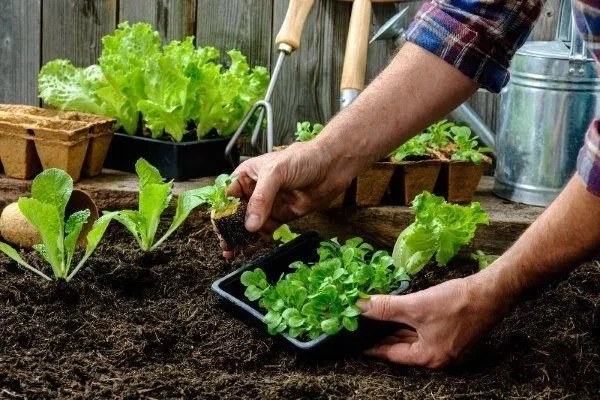
Maintaining the correct temperature is essential for the growth of firm heads of cabbage. If daytime temperatures are above 30 degrees Celsius and nighttime temperatures are above 18 degrees Celsius, head formation is difficult.
By planting seedlings of different stages of growth, you can spread out the ripening of the harvest; the larger and stronger shoots will ripen first, and the weaker ones will ripen later.
To improve plant survival, it is recommended to "wash" the peat cubes; this is especially important in hot weather and when there is poor contact between the pot and the soil.
Winter sowing
Sowing is done at an ambient temperature of +1 to +3°C at a depth of 1-1.5 cm. The advantage of this sowing is that the lettuce ripens 10-15 days earlier in the spring. The resulting lettuce is larger and stronger than that sown in the spring.
But there's a downside: the risk of some seeds freezing. Therefore, when sowing lettuce in winter, sow it 1.5-2 times thicker, then cover the bed with a covering material, peat, dry grass, or fallen leaves. When the weather warms up in the spring, the covering is removed.
Subtleties of care
To grow tasty and healthy iceberg lettuce, it's crucial to properly and regularly care for the seedlings. Watering, fertilizing, and weeding are especially important, as a lack of nutrients or an overgrowth of weeds will negatively impact lettuce growth.
- Loosen the soil every 7-10 days to ensure oxygen reaches the roots.
- Remove weeds by hand every week to prevent competition for nutrients.
- Check plants for signs of disease and pests every 3-5 days.
Watering
The plant requires moisture and watering. The following recommendations should be followed:
- Water the plantings regularly and moderately.
- Water thoroughly once a week or every other day, depending on the weather.
- If the soil is too dry, the heads of cabbage will not form well, and if it is too wet, there is a risk of rot.
- To prevent rot during the hot period, in the last week of crop growth, it is advisable to water at night.
- As soon as the ovaries form, reduce watering.
Watering options:
- sprinkler irrigation:
- the need for watering is determined by the condition of the plants and taking into account weather conditions;
- water may splash dirt onto the leaves;
- drip irrigation:
- water consumption is reduced;
- moisture is distributed more evenly;
- the ability to supply fertilizer to plants through irrigation;
- the likelihood of developing diseases decreases;
- the purity of plants is maintained;
- more labor intensive compared to sprinkling;
- the ability to use mulch and cover.
Top dressing
For good growth and a beautiful marketable appearance, lettuce requires additional feeding:
- Feed the plants twice: before sowing and during head formation;
- combine fertilizing with watering;
- add organic matter: a solution of mullein or bird droppings (1-2 tablespoons per 10 liters of water);
- To prevent brown veins from appearing on leaves, provide calcium.
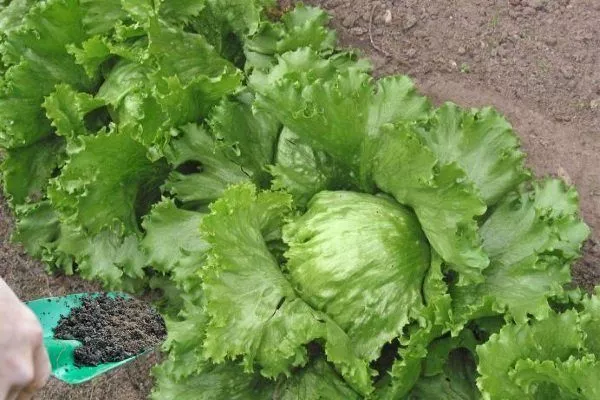
Autumn liming of the soil and regular foliar calcium feeding are ideal.
Shelter
Features of using covering material:
- Cover the salad immediately after planting in the ground;
- control the temperature at +20 degrees, remove the covering material;
- ventilate plants regularly;
- On hot summer days, cover the salad with agrofibre to protect it from the scorching sun rays.
Weeding and thinning
When caring for lettuce, you must follow these rules:
- The first loosening of the soil should take place one month after sowing, and weeding should be done at the same time.
- Loosen the soil shallowly, as the roots of the lettuce are located almost at the surface.
- Plantings that are too dense and close together encourage diseases and make it difficult for the head to form:
- the first time, thin out the plantings in the phase of one true leaf, leaving shoots every 4-5 cm;
- the second time - when 6-7 true leaves appear, leaving the plants 20-10 cm apart.
- If the plants are planted too sparsely, there is a risk of contamination of the lettuce when watering.
Why are there no ovaries on the heads of cabbage?
Sometimes, even with proper and regular care of the plantings, it is not possible to get a good harvest, since there are no heads of cabbage.
This can happen for several reasons:
- insufficient watering;
- planting lettuce in the shade;
- low temperature, up to 19 °C;
- too high temperature, more than 25 °C;
- insufficient number of sunny days;
- very dense or untimely thinned plantings.
Harvesting and storage
The heads ripen approximately 45-90 days after sowing. When they reach 5-10 cm in diameter, the lettuce is ready to harvest.
Conditions for proper harvesting:
- Collect early in the morning before it gets hot;
- choose heads of cabbage of medium density for cutting;
- use a sharp knife;
- Immediately after collection, pack in a plastic container or bag, wrap in a damp cloth and refrigerate;
- in hot weather, harvest after 40 days, in cold weather after 70;
- Store in the refrigerator for up to 7 days at a temperature of +3-5 degrees.
Even after cutting, the lettuce continues to grow; new ovaries form at the cut site near the root collar, one of which can be left for further growth.
Diseases and pests
General recommendations for prevention:
- remove and destroy all plant debris;
- treat all potential sources of infection in a timely manner;
- clean and disinfect equipment and machinery;
- predict the flight of pests and set traps in time;
- observe crop rotation;
- observe storage conditions;
- choose varieties that are as resistant as possible to diseases and pests;
- Do not plant in areas where the infectious agent has previously been detected.
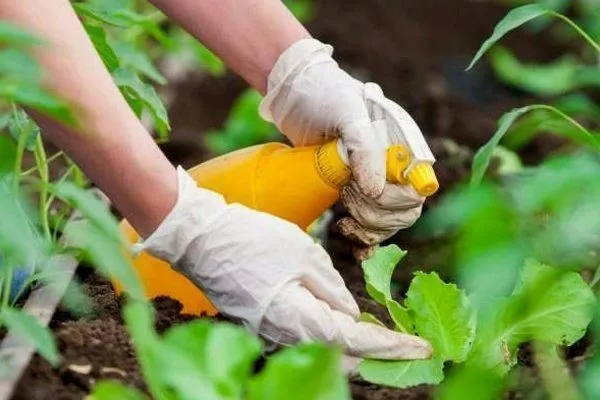
Like any other garden crop, iceberg lettuce can be attacked by pests and various diseases.
| Pests | Control measures |
| Snails and slugs | "Thunder" product. Granules are placed in areas where pests congregate. |
| Mice | They use mousetraps and rodent poison. |
| Insects:
|
|
| Diseases:
|
|
| Blossom end rot | It occurs in stems due to a calcium deficiency. To prevent this, spray the plants weekly with a calcium nitrate solution: 100-150 g of nitrate per 12 liters of water. |
Gardeners' Reviews of Iceberg Lettuce
Iceberg lettuce is increasingly gaining popularity thanks to its large, crisp heads. Its easy care, ability to harvest throughout the summer, and good storage qualities make it a popular choice for planting.