
Victoria is one of the most delicious and juicy rhubarb varieties. This variety is resistant to cold and frost, diseases, and pests. It is recommended to grow it exclusively in open beds. Although it is considered an early ripening variety, stems should be cut repeatedly throughout the growing season.
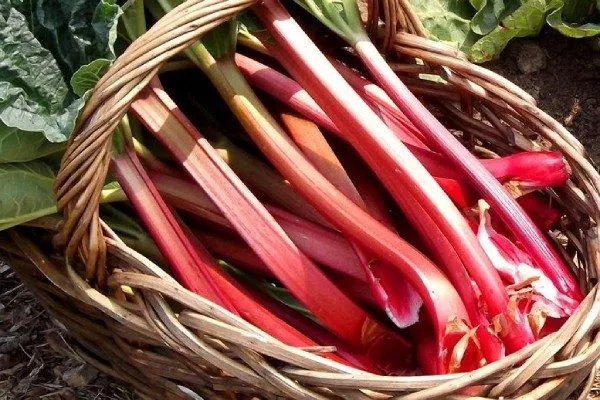
Description and characteristics
This variety is an excellent choice for those who love plants that are easy to grow and resistant to low temperatures. It thrives in a secluded spot in any corner of the garden, eventually growing into a large clump.
Peculiarities:
- It is distinguished by its early maturity; the period from the beginning of growth to the moment when the petioles become suitable for use is only 35-36 days.
- The first fruiting begins 3 years after sowing the seeds.
- The leaves of this plant form a semi-upright rosette. They are large, ovate, slightly tuberculate, bright green, and have a strongly wavy edge.
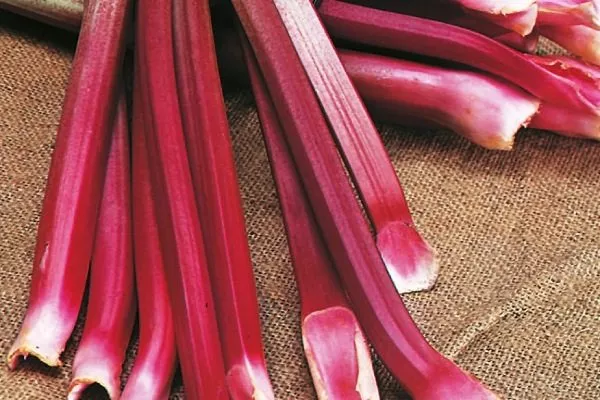
- The petioles are medium-length, also green, with cherry anthocyanin at the base and green-toned flesh.
- It is used both for fresh consumption and for canning.
Landing features
Victoria rhubarb is planted from seed. The plant prefers a location with bright sunlight or partial shade. It requires moist but well-drained soil with plenty of organic matter.
- ✓ Check the soil pH before planting, the optimal level for Victoria rhubarb is 5.5-6.5.
- ✓ Make sure the area is not prone to standing water, even if the soil is well drained.
Subtleties of planting work:
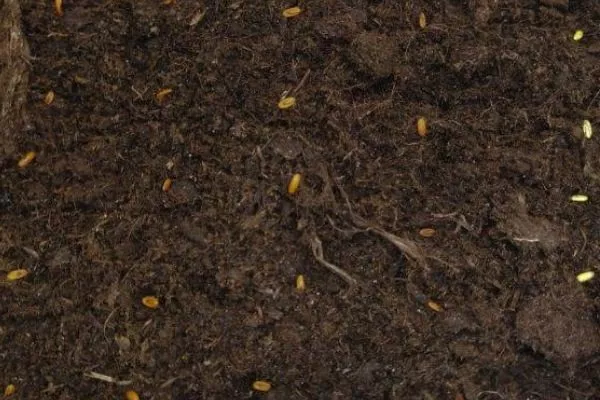
- To plant, the seeds are first soaked in room temperature water until they swell, after which they are placed in damp pieces of gauze or thin cotton fabric.
- Periodically moisten with water from a spray bottle. It's important to keep the planting material in a humid environment at all times.
- When small whitish shoots 1-2 mm long begin to form from the seeds, they are dried and placed in a moist soil mixture.
- They are sown in late April or early May, using the row method with an interval of 25-30 cm between rows.
- The depth of the bookmark is 2-3 cm.
Care and cleaning
Maintenance procedures are standard: weeding and periodic soil loosening are necessary to ensure the root system receives sufficient fresh oxygen. Other steps include:
- In early spring, dig up the areas between the rows. Add organic fertilizers and mineral complexes designed for rhubarb.
- To extend the fruiting period, you need to cut off flower shoots.
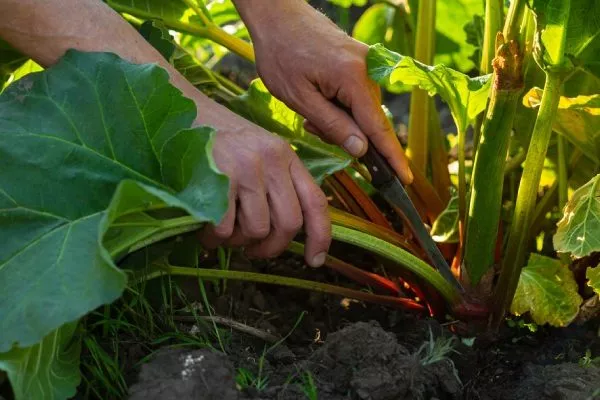
- The first harvest is cut with a sharp knife in May or June, depending on the weather and climate. The optimal stem height for cutting is 30 cm, and the diameter is 2 cm.
- It's important to pay attention to watering. By irrigating your rhubarb plot, you'll improve the quality of your harvest and extend the harvest time.
- When cutting green foliage, remove the petioles immediately when the plant begins to grow. Don't wait until the stems become very thick, as medium-sized petioles have a milder and more aromatic flavor.
- Avoid pruning more than 2/3 of all the plant's shoots at once.
- After harvesting, be sure to remove the leaves, as they contain significant amounts of oxalic acid and can be toxic.
- In autumn, it is necessary to cover the bushes to ensure better wintering of the plant.
Application
Victoria rhubarb is a versatile variety. It's used to make vitamin-rich salads, preserves for the winter, and main and first courses. Thanks to its juiciness and surprisingly slightly sweet flavor, the stalks can be used to make jam, compote, and jelly.
Reviews
Victoria rhubarb is renowned for its unique flavor, vibrant aroma, excellent juiciness, and marketable appearance. Gardeners appreciate its ease of planting and care, adaptability to any climate, and its potential for use in everything from simple salads to exclusive main courses and even beverages.