
Rhubarb has different flavors, ripening times, and appearance depending on the variety. There are approximately 30 known varieties of this crop, including both ornamental and edible specimens. When choosing a rhubarb variety, consider its intended purpose.
| Name | Disease resistance | Soil requirements | Ripening period |
|---|---|---|---|
| Victoria | High | Fertile, well-drained | Mid-season |
| Ob | Average | Moderately fertile | Mid-season |
| Leader | High | Fertile, well-drained | Mid-season |
| Candied | High | Fertile, well-drained | Mid-season |
| Altai Dawns | High | Fertile, well-drained | Early ripening |
| Red Late 34 | High | Fertile, well-drained | Late-ripening |
| Robin | High | Fertile, well-drained | Early ripening |
| Tukumsky 5 | Average | Moderately fertile | Mid-season |
| Ogre 13 | High | Fertile, well-drained | Mid-season |
| Moscow 42 | High | Fertile, well-drained | Mid-season |
Victoria
This rhubarb variety is considered one of the tastiest—and therefore most popular among gardeners—of all rhubarb varieties. It is considered a table rhubarb. The plant's petioles are used both fresh and for canning. The Victoria rhubarb variety is suitable for growing in all regions of the country.
- ✓ Consider the climatic conditions of your region to select the most resistant variety.
- ✓ Pay attention to the purpose of cultivation: ornamental varieties or for food consumption.
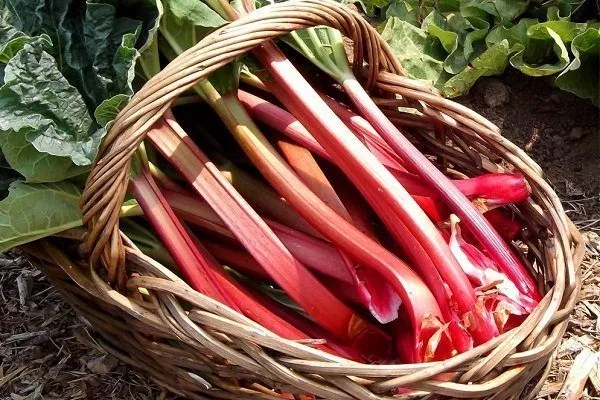
Specifications:
- petiole length – 50-70 cm;
- average petiole weight – 25-80 g;
- taste – pleasant, slightly sour;
- yield during the growing season – from 2 to 4.8 kg per 1 sq. m;
- mid-season variety: the first harvest can be collected 30-35 days after emergence.
Advantages of the variety:
- high yield due to rapid petiole growth;
- resistance to low temperatures;
- ease of care.
Ob
A perennial with tender flesh, the fruits of which are used for processing, making jams, and compotes. This variety is suitable for cultivation throughout Russia.
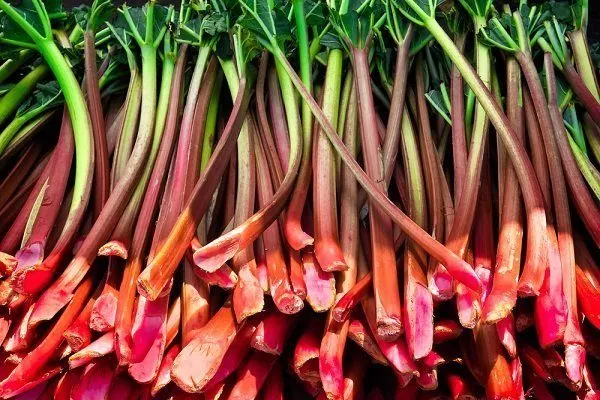
Specifications:
- petiole length – 22-23 cm;
- average weight – 44-84 g;
- taste – sweet and sour;
- the yield is small – 1.6-2.1 kg per 1 sq. m;
- mid-season variety: technical maturity occurs 30-39 days after the emergence of full shoots.
Advantages of the Obskiy variety:
- frost resistance;
- high decorative qualities;
- resistance to waterlogging.
Leader
This perennial rhubarb variety produces thick, very juicy stalks with tender flesh. They are suitable for a variety of dishes, including desserts and compotes.
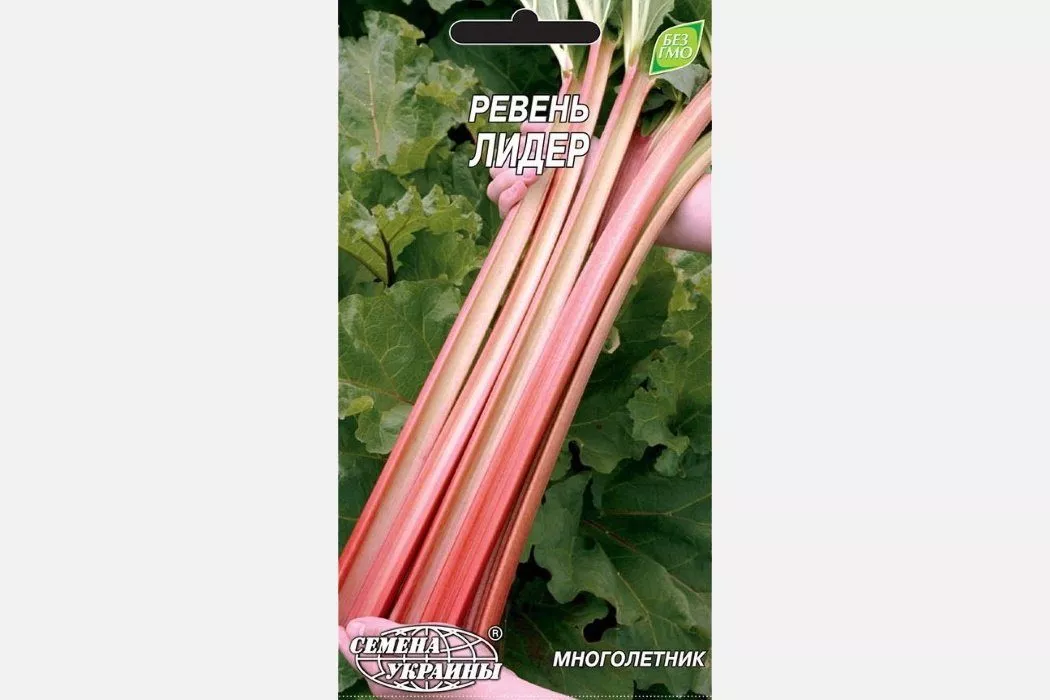
Specifications:
- petiole length – 35-50 cm;
- average weight – 25-50 g;
- taste – sweet and sour;
- yield – from 2 to 5 kg per 1 sq. m;
- mid-season variety: the harvest is collected 30-45 days after the first shoots appear.
Advantages of rhubarb Lider:
- rich in vitamins and minerals (the pulp contains potassium, phosphorus, magnesium, vitamins A and C);
- cold resistance (tolerates spring frosts down to -10 degrees);
- undemanding to light and soil composition.
Candied
The Candied rhubarb variety is suitable for growing in all regions of the country. It is used fresh and canned. Candied rhubarb does not tolerate stagnant water, which is important to consider when caring for the crop.
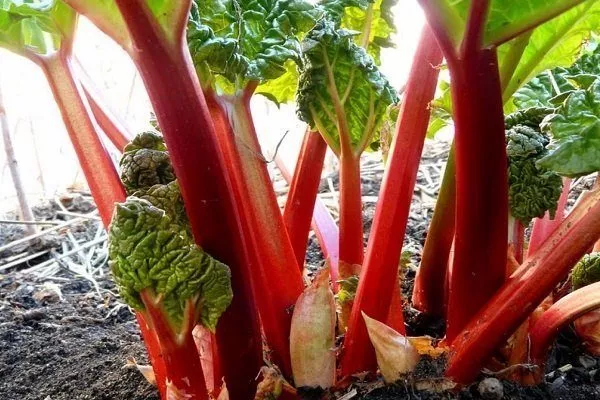
Specifications:
- petiole length – 25-30 cm;
- petiole weight – 200 g;
- taste – sweet and sour;
- yield – up to 3.5 kg per 1 sq. m;
- mid-season variety: the first harvest is collected 39-45 days after emergence.
Advantages of the variety:
- cold resistance;
- disease resistance;
- high yield rates.
Altai Dawns
The plant is a spreading bush with strong, deep-red petioles. The Altai Zori variety is suitable for cultivation in all regions of Russia.
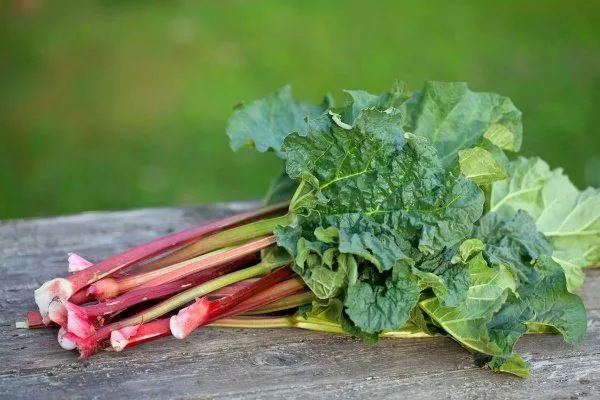
Specifications:
- petiole length – up to 70 cm;
- weight – 80-120 g;
- taste – sweetish-sour;
- yield during the growing season is about 4.2 kg per 1 sq. m;
- An early-ripening variety: the first stalks can be harvested in 23 days – the fruits reach technical maturity in such a short time.
Advantages:
- high yield rates;
- high commercial qualities;
- disease resistance;
- frost resistance.
Red Late 34
This rhubarb variety is prized not only for its abundant harvests but also for its ornamental qualities. It gets its name from the ripening period and the deep scarlet color of its ripe stalks.
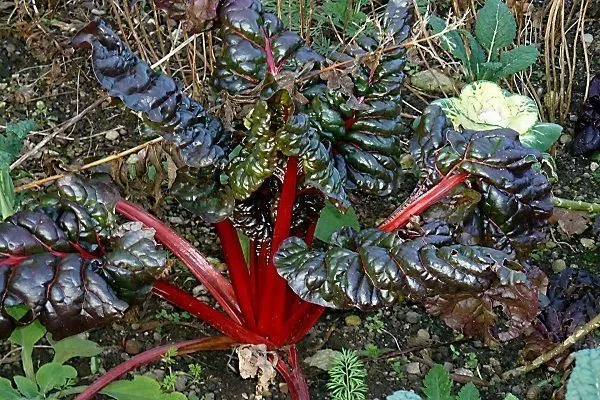
Specifications:
- petiole length – from 40 to 70 cm;
- weight – up to 160 g;
- taste – sour, with hints of sweetness;
- yield – from 1.9 to 7.3 kg per 1 sq. m;
- late-ripening variety: the harvest is collected 65-69 days after emergence.
Advantages:
- high content of vitamins and microelements, due to which it is widely used in folk medicine;
- decorative properties (the bush is tall, the leaves are glossy and have a purple tint);
- disease resistance;
- versatility of use in cooking.
Robin
A wavy variety of rhubarb, the petioles of Zaryanka rhubarb are ideal for canning. A distinctive feature of this variety is that the vibrant color of the fruit is retained even after processing. Zaryanka rhubarb is recommended for cultivation in the East Siberian region of Russia.
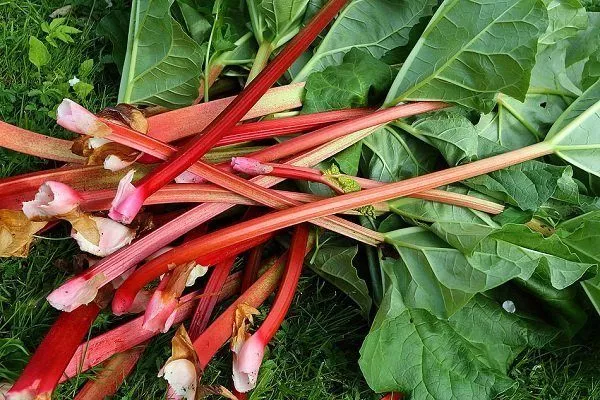
Specifications:
- petiole length – 30-44 cm;
- weight – 150-180 g;
- taste – sweetish, sour, rich;
- crop yield – 2.5-4.5 kg per 1 sq. m throughout the entire growing season;
- early maturing variety: the period from germination to the first harvest is only 30 days.
Advantages of the variety:
- high yield rates;
- increased resistance to diseases;
- decorative value.
Tukumsky 5
This perennial is grown throughout Russia. Ripe petioles are used in cooking and for preserving. The rhubarb variety Tukumsky 5 is ornamental and considered a table variety.
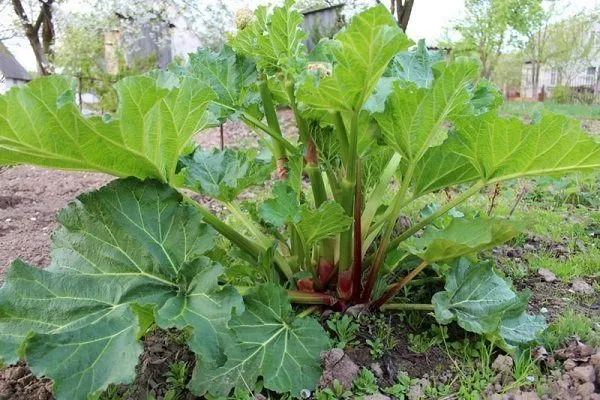
Specifications:
- petiole length – 50-70 cm;
- weight – 100-106 g;
- taste – pleasant, sour with hints of sweetness;
- yield – up to 4.3 kg per 1 sq. m;
- mid-season variety: the harvest is collected 35-45 days after the first shoots appear.
Advantages of the variety:
- relative resistance to diseases such as brown spot and ascochytosis;
- high yield rates;
- frost resistance.
Ogre 13
A distinctive feature of this variety is its high yield. The petioles are distinctive: green with cherry pigmentation on top. It is grown throughout the Russian Federation and is used in home cooking and canning.
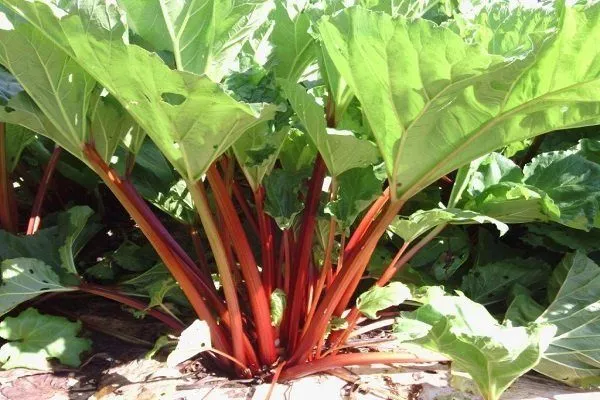
Specifications:
- petiole length – 44-55 cm;
- weight – 196 g;
- taste – sweetish, sour, rich;
- yield – up to 6.3 kg per 1 sq. m;
- mid-season variety: the period from emergence to technical maturity of the crop takes 25-30 days.
Advantages of the variety:
- relative resistance to diseases;
- abundant harvest;
- frost resistance;
- composition rich in vitamins and microelements.
Moscow 42
This variety of curly rhubarb can be grown anywhere in the country. It forms a vigorous bush with thick stems and large, smooth leaves. Ripe petioles are suitable for home cooking and canning.
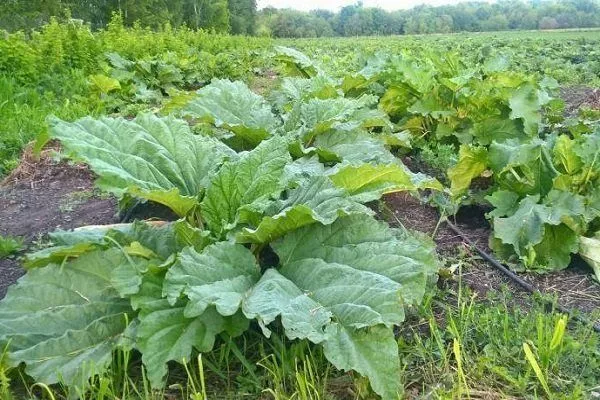
Specifications:
- petiole length – 50 cm;
- weight – from 100 to 150 g;
- taste – sour, sweet;
- yield – up to 6 kg per 1 sq. m;
- mid-season variety: technical maturity occurs 39-45 days after emergence.
Advantages:
- frost resistance;
- resistance to stemming;
- high yield rates.
When choosing a rhubarb variety for planting in your garden, carefully examine its characteristics, especially its suitable growing regions and yield. The crop doesn't require meticulous care, but basic conditions—watering, weeding, and loosening—should be met.