
Rhubarb is an herbaceous plant used in cooking, folk medicine, and even cosmetology. This affordable garden crop serves as the basis for recipes for a wide variety of ailments and cosmetic defects.
Description
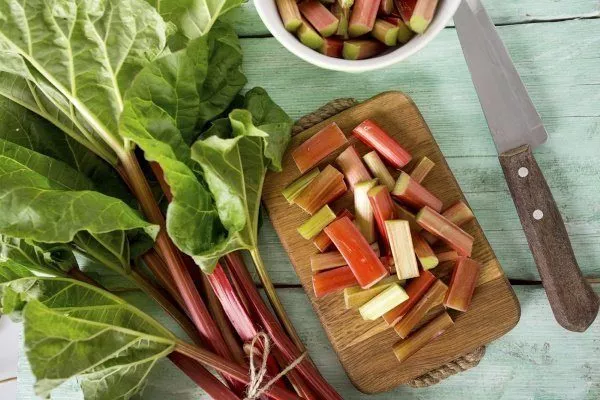
Rhubarb is unsightly in appearance, looking like a weed. It is considered a vegetable and is used in cooking and medicine. Its native land is Central China. Descriptions of this plant can be found in herbals written long before the Common Era.
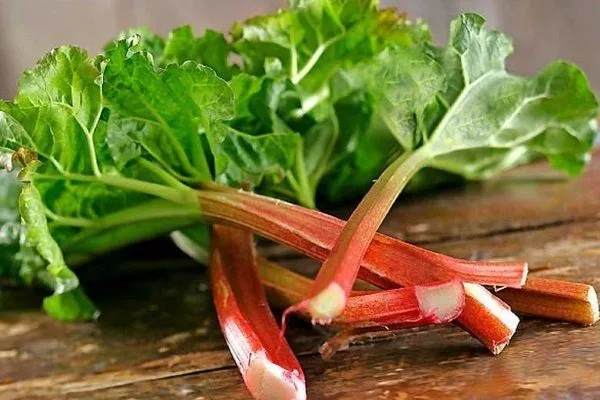
Rhubarb is a tall perennial herb growing up to 3 meters tall. It has branched, thick rhizomes. The stems are annual, thick and straight, hollow inside, sometimes furrowed. The leaves are large, with long petioles. At the end of the stem is a large paniculate inflorescence. The flowers are white, greenish, sometimes pink or red.
- ✓ The soil should be well-drained, with a pH of 5.5-6.5, to prevent root rot.
- ✓ The plant requires a minimum distance of 1.2 m between bushes to ensure sufficient space for growth.
For more information on growing rhubarb and its varieties, see this article.
Areas of use of rhubarb:
- Cooking. Only the rhubarb stems are edible; the leaves and roots are not eaten, as they contain poison. Rhubarb is a versatile food. Its stems are used to make jams, ice cream, jellies, puddings, kvass, kissels, and various desserts. Rhubarb is added to vinaigrettes, salads, borscht, rassolnik (soup soup), sauces, and other dishes. Rhubarb stems have a delicately tart flavor, so they are eaten with added sugar. When the vegetable is stewed in sugar syrup, it releases a lot of juice, requiring almost no water.
- Traditional medicine. Rhubarb has long been used in Tibetan and Chinese medicine. Today, it is used in many effective gastrointestinal and tonic recipes.
- Cosmetology. Rhubarb juice is a wonderful alternative to foundation. It conceals minor imperfections and gives the skin a slightly tanned appearance. It helps with vitiligo, evens out skin tone, and whitens the skin.
Rhubarb belongs to the buckwheat family. There are about 20 species of rhubarb, which easily crossbreed with each other, making them difficult to isolate and identify.
Vitamins, minerals and calories
Rhubarb contains:
- valuable dietary fiber – from 3.2%;
- carbohydrates – up to 2.5%;
- proteins – about 0.8%;
- vitamins – A, K, group B, PP, E, C;
- microelements – iron, copper, selenium;
- macroelements – potassium, calcium, magnesium, sodium, phosphorus.
By eating 100 g of rhubarb, a person will receive the daily requirement of nutrients.
Rhubarb stalks also contain high levels of malic, ascorbic, nicotinic, folic, succinic, oxalic, citric, and acetic acids, which are involved in metabolism and protect the body from free radicals. They promote bile formation and excretion. The high concentration of organic acids is the cause of rhubarb's tart taste.
An overdose of oxalic acid can cause kidney stones. This acid is abundant in mature plants, so it's recommended to eat young rhubarb stalks—those no older than 35 days.
Rhubarb contains two types of dietary fiber—soluble and insoluble. It's low in calories—only 13 kcal per 100 g of peeled stalks. It's useful for weight loss. However, due to its sour taste, many rhubarb dishes and preserves are prepared with sugar, which significantly reduces their nutritional value.
Useful and healing properties
Rhubarb stalks are most often used in folk medicine – they are tasty and contain many beneficial substances. Rhubarb stems are used as a food and medicinal supplement. The plant helps with constipation, menopausal symptoms, and allergies.
The effects of rhubarb stalks on the body:
- Antitoxic. Absorbs poisons, toxins, and waste products. The plant can eliminate the effects of any intoxication. It helps with hangovers, hepatitis, and poisoning.
- Hypoglycemic. Helps lower blood sugar and maintain stable levels in diabetics.
- Antibacterial and healing. It is used to remove pimples, acne, vitiligo, boils, and rashes of various types.
- Vitaminizing and tonic. Boosts immunity. Used to combat alopecia (hair loss). Strengthens nails and hair follicles.
- Anti-inflammatory. Relieves inflammation in arthritis, gout, and diseases of the appendages.
The program "Live Healthy" provides a brief overview of the plant itself, its benefits and harms, and storage methods.
Rhubarb's effects are so multifaceted that it has long been used to treat a wide variety of ailments. This plant is included in many medicinal herbal teas, as it has a positive effect on virtually all body systems:
- Digestion. It affects appetite and normalizes gastric acidity. It is beneficial for gastritis and mucosal ulcers, and normalizes intestinal microflora. Due to its anti-inflammatory properties, rhubarb is used to treat hemorrhoids, colitis, and proctitis.
- Leather. The plant has a whitening effect. It is used to remove pigmentation and scars. Rhubarb's healing properties make it suitable for treating eczema, psoriasis, and trophic ulcers.
- Immune system. It helps restore strength after pneumonia, tuberculosis, and massive blood loss. It invigorates and increases energy, improving metabolism—which is why the plant is included in weight-loss teas.
- Cardiovascular system. Reduces the risk of heart attacks and strokes.
- EyesDue to its rich carotene content, it has a positive effect on vision.
Rhubarb is particularly valued for its laxative, antiseptic, and choleretic properties. Preparations with these properties are made from the plant's rhizomes.
How to take, recipes
To maximize the medicinal properties of rhubarb, it is consumed not only raw but also in concentrated form. The petioles and rhizomes are used to prepare:
- Tinctures. For the treatment of diseases of the digestive system, gall bladder, anemia.
- Infusions. They have antiseptic and anti-inflammatory properties and are used to treat colds, runny noses, sinusitis, and constipation.
- Decoctions. They are used to treat high blood pressure in hypertensive patients. They have proven effective in treating hepatitis.
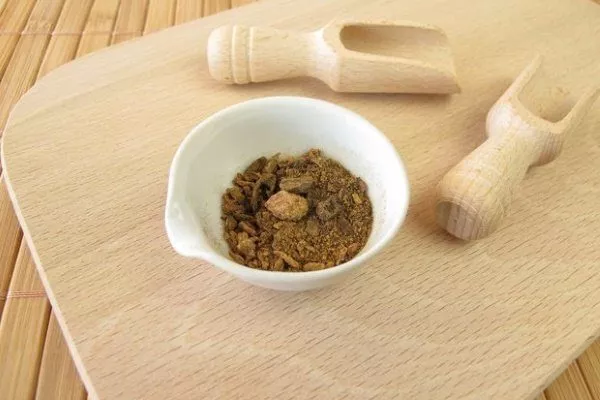
- Powder. It has both a diuretic and laxative effect (depending on the dosage) and regulates the menstrual cycle.
Recipe No. 1. Infusion for constipation. Rhubarb is often addictive. To prevent this, alternate the infusion with over-the-counter medications. How to prepare and take:
- Crush dried rhizomes (2 tbsp) in a mortar.
- Pour boiling water (250 ml) over the resulting powder.
- Let it brew for 10-15 minutes. Strain.
- Before going to bed, drink 1/3 of the resulting volume.
Recipe #2. Anti-diarrhea powder. Useful for flatulence, intestinal spasms, and dysbacteriosis. Preparation and use:
- Grind the dried roots in a coffee grinder to the consistency of a fine powder.
- Take orally twice daily. Dosage: 1-2 g. Children take 0.1 g (about the tip of a knife). Drink with water. To improve the taste, you can mix the powder with honey.
Recipe No. 3. Decoction for hypertension. Made from dried petioles. It has a general tonic effect. Preparation and use:
- Pour boiling water (300 ml) over dried petioles (2 tbsp).
- Let it brew until it cools. Strain.
- Drink throughout the day, dividing the entire volume into three doses – that’s 1/2 glass each.
Recipe No. 4. Tincture for diarrhea. How to prepare and take:
- Crushed roots (2 tbsp) are poured with vodka (500 ml).
- Infuse for two weeks in the dark.
- After straining, store in a cold place.
- Adults only—unless contraindicated—take one teaspoon twice daily before meals.
Recipe No. 5. Decoction for hepatitis. Used to treat various liver diseases. Preparation and use:
- Rhubarb root powder (2 tbsp) is poured with boiling water (500 ml).
- Boil for 15 minutes over low heat.
- Infuse for 6 hours. Strain.
- Take one tablespoon 2-3 times daily before meals. The course of treatment is 30 days.
Recipe No. 6. Choleretic infusion with celandine and dandelion. Preparation and use:
- Mix equal parts of rhubarb, dandelion, and celandine roots. Pour boiling water (250 ml) over a tablespoon of the mixture.
- Let it steep until it cools. Strain.
- Take before meals - 1/3 cup 3 times a day, as a choleretic agent.
Recipe No. 7. A remedy for vitamin deficiency. An excellent winter preventative. Preparation and use:
- Rhubarb stalks are peeled and washed.
- After drying the washed petioles, squeeze the juice out of them.
- Add honey or sugar.
- Drink one and a half glasses of juice per day.
Recipe No. 8. For oily hair. Preparation and use:
- Ground dry rhubarb roots (250 g) are poured with natural white wine (500 ml).
- Cook over low heat until the volume is reduced by 50%. Cool.
- Apply the mixture to damp hair, distributing it along the entire length, for half an hour.
Recipe No. 9. For freckles. Preparation and use:
- The petioles are ground and the juice is squeezed out.
- Ground oatmeal (1 tbsp) and homemade cream (1 tbsp) are added to fresh juice (2 tbsp).
- Apply the mask to the face after cleansing and steaming the skin for 20 minutes.
- The mixture is washed off with cool water.
Recipe No. 10. For acne. Preparation and use:
- Fresh petioles are crushed.
- Mix chopped rhubarb (2 tbsp.) with glycerin (1 tbsp.) and egg white (1 pc.).
- Apply to steamed skin for 15-20 minutes.
- Rinse with cool water and wipe with an ice cube. Repeat this procedure every other day.
Harm and contraindications
Rhubarb, with its wide range of beneficial effects, acts as a medicinal herb, meaning it should not be consumed indiscriminately. Rhubarb leaves (petioles) are not recommended for people with kidney stones due to the deposition of oscalate salts.
Rhubarb is also contraindicated in:
- individual intolerance;
- gallstones;
- peritonitis;
- rheumatism;
- cholecystitis;
- pancreatitis;
- inflammation of the genitourinary system;
- diabetes mellitus;
- gastric and hemorrhoidal bleeding.
Rhubarb should be consumed with caution in the following situations:
- high acidity;
- stomach ulcer;
- cirrhosis of the liver.
It is not recommended to consume rhubarb stalks or dishes/preparations made from them if you have diarrhea. In this condition, rhubarb can have a stimulating effect, which increases the risk of dehydration.
Side effects
As a food, rhubarb is considered safe and free of side effects. However, at high therapeutic doses, it can cause problems.
The risk of side effects increases if rhubarb preparations—infusions, decoctions, etc.—are taken for more than 8 days. Long-term treatment with rhubarb can lead to:
- heart rhythm disturbances;
- formation of kidney stones;
- back or abdominal pain;
- dizziness;
- irritation of the skin and mucous membranes;
- tenesmus (unsuccessful urge to urinate/defecate, accompanied by pain);
- vomiting;
- diarrhea;
- a rush of blood to the pelvic organs.
Special cases
There are cases where rhubarb consumption in any form is not recommended, or is permitted with reservations and restrictions. Rhubarb and its preparations require caution in children and the elderly, as well as during pregnancy and lactation.
Pregnant and lactating women
Pregnant women are allowed to eat rhubarb only after it has been cooked – as part of jelly, desserts and other dishes.
The stems are rich in vitamin K, making them extremely beneficial for women with hypertension. And the high calcium content is beneficial for the healthy development of the unborn child's musculoskeletal system.
By consuming rhubarb, pregnant women can:
- maintain strong bones and teeth;
- be less likely to suffer from colds and acute respiratory viral infections;
- cure diarrhea and constipation (in small quantities rhubarb has a constipating effect, in large quantities – a laxative).
Rhubarb should not be consumed in any form during feeding, as there is a risk of disrupting protein metabolism.
Childhood
A baby can try rhubarb for the first time from the age of one. This vegetable is especially beneficial for children prone to constipation. However, rhubarb should only be given boiled, such as compote. Start with a few drops, gradually increasing the dose and monitoring the reaction. Older children can be offered syrup or jelly.
For children under 12 years of age, rhubarb is given with caution and in small quantities.
Procurement of raw materials
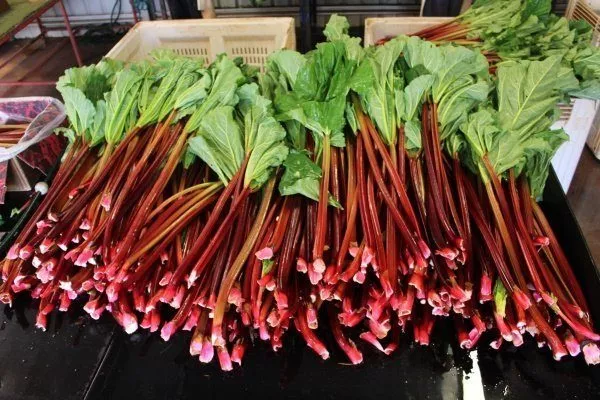
When harvesting petioles, don't use a knife, as it can easily damage the growing point. The stems are broken off by hand, using gentle twisting motions in different directions.
When harvesting leaves, it's best to use a young plant. When harvesting older leaves, the petioles are stripped of their outer layers. Rhubarb is dried, frozen, and canned. In addition to the petioles, rhubarb rhizomes are also harvested.
Drying roots and petioles
Rhubarb roots are dried immediately after harvesting. They are harvested from plants at least four years old—during this time, the roots will accumulate many beneficial substances. Harvesting procedure:
- The rhizomes are dug up from September to October.
- After cutting off the above-ground part, the roots are washed and cut into 10 cm pieces.
- They are dried in the shade, in the air – the roots release moisture and wilt.
- Dried roots are dried in dryers at 60 °C.
The finished product has a dark brown surface and a yellow-pink core. The dried roots have a distinctive odor and a bitter, astringent taste.
Dried and crushed petioles are used in medicine and cooking. They are added to salads, sauces, and baked goods. Preparation instructions:
- After breaking off the leaves and collecting them in a bunch, the leaf blades are removed so that only the petioles remain, which are washed and cut into pieces.
- After air-drying the petioles in the sun for two days, they are then finished off in the oven for two hours at 90°C.
- The dried raw materials are placed in glass jars whole or in crushed form.
| Method | Shelf life | Loss of vitamins |
|---|---|---|
| Drying | Up to 2 years | Up to 30% |
| Freezing | Up to 1 year | Up to 15% |
| Canning | Up to 3 years | Up to 50% |
Freezing
Freezing allows you to preserve the maximum amount of nutrients in rhubarb, which are inevitably lost during heat treatment.
Some housewives blanch the stalks to preserve their red color. However, this procedure reduces the nutritional value of the product.
Freezing procedure:
- Wash the petioles in cold water.
- Dry on paper towels.
- Cut into cubes and place on a baking sheet, then place in the freezer for 1 hour.
- Transfer the cubes to a plastic bag, squeeze out any air, and tie it tightly. Store in the freezer.
Rhubarb is not only a delicious food but also a source of traditional medicine. By growing and harvesting rhubarb, you can create healing and preventative remedies that are just as effective as expensive pharmaceuticals.
I never thought you could make healing infusions from rhubarb; you're amazing! Thank you so much for the recipes with precise dosages. I tried one for hypertension. My husband suffers from it. I'll say his blood pressure dropped within half an hour, but he took the infusion for three weeks and the results were simply astounding—his blood pressure was normal again in the mornings. Thank you so much—this is a very helpful article!!!