
Rhubarb has appeared in our gardens relatively recently, but is rapidly gaining popularity in both garden plots and farmers' fields. To avoid the expense of buying seeds, gardeners successfully propagate it. There are several methods for this, one of which involves replanting the plant.
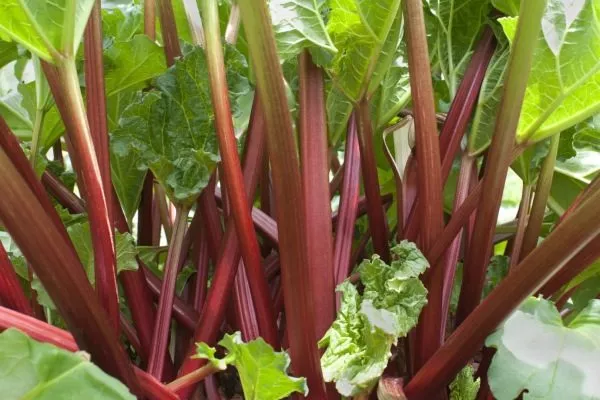
Selecting a location and soil for transplanting and planting
Rhubarb thrives in soils rich in compost and nutrients; in the wild, it's often found in low-lying areas with high humidity. In the garden, it prefers locations with a rich nutrient mixture and stable moisture levels. It doesn't require direct sunlight, as it can also adapt to partial shade.
Please pay attention to other nuances:
- Rhubarb especially appreciates fertile soils, but can also grow in loamy soils. It thrives in slightly acidic, neutral, or alkaline soils. It's recommended to deacidify highly acidic soils before planting rhubarb.
- The soil should be light and constantly moist.
- Practice crop rotation: choose sites for rhubarb where lettuce, radishes, and various onion varieties were previously grown. Rhubarb pairs well with perennial onions, peas, cabbage, radishes, lettuce, celery, beans, horseradish, or spinach. Avoid planting near gooseberries, as they can negatively impact rhubarb growth.
- This species thrives on moisture but does not tolerate excess water. Therefore, it should not be grown in areas where water can accumulate, such as lowlands or near bodies of water.
- ✓ The groundwater level should be no closer than 1.5 m to the surface to avoid over-watering of the root system.
- ✓ The area should be protected from strong winds, which can damage large rhubarb leaves.
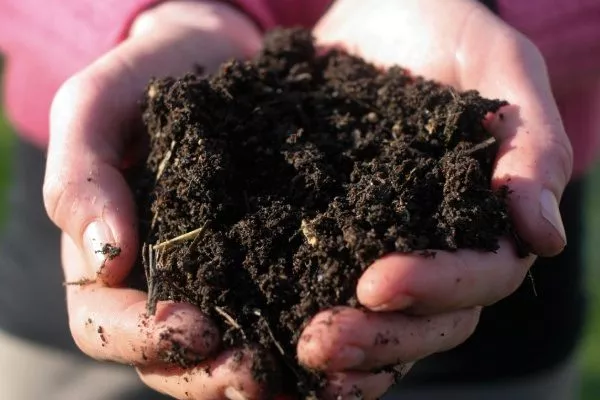
Soil preparation for planting begins in the fall, with the soil mixed with compost or humus, adding potassium and phosphorus. In the spring, before planting, the area is dug over again and ammonium nitrate or other nitrogen-containing fertilizers are added.
Propagation from seeds
Seed propagation of rhubarb is considered the most common. Unlike other crops, generative propagation preserves the variety's characteristics. However, it must be done correctly, and there are two planting methods: directly into the garden beds or from seedlings.
Obtaining seed material
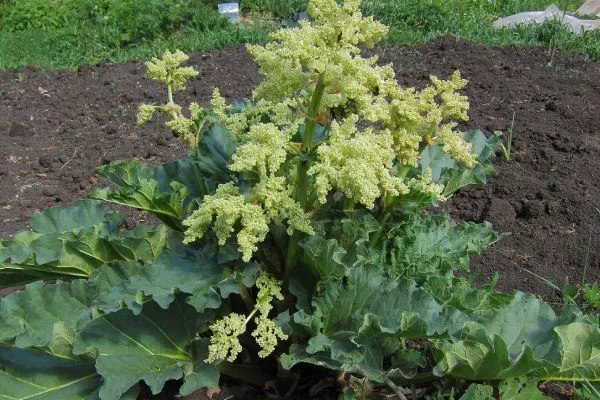
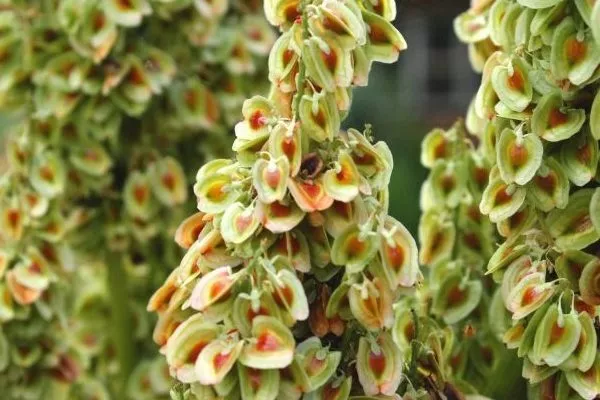
Seeds are collected from bushes that are at least 4-5 years old. Only one flowering branch is left on each plant. The seeds fall quickly as they ripen, so to avoid missing them, the immature flower with its seeds is cut off and dried in a dry, well-ventilated place, protected from direct sunlight, until they are fully ripe.
Seed preparation
The seed preparation process is quite simple. Follow these instructions:
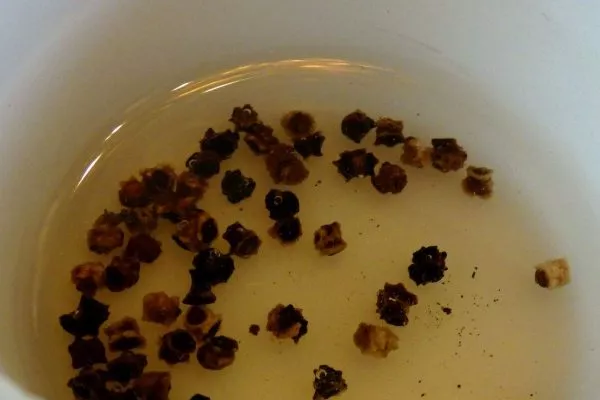
- 4-5 days before the expected planting, place the seeds in a small container, cover with cool water and leave to swell for 10 hours.

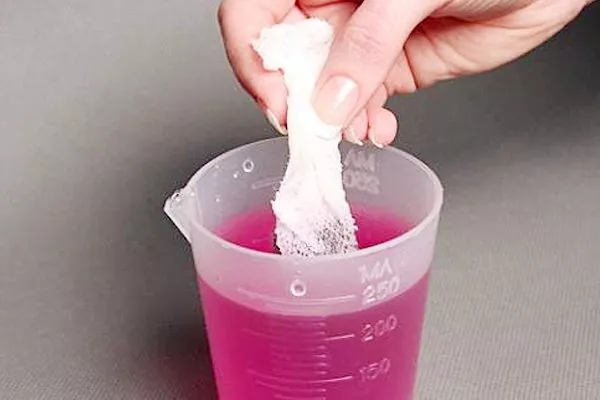
- Next, leave the seeds in a weak solution of potassium permanganate for 60 minutes to disinfect (the color should be light pink).
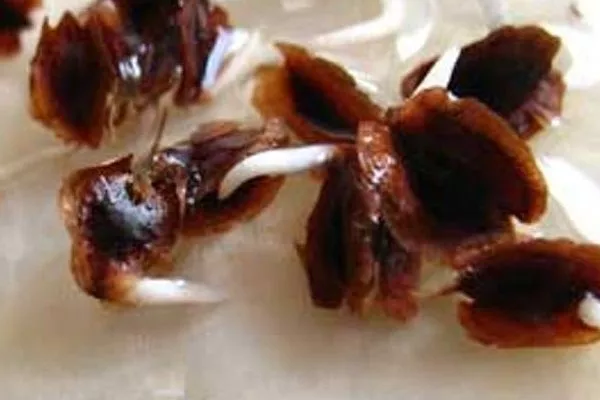
- After this procedure, place the seeds on a thick layer of damp gauze or any cotton cloth and leave for at least 3 days. During this time, they will expand in size, which will help them germinate faster in the prepared soil. Do not allow the material to dry out – periodically mist it with warm water from a spray bottle.
- ✓ The water temperature for soaking seeds should be +20…+25°C.
- ✓ The humidity of the gauze or cloth for germination should be maintained at 70-80%.
Sowing in open ground
Thanks to its high frost resistance, rhubarb seeds can be safely sown directly into the ground. Preparation for sowing begins at the very beginning of the spring season, in March, but can also be done as early as February. Planting in autumn, around mid-October, is also suitable.
This plant species not only tolerates cold but also doesn't require any special growing conditions, making it quite easy to grow in a garden. Before sowing, the seeds must be prepared and pre-germinated according to the general guidelines.
The process of growing rhubarb in a garden bed always consists of the following steps:
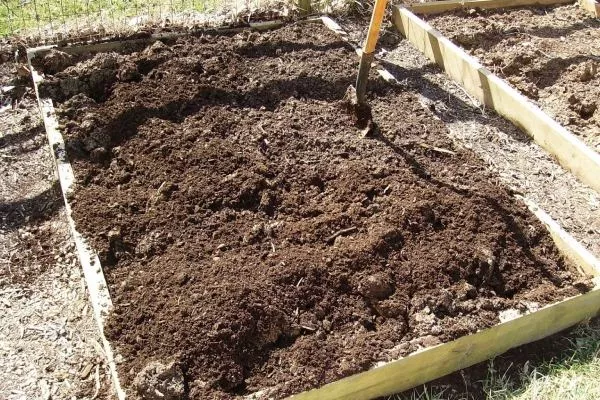
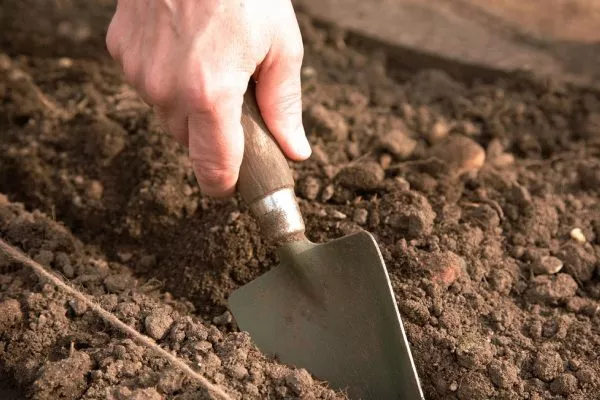
- Dig up the area chosen for planting thoroughly and loosen it as much as possible, adding 7-10 kg of compost/humus and 0.3 kg of wood ash (from deciduous trees only) per 1 sq. m. to the soil.
- Create a bed. Dig parallel furrows 20-30 cm apart and about 3-5 cm deep.
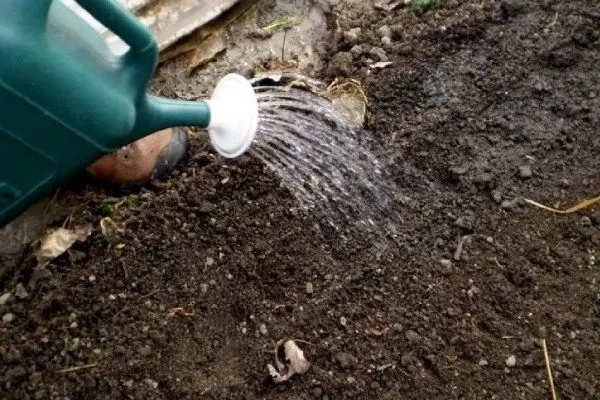
- Fill the furrows with water. If you're sowing in the fall, you don't need to do this—the seeds should be buried in dry soil.
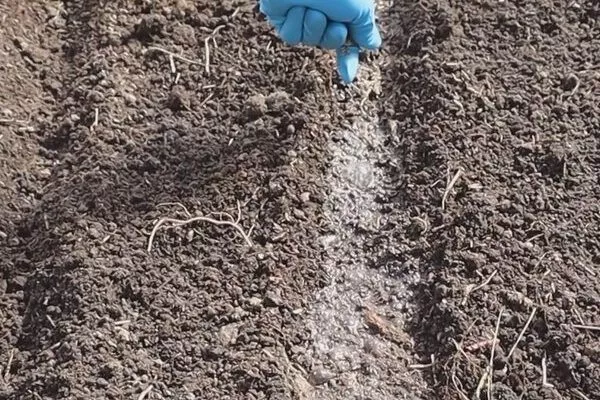
- Place the planting material in the grooves at a distance of 5 cm.
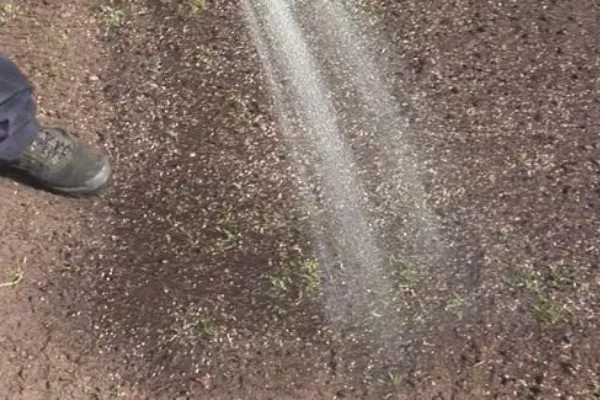
- Cover the seeds with a layer of soil and moisten. Watering is no longer necessary when sowing in the fall.
- When the plants develop their first true leaves, thin out the bushes, leaving a gap of 15-20 cm between plants.
- After a year, transplant them to permanent locations.
Seedling method
Rhubarb is best planted from seed using the seedling method between February and April. Mid-March is the ideal time, as this is when the seedlings emerge quickly. If you plant rhubarb earlier, it won't receive the necessary amount of daylight.
The success of planting and the future health of rhubarb seedlings largely depend on the quality of the soil mixture and the correct choice of growing containers:
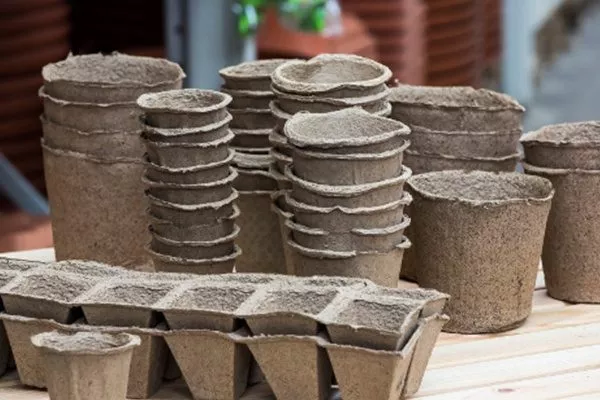
- Capacity. Peat pots and seedling boxes, as well as wooden and plastic containers, and durable glass microgreenhouses are suitable for rhubarb. When choosing seedling containers, it's important that they be spacious enough to accommodate a large number of seeds, with adequate space between them.
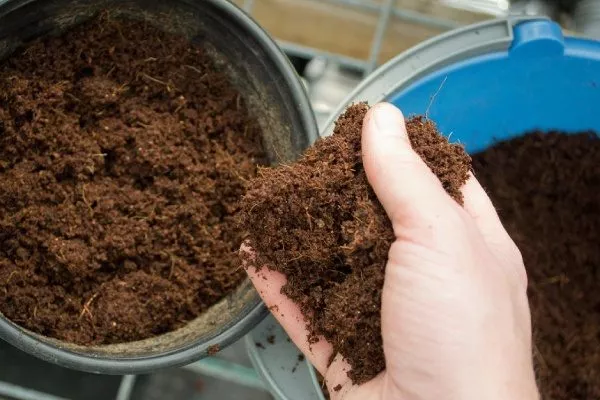
- Substrate. Soil preparation requires special attention. Plants should be grown in nutrient-rich, aerated soil. Typically, seedlings are started by mixing turf with compost and adding potassium fertilizers and superphosphate.
For any seeds, including rhubarb, the main threat is contaminated soil. Therefore, pre-treat the soil by freezing, steaming, or soaking it in a potassium permanganate solution.
Leave 10 to 15 mm of space between seeds. Sow seeds at a depth of approximately 3 cm, then water the soil and maintain a consistent moisture level.
Next steps:
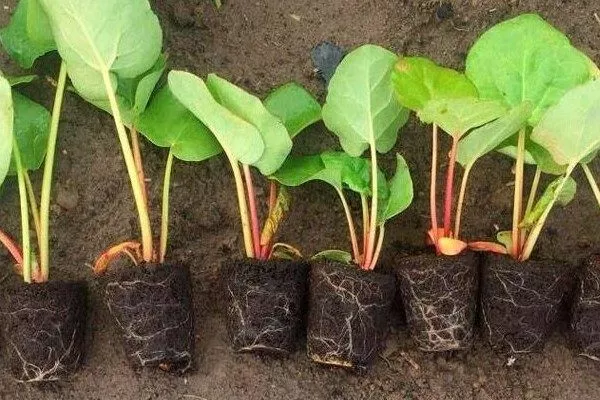
- Transplanting into open ground is done in spring or early summer, when the seedlings have established themselves somewhat. Transplanting is usually done approximately 100 days after sowing, in August or early September. This allows the young plants to better adapt to the outdoors and establish roots before the onset of cold weather. Another option is to transplant rhubarb the following year in spring, after the seedlings have emerged.
- Before transplanting young plants to the garden beds, they need to be acclimatized. To do this, gradually bring the containers outside—first for a few hours, then for a full day.
- The process of transplanting seedlings to a new location is straightforward: first, prepare beds in a sunny spot that meet all the requirements for growing rhubarb, and then carefully remove the bushes and plant them in the beds using the standard method.
- To avoid damaging the roots, it is important to keep as much of the old soil from the container on them (the root ball) as possible.
- After transplanting, the seedlings must be thoroughly moistened.
- ✓ The soil temperature during transplantation should not be below +10°C.
- ✓ The distance between plants should be at least 60 cm to ensure sufficient space for growth.
Caring for seedlings
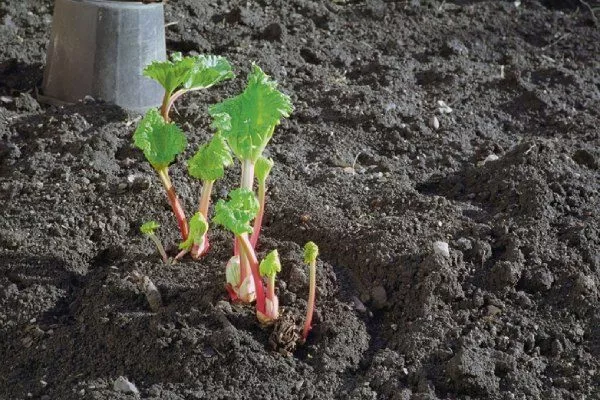
Once planted, rhubarb seedlings will sprout very quickly—in just a couple of weeks. When the first green leaves emerge from the soil, the seedlings should be moved to a bright windowsill or other location with sufficient light but not overheated.
For normal plant development, regular watering, soil aeration and fertilizing are necessary:
- Watering is carried out when the soil begins to dry out noticeably.
- It is recommended to loosen the soil weekly to provide oxygen.
- Every two weeks it is necessary to feed the plant with universal fertilizers.
If the seeds were sown in a common container, once the seedlings have emerged, the plants are transplanted into individual pots. This will allow the plants to feel more comfortable and free.
Propagation by division of the rhizome
To expand your rhubarb beds, you can use division, which is especially convenient if you already have a sufficient number of mature plants in your plot. The process doesn't require much effort, but it's important to follow a few guidelines.
The optimal period for planting rhubarb through a bush is the spring months: from April to May (before the buds begin to sprout) or autumn: from September to October.
What plants are suitable?
The best rhubarb plants for planting are 4- to 6-year-old rhubarb bushes with strong, thick petioles, abundant foliage, and no flowering shoots. The bushes should be perfectly healthy and vigorous.
Dividing the bushes
The process of dividing rhubarb bushes is very simple, as it consists of three steps:
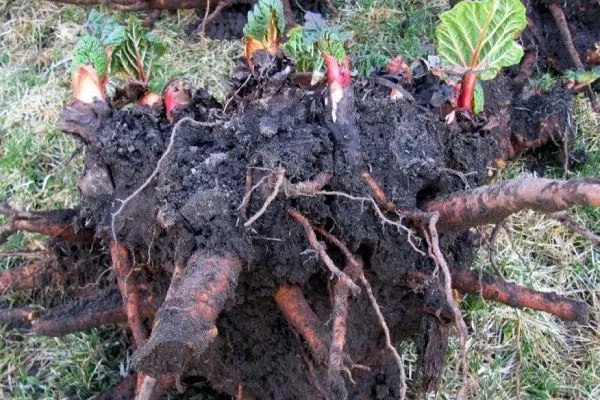
- Remove a mature, healthy rhubarb bush from the soil. You don't have to dig it up completely; just dig it up a bit, remove soil from one side, and separate a portion of the root system.
- Using your hands, carefully remove any remaining soil from the rhizome.
- Using a sharp knife, carefully divide the root system into several parts, making sure that each one contains 2-3 live buds.
Transfer
Planting procedures won't cause any particular trouble either:
- Dig a hole in advance so that it is approximately 45-55 cm deep and has a diameter of 18-22 inches. Leave at least 24-32 inches between plants (as rhubarb grows rapidly).
- Before planting the cuttings, prepare the soil mixture by adding 5-7 kg of humus, 4-6 kg of peat and 0.2-0.4 kg of wood ash to the soil taken from the hole.
- Plant the cuttings in prepared holes. If the soil is dense and clayey, the seedlings should be planted at a depth of about 4-5 cm. In light and loose soil, it is recommended to plant the cuttings at a depth of 7-10 cm.
- Sprinkle the divisions with the prepared soil mixture.
- Water the plantings carefully.
- Complete the process by mulching.
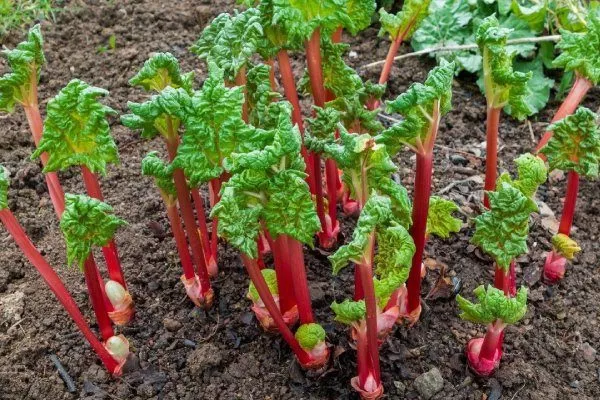
Rhubarb typically takes root easily and requires little care, so even the most novice gardener can propagate by transplanting. The key is to heed expert advice and strictly adhere to proper growing practices. When caring for the seedlings, pay attention to the current weather, as young plants are always weakened.