
Green rhubarb is a healthy plant used in cooking. Its sweet and sour flavor makes it an indispensable ingredient for jams, compotes, and other desserts, and its appearance makes it a beautiful decorative element in the garden. There are many popular rhubarb varieties with attractive characteristics.
The best varieties with green petioles
There are several varieties of green rhubarb, each with unique characteristics. These include petiole length, leaf size, flavor, and yield. Choosing the right variety depends on preference and growing goals.
| Name | Disease resistance | Plant height | Ripening period |
|---|---|---|---|
| Waltham Yellow | High | Average | Early |
| Sikkimese | Average | High | Late |
| Ob | High | Low | Average |
| Cyclone | Average | High | Average |
| Compote | High | Average | Early |
| Monarch | High | High | Late |
| Royal Albert | Average | Average | Early |
| Tukumsky-5 | High | Average | Average |
| Stubborn | High | Low | Early |
| Drug | Average | High | Late |
| Large-petiolate | High | Average | Average |
| Moscow 42 | High | Average | Average |
| Goliath Series | High | High | Late |
- ✓ The optimal soil pH for rhubarb is 5.5-6.5. At higher values, acidification is necessary.
- ✓ Minimum depth of the fertile layer: 40 cm. Rhubarb has a deep root system.
Waltham Yellow
A rhubarb variety distinguished by its richly colored stems and large, succulent leaves. It is disease-resistant and renowned for its high yield. The color of its stems makes it a particularly ornamental plant, suitable for both gardening and cooking.
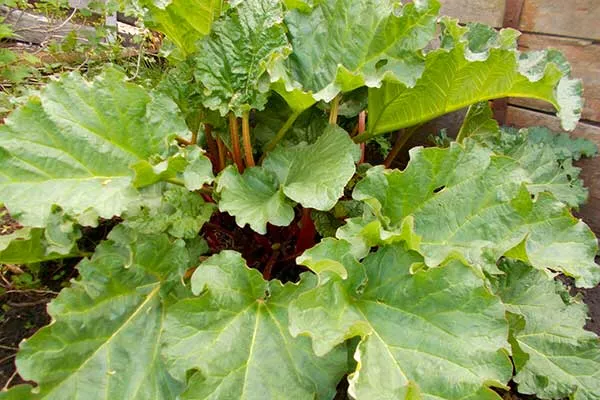
The crop has a sweet and sour taste. Its vibrant color is preserved when cooked. This variety is prized for its ornamental qualities and ease of care. It prefers sunny or semi-shaded locations and reasonably moist soil.
Sikkimese
It is a giant herbaceous plant native to the Himalayas. Its range extends from northeastern Afghanistan to the eastern regions, including northern Pakistan, India, Nepal, Sikkim (in India), Bhutan, Tibet, and Myanmar, where it is found in the alpine zone at altitudes of 4,000–4,800 m.
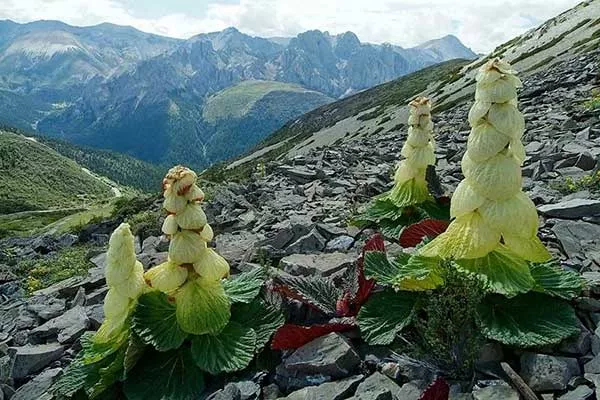
This unusual rhubarb variety produces monocarpic inflorescences 1-2 m tall that rise above surrounding shrubs and low-growing grasses, visible from up to 1.5 km away. Features of the crop:
- It is a conical tower of delicate, straw-colored, shiny, translucent bracts, the upper ones of which have pink edges.
- Large, glossy green basal leaves form the broad base of the plant.
- When the bracts are lifted, membranous, fragile, pink stipules are revealed. Within these are short, branched panicles of miniature green flowers.
- The root reaches 1-2 m in length and the thickness of an arm, with a bright yellow interior.
- After flowering, the stem lengthens, the bracts become rough red-brown and separate from each other.
The stems have a pleasant, slightly sour taste and are eaten by locals, who call the plant "chuka." The cavities contain large amounts of clear water.
Ob
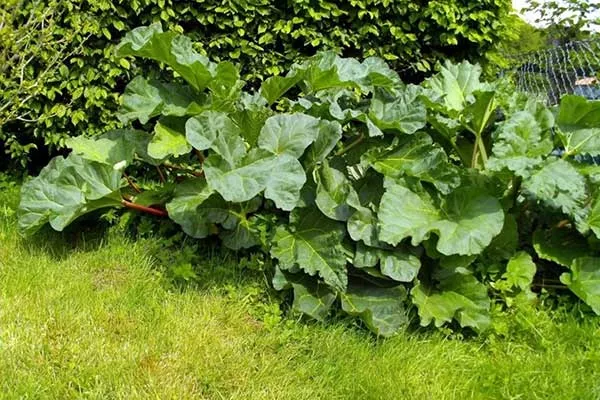
This perennial plant with tender flesh, the fruits of which are used for processing, making jams, and compotes, is suitable for cultivation throughout Russia.
Specifications:
- Length of petioles – 22-23 cm.
- Weight - 44-84 g;
- Taste - sweet and sour;
- Productivity – 1.6-2.1 kg per 1 sq. m.
Cyclone
The plant is a robust shrub with thick stems reaching 1.5-2 m in height and up to 4 cm in diameter. The oval leaves form a semi-upright rosette. The petioles are green, with juicy pulp, up to 70 cm long and weighing 100-150 g, reaching up to 4 cm in width.
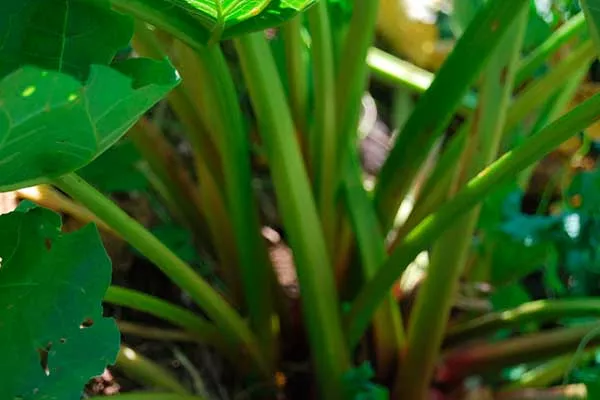
The plant contains valuable organic acids that are essential for nutrition: malic, citric, oxalic, succinic, and salicylic acids. During the growing season, the yield is 2.5-3.5 kg per square meter.
Compote
Recommended for fresh consumption and canning. The period from spring regrowth to commercial maturity is 35-45 days. This perennial plant has a vertical rosette of leaves. The leaves are large, green, medium-bubbly, with a wavy edge and a pointed tip.
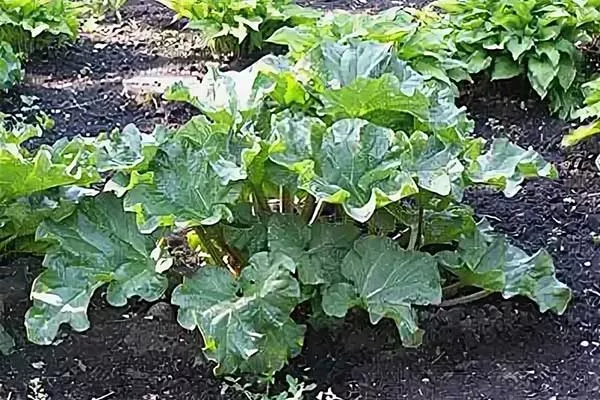
The petiole is medium-length (40-45 cm), medium-width and thickness, green with anthocyanin coloration at the base, slightly ribbed, and green flesh. Each petiole weighs 45-80 g. The yield is high – 2.6-4 kg per square meter.
Monarch
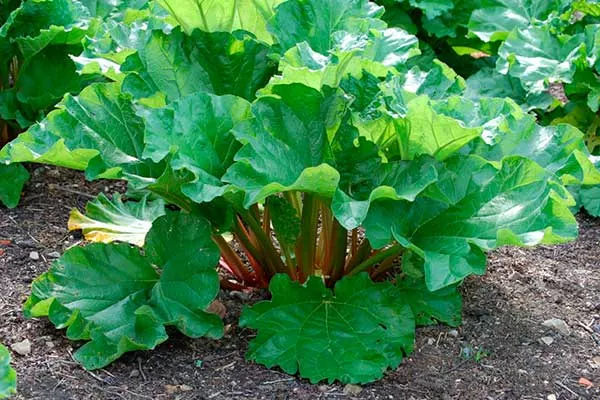
Rhubarb Monarho is one of the largest-growing varieties, distinguished by its smooth, very thick, and fleshy light-green petioles, which are rounded below and grooved above. The leaf blades are very large and light blue-green.
Royal Albert
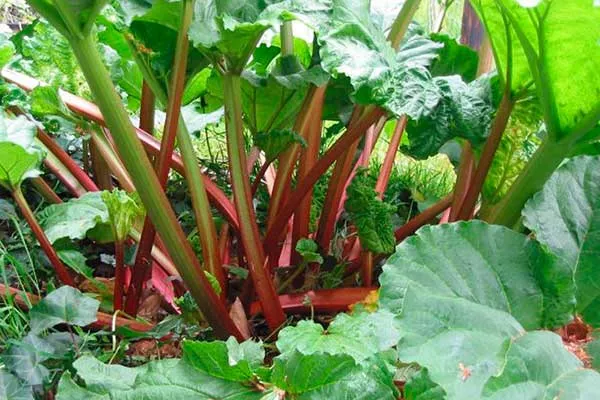
One of the earliest varieties. The petioles are large, pale reddish at first, later turning light green. They are smooth, rounded below, slightly grooved above, with slightly protruding ribs and sharp edges. The leaf blades are light green.
Tukumsky-5
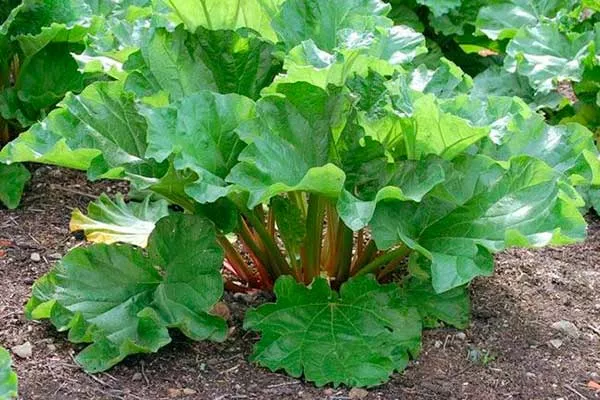
This perennial is grown throughout Russia. Ripe petioles are used in cooking and for canning. It is characterized by its ornamental qualities and is considered a table variety.
Specifications:
- Petiole length – 50-70 cm.
- Weight - 100-106 g.
- Taste - pleasant, sour with hints of sweetness.
- Productivity – up to 4.3 kg per 1 sq. m.
Stubborn
An early-ripening rhubarb variety, it takes 41-44 days from spring growth to technical maturity. The rosette of leaves is raised, 68-83 cm tall and 130-140 cm in diameter, with 17 to 30 leaves.
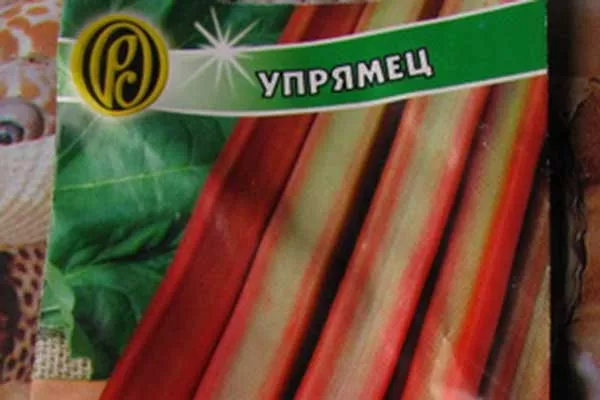
The petioles are large, light green with anthocyanin coloration at the base, 49-55 cm long and weighing 104-180 g. Rhubarb is resistant to bolting.
Medicinal (Rheum officinale)
This perennial herbaceous plant with a developed root system, reaching a height of up to 2 m. It has a fragile, straight, finely furrowed, hollow stem with fine hairs. The petioles are juicy but slightly sour.
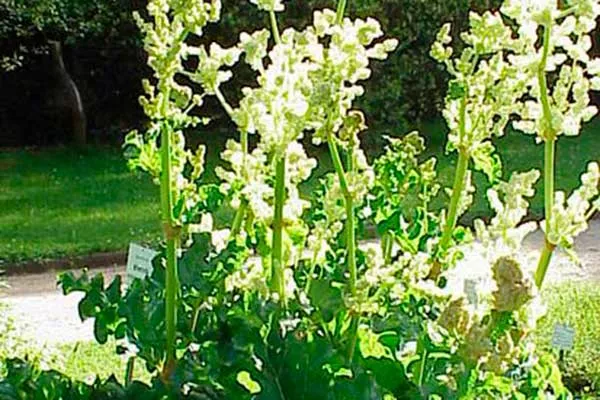
The leaves are large, coarse, and succulent, palmately lobed. The inflorescence is large, paniculate, and leafy, widely branching and spreading. The fruits are triangular nuts.
Large-petiolate
An early-ripening variety with a medium-compact rosette. The petioles are green, with intense cherry pigmentation on the underside and mottling along the ribs on the upper side. They have a deep groove and light green flesh, sometimes with pink spots.
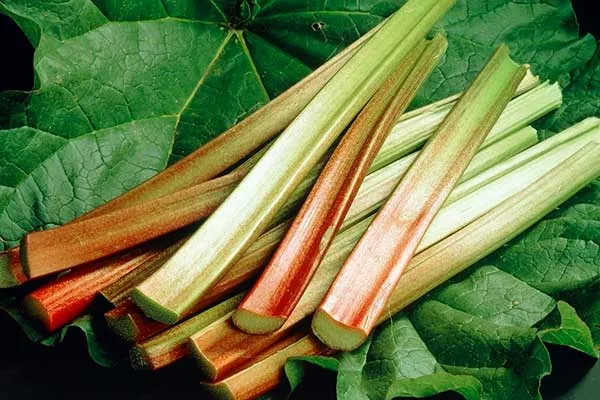
The petiole length is 58-62 cm, the width is 2.1-2.5 cm. When grown in open ground, a significant ability to form shoots is observed.
Moscow 42
The curly rhubarb variety can be grown in any region of the country. The plant forms a vigorous bush with thick stems and large, smooth leaves. Ripe petioles are suitable for both home cooking and canning.
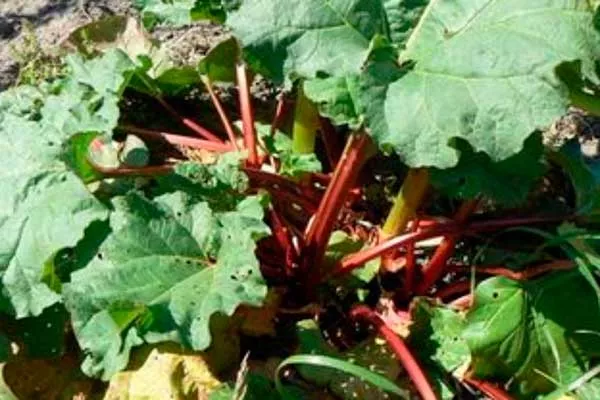
Specifications:
- Petiole length – 50 cm.
- Weight - from 100 to 150 g.
- Taste - sourish, sweet.
- Productivity – up to 6 kg per 1 sq. m.
Goliath Series
A perennial herbaceous plant growing 80-100 cm tall. Its stems are erect, sparsely branched, and green. The leaves are large with curly edges. The flowers are cream-colored, gathered in dense paniculate inflorescences. The plant blooms in July.
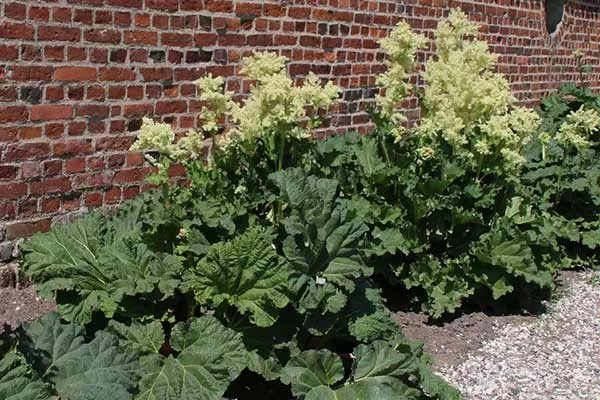
This species is frost-hardy, surviving temperatures down to -30°C. It prefers moisture, but excess moisture in spring can lead to rhizome and bud rot. The plant isn't overly demanding in terms of light, but grows more slowly in the shade. It requires fertile, well-fertilized soil.
Goliath rhubarb is used in flower beds. It can also be used as a spectacular specimen plant. Its roots and tubers have medicinal uses. Young, succulent petioles and leaves are edible.
Advantages and disadvantages of green rhubarb
Green rhubarb is a popular plant used in both cooking and medicinal applications. Its key benefits include:
Among the disadvantages, gardeners note the content of acids and oxalates, the demand for soil and certain growing conditions.
Green rhubarb is a valuable component of a healthy diet. Choosing the right variety for your plot will help you create a beautiful and fertile garden, pleasing to the eye and bringing the joy of cultivating and using fresh, organic produce. A variety of varieties allows you to create any culinary masterpiece.