
Rhubarb is susceptible to a number of diseases and pests. Diseases attack the plant's leaves and petioles, while insects can completely destroy the crop. To prevent crop failure, it's important to recognize the symptoms of damage early and apply appropriate treatments.
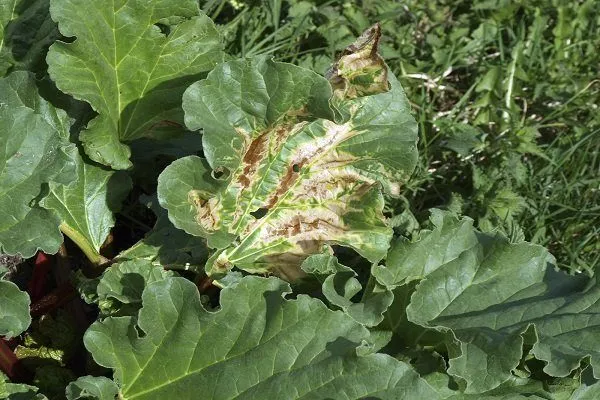
Diseases affecting rhubarb
Diseases that affect rhubarb never arise spontaneously. Certain factors contribute to their development, including:
- increased soil moisture;
- dry and hot weather;
- sudden changes in temperature;
- excess nitrogen in the soil;
- planting a plant in the same place too often.
- ✓ Maintaining optimal soil moisture levels, avoiding both over-watering and drought.
- ✓ Regular application of potassium-phosphorus fertilizers to increase plant resistance to diseases.
To cope with a disease, it is necessary not only to correctly identify its symptoms and select treatment, but also to eliminate the cause of its occurrence.
Ramulariasis
Main symptoms:
- the appearance of round spots on the leaves of the plant;
- the color of the spots is brown with a reddish tint, they are surrounded by a dark border at the edges;
- the spots tend to enlarge and merge, which leads to the drying out of the leaves;
- the petioles become hard, as if made of wood;
- On the inside of the leaf you can see a grey coating.
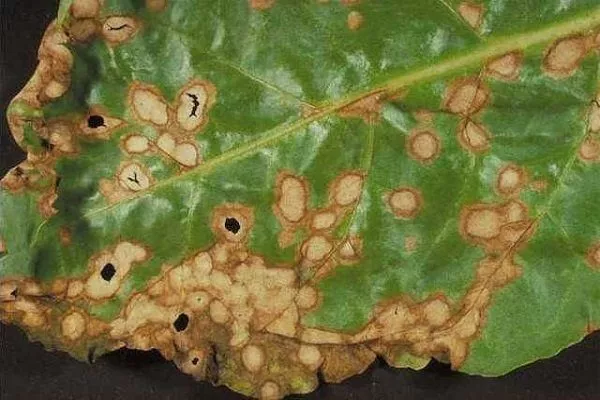
Ramularia is caused by a frost-resistant fungus. It overwinters in the soil, using dead plant leaves to sustain itself.
To combat ramularia, spray the plant with copper sulfate or Bordeaux mixture. You can also use Captan or Polycarbacin. They contain copper, which the fungus is resistant to.
Treatment is recommended when the disease has just begun to affect the rhubarb. If it has affected more than one-third of the leaf, it makes sense to remove and burn it. This will prevent the infection from spreading.
Since cool weather and high humidity encourage the growth of fungal spores, it's advisable to limit watering the plant. This will reduce the risk of infection.
Ascochytosis
Symptoms of the disease:
- blackening of the plant rhizome and its weakness;
- rhubarb fall;
- the appearance of yellow spots on the leaves, resembling burns;
- as the disease progresses, the spots increase in size and become dark;
- the leaves begin to crumble and fall off.
- ✓ The appearance of water-soaked spots on the underside of leaves before they turn black.
- ✓ Slow growth of new leaves and their deformation in the early stages of the disease.
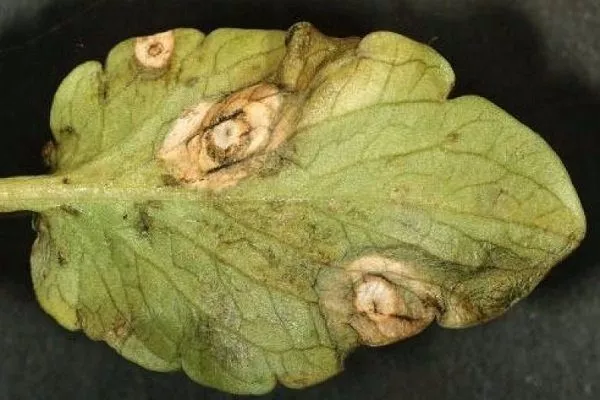
The infection is caused by a fungus. Controlling the disease is difficult, as it responds poorly to fungicides. The most effective treatment is Bordeaux mixture at a concentration of 1%. It is sprayed on the plant leaves at the early stage of ascochyta blight development. A mixture of urea and copper sulfate can also be used. The stems are dusted with a powder made from chalk and copper. If the disease progresses, the rhubarb will be lost.
To prevent fungus, water rhubarb in the evening and only with warm water. Remove leaves promptly at the first sign of infection.
Rhubarb should only be planted in healthy soil. If the area has been affected by ascochyta blight, it should be treated with green manure and fungicides beforehand, including Vincit, Tiram, and Saprol. The area where diseased rhubarb grew can be replanted with rye.
All plants infected with the fungus must be removed, including the rhizomes. These should be burned as far away from the planting site as possible. The infection is highly resistant and can persist for a long time even in dry stems and leaves.
Powdery mildew
Symptoms of the disease:
- the appearance of a white rough coating on the leaves;
- slowing down of plant growth, which stops completely as the infection progresses;
- the leaves become dark, after which they die;
- flowering does not occur, and the rhubarb dies in winter.
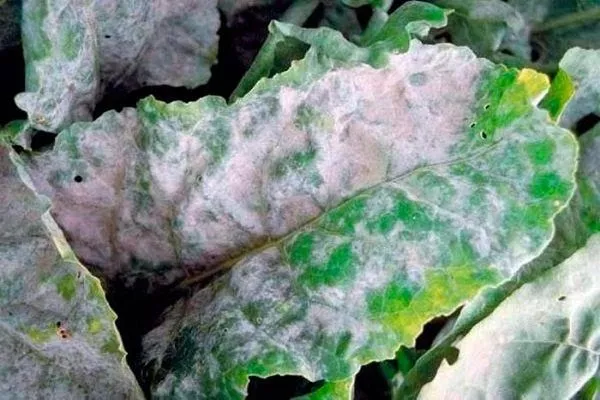
Powdery mildew makes its presence felt in early summer. Its spread is facilitated by cool and damp weather, overwatering, and dense planting. Spores spread easily. They can reach plants through the air, through irrigation water, and even through human contact.
The best products for combating powdery mildew are Alirin-B, Gamair, and Planriz. You can prepare a homemade medicinal solution by mixing 5 liters of water, 25 g of baking soda, and 5 g of liquid soap. Apply it to the stems, leaves, and topsoil once every three weeks. To combat the disease in its early stages, use a weak solution of potassium permanganate.
To prevent powdery mildew and preserve existing plants, it's important to improve your rhubarb cultivation practices. Water only after the top layer of soil has completely dried out. Thin out the plants, removing infected stems. Reduce the amount of nitrogen fertilizer applied.
Rust
Symptoms of the disease:
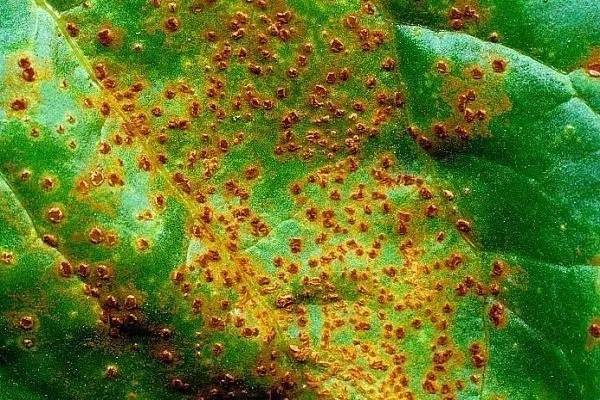
- the appearance of small convex growths on the leaves, which have a dark yellow color, reminiscent of rust;
- growths promote evaporation of moisture and lead to drying out and falling of leaves;
- As the infection progresses, the bulges burst open, releasing parasites that enter the soil and infect healthy plants.
The sooner treatment is started, the more effective it will be. If the infection has only affected a few leaves, they are easier to remove and burn. Once the infection has spread, specialized treatments are needed:
- Topaz;
- Fitosporin;
- Baktofit;
- Bordeaux mixture 1%;
- Abiga Peak.
Rhubarb should be sprayed twice, a week apart, on a warm, sunny day.
To prevent the spread of rust, it's essential to properly care for the plot. After harvesting, remove plant debris from the soil. In the fall, the soil must be dug over. To increase rhubarb seed resistance to rust, treat them with a potassium permanganate solution before planting.
Pests that affect rhubarb
Rhubarb can also be attacked by pests. Many insects seek to satiate themselves with the plant's succulent foliage.
Rhubarb weevil
The beetles are approximately 6 mm long and can be seen with the naked eye. Their bodies are covered with gray scales. A distinctive feature of the weevil is its long proboscis.
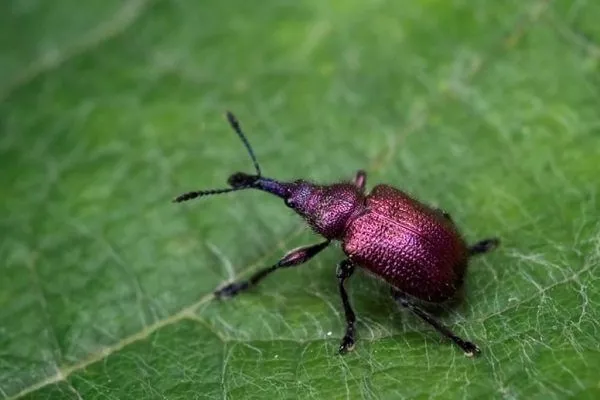
The insect is extremely resilient. These beetles can survive anywhere rhubarb grows. Their presence can be detected by the presence of dark yellow eggs located near the petioles. In early spring, the insects feed on buckwheat and sorrel leaves, after which they transform into pupae. The hatched pests migrate to the rhubarb.
Both beetles and larvae damage the plant's leaves. They chew holes right through the leaves. The larvae eat away the surface layer of the leaves, while the adults leave behind only the veins.
Controlling the beetles is difficult, as treating the plants with chemicals is impossible. Otherwise, they will be uneatable. Specialized treatments can only be applied to seedbeds. Phosphamide 40% is most commonly used.
A preventative measure is proper planting. To prevent insects from migrating from buckwheat and sorrel, they should never be planted near rhubarb.
Potato moth caterpillars
The potato armyworm larvae pose a threat to rhubarb. A single insect can lay up to 75 eggs, and up to 500 clutches over the course of a season. In the spring, a horde of caterpillars emerges. They attack not only rhubarb but also other crops, such as onions, tomatoes, corn, and garlic.
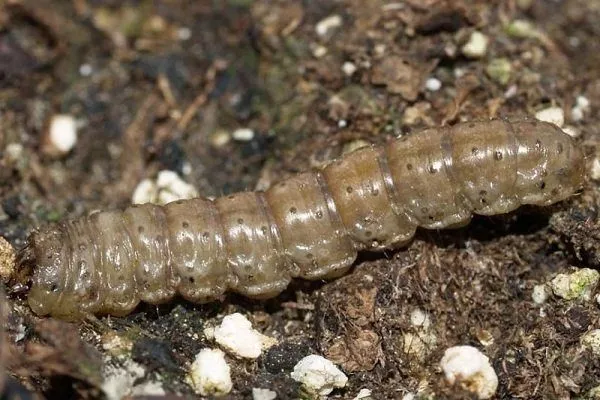
The caterpillars begin feeding in the evening. They destroy rhubarb petioles and foliage; after their invasion, only the veins may remain. Eggs can be found near the stem.
To control caterpillars, use Lepidocide and Bitoxibacillin. Apply these products once every 7 days. Damaged petioles and stems are cut out and burned.
Rhubarb treated with chemicals is unfit for consumption. Use of toxic substances should only be done in extreme cases.
To preserve the harvest, the larvae must be collected by hand. Alternatively, you can use an infusion of burdock leaves. Let it sit for three days, then spray it on the rhubarb.
To avoid the need to apply chemicals to plants, it's necessary to take measures to prevent cutworm infestations. This requires regular weed control, as this is where the moths lay their eggs. They feed on flowering weeds.
Rhubarb bug
The bug has a brightly colored abdomen and a diamond-shaped body. Its head is covered with long antennae. The pest feeds on plant sap, leaving behind characteristic brown spots on the leaves.
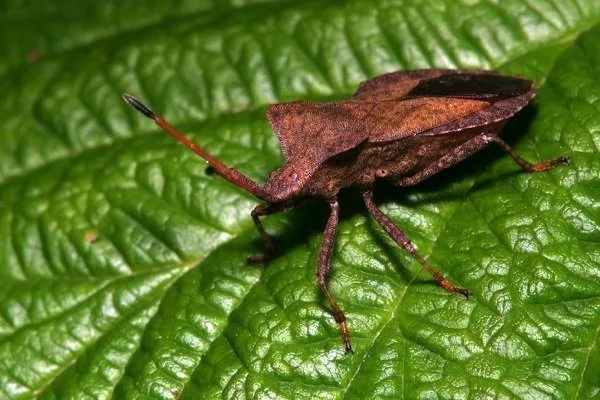
You can control the insect using Fosfamide, Fufanon, and Actellic. However, you should not eat plants after applying pesticides. Therefore, it's best to resort to gentler treatment methods, including:
- Spraying with mustard solution. Use 100 g of powder per 500 ml of water. Once it's completely dissolved, add about 9 liters of water and apply to both sides of the rhubarb leaves.
- Treatment with concentrated onion peel decoction.
- Spraying with clove infusion. Its scent effectively repels many insects.
Experienced gardeners recommend pinching off rhubarb flower stalks. Their scent will prevent bugs and other insects from attracting them.
To prevent bed bugs, collect fallen leaves and other plant debris and burn them just before frost sets in. The soil should be dug up.
To harvest a healthy and abundant rhubarb crop, it's essential to prevent pests and fungi from spreading in your garden. If they do attack the plant, don't delay treatment. The sooner you begin treatment, the better your chances of enjoying a healthy and succulent harvest.