
Bogatyr Parsley is a representative of the finest leafy varieties, used for garnish, as a food additive, and as a medicinal herb. Its beneficial components enhance appetite and improve digestion. Its resistance to environmental conditions is particularly important.
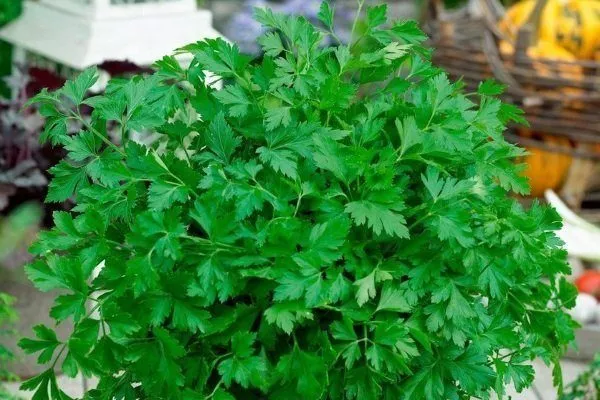
parsley variety "Bogatyr"
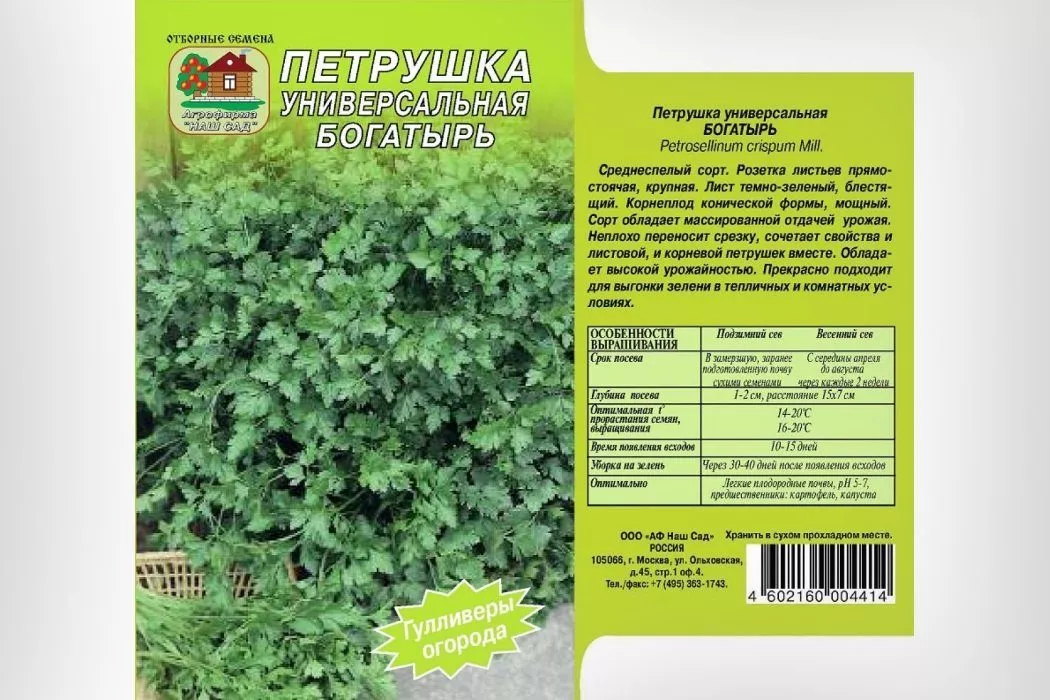
parsley seeds "Bogatyr"
History of selection
The variety was developed in the 19th century and was named Bogatyr for its robust immunity and tolerance to adverse environmental conditions. The work of many scientists in the field of biology helped breeders create this robust greens variety. Researchers strived to give Bogatyr excellent flavor and a perfect appearance for sale at markets or supermarkets.
Description of Bogatyr parsley
This parsley variety is a spicy, early-ripening plant with excellent yields, ripening in 90 days, and is a hybrid of the universal umbelliferous crop.
The variety is biennial, the seeds can be used for planting for a couple of years after the full harvest.
Germination rate is 85-90%, depending on the region where the variety is grown and the level of care it receives. This figure is considered high for the crop. The underground part of the plant is a cone-shaped root approximately 30 cm long, light in color, with a distinctive odor. It is located entirely in the ground. The root weight is approximately 100 g.
The leaves are bright green, glossy, and triangular in shape. The edges are bordered with small teeth. The leaves have a pleasant aroma. The seeds are brownish-green and dry. Only the above-ground portion of this variety is edible. Although some traditional healers rely on the root vegetables for healing, experienced doctors strongly advise against this.
Characteristics of the variety
The Bogatyr variety has a beneficial effect on the body as a whole and is valued for its beneficial properties and marketable appearance.
Values
It has a distinctive aroma, is characterized by good yields, cold tolerance, and drought resistance. After cutting, the plant re-grows foliage. The greens have an excellent appearance and can be stored fresh or frozen for a long time. The Bogatyr variety is suitable not only for home cultivation but also for sale. It benefits the urinary system.
Productivity
The Bogatyr variety is distinguished by its high yield, which is why it is prized by many gardeners. Approximately 2.5 kg of plants can be harvested from 1 square meter, or 25,000 kg from 1 hectare. With proper care, this yield increases.
Ripening period
Full maturity occurs three months after planting the seeds. The greens should be harvested in late summer or early fall, or, if the climate permits, mid-fall.
Watch the video below for a review of the Bogatyr parsley variety:
Sowing time
The plant is sown in mid-spring. It's not recommended to sow later, as the parsley may be exposed to the first frost, which will negatively impact the yield of the greens.
Resistance to diseases and pests
This green variety exhibits low resistance to diseases and insects, which can lead to infestation of other nearby plants. Bogatyr is susceptible to diseases such as white rot and rust. Soft rot and sclerotinia are not a problem for the plant. Pests include melon aphids, carrot flies, and stem nematodes of onions and garlic.
Advantages and disadvantages of Bogatyr parsley
Benefits of greens:
- has beneficial properties;
- used to decorate dishes;
- high germination;
- the greens have excellent taste;
- high yield.
Main differences from other leafy varieties
This variety of parsley has a number of distinctive characteristics:
- High tolerance to shaded areas.
- Frost and drought resistance.
- The root is freely immersed in the soil, so it can be easily pulled out.
- It has a distinct aroma and improves appetite. Those wishing to lose weight should avoid adding this parsley to their diet.
- Reproduction occurs by self-seeding.
- It quickly produces a large number of leaves with regular thinning.
- Allows gardeners to harvest 2-3 times in a row during the season.
- Designed for forcing plants in winter and early autumn.
- ✓ High tolerance to shade, which is rare for leafy parsley varieties.
- ✓ Self-seeding ability, which allows for natural renewal of plantings.
Step-by-step instructions for growing
Growing a plant of this variety on your own plot is not difficult, but you will have to follow a certain algorithm of actions and rules.
Landing
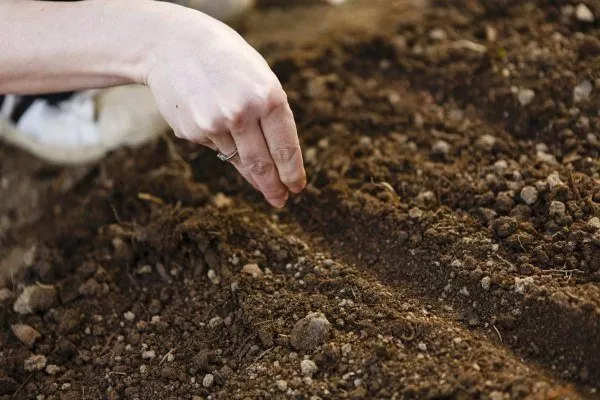
Parsley thrives in full sun, so the seeds should be planted in a well-lit area. The soil should be well-drained, loose, and nutritious. During preliminary tilling, add humus fertilizer at a rate of 4 kg per square meter. The soil may be slightly acidic.
- ✓ Optimum soil temperature for sowing seeds: +5°C.
- ✓ The seed sowing depth should not exceed 1 cm in heavy soils and up to 2 cm in light soils.
Bogatyr parsley is best planted after cabbage, onions, garlic, potatoes, turnips, radishes, and eggplant. It should not be planted after any other parsley, carrots, or cilantro for at least four years. Plant Bogatyr near berry crops; their scent repels various insects. Plant in a hole 0.1 m deep in mid- to late spring. Planting pattern: 0.2 x 0.08 m.
5 g of seeds should be sown per 1 sq. m.
After planting, the holes are covered with quicklime, then topped with soil and compacted. The soil should be mulchedThe first shoots will appear 2-3 weeks after sowing.
Care
Caring for Bogatyr parsley begins with disinfecting the seed. The seeds should be soaked in water for 48 hours, changing the water several times a day. A couple of hours before planting, the seeds are dipped in a weak solution of potassium permanganate.
Bogatyr parsley seedlings don't like excessively dry or wet soil; watering should be done sparingly. The soil should be loosened immediately afterward.
To create a large parsley harvest, thinning of seedlings is necessary:
- 1st time – when the plant has about 3 leaves (keep the distance between them at about 4 cm);
- 2nd time – after 2 weeks (the distance between seedlings is about 5-10 cm).
Use the leaves you've pulled out for fertilizer. Don't forget to remove any excess weeds.
An important aspect of plant care is maintaining the correct daylight hours—the normal range is 15 to 18 degrees Celsius. If the temperature drops below this level, the seedlings stop growing, and if it rises, the parsley dries out. The natural daylight hours in the germination area are also important.
Weeds are harmful to plants and should be removed at least four times a month. Loosen the soil after watering, preventing stagnant water, which can lead to root rot. Mulch can be used to protect against drafts and weeds, and it can also be used for plant nutrition. Fertilizer should be applied about three times per season, preferably with a potassium-rich fertilizer.
Harvesting and storage
Greens are harvested in late summer or early fall, depending on the climate and the quality of care. The above-ground portions of the greens are trimmed and cleared of soil, washed, dried, and stored in a dry, ventilated area, possibly in the freezer. The shelf life is up to 150 days.
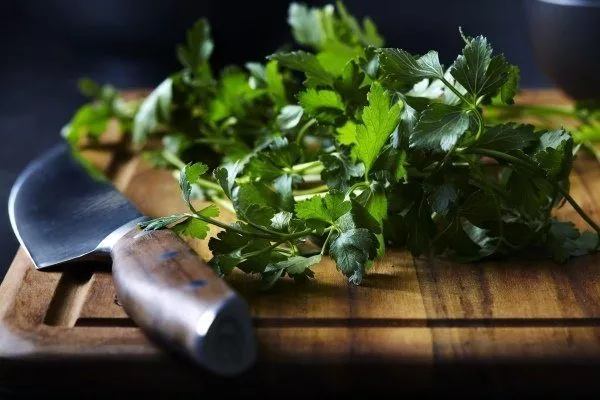
The plant is used for cooking or garnishing dishes. Storing the rhizomes will allow you to use them to force the plant during the winter. The seeds are stored in bags at a temperature of 15 to 20 degrees Celsius.
Pest and disease control
Control methods include:
- Constant loosening of the soil and preventing excessive acidification.
- For sowing, use treated seeds.
- Follow crop rotation rules.
- Plant 1st and 2nd generation plants at a distance from each other.
- Avoid overwatering the soil.
- If various symptoms of diseases appear, treat the greens with a solution of Bordeaux mixture or boric acid (1%).
- If the impact of the disease is minor, remove the infected plant from the garden bed.
- Follow all rules for storing seeds.
Reviews of Bogatyr parsley
Bogatyr parsley is one of the finest varieties of the Apiaceae family, boasting unrivaled flavor and aroma and therapeutic benefits. It's nutritious and rich in vitamins, making it an indispensable and vibrant addition to any dish.