
Parsley is a spicy herb revered in every family. It's no wonder many gardeners are interested in growing it. Its frost resistance allows it to be planted almost year-round, and winter planting offers several advantages. However, to reap a bountiful harvest, it's important to understand the subtleties and nuances of growing it.
Advantages
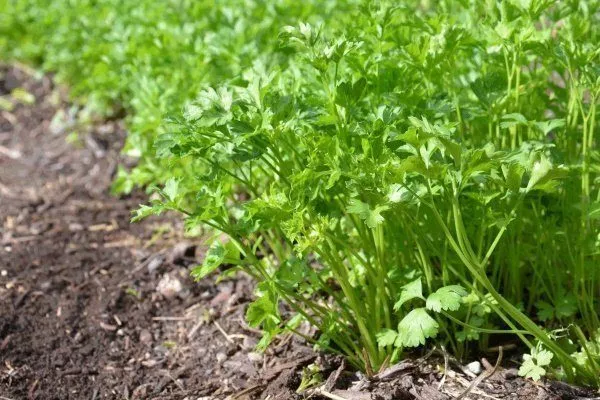
Sowing parsley in the winter has a number of advantages, which makes this late-growing method so popular:
- A bountiful harvest. Seeds that survive autumn frosts and winter freezes become significantly more resilient, stronger, and healthier, which means a high germination rate.
- Speed. Parsley planted in the fall yields a harvest in the shortest possible time. It's significantly ahead of its spring counterparts, maturing 3-4 weeks earlier. Snow cover prevents the plant from freezing, and the first spring sun and warmth allow for rapid growth and ripening.
- Versatility. The soil in which parsley was grown can be reused, a feat not many crops can boast.
- Time savings. In the spring, when the farmer begins actively planting other crops, more time will be available for these tasks, as it won't have to be spent planting parsley.
The right time
On average, the best time to plant parsley before winter is late October or early November. However, depending on the climate and temperature in your region, this important time may be closer or delayed.
Parsley should be planted before the first frost, so it's recommended to keep a close eye on weather forecasts as October approaches. Nighttime temperatures hovering between 2-3 degrees below zero are a sign that it's time to plant parsley.
Seed preparation
The high essential oil content of parsley seeds ensures a long germination period. Therefore, to enjoy your homegrown herbs as soon as possible, the planting material must be properly prepared in advance:
- The first stage of preparation is the careful selection and culling of seeds. The very best seeds must be selected from among all the available seeds. Damaged, spoiled, or poor-quality seeds should be removed from the general population without the slightest concern. Criteria for selecting seeds for winter sowing
- ✓ The seed germination rate must be at least 70% to guarantee a harvest.
- ✓ Seeds must be fresh, no older than 2 years, to ensure high germination energy.
To speed up germination, you can soak the seedlings briefly in a disinfectant solution. Boric acid, copper sulfate, or potassium permanganate can be used for this purpose.
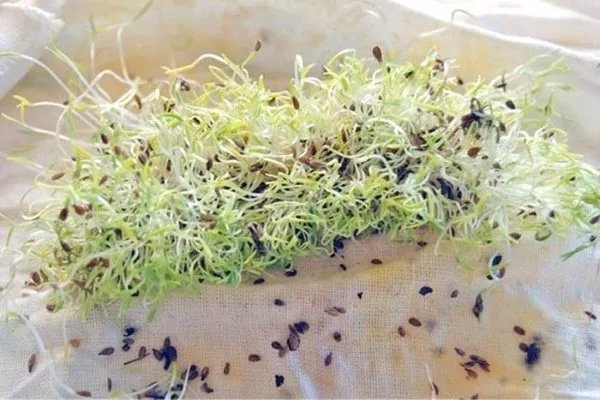
- The next step is soaking. To do this, wrap the seeds in several layers of damp cheesecloth. They should remain in this state for, on average, about 5 days. Maintaining the correct temperature is crucial – the soaking area should remain at room temperature (22-25 degrees Celsius) throughout the entire soaking period.
- Once the seeds have sprouted, leave them in the damp cheesecloth, but this time reduce the temperature to a cooler temperature—no more than 2 degrees Celsius—to harden them off. To do this, place the sprouted seeds on the bottom shelf of the refrigerator for 7-10 days. After this time, the seeds are ready for planting.
Hardening off the seeds will come in very handy if you plan to plant parsley in the winter, although it is not necessary.
There are also other methods of seed preparation that are used less frequently by gardeners and farmers, but are no less effective:
- BubblingA procedure aimed at disinfecting planting material, dramatically accelerating seedling emergence, and increasing germination rates. To achieve this, the seeds are soaked in cool (around 20°C) water, which is continuously saturated with oxygen or air by a compressor.
- VernalizationThis method also aims to accelerate parsley growth. To do this, the swollen plant seeds are kept at a low, positive temperature for a short period of time (for example, at night), and then at room temperature (during the day). Vernalization is carried out over a period of 7-10 days.
- PelletizingA special agricultural machine called a pelletizer is required for this procedure. The technique involves coating the seeds with a protective, nutrient-rich coating in the shape of a ball. Typically, a mixture of humus, peat, and mineral fertilizers is used. Pelleting ensures easy seeding of parsley with minimal time and effort.
Choosing a location
Choosing the right planting site is one of three components of successfully growing parsley during the cold season. To choose the right site, follow these criteria:
- The first criterion for a successful location is light. Greens are relatively undemanding about growing conditions and will thrive even in the shade. However, sufficient light will yield a larger harvest. Therefore, it's best to choose a site with the longest daylight hours. An open area is the optimal choice in this case.
If onions, tomatoes, potatoes, cabbage, or garlic were previously grown in the potential planting site, this will be a significant advantage. However, if carrots were previously grown in the same area, it's best to find another location.
- The second criterion for a good location is snow coverage. The more snow a potential planting site receives in winter, the better. Snow will provide reliable protection for parsley from the harsh winter frosts and maintain the necessary moisture levels.
- The final selection criterion is the conditions that pose a risk to the seedlings. Parsley certainly requires a certain amount of moisture, but this doesn't mean the plant will tolerate too much. Therefore, areas prone to flooding are not suitable for growing this herb. This rule also applies to excessively windy areas.
Soil preparation
The final component of a bountiful and high-quality parsley harvest in the spring is properly prepared soil in the summer, which must be cultivated and fertile.
To create the ideal soil for sowing parsley in winter, you will need to follow several steps:
- Immediately after harvesting the plants that grew in the area where the greenery will be planted, treat the soil with superphosphate and potassium salt in a concentration not exceeding 20 grams of the substance per 1 square meter of the area.
- Fertilize. It's strongly recommended not to use pure manure for this purpose. However, a combination of well-rotted manure and sand will allow parsley to grow and develop without the risk of seed rot. This fertilizer will improve soil drainage and make the soil easier to loosen.
- Loosen the soil thoroughly and effectively.
- Improve the quality of the topsoil by adding sand or peat. Do this carefully to ensure the soil remains soft, airy, and not compacted.
Sowing
Parsley can be planted in the fall either directly in the garden or indoors. However, be prepared for a significant investment: you'll need a third more seeds than if planted in spring or summer. Winter is a harsh season, and despite parsley's frost resistance and pre-hardening, on average only 70% of the seeds germinate.
In open ground
Planting parsley in your garden isn't difficult, even for a novice farmer. It only takes four steps:
- If the seeds were pre-soaked and successfully passed the preparatory stage, they need to be given some time to dry out and remove excess moisture. A few hours should be sufficient.
- Moisten the soil with a little watering.
- Now you can begin sowing. To do this, plant the seeds in the soil to a depth of no more than 1 centimeter. When planting the seeds, it's important to maintain a distance: there should be at least 15 centimeters between rows of future parsley, and about 3 centimeters between plants.
To speed up the emergence of the first shoots, you can cover the beds of greens with plastic and remove it once the sprouts appear. This covering will help maintain the optimal temperature for the greens.
- Mulch future plants with a three-centimeter layer.
- ✓ The soil temperature for sowing should not be below +2°C to avoid freezing of the seeds.
- ✓ Soil moisture should be moderate to prevent seed rotting.
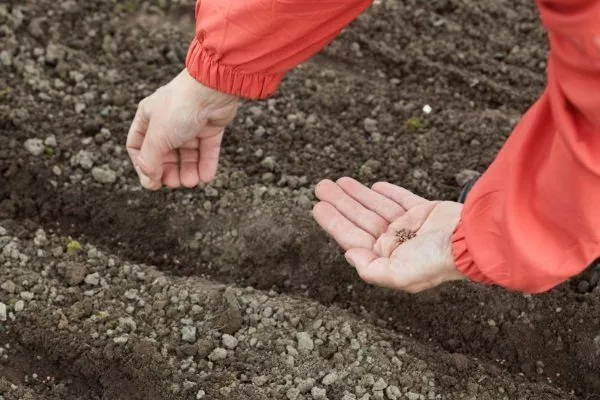
If all planting conditions are met (optimally selected site, properly prepared seeds, and high-quality fertilization), the first shoots will appear within a week and a half. Dry seed may require a little longer.
At home
If you don't have a garden or land, or for other reasons that make it impossible to grow parsley outdoors, you can grow it indoors using boxes and pots that are large enough.
To sow greens before winter at home, you need to follow these steps:
- Soak the seeds. To do this, heat the water to 38 degrees Celsius and leave the seeds in it for 3 days. Replace the water with equally hot water every 12 hours.
- Cover the bottom of the container with a drainage mixture (a combination of pebbles and expanded clay will do) in a layer several centimeters thick.
You can use high-quality, fertilized soil from your garden if you can find it. Otherwise, store-bought all-purpose potting soil will do.
- Water and lightly compact the resulting homemade bed.
- Make small furrows in the soil, about 1 centimeter deep, and then begin planting. A nice bonus of planting parsley indoors is that it can be sown more compactly in a container: about 10 centimeters between rows. A few centimeters between the future plants will be sufficient.
- Cover the seedlings with a thin layer of soil and place the container with seeds in a well-lit place, such as a windowsill on the east or south side, to ensure sufficient light.
- Maintain a consistent temperature for parsley, ranging from 15 to 20 degrees Celsius. Temperatures below this range will slow growth, while temperatures above this range will cause the plant to dry out. If adequate light is not available indoors, a standard table lamp can be used, positioned about half a meter from the seedling box or pot.
Once the bushes reach 10 centimeters in height, you can safely harvest the parsley: this parsley is already ready for consumption.
Care
Until the first shoots emerge above ground, caring for parsley comes down to careful attention to watering and ventilation. Seedlings should be watered regularly, as the soil dries out, but not too much. Uninvited weeds should be removed as soon as they are noticed.
In case of sudden severe frosts, parsley can be covered with a special agronomic fiber that allows air to pass through well.
As soon as the first 2-3 true leaves appear, you can begin weeding and thinning. Any manipulation should be carried out carefully, taking care not to damage the fragile and vulnerable plant and its root system.
To ensure parsley develops full-fledged rosettes of leaves, it needs to be fertilized twice: when the first leaves appear and once a full, small rosette has formed. For this purpose, use a fertilizer made from mullein or compost at a ratio of 9 liters of water per 1 kilogram of organic matter. It's a good idea to add 15 grams each of potassium sulfate and superphosphate.
Timely watering, loosening, thinning, and fertilizing of parsley are excellent preventative measures against diseases of this plant. However, it can sometimes be susceptible to infection:
- white spot;
- brown rot;
- powdery mildew;
- downy mildew;
- early burn;
- rust.
If any suspicious growths are detected on the plant, it should be treated. To do this, apply a weak (1%) solution of Bordeaux mixture to all green parts of the parsley. Spraying with a 1% colloidal sulfur solution is particularly effective in eliminating powdery mildew.
Harvesting and storage
Parsley should be harvested gradually, as it ripens and is needed. A judicious approach to harvesting leaves and roots will ensure a long-lasting supply of fresh, tasty, and aromatic herbs.
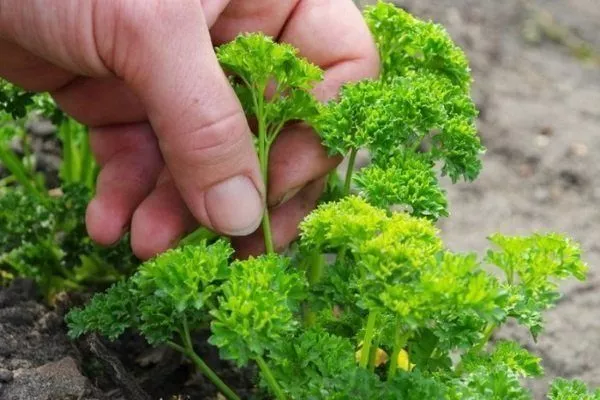
Methods for storing parsley leaves vary depending on your needs. For long-term storage, you can freeze or dry the herbs. And if you need the herb immediately, simply refrigerate it or preserve it in oil.
The plant's roots should be stored in a wooden box in a cool place. For best preservation, it is strongly recommended to sprinkle them with sawdust or sand.
The best varieties
Not every parsley variety tolerates winter sowing well. Therefore, if you choose this method, consider the following frost-resistant leafy varieties:
- Bogatyr;
- Breeze;
- Carnival;
- Curly leaf;
- Common leaf;
- Esmeralda.
Root varieties with fewer tough leaves can also be successfully sown in late autumn. The following varieties produce particularly good yields under these conditions:
- Alba;
- Berlin;
- Good morning;
- Spicy;
- Sugar;
- Fruitful.
Parsley can be grown by any gardener, even a novice. This easy-to-grow plant thrives equally in cold autumns and frosty winters. Sowing this herb before winter will yield a bountiful, high-quality harvest in early spring, when other plants are just beginning to emerge.
I've never sown parsley before winter; it usually sprouted on its own in the spring, but last year I decided to give it a try after reading your article. I really liked it, as the yield increased significantly, and I was surprised that the seeds survived the winter so well. I thought only mature plants were frost-resistant. Thank you so much for your help! I'll always do it this way now, and it'll be one less job to do in the spring.