
The Petra variety is ideal for gardeners: it's easy to grow, has excellent flavor, is highly productive, and has an attractive appearance, thriving in both full sun and light shade. It's an excellent choice for both beginning gardeners and experienced growers who value reliability and quality.
Introduction to the variety and characteristics
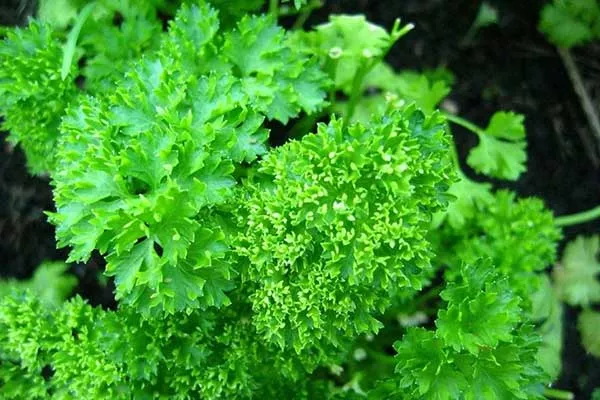
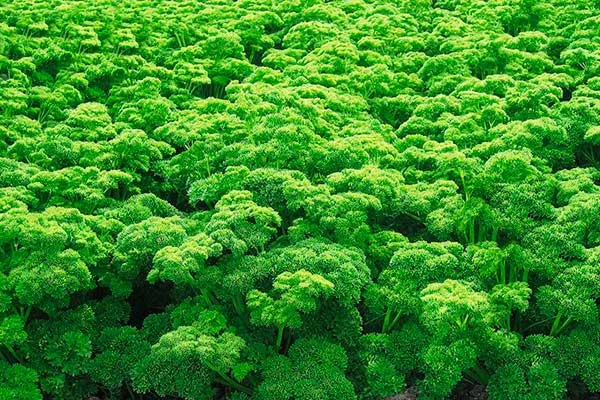
This parsley belongs to the curly variety. The Petra variety is known for its ability to quickly recover after pruning. It's a mid-season variety, ready for harvest in just 85-95 days.
Other characteristic features:
- Harvesting time and yield. Harvesting can be done from the May holidays until the end of October. Yields range from 1.5 to 3 kg per square meter.
- Cold resistance. This variety produces a stable harvest even in challenging climates. The bushes easily tolerate cold snaps.
- Suitable regions for cultivation. The variety grows well in the Northern, Northwestern, Central, Volga-Vyatka, Central Black Earth, North Caucasus, Middle Volga, Lower Volga, Ural, West Siberian, East Siberian, and Far Eastern regions.
- Soil requirements. Petra parsley prefers nutrient-rich soils with a deep tillage layer, as well as light sandy and airy semi-clay soils. Although this variety of parsley doesn't have strict growing conditions, for the best yield, it's worth paying attention to the listed characteristics. Ideally, parsley should be grown after crops such as onions, cucumbers, or tomatoes.
- Harvesting. Parsley leaves can be harvested as they grow, when they reach a height of 12-13 cm.
- ✓ Soil pH should be between 6.0-7.0 for optimal growth.
- ✓ The depth of the fertile layer is not less than 30 cm.
The rules and methods for preserving green mass deserve special attention:
- In autumn, the plant can be stored in the refrigerator or basement; glass jars are suitable.
- Before storing, greens should be dried a little in the oven to prevent rotting, but natural drying is also acceptable.
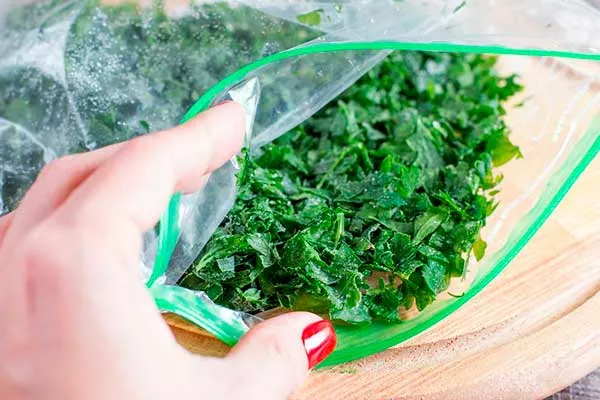
- Finely chopped parsley can be frozen into ice cubes, which is an excellent way to preserve it long-term. Parsley can be stored in the freezer for a long time, and individual cubes are convenient for use in soups, cooked dishes, and smoothies.
- Fresh parsley placed in sand retains its quality for 2-3 months.
Features of selection
Parsley variety Petra (Petra Moshrue) entered into agricultural use in 2005 thanks to the efforts of experts from Bejo Zaden BV
This species is known for its ability to produce consistent yields even in conditions that are not always considered ideal.
External data of Petra parsley
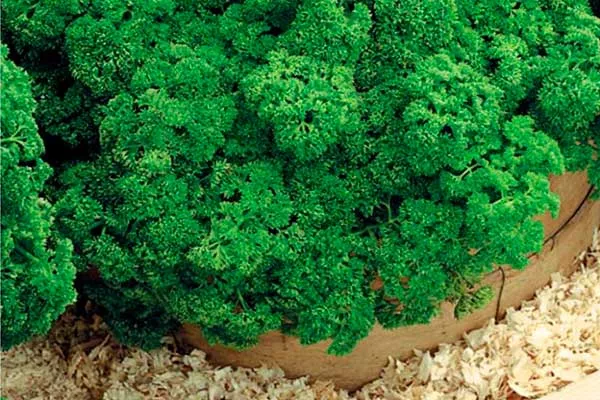
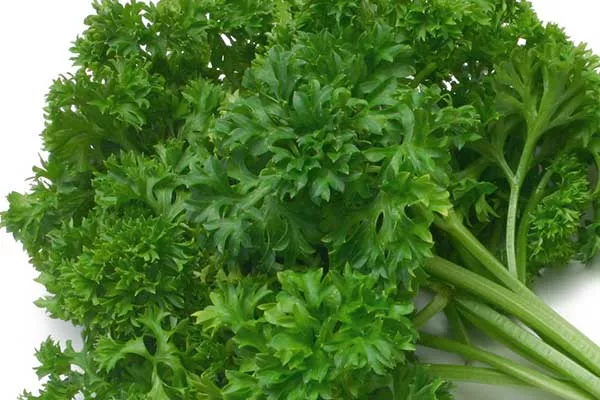
The plant forms a sturdy rosette with leaves that grow almost vertically. The leaflets are a standard length and rich green with wavy edges. The petioles reach 6-6.5 cm in length and are of medium thickness.
The weight of greens from one bush ranges from 40-60 g. The leaves have a soft texture and a pleasant aroma.
Taste properties and purpose
Petra parsley is characterized by a fine texture and rich aroma. Its flavor is balanced and pleasant. It is widely used in home cooking: it's perfect for adding to salads, soups, and main courses, and serves as an excellent garnish for various culinary creations, including festive dishes.
Landing features
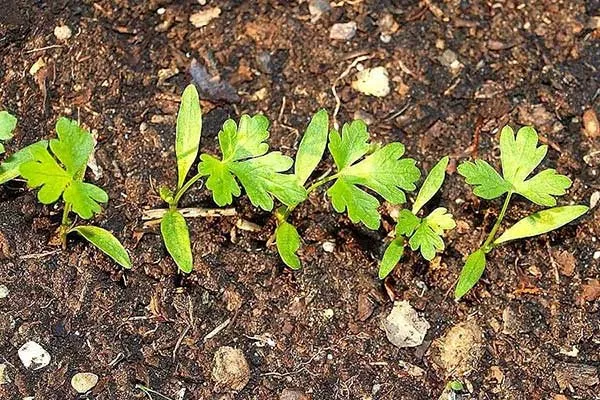
Seeding begins in April, with direct sowing preferred, as seedlings are not widely used. To ensure a continuous supply of fresh greens, many gardeners use a sequential sowing system, planting new seeds every fifteen days. This process continues until July.
- Soak seeds in water at 40°C for 48 hours to improve germination.
- Rinse the seeds under running water to remove germination inhibitors.
- Dry the seeds until they become loose in the air, avoiding direct sunlight.
Sometimes winter planting is carried out in October, but in this case it will be necessary to protect the young shoots with agrotextiles to prevent possible frosts and prevent stemming.
Peculiarities:
- Parsley can be grown in both full sun and partial shade. Suitable sites include flat or slightly elevated terrain, where groundwater flows at a depth of 100-150 cm.
- Preparing beds for spring planting should begin in the fall. The soil should be fertile, loose, and neutral in pH, with a well-developed soil layer for cultivation. Ideal conditions for parsley include soft, fresh loams and sandy loams.
- Before planting, soak the seeds in warm water for half an hour and then gently dry. While the seeds are drying, pay attention to preparing the site:
- dig up the ground;
- form furrows at intervals of 18-22 cm, 10 to 15 mm deep;
- Pour hot water over the beds and let it soak in and cool.
- Place the planting material at intervals of 5-7 cm, although you can make the step narrower, but in this case, thinning of the beds will be required later.
- The seeds are carefully covered with dry soil, and after 15-20 days you can expect them to germinate.
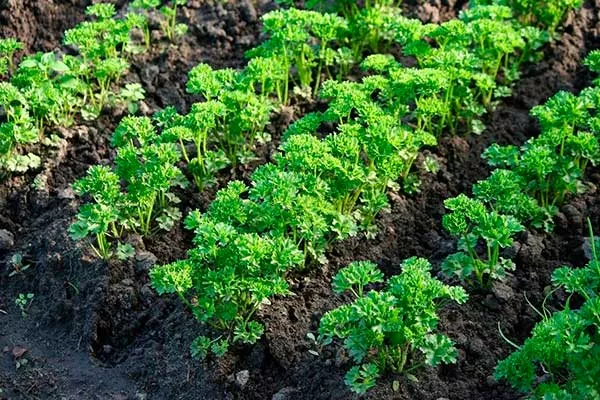
Sowing seeds in the fall doesn't require soaking. The planting process remains the same, but afterward, the beds should be covered with a layer of peat or other organic material.
Care instructions
Caring for Petra is not difficult:
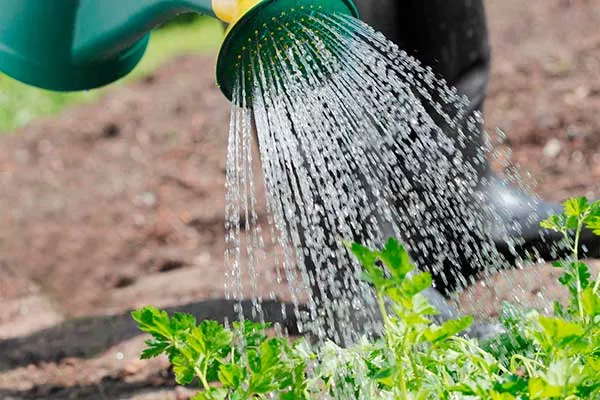
- Regular watering is required to maintain proper soil moisture. Watering needs can be determined by the loss of leaf elasticity. When watering, it's preferable to use sun-warmed water, and watering should be done in the morning or evening.

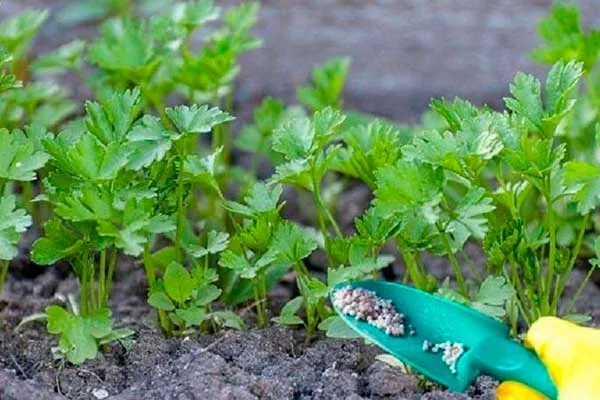
- Use a complete mineral fertilizer with increased nitrogen content every two weeks. This is important for maintaining the plant's health and growth.
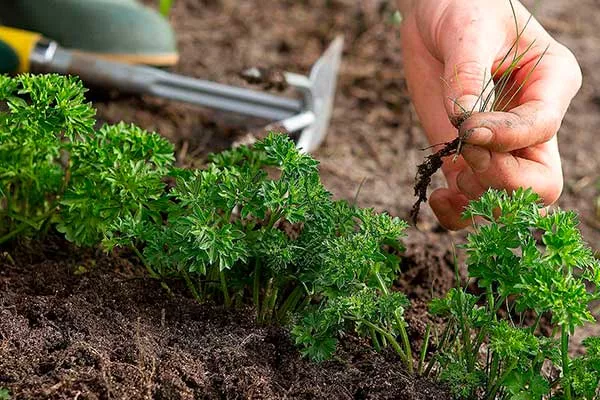
- Petra requires regular weeding, especially during its initial development, as well as loosening the substrate to prevent moisture stagnation. This work should be done only the day after watering and only between rows of plants.
Resistance to diseases and pests
This parsley variety has good resistance to various diseases common to this crop. However, in some cases, when growing conditions are inadequate, parsley loses its defense mechanisms.
What you may encounter:
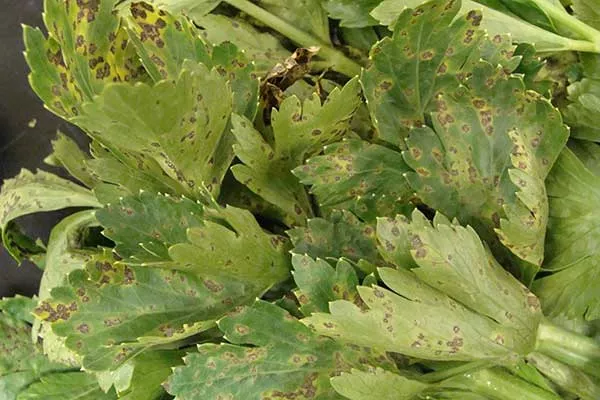
- If light green spots appear on parsley leaves, this may indicate a nitrogen deficiency. To remedy this, you can use compost tea or nitrogen-containing fertilizer.
- During the rainy season, when the air is thick with humidity, even the robust Petra is not immune to powdery mildew. If a white coating appears on the plant's leaves, the diagnosis is obvious. Over time, the fungi that cause this disease become darker. The damage to the crop can be irreparable, so fungicides should be applied at the first signs of a powdery mildew outbreak.
- Brown marks on the veins of parsley leaves are signs of phoma, another fungal disease that can lead to root rot. These plants are not known for their longevity and are rarely treated.
Positive and negative qualities
Petra is a variety of curly parsley that is widely used in home cooking. This plant offers several benefits:
Petra doesn't have any significant drawbacks. The main drawbacks, if they can be called that, are related to its appearance: all varieties of curly parsley lose their aroma when dried, and their leaves are slightly coarser than regular varieties.
Reviews
Curly Petra is a fairly resilient parsley; with proper cultivation practices and crop rotation, it will grow quickly and without any complications. Its abundant harvests are versatile, but gardeners recommend harvesting the leaves a little before they reach full maturity due to their coarse texture.