
Parsley Mooskrause is a fragrant variety distinguished by its ease of care, abundant harvest, and resistance to adverse conditions. This herb has excellent flavor, making it a popular choice for adding a piquant touch to dishes. It is also popular in cosmetology and boasts many beneficial properties. With proper care, harvests will be abundant.
History of selection
In the novel, Petrushka Mooskrause appears as a janitor who falls victim to the treacherous Woland. He transforms him into a talking cat, making him one of the most colorful and memorable characters in the novel.
After the publication of the novel "The Master and Margarita," Petrushka Mooskrause became a favorite among readers: his funny phrases were often quoted, and the character's images were repeatedly recreated in theatrical productions.
Mystical origin
The origins of Petrushka Mooskrause have long been debated. Some researchers believed he was entirely fictitious and had no real-life counterpart.
It later became known that the hero had roots in Russian folklore. His name and some of his traits were borrowed from Russian folk tales and legends.
History in the theater
The most famous portrayal of Petrushka Mooskrause was brought to life on stage in various productions of "The Master and Margarita." Actors in various versions of the play strove to convey the character's comical and unpredictable nature.
Introduction to the variety
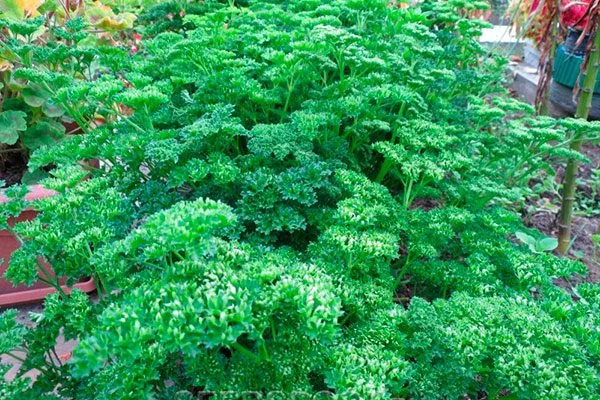
The rosette is semi-upright and consists of 18-20 leaves. The stem reaches a height of 20-30 cm. This semi-spreading plant is characterized by dense, light-green foliage with wavy edges, a long, thick petiole, and a thin, white-gray, cone-shaped rootstock 15-25 cm long.
During flowering, which typically occurs in June-July, a single umbel of milky-green or white flowers appears. After this, seeds form.
Characteristics of appearance
The plant stands out among other varieties with its dense crown, consisting of fleshy, juicy, shiny and velvety leaves with a wavy outline, which gives the plant the appearance of a beautiful ball.
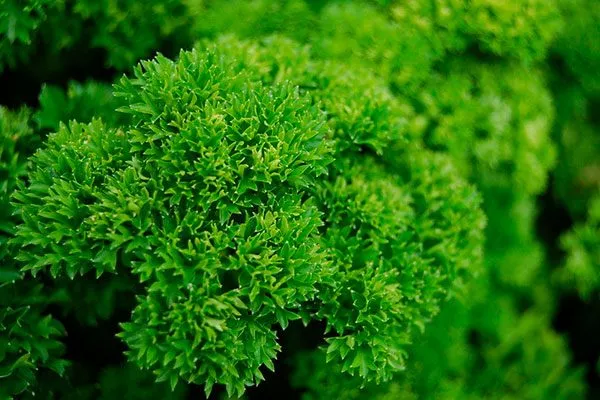
The weight of a single bush varies from 30 to 40 grams, but larger specimens weighing up to 60-110 grams are also found. The seeds are small and bright brown. The foliage quickly recovers after cutting.
Taste qualities
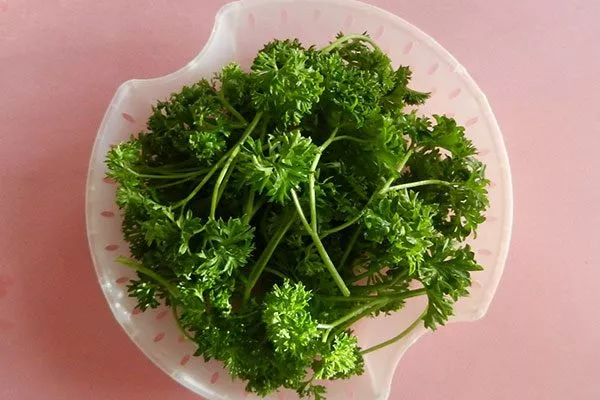
Despite the toughness of the greens, they possess a bright, rich aroma thanks to the high content of essential oils in the seeds. They have a light, sweet flavor with piquant notes.
Where is the variety used?
Mooskrause parsley is widely used in cooking due to its vibrant aroma and rich flavor. The herb is also used for cosmetic purposes.
In cooking
It's an excellent garnish for salads, soups, meat, and fish dishes. It pairs beautifully with tomatoes, cucumbers, onions, peppers, carrots, and pumpkin. Finely chopped, it's added to sauces, marinades, and used to make pesto—an Italian sauce that pairs well with pasta and meat.
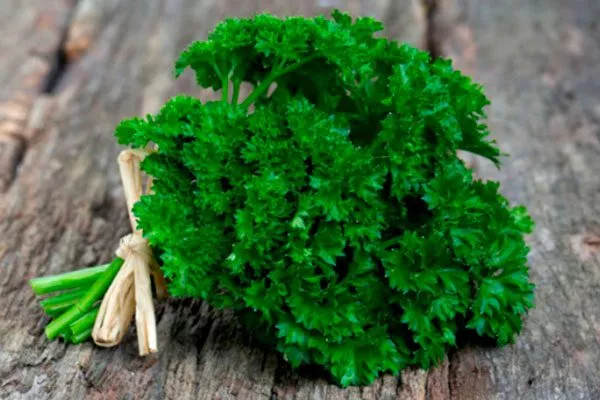
It's often used in omelets and other egg dishes. Dried parsley adds flavor to cheeses, oils, vinegars, marinades, and sauces, while frozen parsley is sprinkled on baked meats, fish, and vegetables. Many people like to garnish soups and dumplings with it.
Peeled and chopped parsley plants are used to make parsley oil, which makes an excellent salad dressing. Parsley seeds are also used in potato and vegetable dishes, marinades, and in preserving vegetables and jams.
In cosmetology
Thanks to its unique composition and healing properties, Mooskrause parsley is widely used in cosmetology. Rich in antioxidants and vitamins, it helps improve the condition of skin and hair:
- Contains high amounts of vitamin C, which acts as a powerful antioxidant, protecting the skin from damage caused by free radicals.
- Vitamin A improves skin tone and reduces wrinkles.
- In cosmetology, parsley is used in masks, toners, and facial creams. The mask helps lighten age spots and moisturizes and refreshes the skin. To prepare it, chop the fresh herb, mix it with natural yogurt, and apply it to the skin for 15-20 minutes. After rinsing, the skin becomes soft and radiant.
- Parsley is rich in iron, zinc, and potassium, which help strengthen hair. Vitamins C and E help restore damaged hair and stimulate growth.
An infusion made from fresh leaves steeped in boiling water helps strengthen hair when used regularly as a rinse after washing, leaving it strong, shiny, and healthy.
Beneficial properties
Mooskrause is valued for its rich chemical composition, including vitamins B, E, K, and C, beta-carotene, choline, and retinol, as well as minerals such as manganese, rutin, selenium, phosphorus, sulfur, magnesium, potassium, calcium, and sodium. It also contains essential oils and unsaturated fatty acids, and a minimal amount of cellulose.
The nutritional value of parsley is 44 kcal per 100 g, containing 9 g of carbohydrates, 11 g of protein and 0.7 g of fat.
Beneficial properties:
- It has diuretic properties that help remove toxins and excess fluid.
- Improves digestive function and helps reduce inflammation in the intestines.
- Contains antioxidants that strengthen the immune system and protect against free radicals.
- Helps fight inflammation and reduces the risk of chronic diseases.
However, excessive consumption of greens can cause allergic reactions and overdoses, manifesting as euphoria, unreasonable fears, increased aggression, and uncontrollable laughter.
When does it ripen?
An early-ripening variety. It takes approximately 65-70 days from mass germination to technical maturity. Selective cutting should be performed when the bushes reach a height of 10-14 cm, usually 1.5 months after planting. Harvest from late July to mid-September.
Productivity
It is characterized by high yields, which vary depending on the cultivation method: when grown in a bed, up to 4 cuttings are made, yielding 2 to 2.5 kg of greens per square meter. With year-round cultivation, up to 8 cuttings are produced, significantly increasing the overall yield.
Climate and soil requirements
The crop is cold-hardy and tolerates short-term drought and heat. Choose sunny beds for planting, but the plants grow well in shaded areas of the garden.
Features of cultivation
Mooskrause parsley is grown both in open ground and in small containers on a windowsill. It's important to follow certain recommendations to ensure a bountiful harvest.
Soil preparation
Pre-treat the area, considering several key factors. Follow these recommendations:
- Clear away weeds and stones. Loosen the soil to a depth of 15-20 cm using a shovel or rake.
- Fertilize with complex mineral fertilizers or organic matter, such as humus or compost. Spread evenly over the entire area and dig in.
- Test the soil pH level using a test kit and add lime or sulfur if necessary.
The plant does not tolerate waterlogging or stagnant water. Check the groundwater level in the area. If necessary, create a drainage system or select a more suitable location.
Planting diagram
Choose the most suitable method for growing parsley—from seed or from roots. The first method is very simple:
- Soak the seedlings in water for 2 days, changing the water 2-3 times a day. Disinfect the seeds by soaking them in a weak solution of potassium permanganate for several hours.
- Loosen the soil and dig holes up to 5 cm deep, with a distance of 4-6 cm between them. Water the soil.
- Place a few seeds in each hole, cover them with a thin layer of soil and moisten the soil again.
To speed up germination, cover the container or area with plastic film, removing it daily for 20-30 minutes to allow air to air out. Once the seedlings emerge, remove the film completely.
Second method:
- Select firm, healthy roots that are 6-8 cm long and 2-5 cm in diameter.
- Divide large specimens into pieces, treating the cut areas with wood ash for disinfection.
- Keep them in sand for 2-3 days to increase the chances of germination.
Place the root vegetable at a slight angle into moist, nutritious soil, leaving the top above the soil surface. After planting, water generously with warm water.
Post-planting care
For good growth and development, it's important to pay a little attention to the crop. Follow these simple agricultural practices:
- Provide daily watering, especially in dry areas of the soil. Water the plants thoroughly, but less frequently, to avoid overwatering.
- Fertilize your parsley with organic fertilizer every two weeks, following the package instructions. This will help ensure the plant receives all the necessary nutrients.
- Regularly remove weeds and trim wilted or damaged leaves. This will help maintain a beautiful appearance and protect your plants from disease.
- If the leaves are drooping towards the ground, install stakes or supports for support.
Remove fallen specimens and other organic debris to prevent rot and disease.
Collection and storage
Harvest both the leaves and the stems of the parsley. Clean the roots thoroughly to remove soil and rinse well. Dry or freeze the herbs to preserve their flavor for as long as possible.
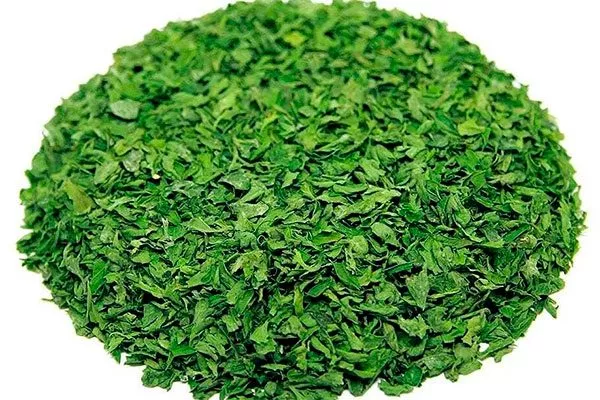
Place the dried product in cloth bags. In these conditions, it will retain its properties for up to 6 months. Fresh parsley can be stored for up to 3-4 weeks in a plastic bag.
Positive and negative qualities
Mooskrause is a fragrant and nutritious green that deservedly ranks among the most popular varieties. Its benefits include:
This variety has no significant drawbacks. If you follow basic planting and care guidelines, you can expect excellent results.
Reviews
Parsley Mooskrause is one of the most popular varieties of herbs, deservedly gaining recognition from both professional agronomists and home gardeners. This early-ripening variety boasts not only excellent flavor but also good productivity. The key is to ensure proper and timely care for the crop.