
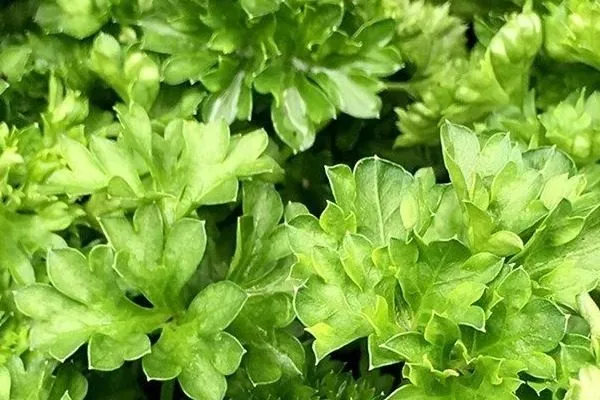
Kucheryavets parsley is a variety grown for its exquisite, succulent greens. It not only has a mild flavor but also attracts attention with its decorative qualities, making it an ideal choice for garnishing dishes and even garden plots.
Peculiarities of origin
Kucheryavets was developed by renowned Russian breeders Sergei Vasilyevich Maksimov and Nikolai Nikolaevich Klimenko. This variety was officially recognized and approved for cultivation in 2005. Read about another curly variety. Here.
Characteristics and description
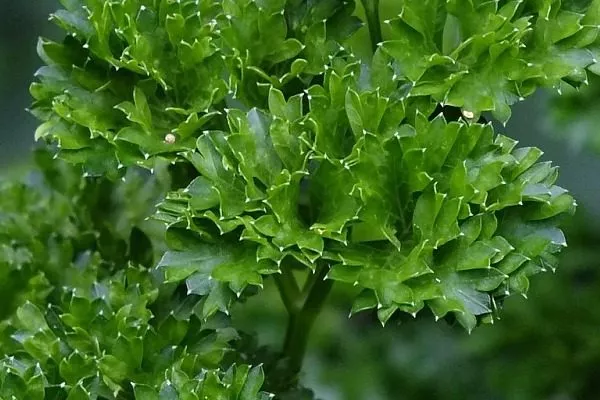
This leafy parsley variety forms a compact, medium-sized rosette that tends to be semi-upright. Its leaves are quite large, triangular, rich green, and have a textured edge. The petiole is medium in length but thickened, with a delicate anthocyanin hue.

Other varietal characteristics and features:
- The weight of one plant ranges from 50-65 g.
- The greens are distinguished by their delicate texture and pleasant aroma.
- It is distinguished by its rapid and dense growth after pruning.
- Its taste is excellent, and its aroma is strong and rich.
- Parsley leaves It is recommended to use both fresh and dried as a flavoring and a source of vitamins. Its uses are varied.
- The Kucheryavets variety is mid-season, with the period from the emergence of the first shoots to reaching technical maturity lasting 80-90 days. The greens are harvested from the first days of July until the last days of summer.
- Productivity is significant and amounts to 2-3 kg per 1 sq. m.
- The plant grows well in both sunny and shaded areas.
- The Kucheryavets variety is cultivated in various regions of Russia, including the Northern, Northwestern, Central, Volga-Vyatka, Central Black Earth Region, North Caucasus, Middle Volga, Lower Volga, Ural, West Siberian and East Siberian regions, as well as in the Far Eastern District.
- Kucheryavets is distinguished by good winter hardiness and is able to grow well both in the south in the sun and in cooler, semi-shaded conditions.
- Once cut, the greens remain fresh for a long time.
Susceptibility to diseases and pests
This variety of parsley has high resistance to diseases, but it is impossible to completely eliminate them. The most common problems:
- For powdery mildew The leaves become covered with a whitish coating that spreads quickly in humid conditions.
- Cercospora leaf spot characterized by the appearance of yellow spots with dark edges on the leaves, most often as a result of excess moisture and dense planting.
- Rust causes the appearance of orange-yellow spots that darken over time.
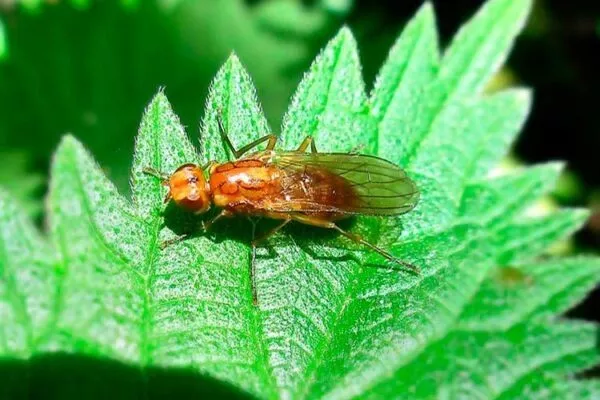
Among the pests that can damage the Kucheryavets variety are:
- Stem nematode – is a worm-like parasite that damages stems and roots.
- Carrot fly – lays eggs, from which larvae emerge that destroy the leaves.
- Melon aphid – feeds on the plant's sap, which causes its growth to stop and, ultimately, the death of the parsley.
How to plant and care?
Parsley can be grown from either seeds or split roots. The latter method is best started in April, but if desired, the process can be started anytime before June.
- ✓ The optimal soil temperature for sowing Kucheryavets parsley seeds should not be below +5°C.
- ✓ To prevent diseases, it is necessary to ensure a distance of at least 5 cm between plants.
| Method | Landing time | Sowing depth |
|---|---|---|
| Seeds | April-June | 5-7 mm |
| Root vegetables | April | The root apex above the surface |
High-quality Kucheravtsa parsley yields are achieved in loose, neutral, or slightly acidic soil. Preparing the planting site is done in the fall:
- clearing of weeds and residues from the previous harvest;
- digging and adding organic matter.
In the spring, if necessary, the beds should be disinfected from pests and diseases, and a complex of mineral preparations should be introduced.
The process of sowing seeds is standard, and when dividing the root crop, proceed as follows:
- For planting, form small holes in rows located at a distance of 15-20 cm from each other.
- Carefully place the roots into the holes at a slight angle, leaving no more than 5 cm between them.
- Then carefully cover the plants with soil so that the top of the roots remains above the surface.
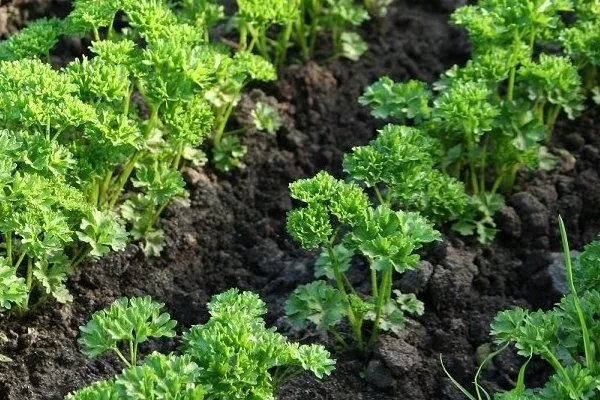
Once the first leaves emerge, water them regularly—several times a day. After that, water as needed, but be careful not to let the soil dry out or allow water to stagnate.
Seed method:
- To grow seedlings from seeds, you can use a special soil mixture filled into seedling containers. The pre-sprouted seeds, soaked in warm water (30-35 degrees Celsius) for two days, germinate in these containers.
This will remove protective essential oils that can hinder germination. The water should be changed regularly. - You can also use a method where you mix the seeds with water and then spread them in a thin layer on cheesecloth. To maintain moisture, periodically spray the cheesecloth with water.
- After germination, transplant into forms with prepared soil: make small indentations in the ground of 5-7 mm, carefully place the seeds in them, and then lightly cover with soil.
- Containers with seedlings are placed on a windowsill where there is sunlight, or in a greenhouse.
- The seedlings need to be watered daily to prevent the soil from drying out. This can be done using a drip syringe or sprayer.
- At the beginning of May, Kucheryavets can already be planted in open ground, maintaining a distance of at least 20-23 cm between rows and 8-12 cm between plants.
Care instructions:
- Don't forget to weed to keep the parsley from growing. Weeding also helps aerate the soil, allowing better air flow to the roots.
- Watering is determined by the growing purpose: when drying parsley, it can be infrequent, which will result in a richer flavor but may make the stems coarse. When growing for fresh consumption, watering more frequently is required.
Positive and negative qualities
Key benefits:
Gardeners and farmers did not find any significant shortcomings.
Reviews
Kucheryavets leaf parsley is distinguished by its mild flavor and delicate leaf texture, easy cultivation, and ability to thrive in both full sun and shade. Its versatile uses make it suitable for drying and freezing, making it especially prized by gardeners and homesteaders.